






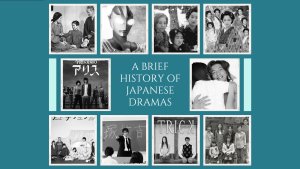
 A Brief History of Japanese Dramas
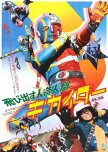
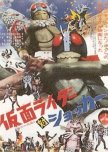
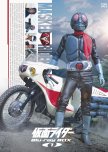
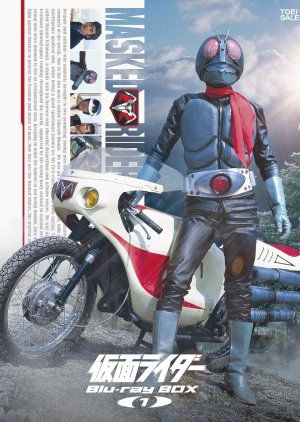
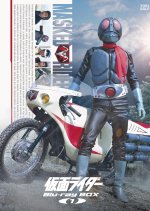
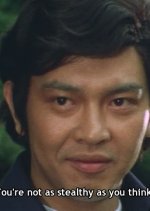
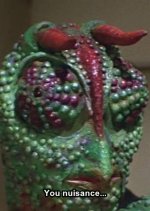
 In this classic manga adaptation, which kick-started the long-running Kamen Rider TV franchise, Hongo Takeshi, a professional motorcycle racer with an IQ of over 900, is captured by Shocker, a Japanese neo-nazi group, and transformed into a cyborg warrior called Kamen Rider. However, before they can begin brainwashing him, Hongo escapes with the kidnapped professor who Shocker forced to turn him into Kamen Rider. Now it's up to Hongo, the professor, and their friend Tachibana to take Shocker down before they can take over the world. Edit Translation
- English
- Português (Brasil)
- Español
- Italiano
- Native Title: 仮面ライダー
- Also Known As: Kamen Rider #1 , Kamen Rider The Original Series , Masked Rider
- Director: Takemoto Koichi, Yamada Minoru, Orita Itaru, Kitamura Hidetoshi, Okunaka Atsuo, Uchida Issaku
- Screenwriter: Nagaishi Takao, Ichikawa Shinichi, Suzuki Ikuro, Hasegawa Kimiyuki, Igami Masaru, Hirayama Kimio, Shimada Masayuki, Takizawa Mari, Ishimori Fumio, Okeya Goro, Maruyama Kogai, Ono Takeo
- Screenwriter & Director: Taguchi Katsuhiko, Tsukada Masahiro
- Genres: Action, Tokusatsu, Comedy, Sci-Fi
Where to Watch Kamen Rider

Free (sub)
Cast & Credits
-

-

-
 Chiba JiroTaki KazuyaSupport Role
 -
 Kobayashi AkijiTachibana TobeiSupport Role
 -
 Morikawa ChiekoMidorikawa RurikoSupport Role
 -
 Shimada YokoNohara HiromiSupport Role
Reviews

This review may contain spoilers
Kamen Rider 1971 - An Aged Titan
The original Kamen Rider 1971 cannot be understated as an incredibly important pillar of pop culture in Japan and beyond. The series that truly started it all. With its iconic design of the original Kamen Rider (referred to as Ichigo) and the subsequent second Rider (referred to as Nigo), it paved the way for a founding father in the tokusatsu genre. However, it's a difficult beast to talk about, because while charming, it is incredibly flawed. The series starts very strongly, with a lean towards horror. It was always monster-of-the-week, but what made it interesting early on was how it leaned into the fear of everyone involved. Even the main character, Ichigo, has internal fears that are set up early on. However, as the series progresses, in order to stay on the air it had to be changed to be more lighthearted. Unfortunately this drops a lot of the overt story of Kamen Rider 1971 and ends up making it an incredibly repetitive watch, as plot only truly progresses about once every thirty episodes or so, and with it being the longest Kamen Rider series on its own (not including sequel shows like Black & Black RX or Kuuga & Agito) it can sometimes be a gauntlet. Make no mistake, this show is NOT made to be binged AT ALL. And while it feels unfair of me to review a show made 52 years ago as if it was made in the modern era, we have to concede that our perception of these things, including the very way in which it is viewed, has fundamentally changed since its creation. We have to acknowledge the way that these things change, and that includes the franchise itself as it progresses. At this point, while this is the originator of all Kamen Riders, I would in no way say it is a good first show to watch for inquisitive minds interested in the franchise due to its inability to be enjoyably be watched in succession like some others. It is an entertaining watch in short bursts, but mind-numbing when watched too quickly. If you do watch it, try not to binge it to get through it. Take sips, don't chug. Enjoy the fun and crunchy practical effects and the inventive ways they get around having zero budget. The camp can be fun, the designs can be silly, and it can be a series that gets a good laugh or two, even if unintentionally. But if you are tempted to watch it quickly to get to some of the other stuff in the franchise, it will become a difficult watch as the formulaic nature of the series turns your brain into putty.Was this review helpful to you?

Rider Jump! Rider Kick!
Giving birth to one of the most endearing pieces of tokusatsu media on the planet, the influence of the original Kamen Rider is impossible to overstate. Its themes of identity, sacrifice and resistance against oppressive power still resonate even today, giving rise to the idea of the tragic, masked hero in one of its most enduring forms. Despite initially starting as a more mature option for tokusatsu fans, the show truly finds its stride when it stops taking itself too seriously and starts having fun with its pulpy premise, treating it with a surprising earnestness. Granted, some pretty notable factors have unfortunately dated the show in its accessibility, being an excruatingly 98-episodes long, it's very easy to get burnt out with how repetitive it can be, with some episodes showing their age more than others. While the show's adamant refusal to explain itself and sudden shift in tone due to Hiroshi Fujioka's injuries is jarring, the overall look and stylings of the show are so endearingly charming, visually rich and all around exciting. Rarely does it feel like the budgetary limitations get in the way of telling a good story. The fights are dynamic, the motorcycle action is aplenty, and the sound of the opening theme is more than enough to get the blood pumping as the Riders face off against a swarm of Shocker grunts or in a showdown against the monster. While certainly rough around the edges, everything about Kamen Rider is done with such infectious enthusiasm; throughout its ups and downs, its message never falters. Human life is more important than even peace and justice, and your humanity is not defined by your body alone.Was this review helpful to you?