K-Drama


Hikaru no Go is about Go, while Chihayafuru is about karuta
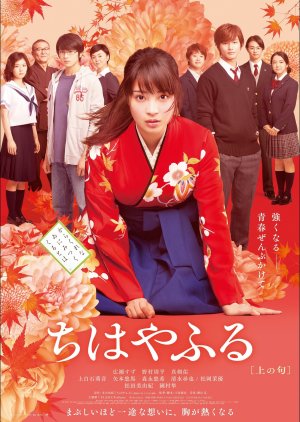
Ayase Chihaya is obsessed with a Japanese poem card game called Karuta. After entering high school, she decided to form a Karuta club to meet her previous Karuta childhood friends. However, people refuse to join her club. She then meets Mashima Taichi, her old Karuta friend from her previous school. He too refuses to join her club at first. However, after seeing how serious she is about making the club successful, he decides to help her.
Ayase Chihaya is obsessed with a Japanese poem card game called Karuta. After entering high school, she decided to form a Karuta club to meet her previous Karuta childhood friends. However, people refuse to join her club. She then meets Mashima Taichi, her old Karuta friend from her previous school. He too refuses to join her club at first. However, after seeing how serious she is about making the club successful, he decides to help her.

They are both high school sports shows focusing on both personal and team growth. The sports introduced in both shows are traditional and recreational for the most parts, and their competitive nature isn't popular with the general public.
The Chihayafuru series has 3 (+1 summary) movies, unlike Asahinagu's 1. This allows for Chihayafuru to cover more character depth and growth, which is fortunate.
If you feel Asahinagu was fun to watch, I'm certain that you'd find the Chihayafuru series just as exhilarating, if not more!
(Plus cute girls looking fierce, what more do you need ^^)
The Chihayafuru series has 3 (+1 summary) movies, unlike Asahinagu's 1. This allows for Chihayafuru to cover more character depth and growth, which is fortunate.
If you feel Asahinagu was fun to watch, I'm certain that you'd find the Chihayafuru series just as exhilarating, if not more!
(Plus cute girls looking fierce, what more do you need ^^)

Kiriyama Rei is a 17-years-old shogi (Japanese chess) player. He debuted as a professional shogi player when he was in middle school. He lives by himself in Tokyo, because his parents and younger sister died in a traffic accident when he was little. One day, Kiriyama Rei meets three sisters who are his neighbours. The three sisters are Kawamoto Akari, Kawamoto Hinata and Kawamoto Momo. This is his first meeting with someone outside of the shogi world in many years. Having meals with the Kawamoto family brings warm feelings to Kiriyama Rei. As Kiriyama Rei continues his shogi career, his interactions with his neighbours allow him to grow as a shogi player and as a person.


The Lines That Define Me (Sen wa, Boku wo Egaku) and Chihayafuru (Kami no Ku) share similarities in their themes, character journeys, and focus on traditional Japanese art forms, although they revolve around different mediums:
1. Focus on Traditional Japanese Art and Culture
The Lines That Define Me: Centers on the art of sumi-e (Japanese ink painting), exploring its philosophy and techniques.
Chihayafuru: Revolves around karuta, a traditional card game based on classical Japanese poetry from the Ogura Hyakunin Isshu anthology.
Both works celebrate Japanese traditions and delve into their cultural significance, showing how these practices shape the characters' identities.
2. Personal Growth and Self-Discovery
Both protagonists embark on journeys of self-discovery through their chosen art form. In The Lines That Define Me, Sosuke Shiba finds solace and purpose in sumi-e after experiencing personal loss. In Chihayafuru, Chihaya Ayase grows emotionally and mentally through her love of karuta.
Both stories emphasize dedication, practice, and perseverance in mastering their respective crafts.
3. Mentorship and Community
The Lines That Define Me: Sosuke finds guidance in a master painter, who helps him uncover the depth of sumi-e.
Chihayafuru: Chihaya has a team and mentors who encourage her growth, such as her teacher and teammates in the karuta club.
Mentorship plays a crucial role in helping the protagonists overcome challenges and improve their skills.
4. Exploration of Emotions Through Art
Both works portray art as a medium for expressing emotions and understanding oneself. Sosuke's sumi-e becomes a way to process his grief and channel his feelings, while Chihaya finds personal meaning and connections through karuta.
5. Competition and Achievement
Both series depict competitive aspects of their respective art forms. In The Lines That Define Me, there are exhibitions and evaluations of artistic work. In Chihayafuru, karuta matches provide a competitive framework that drives the characters forward.
6. Visual and Emotional Aesthetics
Both stories use stunning visuals and intricate details to depict the beauty of traditional art forms, engaging viewers or readers emotionally while highlighting the artistry behind the practices.
Key Difference:
While Chihayafuru places a stronger emphasis on teamwork, friendships, and competitive dynamics, The Lines That Define Me is more introspective, focusing on individual healing and growth through art.
1. Focus on Traditional Japanese Art and Culture
The Lines That Define Me: Centers on the art of sumi-e (Japanese ink painting), exploring its philosophy and techniques.
Chihayafuru: Revolves around karuta, a traditional card game based on classical Japanese poetry from the Ogura Hyakunin Isshu anthology.
Both works celebrate Japanese traditions and delve into their cultural significance, showing how these practices shape the characters' identities.
2. Personal Growth and Self-Discovery
Both protagonists embark on journeys of self-discovery through their chosen art form. In The Lines That Define Me, Sosuke Shiba finds solace and purpose in sumi-e after experiencing personal loss. In Chihayafuru, Chihaya Ayase grows emotionally and mentally through her love of karuta.
Both stories emphasize dedication, practice, and perseverance in mastering their respective crafts.
3. Mentorship and Community
The Lines That Define Me: Sosuke finds guidance in a master painter, who helps him uncover the depth of sumi-e.
Chihayafuru: Chihaya has a team and mentors who encourage her growth, such as her teacher and teammates in the karuta club.
Mentorship plays a crucial role in helping the protagonists overcome challenges and improve their skills.
4. Exploration of Emotions Through Art
Both works portray art as a medium for expressing emotions and understanding oneself. Sosuke's sumi-e becomes a way to process his grief and channel his feelings, while Chihaya finds personal meaning and connections through karuta.
5. Competition and Achievement
Both series depict competitive aspects of their respective art forms. In The Lines That Define Me, there are exhibitions and evaluations of artistic work. In Chihayafuru, karuta matches provide a competitive framework that drives the characters forward.
6. Visual and Emotional Aesthetics
Both stories use stunning visuals and intricate details to depict the beauty of traditional art forms, engaging viewers or readers emotionally while highlighting the artistry behind the practices.
Key Difference:
While Chihayafuru places a stronger emphasis on teamwork, friendships, and competitive dynamics, The Lines That Define Me is more introspective, focusing on individual healing and growth through art.


Yuki Rio, the daughter of an old, prestigious family in Kyoto with over 1,000 years of history, enters into an arranged marriage at the age of 16 with a man she’s never met. Her husband is Takamine Masatomo, a handsome CEO in the IT industry. Every year on her birthday, she would receive 50 million yen, making their relationship one based solely on money. One day, after ten years had passed with no contact, Rio decided to move to Tokyo. She asks her husband, whom she’s meeting for the first time, for a divorce. On the other hand, Takamine finds himself unexpectedly attracted to Rio and doesn’t want a divorce. Thus begins a romantic battle between a wife who wants a divorce and a husband who refuses to let her go.