




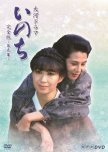


 Breaking Stereotypes: Older Folks in Dramaland
 - Português (Portugal)
- Українська
- magyar / magyar nyelv
- dansk
Elenco e Créditos
-
") Tanaka Yuuko Papel Principal
Tanaka Yuuko Papel Principal -
") Kobayashi AyakoTanimura Oshin [Young]Papel Principal
Kobayashi AyakoTanimura Oshin [Young]Papel Principal -
") Otowa NobukoTanimura Oshin [Old]Papel Principal
Otowa NobukoTanimura Oshin [Old]Papel Principal -
") Watase TsunehikoNamiki Kota [Oshin's first love interest]Papel Secundário
Watase TsunehikoNamiki Kota [Oshin's first love interest]Papel Secundário -
") Namiki ShiroTanokura Ryuzo [Oshin's husband]Papel Secundário
Namiki ShiroTanokura Ryuzo [Oshin's husband]Papel Secundário -
") Izumi PinkoTanimura Fuji [Oshin's mother]Papel Secundário
Izumi PinkoTanimura Fuji [Oshin's mother]Papel Secundário
Resenhas
An epic, iconic and life changing drama
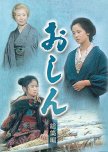
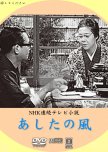
I first watched this show as a young child and it helped me become who I am now. I didn't realise it then but it soon became a worldwide hit not just around Asia in the 1980s but it subsequently travelled to non-traditional viewing audiences such the Middle East and South Americas in the 1990s. Thus I'm surprised that no one has reviewed such an iconic and character-forming drama yet.First of all, the show was shot in the mid 1980s. As such, the scenes set in 'modern' Japan still look very dated. However if you ignore that, the rest of the show is set from the early 1900s all the way to the 1980s. Re-watching it now however, some bits that may have been acceptable in the 1980s probably wouldn't be accepted now. For instance, a teenage boy helps child Oshin out and a grown man lies naked with her to warm her up. It sounds icky but she was hypothermic. Also, there's a lot of domestic abuse and not to mention the obvious child labour. Although such scenes might accurately reflect the turn of the 20th century, I'm sure if Oshin were filmed today, I'm sure such scenes would be removed as they portray criminal acts. In this sense, the show feels dated because of when it was filmed yet ironically true to the period it's portraying.
Second, what I disliked about the show. It's in 15 minute episodes spread over nearly 300 episodes, which makes it hard to watch today in a time poor world. I know that it was broadcast in a different era and it certainly kept my dinner times busy for nearly a year back then. However, the show never feels draggy. Each episode ends exactly at a cliffhanger, that's brilliant editing! I don't expect the show to be cut but I really hope NHK or a subscription service such as Netflix would connect them into 1 or 1 ¼ hour episodes typical of these days.
Third, what I liked about the show: the story of course! It's very tightly written with no lapses in logic or loose ends. I do not like how many of the male characters treated the women but it was typical of the time it portrays. Yet in spite of the strongly paternalistic culture, the highlight of the show is the strong women characters. They not only stayed resilient despite their circumstances and what life threw at them, but were in fact stronger than their men. They were the silent and long suffering foundations holding up their men who had fragile egos. They are inspirational! Oshin in particular unlike her long suffering mother showed that she's no pushover. She knew how to tread the thin line between yielding to someone of power yet persevering and in the process, winning over her worst critics. She got through with sheer grit and hard work.
I also like the growth we see across the three Oshins. While the child Oshin was abused, naive and unconfident, the young-middle aged Oshin grew in confidence and learned to stand on her own two feet and fiercely protect those she loved. Yet it was a life lived not without regrets, and in the older Oshin we see a deeply reflective person who gives a flick to her needy and disappointing next generation. I like all three actors who played Oshin.
Esta resenha foi útil para você?

Esta resenha pode conter spoilers
"A mother's worries are never over."
"Oshin" is the 6th asadora that I've watched. Like "Ohisama" and "Hanako to Anne," it has been on my radar for a very long time. It's considered a classic after all. But, like most people, I thought the 297 episode count was daunting. However, after I decided to go all in with watching asadoras, I knew I wanted to watch "Oshin" early on in this journey. How I approached "Oshin" was that I watched in sets of 2 to 3 weeks at time and then switched to watching "Ohisama" for 2 to 3 weeks. I obviously finished "Ohisama" first with this method. I think this helped "Oshin" feel less daunting at times and helped keep my interest up, and therefore avoiding burn-out.The structure of "Oshin"'s story is similar to "Ohisama," being presented as older Oshin (Nobuko Otowa) telling her life story to her grandson Kei (Goro Ohashi). There is an extra layer of mystery as we the audience are unaware of why she has suddenly left home for her nostalgia trip. The reason is not actually revealed until the final two weeks of episodes. I rather like this framing device though, thankfully, it's used only as much as needed. For example, we go long periods of time without seeing older Oshin when it's important to focus fully on the main story.
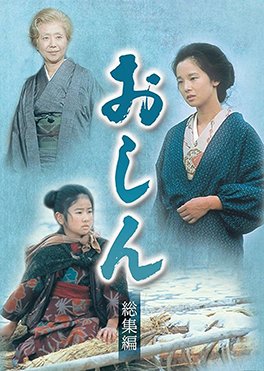
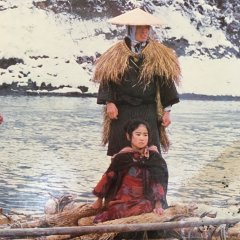
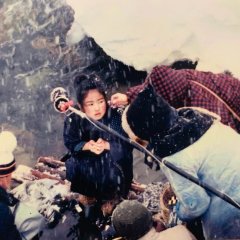
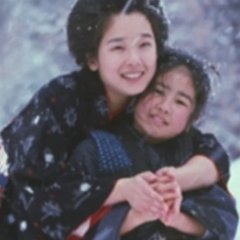
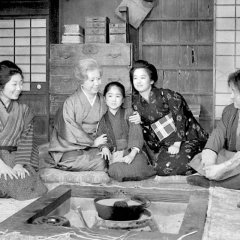
The first few weeks of "Oshin" covers Oshin's tough childhood during the Meiji period. She is played by an unforgettable young actress Ayako Kobayashi. Many of the lessons she learns during her childhood will be brought up continuously throughout the rest to the drama. Personally, these episodes are kind-of hard to watch due to Oshin being mistreated constantly. Oshin is the daughter of a sharecropper and sent out to work at only seven-years-old. After several bumps in the road, she finds employment at Kaga-ya. Here we finally meet some supportive adults and Oshin makes a lifelong friend in Kayo (Terumi Azuma). The story then skips to when Oshin (now played by Yuko Tanaka) is sixteen and meets her first love Kota (Tsunehiko Watase), an advocate for the farm labor movement who is constantly hounded by the police. These are the three most important characters of the story.
It will take too long to summarize the rest of the story so I'll just talk about some of the characters. Oshin's husband, Ryuzo (Shiro Namiki), is one of the most frustrating characters I've encountered in fiction, though somehow I can't help but feel sorry for him. This series has a lot of similarly frustrating (mostly male) characters: Oshin's father, her son Hitoshi, her mother-in-law Kiyo, her daughter-in-law Michiko, her brother Shoji, and her sister-in-law Tora among others. The writer, however, does something really interesting with all of these characters. She makes you dislike them so much that you're just wishing that they worse will befall them, but then she'll find a way for you to sympathize with them in the end. These characters also make it easy to appreciate the nice people like the people of Kaga-ya, Oshin's hairdressing teacher, the yakuza member Ken, Ryuzo's servant Geneimon, and Kota's aunt Hisa. I truly love all of these people.
A little less than half-way through the drama, Oshin, has to go with her husband and child to live at her in-laws in Saga. This storyline went on for a long time and is hands down the hardest part to get through. Her mother-in-law is abusive towards her and her husband does nothing basically. I took several breaks during this time and I recommend doing the same for others. This part later sets a lot of context for when Oshin herself becomes a mother-in-law and adds a great bit of irony.
The latter half of the drama (when Oshin is played by Nobuko Otowa) is probably my favorite. I was finally able to relax and just watch Oshin set up her supermarket business, though I did miss Tanaka Yuko. Her son Hitoshi was admittedly annoying at nearly every turn, but he's surprisingly layered as a character. Her other children were great for the most part. I will say that the constant changing of actors as these characters aged was a bit confusing. They should've stuck with the old age make-up and grey hair. Kota's actor is never changed by the way; he just gets a mustache that turns greyer with time lol.
I had a great time watching this, even with all of the hard-to-watch parts. Asadora dramas are a truly a unique viewing experience. I've never quite felt like I knew characters so well. The story starts when Oshin is seven and then ends when she is eighty-three with very few time skips. An amazingly epic drama that's a once-in-lifetime experience. I see why it's considered a classic, especially within the context of the 1980s. For modern viewers, I encourage to exercise caution unless you're interested in different cultures and time periods. This is not like asadora dramas of today or the past twenty years and may have a lot of things you don't like. Compared to something like "Hanako to Anne" (same time period), "Oshin" is a harsh watch, though I recommend it nonetheless.
My Asadora Ranking: https://kisskh.at/list/LAlqpp21
Esta resenha foi útil para você?