







 Winners and Nominees of The 15th Asian Film Awards
 - Français
- English
- magyar / magyar nyelv
- dansk
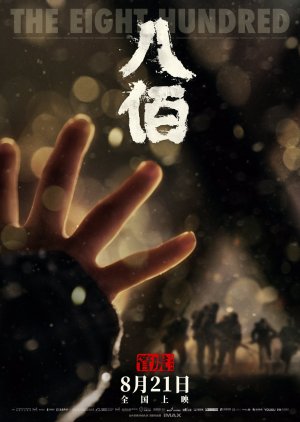
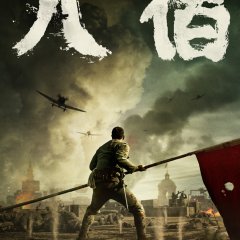
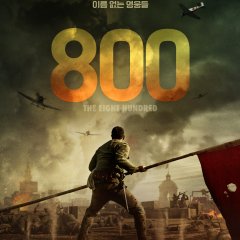
- Titre original: 八佰
- Aussi connu sous le nom de: Ba Bai , Ba Bai Qi Shi Lu , Eight Hundred , We Have 800 People , 八百启示录 , 战争启示录之八百壮士
- Scénariste et Réalisateur: Guan Hu
- Scénariste: Ge Rui, Zhao Dong Ling
- Genres: Historique, Drame, Guerre
Où regarder The Eight Hundred

Subscription (sub)

Gratuit

Ppv (sub)

Gratuit (sub)

Subscription (sub)
Distribution et équipes
-
") Wang Qian Yuan Rôle principal
Wang Qian Yuan Rôle principal -
") Zhang Yi Rôle principal
Zhang Yi Rôle principal -
") Yu Hao Ming Rôle principal
Yu Hao Ming Rôle principal -
") Yao Chen Rôle principal
Yao Chen Rôle principal -
") Tina TangYang HuiminRôle principal
Tina TangYang HuiminRôle principal -
") Vision WeiZhu Sheng ZhongRôle Secondaire
Vision WeiZhu Sheng ZhongRôle Secondaire
Critiques

The last line of defence
(Important note:I won't look up how historically accurate this depiction is, so everything below is based 100% on the film)
The Japanese army raged relatively unchecked across northern China, crushing the tiny, weak forces that stood against it. As Chinese soldiers fled towards the British-protected Shanghai, they were caught and executed by their own as deserters, the Japanese, who showed no mercy to the enemy... and ultimately, turned away from Shanghai by armed British troops operating under a makeshift peace treaty that meant no Japanese could enter, as long as Chinese soldiers didn't retreat there.
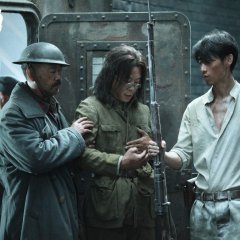
For the handful of Chinese we're introduced to at the beginning, separated from their unit whilst heading to the last line of defence by Chinese troops, there was little hope, as only deserters and the dead got separated.
Being captured by their own and made do the "traitors' work" of repairing defences under threat of sniper fire, these few men - a mere boy, one of them - are soon forced to flee, but to see their comrades slaughtered as they ran... is that really an option?
But to stay means to kill. How can a simple farmer kill another human being?
And so, the 3 day battle changes each of them; we see how men bond as brothers in life and death situations; how a few soldiers could inspire an entire nation to rise up off its knees and fight.
As for the actual film: well, it's amazing (but be sure not to miss the necessary exposition explaining why the Japanese can't just bomb the building, or you'll think there was a serious plot-hole (there wasn't!).
The running time is well over 2 hours yet it never drags, and not a single moment feels wasted.
It used to be that China envied Hollywood's war epics, but the tide may well be turning.
Definitely recommended.
Cet avis était-il utile?

hace mucho que no lloraba así...
primero que nada, no la veo como propaganda china, si, lógicamente una película hecha desde el punto de vista chino va a tener cierta narrativa y suavizar ciertas cosas pero el punto es que esto si fue un hecho real...el pueblo chino realmente padeció bajo el yugo del ejército japonés, eso no es falso, es la realidad y una realidad que pocas veces escuchamos de este lado del mundo
nací y crecí en una ciudad que fue fundada por la comunidad china irónicamente en el norte de México (si, justamente al lado de estados unidos) así que cuando pienso en china o veo este tipo de películas a mi mente no viene la imagen de la china autoritaria ni "malvada" ni de propagandas de un gobierno, a mi mente viene la idea de un pueblo trabajador, uno que tuvo que resistir saqueos, invasiones y la brutalidad a lo largo de su historia
es bueno investigar sobre la historia no solo desde el punto de vista americano y blanco, sino conocer todas las partes de la historia porque alguien que no conoce su historia está condenado a repetirla
Cet avis était-il utile?