


In Royal Nirvana, the Double 99 Festival (Double Ninth or Chongyang Festival) acts as a poignant cultural symbol of ascending to heaven to avoid disaster. It serves as the tragic backdrop where Crown Prince Xiao Dingquan takes the blame for a rebellion to secure the realm's peace.
Significance of the Double 99 Festival
The Concept of "Clear Qi": In traditional Chinese culture, the Double Ninth Festival (ninth day of the ninth lunar month) is associated with the Taoist belief that "clear qi ascends" and high terrain allows one to avoid ill fortune. In the drama, it is a thematic parallel to his ultimate spiritual "ascent" and tragic release from his earthly burdens.
The Illusion of Peace: The festival is meant for longevity, gathering with loved ones, and seeking clear skies. In the narrative, it highlights the bitter irony of Dingquan's situation—he climbs to the peak of power only to face betrayal, suffering, and the forced loss of those he cherishes.
The highly explosive "Ballad Case" takes place in this backdrop.
A breakdown of this pivotal plot point shows how a seemingly innocent family gathering turned into a political trap:
The Significance of the Song: "Gold Bell and Cast Mirror"
The lyrics sung by the Emperor's favourite young concubine are: "Gold bell suspended, copper mirror cast, dark iron melted, the phoenix emerges, will the beauty look back?"
This is not an ordinary song; it is a politically subversive folk ballad that weaponizes the Emperor's bloody rise to power
"Gold Bell" : Refers to the late Crown Prince Min, whose personal name was Duo, meaning bell. He was the rightful heir whom the current Emperor usurped and he ended up committing suicide.
"Copper Mirror": Refers to the current Emperor, Xiao Ruijian, whose personal name Jian means mirror.
The Imperial Secret: The song openly reminds the world that the Emperor stole the throne from his brother by relying heavily on the military might of the Gu Family (via the late Empress - Crown Prince mother - and General Gu Silin, Queen's brother). It implies the Emperor's crown is illegitimate and completely indebted to the Crown Prince's maternal family.
Sequence of Events During the Family Gathering
The Shared Celebration: The gathering takes place on a festival day that coincides with Xiao Dingquan's birthday. The atmosphere is deceptively relaxed as the family engages in a celebratory drinking game.
The Fatal Performance: To please the Emperor, Noble Consort Song - a young, naive concubine favoured by the Emperor—performs the song, completely unaware of its taboo historical context. She was secretly tricked into learning it by rival political factions (orchestrated by Prince Qi's side) to trigger the Emperor's paranoia.
The Emperor's Fury: The moment the lyrics leave her mouth, the Emperor's demeanor instantly shifts into terrifying, bloodshot rage. The celebration halts in absolute terror as the Emperor realises. his darkest sin and insecurity, have been sung aloud at an imperial banquet.
The Immediate Backlash: Because the ballad directly praises the Gu family and the late Empress's bloodline, his suspicion instantly falls upon the Crown Prince, Xiao Dingquan, and his maternal uncle, General Gu Silin, as the masterminds behind the song's spread.
Why Xiao Dingquan Takes the Fall Willingly
Xiao Dingquan did not orchestrate the song, yet he steps forward to bear the Emperor's brutal wrath for very strategic and heartbreaking reasons:
To Defuse the Emperor’s Treason Paranoia: The Emperor's greatest fear is that the Gu family will use their military power to overthrow him and put Dingquan on the throne. If Dingquan fights the accusation, the Emperor will view it as a confirmation of a Gu family coup, which would lead to an immediate bloody purge of his uncle's faction.
To Protect His Uncle and the Army: General Gu Silin is currently commanding the military at the volatile northern border. By taking the blame locally as a "filial mistake" or personal oversight, Dingquan prevents the Emperor from recalling, arresting, or executing General Gu, which would leave the empire entirely defenseless against foreign invasion.
To Spare the Servants and Lower Officials: Whenever the Emperor rages, hundreds of palace maids, eunuchs, and lower officials are tortured and executed to root out "conspiracies." Dingquan confesses to minimize the collateral damage and stop the immediate bloodbath in the palace.
The Core Tragedy of His Character: Dingquan is trapped in a paradox. He knows his father hates him because his existence reminds the Emperor of his reliance on the Gu family. By willingly taking the punishment, Dingquan is submitting entirely to his father's authority, hoping that absolute obedience and self-flagellation will finally prove to the Emperor that he has no desire to rebel.
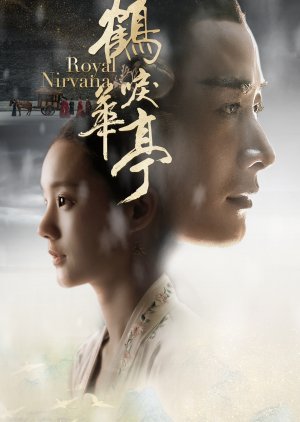
Details
- Title: Royal Nirvana
- Type: Drama
- Format: Standard Series
- Country: China
- Episodes: 60
- Aired: Nov 12, 2019 - Jan 6, 2020
- Aired On: Monday, Thursday
- Original Network: Youku
- Duration: 45 min.
- Genres: Historical, Psychological, Romance, Political
- Tags: Power Struggle, Father-Son Relationship, Hidden Identity, Adapted From A Novel, Revenge, War, Difficult Adulthood, Palace Setting, Prince Male Lead, Royalty
- Content Rating: 15+ - Teens 15 or older
Statistics
- Score: 8.1 (scored by 1,425 users)
- Ranked: #2258
- Popularity: #3647
- Watchers: 6,154
- Favorites: 0


Popular Lists
Related lists from users






Recently Watched By


