








 The Big 10 Japanese Dramas on MDL
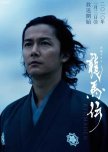
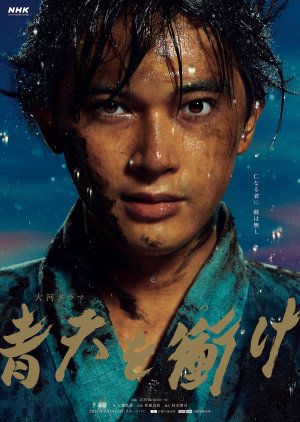
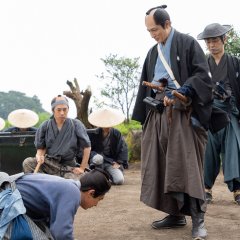
 Shibusawa Eiichi (Yoshizawa Ryo), el hombre cuyo rostro aparecerá en el nuevo billete de 10.000 yenes de Japón, es conocido como el padre del capitalismo japonés. Participó en la fundación de casi 500 empresas y, al mismo tiempo, de unas 600 organizaciones de bienestar social. Shibusawa vivió en una época de cambios turbulentos. Comenzó como un defensor del sentimiento anti-extranjero, pero reconociendo el impulso de la historia, llegó a abrazar las ideas occidentales. Nacido en una familia de agricultores en una zona rural, Shibusawa se convirtió en vasallo del último shogun, Tokugawa Yoshinobu (Kusanagi Tsuyoshi). Pero con la desaparición del shogunato Tokugawa en 1868, se encontró desempleado. Shibusawa terminó sirviendo al nuevo gobierno Meiji a su pesar. Después de librar una gran batalla en la arena política, finalmente renunció a la edad de 33 años y se convirtió en civil. Como industrial, lanzó reformas imponentes, fundando lo que se necesitaba y sentando las bases para el Japón moderno: banca, seguros, fabricación de papel, ferrocarriles, transporte, gas y electricidad. Guiado por las enseñanzas de Confucio, que había aprendido desde joven, Shibusawa pudo superar la adversidad sin importar cómo cambiara la situación. En sus últimos años, centró su energía en servir el interés público y fue nominado dos veces al Premio Nobel de la Paz. (Fuente: DramaFandom). Edit Translation
- Español
- Русский
- magyar / magyar nyelv
- dansk
- Título original: 青天を衝け
- También conocida como: Hit the Blue Sky , Seiten wo Tsuke , Seiten o Tsuke , せいてんをつけ
- Guionista: Omori Mika
- Director: Murahashi Naoki, Tanaka Kenji, Kawano Hideaki, Kurosaki Hiroshi
- Géneros: Histórico, Drama
Dónde ver Seiten wo Tsuke

Subscription
Reparto y créditos
-
") Yoshizawa RyoShibusawa EiichiPapel principal
Yoshizawa RyoShibusawa EiichiPapel principal -
") Kobayashi KaoruShibusawa Ichiroemon [Eiichi's father]Papel secundario
Kobayashi KaoruShibusawa Ichiroemon [Eiichi's father]Papel secundario -
") Wakui EmiShibusawa Ei [Eiichi's mother]Papel secundario
Wakui EmiShibusawa Ei [Eiichi's mother]Papel secundario -
") Murakawa EriShibusawa Naka [Eiichi's older sister]Papel secundario
Murakawa EriShibusawa Naka [Eiichi's older sister]Papel secundario -
") Fujino RyokoShibusawa Tei [Eiichi's younger sister]Papel secundario
Fujino RyokoShibusawa Tei [Eiichi's younger sister]Papel secundario -
") Kora KengoShibusawa Kisaku [Eiichi's cousin]Papel secundario
Kora KengoShibusawa Kisaku [Eiichi's cousin]Papel secundario
Reseñas

An engaging first half, but a bit overwhelming later on
After finishing Reach Beyond the Blue Sky, I can safely say that Shibusawa Heikuro was my absolute favorite character. Mizukami Koshi’s performance was incredible—he is an exceptionally talented actor who made Heikuro so admirable and deeply memorable. His character arc absolutely broke my heart.Chuichiro was another standout for me, though his storyline goes in an incredibly wild and chaotic direction. His choices and his downward spiral were deeply tragic to witness because he clearly had so much potential. It was really sad seeing his character turn out the way he did.
The show boasts a fantastic supporting cast. Machida Keita was spectacular as Hijikata Toshizo, and I also loved Hiraoka and his wife, Kisaku, and Eiichi's wonderful parents (especially his father). Even with limited screen time, Kamishiraishi Mone was wonderful as Tensho-In, and seeing Kasamatsu Sho in the cast was a huge bonus. On the negative side, the main character Eiichi made some frustrating personal choices that really pissed me off.
Unfortunately, the series lost its spark for me in the second half. From about episode 28 onward, after a major shift in the political landscape, it became a bit of a chore to watch. The political subplots became completely overwhelming—there was a lot of dense dialogue and complex power dynamics that went over my head, and I eventually gave up trying to follow it. Because of that, I couldn't understand why everyone held the last shogun, Tokugawa Yoshinobu, in such high regard. I wasn't a fan of the actor's performance either, and the character never quite stood out to me. If I would rewatch it one day, I would only watch the first half.
Overall, it’s a solid series for its first half, but it gets bogged down and boring in the later portion. Keep in mind this is just my personal take on the drama itself, purely as entertainment rather than a strict historical critique!
¿Te ha parecido útil esta reseña?