- Italiano
- English
- magyar / magyar nyelv
- dansk
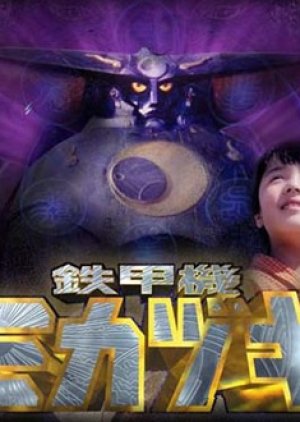
- Titolo Originale: 鉄甲機ミカヅキ
- Conosciuto Anche Come: Giant Robot Mikazuki , Iron Armor Crescent Moon , Ironclad Machine Mikazuki , Tekkouki Mikazuki
- Regista: Amemiya Keita
- Sceneggiatore: Inoue Toshiki
- Generi: Azione, Tokusatsu (Effetti Speciali), Fantascienza
Cast & Ringraziamenti
-
") Noboru TakachiKiba IsamuRuolo di Supporto
Noboru TakachiKiba IsamuRuolo di Supporto -
") Hotaru YukijiroDoihara KunioRuolo di Supporto
Hotaru YukijiroDoihara KunioRuolo di Supporto -
") Shirashima YasuyoKusaka YukikoRuolo di Supporto
Shirashima YasuyoKusaka YukikoRuolo di Supporto -
") Okada HidekiKinjo MasatoRuolo di Supporto
Okada HidekiKinjo MasatoRuolo di Supporto -
") Hara FuminaNinomiya YukiRuolo di Supporto
Hara FuminaNinomiya YukiRuolo di Supporto -
") Matsuoka SayaIzumi SaoriRuolo di Supporto
Matsuoka SayaIzumi SaoriRuolo di Supporto






Foto
Recensioni

The closest Keita Amemiya has ever come to a kaiju film
I've been deeply neglecting the works of Keita Amemiya in recent years and figured that Iron Armoured Machine Mikazuki would scratch that itch. Serving as an update on the boy and his giant robot subgenre that gave us the likes of Tetsujin-28 and Giant Robo, the series plays around with plenty of tokusatsu tropes and mixes in elements from the big three, be they costumed heroes or giant kaiju. The cards are kept relatively close to the chest for the admittedly rather slow and childish first half, but dramatically reveal a darker, more introspective core amidst all the flashy heroics once the dust has settled. It combines late-Heisei tokusatsu aesthetics with psychological sci-fi and mythic symbolism, with Mikazuki, a mysterious iron giant born from human desire, blurring the line between weapon, god, and reflection of the human soul, resulting in a show that prides itself on emotional conflict, moral ambiguity and the consequences of wishing for power. The monsters aren't just external threats, they're manifestations of human obsession, fear and despair. There's an unmistakable ambition to the series, having originally been pitched as a one-and-done film before Amemiya and writer Toshiki Inoue retooled it into what it is today. Each episode has the scale and look of similar tokusatsu productions from around the same time, but with the added benefit of going against the Japanese norm and being shot in widescreen. You can thank the extremely large budget for that. It all lends a greater weight to Amemiya's incredible visual designs, half of which feel like they've been ripped right out of his '90s body of work. The direction is clean, the music extremely catchy, the writing engaging, and the effects work is to a rigorously high standard; even with the rough early 2000s CG work, it's thankfully rather unintrusive. While Iron Armoured Machine Mikazuki might be flawed, bleak and unapologetically slow in places, it's equally moody, haunting and deeply unconventional. It's the kind of series that lingers in your mind not because it was polished or popular, but because it dared to be strange, sombre and sincere in an era when few shows of its kind were willing to take that chance.Questa recensione ti è stata utile?



![Kaiju,Tokusatsu,Mecha,etc* [Multi-List]](https://i.mydramalist.com/aEgymt.jpg)
![Kaiju,Tokusatsu,Mecha,etc* [Multi-List]](https://i.mydramalist.com/Zbd0q_4t.jpg)
![Kaiju,Tokusatsu,Mecha,etc* [Multi-List]](https://i.mydramalist.com/YAZ2gt.jpg)
![Kaiju,Tokusatsu,Mecha,etc* [Multi-List]](https://i.mydramalist.com/9xYJyt.jpg)
![Kaiju,Tokusatsu,Mecha,etc* [Multi-List]](https://i.mydramalist.com/xbjEr_4t.jpg)