Editorials





Similar characters. We have an older, more cynical and serious character that does not hold back to fight for his justice, while the younger one is trying to fight for the "good" of humanity. Both revolve around the law and both evolve around similar concepts. Generally both dramas give off very similar vibes.


I never thought I would find a show on the same wavelength of TDJ, yet here we are! I could not stop thinking about how similar these two shows are while still retaining both their uniqueness. First of all, the story, the themes and the context are quite similar, they both aim at making you question the relationship between ethics, morality and the law, however, they will also denounce some of the cruelest and messed up aspects of our society, and it will sting. Then the characters: the protagonists are both considered unlawful/cruel/corrupted despite working as representatives of the law, yet through their questionable methods they are able to reach the fairest/rightful outcome, they also both have past secrets and family issues! The co-protagonists are both young guys who are initially suspicious of the main lead and interfere with his work, but they slowly understand each other and end up co-operating. I can’t say anything else about the development of the story because Sins of Kujo has not been completely adapted yet (and I haven’t read the original source), therefore I can’t say for sure whether it’s going to go a different route than TDJ. I would also say TDJ is set in a way more dystopian universe compared to SoK, which, on the other hand, seems to paint a more realistic image of modern Japan and what being a lawyer actually involves behind the scenes. That said, I loved both of them so much, truly among my top favorites.





both are queer(ed) shows with the same central narrative of political intrigue (one in law and the other in finance) hinging on a hierarchical homo-social/erotic bond between a mentor and the mentee
- both involve a younger, rather naive male subject and an older, more powerful mentor
- in both, the relationship between the two is exclusive and emotionally charged with no other comparable dynamic
- in the devil judge, the mentor figure represents a critique of corruption within the system and his mentee slowly comes to understand his methods despite disagreeing before; whereas, in war of faith, the mentor figure represents reform within the system, which the mentee is initially aligned with yet later outgrows
war of faith is more grounded in historical materialism while the devil judge imagines change through powerful and exceptional individuals but both are well-written, worthwhile (queer) narratives that are more similar than they are not
- both involve a younger, rather naive male subject and an older, more powerful mentor
- in both, the relationship between the two is exclusive and emotionally charged with no other comparable dynamic
- in the devil judge, the mentor figure represents a critique of corruption within the system and his mentee slowly comes to understand his methods despite disagreeing before; whereas, in war of faith, the mentor figure represents reform within the system, which the mentee is initially aligned with yet later outgrows
war of faith is more grounded in historical materialism while the devil judge imagines change through powerful and exceptional individuals but both are well-written, worthwhile (queer) narratives that are more similar than they are not

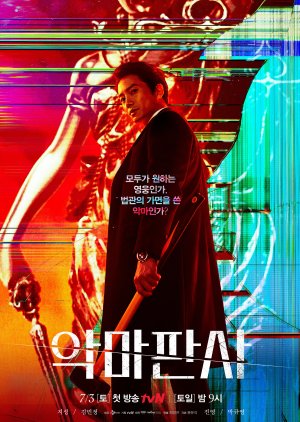
In a dystopian Korea where society has collapsed and distrust in leaders runs deep, Head Trial Judge Kang, known as the "Devil Judge," runs a brutal courtroom reality show, punishing the guilty with ruthless precision. His mysterious persona divides public opinion—some view him as a hero, while others suspect his true intentions. A bitter rivalry ensues between the "Devil Judge" and the ambitious Jung Sun Ah, a corporate foundation director. Amidst this chaos, two childhood friends, rookie Judge Kim Ga On and Police Officer Yoon Soo Hyun, strive for true justice, challenging both the scheming Jung Sun Ah and the notorious Kang.

What is justified when it comes to justice? Both dramas thematize this question. Both have criminals and the question of how far the legal system should go in order to punish them. Both demonstrate good and evil, morals and fairness. Both main characters go controversial ways and make you question your own standpoint on how far one can go for it to be too far.