Editorials


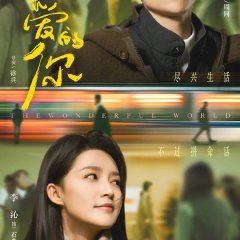
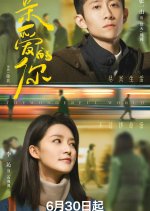
O jovem Xu Xian, de Hangzhou, órfão de mãe desde a infância, acredita fervorosamente em mundos paralelos. Ao cruzar com Zhou Tong, um desconhecido quase idêntico a Bei Jing, na rua, fica obcecado em encontrá-lo. Em um encontro às cegas, conhece a pragmática Shi Dian Dian, que prontamente se junta à sua busca. Mas o destino muda quando Zhou Tong sofre um acidente a caminho da apresentação de sua namorada, Wen Xiao Yao. Neste dia crucial, as vidas dos dois casais se rompem. Enquanto Xu Tian e Shi Dian Dian navegam pela dor e por uma conexão inesperada, eles lentamente curam as feridas emocionais um do outro. Enquanto isso, Wen Xiao Yao transforma a mágoa em arte, ascendendo como uma bailarina estrela; seu momento decisivo na carreira nasceu do amor recíproco por Zhou Tong. (Fonte: WeTV) Edit Translation
- Português (Brasil)
- Русский
- Español
- English
Where to Watch Que Mundo Maravilhoso



Cast & Credits
-
") Zhang Yi ShanXu Tian | Zhou TongMain Role
Zhang Yi ShanXu Tian | Zhou TongMain Role -
") Li QinShi Dian DianMain Role
Li QinShi Dian DianMain Role -
") Ruan JuWen Xiao YaoMain Role
Ruan JuWen Xiao YaoMain Role -
") Lian Yi MingQiao Guang HuiMain Role
Lian Yi MingQiao Guang HuiMain Role -
") Niu LiSong Guang WangSupport Role
Niu LiSong Guang WangSupport Role -
") Wang Yu YanQiao MiSupport Role
Wang Yu YanQiao MiSupport Role



Reviews

This review may contain spoilers
At first glance, this drama feels pleasant—a healing, sweet love story. But beneath the charm, it leans more toward fake fantasy than grounded storytelling.The central romance strains believability: a man with autism, who isn’t rich, powerful, or exceptionally handsome, so easily finds a beautiful young woman who not only agrees to date him but also goes out of her way to do so much for him. He doesn’t openly express love, romance, or affection, yet she still falls for him unconditionally.
In real life, an average-looking man with autism would rarely attract such effortless devotion, especially without status, wealth, or some compelling reason for the woman’s interest. Chinese society’s reality is very different—we often see marriage programs where even 40-year-old brides demand millionaires. Against that backdrop, a stunning 28-year-old woman, model-level attractive, chasing an autistic man “just because,” feels less like reality and more like a wish-fulfillment fantasy for introverted men.
It might have worked better if the show had given the female lead a believable reason to enter this relationship first—practical, emotional, or circumstantial—and then allowed love to grow naturally. Without that, her instant attraction feels fake and leaves viewers constantly asking “Why is this happening?”
For comparison:
In older Korean dramas with autistic or socially challenged male leads, the story usually shows hesitation, resistance, or at least a struggle before romance.
Good Doctor (Korean version) portrayed an autistic genius doctor; even with his brilliance and closeness to the heroine, she initially hesitated to see him as a partner.
Another drama with an autistic chaebol still depicted the female lead as though marrying him was a burden, despite his wealth.
By contrast, The Wonderful World skips realism and dives straight into dreamland—a fantasy where any introverted or autistic man can imagine being loved unconditionally by a perfect woman, without needing to bridge the gap between reality and romance.
Was this review helpful to you?

INSANELY CHARMING, PAINFULLY CONTRIVED
In some ways this series is trash. In other ways it's transcendent. I've never experienced a story so conflicted this way. So let me tell you right now it's a soft recommend -- a great show for your heart, but a migraine for your brain.I normally would have abandoned a series this contrived. All sorts of things happen because of 'fate', which is a poor screenwriting trick. And it's such a shame because the characters are so endearing.
The core question of this series is: what would you do if you discovered you had a doppleganger? Someone who looked exactly like you, but behaved differently. In Western stories this would be an actual twin brother somehow separated at birth, but I love how the Eastern story simple accepts the doppleganger as real and proceeds forward.
The problem is that from this point forward the writer/director filmed a really rough draft. He needed input from another writer to make this thing make sense -- and there's SO MUCH WRONG here.
1. Characters ping-ping between cities in contrived confusing ways. Towards the end of the series I honestly lost track of which city we were in half the time. The entire series should have been set in Beijing.
2. We have four main characters: Memory Issues Li Qin, Ballerina, Photographer Boy, and his clone Qipao Boy. The story struggles with having these characters all cross paths by coincidence again and again and again. There was no need for this. The first time the boys crossed paths was fine, but after that --
3. -- these four characters should have become fast friends. Eliminating the need for coincidence entirely. They should have been friends before the major plot twist happened. A month or so would have made the looming tragedy 12 times more tragic.
If you've made it this far, you have a feeling you should pass. You're probably right. But I was happy to watch these characters despite the illogical elements of the script.
Here's why --
1. The male lead isn't your run of the mill Idol Drama Pretty Boy. Instead he plays two different roles really well. I definitely want to see more of this guy.
2. The ballerinas are fantastic because... they're actual ballerinas! Instead of tiny emaciated actresses buried in makeup, they're simply fit young ladies that exude beauty. The lead ballerina is TERRIFIC and I'll watch anything with her going forward. Her emotional depth is the anchor of this show. Her snarky best friend literally has almost no credits on MDL but is so natural she steals half the show.
3. What brought me here is Li Qin and her constant ability to pick interesting stories. Her role is so delightfully different for her and yet she's pulling of her subtle acting thing yet again. She can smile with a slight tear in her eye and kill me everything. The problem is her character's psychological flaws are so all over the place that even the great Li Qin can't quite fix her.
Reviewing this is so hard. Let me say I loved the performances, loved the ballet, loved the young actors, loved what they tried to do with the story, but felt the page by page story became an embarrassing mess after Episode 17. Yet there was something about these characters and actors that got me to the end just the same.
I guess I'd say give this a try. If it grabs you a little, see it through. If not at all, run away, lol.
Was this review helpful to you?
Recommendations
There have been no recommendations submitted. Be the first and add one.