










 Cat-Loving Haruki Murakami and the Abundance of Movie Adaptations
 Um entomologista amador resolve sair da cidade e passar o fim de semana numa área desértica do Japão, a fim de coletar insetos raros. Ele pernoita numa casa onde habita uma estranha mulher. Logo ele vai perceber que caiu em uma armadilha, a qual não existe saída. (Fonte: Filmow) Editar Tradução
- Português (Brasil)
- English
- magyar / magyar nyelv
- dansk
Onde assistir A Mulher da Areia

Subscription (sub)

Purchase
Elenco e Créditos
-
") Okada Eiji Papel Principal
Okada Eiji Papel Principal -
") Kishida Kyoko[Woman]Papel Principal
Kishida Kyoko[Woman]Papel Principal -
") Yano Sen[Villager]Papel Secundário
Yano Sen[Villager]Papel Secundário -
") Mitsui Koji Desconhecido
Mitsui Koji Desconhecido -
") Kanze Hideo Desconhecido
Kanze Hideo Desconhecido -
") Nishimoto Hiroyuki Desconhecido
Nishimoto Hiroyuki Desconhecido
Resenhas
Pay attention to details
This movie is based on the novel by the same name. This isn't a story that makes sense if you watch superficially. Everything is a figure of life reflections snd the meanings only get deeper the more you go back onto everything that happens. Amazing acting, filming, etc. Even though, It's a very claustrophobic piece and long, so I don't think of watching again. Maybe I'll read yhe book instead.Esta resenha foi útil para você?

“Are you shoveling to survive, or surviving to shovel?”
This lone stretch of dialogue succinctly sums up the thematic heart of Woman in the Dunes. It is a momentous parable that speaks of the human condition—but which part and to what effect? Is this a story of emancipation despite physical confinement? Perhaps our characters are two Sisyphuses, doomed sinners and prisoners twice over. Or maybe things are more hopeful, despite the bleak atmosphere of the story. What if all of us are digging away at the sands of life, just trying to stay ahead day by day, lest we be crushed? We might be stuck struggling at the bottom forever, but at least there –is- still a bottom. And we may not be alone down there forever, either. What do you think it might be?
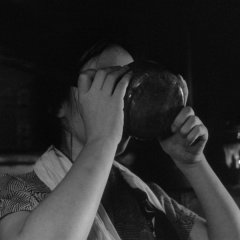
Woman in the Dunes speaks to the viewer on a visceral level, using shots so finely detailed as to tickle the senses. There are times the sand moves vibrantly across the screen—one might expect to dip their fingers through the television and feel the grains. Once when the male lead drinks from the limited water, I cringed, almost tasting the salty corruption of the sands.
Our leads engage in an intense sexual relationship, one desperate yet almost like a calculated carnal exchange. The woman acts as a seductress—to bind the man to her?—yet something about the scenes build up and inflame to suggest more as the film rolls along. Please be prepared for sexual elements as they play a large role in Woman in the Dunes. It is not quite a “pink film,” however; we predate those by several years.
Despite the exemplary cinematography, my favorite element of this film must be the score. Without the stylings of Takemitsu Toru, the uncanny atmosphere of Woman in the Dunes would be shattered. He lends scenes an off-kilter feel, sometimes even palpable suspense, though they might seem otherwise quiet. This helps build the overall effect of the film to its crescendo. One effect in particular left an impression on me: a high-pitched sound, as if rocks were scraping across a tin roof.
Esta resenha foi útil para você?