
 News


Since both Li Si and Meng Rui are living under names that were deliberately given to them or adopted, I thought it might be interesting to take a closer look at the meanings and possible associations behind those names.
Obviously, not all of these interpretations were necessarily intended by the author or the screenwriters, but some of them fit the characters and their stories pretty well.
Li Si (黎斯) / Qingyang (青阳)
The character 斯 (sī) in Li Si's name doesn't carry any particularly obvious meaning on its own in this context. In classical Chinese, it can mean "this" or "such," and has a somewhat literary, scholarly quality to it.
There are, however, some interesting possibilities for wordplay.
For one, sī sounds similar to sì (四, four), which could be read as a little nod to Li Si's original identity as the Fourth Prince. There's also a possible connection to his shifu's name, Li San (黎三), in which sān (三) literally means "three." And while we're playing around with the different tones of si, there's also sǐ (死), meaning "death."
Which brings us to another possible interpretation: the recurring imagery of death and rebirth in the names Li Si and Qingyang.
黎斯 (lí sī) sounds somewhat similar to 离世 (lí shì), meaning "to depart this world" or "to pass away." Meanwhile, 青阳 (qīng yáng) is an ancient literary name for spring, the season when everything comes back to life.
Another interesting association is 离思 (lí sī), meaning thoughts of separation, longing, or sorrow at parting. Unlike 离世, this one is an exact homophone of 黎斯, tones included.
It's also the title of a famous sequence of five poems by the Tang poet Yuan Zhen (元稹). The fourth contains these celebrated lines:
曾经沧海难为水,除却巫山不是云。
Roughly: "Having known the vast ocean, no other waters will suffice; having seen the clouds of Mount Wu, no other clouds compare."
The poem is traditionally associated with profound attachment and mourning for a lost loved one. Considering how much of Li Si's life has been shaped by loss, separation, and his inability to completely leave the past behind, it's a rather fitting association.
And then there's Qingyang (青阳) itself. The individual characters carry some lovely imagery:
青 (qīng) — the blue-green colour associated with spring, the east, vegetation, and new growth.
阳 (yáng) — sunlight, warmth, and the active, rising force of yang.
Together, they evoke spring sunshine, returning warmth, and the renewal of life.
I particularly like this in relation to Li Si's character. Despite everything he's experienced, he has retained his capacity for affection, humour, and genuine concern for other people. In that sense, Qingyang could represent not merely the carefree identity he presents to the world, but the person he is determined to remain underneath it all.
If we read 黎斯 as a name associated with the symbolic death of Zhou Yan, then 青阳 offers a rather beautiful counterpoint: the possibility of life beginning anew.
Meng Rui (蒙锐) / Shen Jing'an (沈镜安)
Meng Rui's name is interesting for somewhat different reasons. Since 蒙锐 isn't his birth name either, we can look at the possible associations behind the characters chosen for his new identity:
蒙 (méng) — to cover or conceal; it can also mean to undergo or suffer something.
锐 (ruì) — sharp, keen, penetrating, vigorous, or determined.
锐 is a fairly common character in masculine Chinese names, often suggesting intelligence, decisiveness, strength, or an indomitable spirit. It also contains the metal radical 钅, giving it an additional association with blades and sharpness. All of which seems rather appropriate for Meng Rui.
But what I find even more interesting is how sharply this contrasts with his original given name, Jing'an (镜安), which has a much gentler feel to it.
镜 (jìng) — mirror, with possible associations of clarity, reflection, and the ability to see things as they are.
安 (ān) — peace, safety, tranquillity. It could be read as a wish for a peaceful and secure life.
Put the two names side by side, and they almost seem like opposites:
镜 (mirror) vs. 蒙 (concealment): A boy whose original name evokes clarity and reflection becomes a man whose very identity is hidden from the world.
安 (peace) vs. 锐 (sharpness): Someone whose childhood name evokes peace becomes a swordsman whose entire life is driven by vengeance.
I find this contrast particularly hearbreaking. Shen Jing'an sounds like the name of a child whose family wished him a peaceful life; Meng Rui sounds like the name of someone who could no longer afford to live that life.
And perhaps that's what makes their adopted names so interesting when considered together. Both men have lost their original identities to the same tragedy, and both have spent seventeen years living as someone else. Yet the names they now carry also reflect the very different ways in which they have learned to survive it.
edited


Details
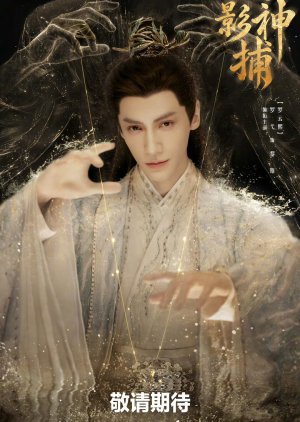
- Title: Shadow Punisher
- Type: Drama
- Format: Standard Series
- Country: China
- Episodes: 30
- Aired: Oct 2, 2026 - Oct 15, 2026
- Aired On: Monday, Tuesday, Wednesday, Thursday, Friday, Saturday, Sunday
- Original Network: iQiyi
- Duration: 45 min.
- Genres: Mystery, Wuxia, Fantasy
- Tags: Skilled Fighter Male Lead, Detective Fiction, Detective Supporting Character, Magical Object, Teamwork, Hidden Identity, Conspiracy, Murder, Investigation, Suspense
- Content Rating: G - All Ages
Statistics
- Score: 8.4 (scored by 2,132 users)
- Ranked: #960
- Popularity: #3032
- Watchers: 8,153
- Favorites: 0


Popular Lists
Related lists from users
Chinese Dramas That Aren't Out Yet
229 titles 813 loves 69



Which C-Drama Are We Watching Next?
758 titles 332 loves 37

♫ OST SONGS BY LIU YU NING ♫
168 titles 197 loves 119
Recently Watched By


