News


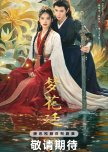
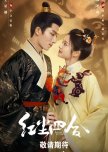
A Chou era una humilde recolectora de excrementos, despreciada y maltratada por todos. Sin embargo, debido a su extraordinario parecido con Wei Rao, la noble hija de una familia de marqueses, se ve obligada inesperadamente a ocupar su lugar como novia sustituta. Así, es enviada a la prestigiosa residencia del duque Lu para casarse con Lu Zhuo, el heredero del título nobiliario, quien se encuentra en coma y al borde de la muerte, con la esperanza de que el matrimonio le traiga buena fortuna. Pero la situación da un giro peligroso cuando su esposo, gravemente enfermo, despierta de repente. Convencido de que A Chou es una mujer astuta y despiadada, Lu Zhuo desconfía profundamente de ella y se mantiene siempre en guardia. Mientras tanto, la verdadera Wei Rao, cada vez más furiosa porque una plebeya ha ocupado su lugar, comienza a conspirar para recuperar su identidad y su matrimonio. Atrapada en un matrimonio en el que cualquier paso en falso podría costarle la vida, A Chou no puede permitirse el lujo de enamorarse. Armada únicamente con su ingenio y una férrea voluntad de sobrevivir, deberá abrirse camino entre una peligrosa red de conspiraciones familiares e intrigas políticas. (Fuente: Youku) Edit Translation
- Español
- ภาษาไทย
- עברית / עִבְרִית
- Українська
Where to Watch Donde Termina La Máscara

Subscription (sub)

Subscription (sub)

Subscription (sub)

Subscription (sub)

Subscription (sub)
Cast & Credits
-
") Tian Xi WeiA Chou | Wei Rao / Jun DaiMain Role
-
") Yan AnLu Zhuo / Shou ChengMain Role
-
") Liu Xiao BeiQi Zhong Kai [Marquis Pingxi's 2nd son]Support Role
-
") Pan Jun YaBi Tao [Wei Rao's maidservant]Support Role
-
") Wang Yi ZhouJie De [Lu Zhuo's servant]Support Role
-
") Dai Gao ZhengHan Liao [Marquis Xiting's heir]Support Role


Reviews

This review may contain spoilers
A Delicious Beginning, a Diluted Ending
The beginning was actually quite promising, despite being so tropey. They have collected all the short vertical drama tropes under the sun, but what made it work for me initially was how unapologetically soap-opera-y the whole thing was. The drama wasn't particularly interested in subtlety, and honestly, neither was I. It was campy, exaggerated, occasionally ridiculous, and seemed perfectly happy to embrace all of it.There's also something very Princess and the Pauper about the whole identity situation, which, as someone who grew up watching the Barbie movie, I found rather entertaining. The more you get to know Achu and Jundai, the more you realise that they're not as different as their circumstances might suggest. In fact, I got the impression that Achu could have easily turned out like Jundai had they switched places. It's an interesting take on the identical-girls trope, and one of the things I genuinely appreciated about the story.
Tian Xiewei's portrayal of the two girls was particularly entertaining because she gives them such distinct mannerisms. Jundai is portrayed with exaggerated facial expressions, wide-eyed stares, peculiar sneers, and a habit of overpronouncing every word. She talks with her whole body. Achu, by contrast, is much more restrained, but there's always an underlying sense of distrust and uneasiness about her, as if she's barely holding herself together. Even when she's trying to appear composed, you can feel that she's constantly on guard.
The whole concept of an auspicious bride being brought in to awaken her groom from a coma was another element I found genuinely intriguing. Add to that the gorgeous visuals, and I was already having a pretty good time. I was also particularly excited to see Yan An finally getting a male lead role after waiting for him to have this opportunity for so long. And with Dai Gaozheng making his move into longer-form dramas, there was quite a bit to look forward to in the cast department as well.
I should mention that I had also tried reading the novel this drama is supposedly adapted from. I didn't finish it, but I did get through the first few chapters and skimmed some of the later ones, so I had at least a rough idea of the original story. When the drama started, my immediate reaction was basically: This has almost nothing to do with the novel. Why did they even bother buying the IP if they were going to change practically everything? The character names were about the only familiar thing. But I decided to put that aside because, well, the drama was still entertaining me. I was invested, the melodrama was working, and I especially enjoyed watching Weirao slap the living hell out of everyone in the first episode. Very satisfying. I may have some anger issues.
Looking back, though, I think those changes ended up doing the story more harm than good. From what I read, there were only a couple of episodes that even vaguely resembled the novel, and they were somewhere in the middle. The adaptation leans much more heavily into the revenge angle, but in doing so, it also strips away a lot of the male lead's character and, more importantly, changes the dynamic between the two leads. And that, as I would come to realize, is where a lot of my problems with the drama begin.
So yes, despite the ridiculous number of tropes piled on top of one another, I was genuinely entertained. The drama had a certain shamelessness about its storytelling that I found quite enjoyable. Unfortunately, that initial enthusiasm didn't last.
For the first half of the drama, the central objective is fairly clear: Find out why these girls are identical, figure out who actual Weirao is, how the identity swap happened, and who has been deceiving whom. There's a mystery to unravel, and even when the story gets ridiculous, there's something that keeps you curious about what happened and how it's all going to come out. But the moment the truth is finally revealed and Weirao returns to her rightful place, the drama seems eager to move on. Jundai is killed off in a rather anticlimactic and unsatisfying way, and just like that, the entire focus shifts.
Now we're following Weirao as she navigates her newfound life of status, wealth, and power. Of course, that also means a whole new collection of enemies who want to bring her down, so she has to outmaneuver them while dealing with one palace scheme after another. At the same time, she wants to use her position and all the resources available to her to protect ordinary people, fight injustice, and generally make the world a better place. Very Disney princess of her, honestly. All she's missing is a musical number.
The problem is that this new direction never manages to capture my interest in the same way the identity mystery did. What follows is an endless cycle of schemes, counter-schemes, and people reacting to other people's schemes. It's like watching a thousand balls being thrown around and ping-ponging inside the same royal court. There's certainly no shortage of things happening, but I eventually stopped caring about most of them.
Following Weirao through all of this eventually becomes rather exhausting. The story presents her as someone who is constantly progressing: she keeps taking people down, getting revenge, securing her position, and eventually even gets her romantic counterpart. And yet, I couldn't shake the feeling that she was somehow stuck in the same place. She's still guarded, emotionally distant, and perpetually on alert, moving from one confrontation to another without much of a sense that anything is changing internally. It's one victory after another, but the character herself feels strangely stagnant.
There is also something rather convenient about where Achu's story ultimately takes her. Throughout the drama, she is presented as ridiculously competent at pretty much everything. Politics, Business, household Management, navigating the streets, outsmarting her enemies—you name it, she seems capable of doing it. The story spends all this time showing us that a commoner can be just as intelligent, capable, and deserving of power as anyone born into privilege. And then, of course, she turns out not to be a commoner at all, but a noblewoman.
This is something I often find frustrating in these kinds of stories. They seem determined to tell us that blood and birth don't define a person's worth, only to eventually reveal that the extraordinary commoner was secretly special by birth all along. Instead of proving that there is no meaningful difference between a noblewoman and an ordinary person, the story almost ends up suggesting the opposite: look at how exceptional she is—and surprise, she had noble blood in her veins all along.
And the way these revenge arcs are handled doesn't help. The drama will introduce some supposedly formidable opponent, build them up as this enormous obstacle that Weirao is going to have to struggle against, and then have her defeat them in about half an episode. That's it. Meanwhile, the gambling brother, who should have been a relatively minor nuisance, somehow keeps surviving every storyline and popping up episode after episode to cause more trouble. It's almost impressive. The major threats are disposed of with barely any effort, but this one persistent pest just refuses to leave.
Another thing that made the whole palace storyline really exhausting was just how overcrowded it felt with awful people. And I'm not asking for everyone to be morally upright, well-adjusted individuals. But surely we could have a little less evil? Between the scheming consorts, manipulative family members, abusive parents, spoiled princes, creepy officials, and whatever else this story decided to throw at us, it sometimes felt like everyone was competing to be the most vile person in the room. There's so much hostility coming from every direction that it eventually becomes numbing. I don't mind morally questionable characters; I just want a little more quality rather than quantity.
And then there are all the characters who simply overstay their welcome. The male lead's sidekick, for example, spends an absurd amount of time fawning over Weirao despite her making it painfully obvious that she's not interested. At some point, his behavior stops being amusing and just becomes invasive and annoying. Then there's the gambling brother, who, as I've already mentioned, prevails for some reason. And don't even get me started on the endless cousins, wives, and other assorted family members who could easily have been cut without anyone noticing. I watched this entire drama to the end and I still couldn't tell you who half of Lu Zhou's relatives were. That's how little I cared.
Now my biggest problem with this drama is the male lead. He's flat, underwritten, and has absolutely nothing going on beyond being the female lead's romantic interest and occasional plot device. No meaningful ambition, no particularly interesting personality, no independent motivation that makes me want to follow his story. And before someone tells me this is a female-centric drama and therefore the male lead isn't supposed to take up much space: I don't care. Female-centric storytelling doesn't require the male lead to have the personality of a piece of cardboard. He's essentially there to accommodate Weirao, support her, and arrange his entire existence around her. To the point where he has absolutely no problem with being used by her. And I understand that romance audiences seem to be drawn to two ends of extremes these days. Nobody wants a mere green flag anymore; they want a whole green forest. Nobody wants red flags either, apparently, just straight-up abusive psychos. That's the state of recent dramas. But surely there's some middle ground? I'd just like him to have a personality, or is that not allowed? The absolute audacity of casting this gorgeous, sexy, ripped man just to make him give out puppy stares all the time. Because honestly, why am I supposed to care about this man when the drama itself seems to have so little interest in who he is outside of loving her? Steamy kisses are nice, but they can't compensate for a romance that has absolutely no emotional groundwork.
The romance plot is the weakest plot in this story. They hit all the relationship milestones but Im not in the journey with them. He is jealous? Well that came out of nowhere. He loves her? That was really fast. They are divorced? I don’t care actually. He is trying to win her back? Huh. Ok I guess. You get the idea. The drama keeps moving their relationship forward, but I'm never given enough of a reason to feel invested in any of it. And I know this is partly a matter of personal taste, but his excessive devotion just doesn't do much for me as a romantic lead. And to add some insult to the injury they try to overcompensate this by throwing in kissing scenes left, right and center but here is the catch: they are edited because of censorship so some of them came out looking a bit choppy.
Speaking of choppy, weird editing hit this drama real hard. Episode 25 was jumping forward in an unnatural way. I don’t know why would they cut out important scenes with no intimacy in it but alas ….. why would we want to see their long awaited real wedding when we can watch them kiss again?
Another thing that has been bothering me since the very first episode is the male lead's voice. It simply doesn't suit him. It's so deep, overly polished and theatrical that sometimes he sounds less like a human being having a conversation and more like an animated character delivering a dramatic monologue. And I genuinely don't understand the decision behind it, especially when Yan An has dubbed himself before and has a perfectly good voice. Meanwhile, Tian Xiewei dubbed both of her characters herself. Why was one actor's original voice retained while the other was replaced? I don't know, but the result is distracting.
The first half was indulgent, sweet, creamy and unhealthy. From the mid point it got diluted and now it taste like nothing. 25 episodes in and its safe to say I don't care about anyone's fate no more.
Was this review helpful to you?
This review may contain spoilers
Convenient Writing with a Very Disappointing and Illogical Ending
A series whose plot relied on contrived plot conveniences and deus ex machina moments from the very first episode. These were easy enough to overlook because it was intriguing to see what would happen to the protagonist as she tried to conceal her identity and confront her other "half." However, halfway through the series, everything starts to fall apart. It's as if the writers had no idea how to continue the very storyline they had created, wasting a considerable amount of time on unnecessary subplots, especially considering how things ultimately wrapped up. It also feels as though these storylines were only there to keep proving that the protagonist is more important and intelligent than everyone else.And let's not overlook the acting, which occasionally felt exaggerated, especially when it came to the female lead. Although she's a good actress, there were moments when her performance felt overly dramatic, particularly during emotional scenes and crying sequences.
On the other hand, the characters are forgettable and, for the most part, completely wasted. It's as if none of them have any defining traits of their own and only exist to revolve around Wei Rao. This is especially true of Lu Zhuo, who shows some promising qualities in the early episodes that could have given him more depth, only to be reduced to the typical male lead whose sole purpose is to rescue her whenever the plot calls for it. The antagonists are equally forgettable, and none of them gets an ending that feels satisfying given everything they've done. And that brings me to another major flaw of this production.
This series suffers from the same problem as many others released this year: it simply doesn't have a proper ending. In this case, I understand that the story is centered around the female protagonist, but what they did here was simply incoherent and illogical. It's obvious that the series "ended" this way just to keep emphasizing that she is the only one with any real power or authority over everyone else. I mean, how can you seriously tell me that someone who isn't even actually part of the royal family gets to make decisions on their behalf, and nobody has anything to say about it??? They could have easily cut the last 12 minutes and given us a "decent and happy ending" instead.
Was this review helpful to you?