Adapted From A Novel
Meet Again
Conspiracy
Enemies To Lovers
Cunning Female Lead
Cunning Male Lead
Retribution
Marriage Of Convenience
Dysfunctional Family
Family Relationship
Love/Hate Relationship
Heiress Female Lead
Amnesia
Meet Again
Conspiracy
Enemies To Lovers
Cunning Female Lead
Cunning Male Lead
Retribution
Marriage Of Convenience
Dysfunctional Family
Family Relationship
Love/Hate Relationship
Heiress Female Lead
Amnesia
Both stories revolve around couples who start off as reluctant partners, marked by mistrust, rivalry, or even hidden agendas, but gradually evolve into a strong team through shared challenges. In Glory, Lu Jiang Lai and Rong Shan Bao navigate deception and shifting power dynamics, while in Prisoner of Beauty, Xiao Qiao and Wei Shao deal with a tense marriage alliance and family rivalry. In both cases, the couples engage in witty clashes and emotional growth, turning initial hostility into mutual respect and affection. At their core, both dramas highlight love born from conflict, trust earned over time, and the power of partnership in the face of larger societal pressures.
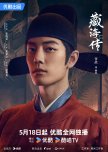
Like Lu Jianglai, Zang Hai is a survivorof a massacre who returns to the capital under a false identity. He uses his intellect as his primary weapon, infiltrating the very government that destroyed his family. Both dramas prioritize 'brain over brawn'. If you liked the scenes in Glory where Jinaglai outmaneuvers his enemies through law and logic, Zang Hai delivers that in spades within the Ming Dynasty court.
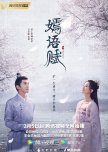
The reason these two dramas feel so similar is because they’re built around the same kind of chemistry: smart women, smart men, and their "intellectual match" romance.
1. Both dramas feature female leads who are exceptionally intelligent, practical, and arguably "cunning" by the standards of their time.
Glory: FL is the cool, calculating head of her matriarchal family. She doesn't wait for things to happen; she anticipates her opponents' moves.
The Autumn Ballad: FL uses her sharp mind to navigate a family that marginalises her. She is famously unapologetic about using tactics and manipulation to secure her own survival and happiness.
2. The Intellectual Match
In both shows, the romance isn't based on a "damsel in distress" trope. Instead, the leads are intellectual equals who were initially distrustful of each other.
Glory: ML and FL share a mutual understanding. He is an intelligent official who respects her authority.
The Autumn Ballad: ML and FL constantly try to outsmart each other. Their relationship is built on mutual recognition of each other’s brilliance and ruthlessness.
3. Investigation and Mystery Elements
Another huge similarity is the mystery/investigation angle.
The Autumn Ballad leans heavily into the "detective" genre as the leads solve various cases that eventually lead back to a larger conspiracy involving the Qiu family.
Glory follows a similar path, starting with a murder case that brings the ML into the world of the FL
4. Family Power Struggles
The family drama is absolute chaos in both.
In Glory, FL has to contend with backstabbers and the pressures of her position.
In The Autumn Ballad, Qiu Yan is constantly fighting against the rigid, often cruel expectations of her family.
1. Both dramas feature female leads who are exceptionally intelligent, practical, and arguably "cunning" by the standards of their time.
Glory: FL is the cool, calculating head of her matriarchal family. She doesn't wait for things to happen; she anticipates her opponents' moves.
The Autumn Ballad: FL uses her sharp mind to navigate a family that marginalises her. She is famously unapologetic about using tactics and manipulation to secure her own survival and happiness.
2. The Intellectual Match
In both shows, the romance isn't based on a "damsel in distress" trope. Instead, the leads are intellectual equals who were initially distrustful of each other.
Glory: ML and FL share a mutual understanding. He is an intelligent official who respects her authority.
The Autumn Ballad: ML and FL constantly try to outsmart each other. Their relationship is built on mutual recognition of each other’s brilliance and ruthlessness.
3. Investigation and Mystery Elements
Another huge similarity is the mystery/investigation angle.
The Autumn Ballad leans heavily into the "detective" genre as the leads solve various cases that eventually lead back to a larger conspiracy involving the Qiu family.
Glory follows a similar path, starting with a murder case that brings the ML into the world of the FL
4. Family Power Struggles
The family drama is absolute chaos in both.
In Glory, FL has to contend with backstabbers and the pressures of her position.
In The Autumn Ballad, Qiu Yan is constantly fighting against the rigid, often cruel expectations of her family.
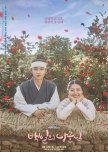
I’m surprised no one recommended this.
Lots of similarities, but a few differences too.
Smart leads
Both are historical dramas
Amnesiac ML who is rescued by the FL
ML unwittingly plays a role assigned by the FL
MLs are previously married
In 100 Days My Prince, the ML is a crown prince - a royalty. In Glory, he is an official. So a few differences too. Both are delightful dramas.
Lots of similarities, but a few differences too.
Smart leads
Both are historical dramas
Amnesiac ML who is rescued by the FL
ML unwittingly plays a role assigned by the FL
MLs are previously married
In 100 Days My Prince, the ML is a crown prince - a royalty. In Glory, he is an official. So a few differences too. Both are delightful dramas.
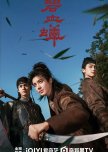
Both stories revolve around hidden identities and fallen or undercover protagonists navigating dangerous power structures, with characters forced to conceal their true selves to survive while becoming entangled in larger political or sect-based conflicts, and in both narratives unlikely alliances form through rivalry and mistrust, gradually turning into cooperation as the characters investigate deeper conspiracies, balance personal motives with greater causes, and uncover truths that powerful factions want buried.
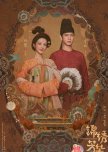
After rising star magistrate Lu Jiang Lai is brought down by a past wife-murder case, he’s left injured, amnesiac, and on the run, only to be rescued by Rong Shan Bao, the Tea King's cunning daughter. Once rivals, she hides his identity and demotes him to a stable boy to exact revenge. As Lu Jiang Lai plays along to survive, he becomes entangled in the Rong family’s high-stakes search for a son-in-law. Amid power plays and hidden agendas, he and Shan Bao engage in a battle of wits that slowly turns into something deeper.
Feng Miao Jun, a princess of the fallen Anxia Kingdom, crosses paths with Yun Ya, a cruel master from Wei. Despite initial distrust, their fates intertwine. Together with Master Mo Ti Zhun and Saintess Han Yue, they become close allies in their battle against the Heavenly Demons. Through trials, love, and mutual support, they grow into powerful beings capable of facing all challenges.
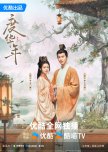
Both dramas flip the usual power setup in a fun way. The female leads are in charge; confident, influential, and fully in control; while the male leads have to find their place in their world. Instead of being dominant, the men are a bit playful, coy and soft as they try to win the women over. They don’t mind taking a backseat. If anything, they lean into it, craving attention, affection, and a little bit of pampering. This role reversal gives a light, refreshing feel that’s both cute and entertaining to the ruthless and aggressive manipulations, scheming and power struggles that come with these womens' positions.
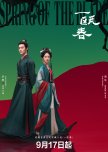
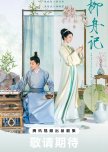
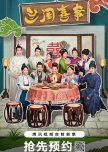
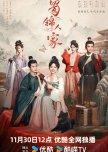
During the Tang Dynasty, Ji Ying Ying from the Huanhua Dyeing Workshop and Zhao Xiu Yuan, her childhood sweetheart, are separated when Zhao is forced to marry another. Ji later meets Yang Jing Lan, a nobleman's son who falls for her, and despite a rocky start, their bond deepens. When the White King of Nanzhao attempts to steal Ji’s dyeing secrets and kidnaps her, Yang Jing Lan leads a defense of Yizhou, defeats the enemy, and reunites with Ji and their families.
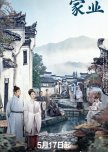
- Story centres around powerful and influential business. (Ink/Tea leaf) There will be lots of 'superficial' competitions between businesses/individuals to decide who's the GOAT.
- There are lots of learning material on ink-making and tea-making.
- The company's head is the grandmother, who cherish and clearly favors FL. She knows FL is smart and a reflection of herself from a young age.
- The business went though lots of hurdles and crisis, which the whole family, particularly, grandmother, trusted FL to lead them to rise.
- FL has to deal with outside competitors and some inner family drama, who are shown to be jealous for their abilities.
- FL has ML as a companion who is smart and well verse in martial arts.
- ML is indebted to FL, which turns into love.
Difference:
- FL in the heir is heartwarming, cheery and yet can be stern depending on situation. FL is also very empathetic and have great tolerance.
- FL in Glory is more stern, calm, and is shown to try hard to be emotionless. To everyone except her grandmother and ML, she put a mask on and try not to show extreme emotion and try her best to be cool headed.
- There are lots of learning material on ink-making and tea-making.
- The company's head is the grandmother, who cherish and clearly favors FL. She knows FL is smart and a reflection of herself from a young age.
- The business went though lots of hurdles and crisis, which the whole family, particularly, grandmother, trusted FL to lead them to rise.
- FL has to deal with outside competitors and some inner family drama, who are shown to be jealous for their abilities.
- FL has ML as a companion who is smart and well verse in martial arts.
- ML is indebted to FL, which turns into love.
Difference:
- FL in the heir is heartwarming, cheery and yet can be stern depending on situation. FL is also very empathetic and have great tolerance.
- FL in Glory is more stern, calm, and is shown to try hard to be emotionless. To everyone except her grandmother and ML, she put a mask on and try not to show extreme emotion and try her best to be cool headed.
The only real similarity between these two dramas is that they both feature a matriarchal family or social structure. One is a fantasy drama, while the other is a historical one, and in terms of story, tone, and setting, they are very different.
there are very few dramas that focus on a matriarchal society.
there are very few dramas that focus on a matriarchal society.