











 1
1 1
1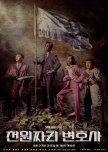







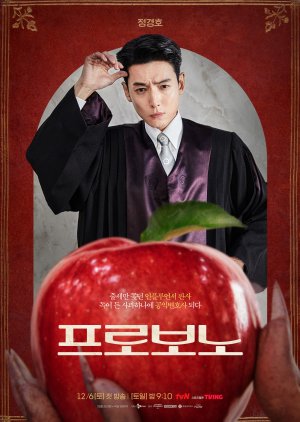
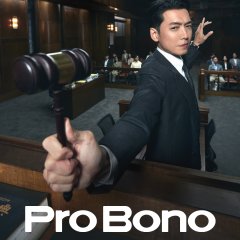
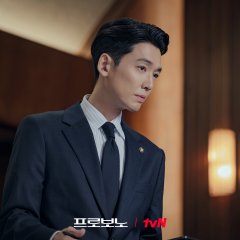
 Jung Kyung Ho and So Ju Yeon are confirmed to lead 'Pro Bono'
 - Italiano
- 한국어
- Arabic
- Русский
- Titolo Originale: 프로보노
- Conosciuto Anche Come: Peurobono
- Regista: Kim Seong Yoon
- Sceneggiatore: Moon Yoo Seok
- Generi: Commedia, Legge, Vita, Drama
Cast & Ringraziamenti
-
") Jung Kyung HoKang Da WitRuolo Principale
Jung Kyung HoKang Da WitRuolo Principale -
") So Joo YeonPark Gi PpeumRuolo Principale
So Joo YeonPark Gi PpeumRuolo Principale -
") Yoon Na MooJang Yeong SilRuolo Principale
Yoon Na MooJang Yeong SilRuolo Principale -
") Seo Hye WonYoo Nan HuiRuolo Principale
Seo Hye WonYoo Nan HuiRuolo Principale -
") Kang Hyung SukHwang Jun URuolo Principale
Kang Hyung SukHwang Jun URuolo Principale -
") Lee Yoo YoungO Jeong In [O & Partners attorney]Ruolo di Supporto
Lee Yoo YoungO Jeong In [O & Partners attorney]Ruolo di Supporto
Recensioni

A blend of comedy and sincerity in tackling unusual cases and escaping an elaborately set trap
I’m going to start with one detail that should be understood but may not be by viewers going in. Ordinarily, pro bono representation simply exists to provide legal services for those who otherwise cannot afford it, plain and simple. There are public defenders for certain kinds of trials, mainly criminal, but if you are sued in a civil trial, most of the time whoever has money to hire legal professionals wins. I mention this because THIS SHOW’s ultra-elite law firm, rather than having younger lawyers across many teams handle a certain number of them every year like most firms, has a highly unusual ragtag set of four-then-five people with wildly different priorities do this as a marketing/public image stunt. Don’t get me wrong; MANY if not most law firms’ free cases are done to tick that social responsibility box in places that don’t require it outright. This one, though, doesn’t even pretend. The cases are not merely helping some people sued from becoming bankrupt. They are odd cases that may gain media traction. You do not often have a courtroom stacked with half a dozen plus lawyers (accounting for both sides) for, oh, a dog custody case even though that case was far more than the “breakup who takes the dog” sort of battle).Where this shines? Easy, Jung. Kyung. Ho. He is, as Da Wit, the heart and soul of this. As a judge unafraid to deliver justice to both ordinary and extraordinary criminals and regular citizens in turn, in punishing a select few morally bankrupt businessmen severely, he got on many bad sides including within the legal field which he is already an outcast in as he skipped law school and went straight for credentials (almost unheard of which the drama makes clear). Not just a regional “mediocre” law school grad but no law school at all? Color him dispensable to most if not for his brain having some street smarts.
The cases are very much cherry picked for drama viewing, no different from other legal shows, vigilante stories, medical dramas, and so on. Whereas Diary of a Prosecutor is very slice of life and mellow and shows ordinary days for a less common profession with its characters mostly getting along, this has plenty of antagonism from within the team and from the outside, even the owner of the law firm eager to disband them. The lead’s name very intentionally adapts to David in English, and we’re told a few times of him battling Goliaths as an ordinary guy who grew up very poor.
Overall, the cast is quirky and fun to watch most of the time. Some are a bit oversimplified much of the show, particularly our screamer and rather dimwitted opportunist in the team. That I mostly blame on the short length and priorities placed on balancing cases for the team with Da Wit’s bigger case. The main lead’s story is rather complicated, and his relationship with his team members. He only plans to stay with a short time at all and barely has time to teach them techniques and strategies through a few cases before his own case comes to light, the motive behind one of the non-legal professionals setting a trap with quite a bit of help, a trap to get him off the bench and ideally punished as he becomes the defendant against a plaintiff whose father died in prison after receiving a seven year sentence which was at the time the maximum allowed but which to viewers shows another case of law too often serving the rich, victims dying and becoming disabled a frequent occurrence in manufacturing in some nations, especially small businesses in places without robust government oversight which is a costly investment to choose for politicians who want “visible” results.
Perhaps my favorite part of this show is that the characters are all imperfect, their trust fragile… maybe it is a little overly obvious at times, but they show the ease with which relatively strong but newly obtained trust and admiration can come tumbling down with a speck of doubt planted. It shows how the team members—who all have very different goals—see this doubt and ultimately handle feeling various degrees of betrayal. We see their changes in behaviors, their growth (sometimes through stumbling around and tripping over their own pride if not their feet, too), and their insecurities on full display. The issues they have at home or had as kids? They are still with them day to day impacting how they evaluate cases and the people in them. They’ve acquired quite a formidable toolkit from their team leader, and with sharper knives and focus alike, they are tasked with representing someone suing him.
The moral ambiguity of so many characters, his ex-girlfriend turned boss very much among them, the total greed of plenty, and the strategies these people with their own motivations employ is interesting and well-contrasted by the pro bono team lead by someone who is at times half opportunist, half servant of the people but mostly good. It made it unclear who was or was not on his side until the end—to what extent they were, more specifically. If nothing else, this is a quick way to see how wildly different people might handle some of the same content and even maybe see yourself in a few.
Is this drama perfect? Not at all. It sometimes circles around its main lead’s overarching storyline like a vulture without chomping down as effectively as it could. It is very hard to integrate that story into the day to day casework, yes, and they mostly did pretty well with it even if 75% of the credit goes to JKH, something I doubt any viewer who doesn’t have ties to the staff for the show will disagree with. Where they sometimes had a bit of disconnect was covered well enough to not pay it much mind until settling down to write this.
The show was lively, the dialogue SMART for a change (in the native language, subtitles obviously always lacking some of the charm of the original, especially for this streaming service), and as usual, he mastered this role and stopped, during those hours, being the actor and just became Kang Da Wit whether using his immense range of vocal styles with that iconic voice of his I can hear just thinking about this or that character in a scene, body language including some physical comedy he is top notch at delivering, or simply (especially in court) communicating with his ultra flexible face and its thirty two million ways of bending, twitching, and otherwise expressing the full range of thoughts and emotions without a word.
Not everyone will like this, naturally. Some hate workplace-centered dramas, legal not often a preference; others will be annoyed with the eccentric blend of characters. Some won’t be able to get past some of the set up feeling too elaborate to buy into (current overlapping title The Judge Returns is thus far more “subdued” [well, after the initial event that sets it off] and less comedic than this with only a slight bit of physical comedy… it is also darker feeling, though).
If you want pretty high energy characters with quirks abounding and some touching backstories brought to light if not in extreme depth (just enough to understand them), this fits that bill. It shows places where the law is clearly just not enough and is pretty brutally honest in depicting how greed can also make skilled lawyers tools for making the world genuinely worse just as a less greedy set of skilled lawyers can make the world so much better though there are far too few of those around to handle all the world’s injustice, especially for people with few financial resources.
It was a really fun diversion for 5 weeks for me! It paired nicely during my weekends with Taxi Driver, too, both ending this weekend. It feels far too short, though, a good thing in one sense—I couldn’t believe it went by so quickly! THAT sure hasn’t been typical of most dramas lately! 🤔
Questa recensione ti è stata utile?

Pro Bono vs. Lazy Critics: Guess Who Wins?
Pro Bono isn’t controversial, your privilege is. Some bubble dwellers voluntarily watched a legal drama (just 4 eps) and thought the biggest crime was queer representation or women’s autonomy. Spoiler: the only crime here is your complete lack of critical thinking. (You can find my criticism concerning this show at the end. This review only discusses first four episodes and the bad faith comments about them.)“Too woke”
Okay, let’s unpack this embarrassing ‘hot take.’ You’re voluntarily watching a LAW drama, a genre literally about justice, society, and real life conflicts and your main critique is ‘too woke’? This show addresses teen pregnancy, anti abortion coercion, and queer rights (in first 4 eps). If that bothers you, maybe basic human rights just aren’t your thing….own it and move on.
“Pushing your agenda”
Calling women’s autonomy or queer existence an “agenda” is a rhetorical trick. It reframes freedom as threat so that control looks like morality. Abortion as a personal vs. imposed choice. You completely ignore the distinction between personal belief and enforcing that belief on others. A religion can inform personal choices, but trying to force a fully grown woman/teen to carry a pregnancy against her will is coercion, not morality. Claiming this as “moral correctness” while decrying propaganda is contradictory.
If a belief cannot survive without being forced on others, then the belief, not the people living freely…. is the agenda. That’s the distinction.
“Propaganda”
Propaganda isn’t diversity, autonomy, or people living their truth, it’s the weaponization of belief to control others. Showing queer people on screen (for five minutes) or supporting women’s right to choose isn’t “pushing an agenda”; it’s acknowledging reality. The real agenda is hiding behind morality to take away agency: forcing a teen or sexual assault survivor to carry a pregnancy, dictating who people can love, or enforcing religious rules on everyone else while pretending it’s “for their own good.” It’s not about care or ethics; it’s about control. And the kicker? These people rarely give a damn about the outcomes, if the child is disabled, neglected, abused or struggling, that doesn’t matter. What matters is that their moral scoreboard looks clean. Freedom, choice, and empathy threaten them, so they call it an “agenda” to scare others into compliance. If your beliefs need chains to survive, that’s not morality, it’s coercion masquerading as virtue.
“This is Western crap, why bring it to Kdrama?”
Again, watching a LAW drama and complaining it’s “Western propaganda” is peak absurdity. This isn’t a romcom with rainbow sunshine; it’s a show about real societal issues which exist everywhere, not just in the U.S. Expecting a legal drama to ignore these realities is like complaining about rain during a storm. If discomfort equals propaganda, then reality itself is offensive, but maybe the problem isn’t the show, it’s the viewer.
Why did i take this drama as pro bono and defend it with my last two brain cells after scrolling through all the ignorant takes?
Because unlike some viewers, I actually understand what a law drama is, what human rights mean, and that empathy isn’t a ‘Western agenda.’ Yes, I got offended reading these comments deny basic human rights to fellow humans because it doesn’t align with their own religious beliefs. Religious beliefs should dictate how you lead your own life, not how you can control other’s life. I respect your religion and your beliefs. If you don’t want to abort your own baby, that is your choice and I will respect that. If you are not attracted to same sex, that is your orientation, I will respect that. Forcing it on others? Now thats a propaganda, not an opinion.
Media does not exist in a vacuum, it shapes what society sees as normal, moral, and acceptable. When topics addressed in this drama are ignored or softened, existing power structures are quietly validated. By portraying legal support for queer individuals and the real consequences of denying women choice over their own bodies, the show acknowledges lived realities that affect vulnerable people every day. This is not about promoting an ideology, but about refusing to romanticize control, questioning “clean” moral endings that overlook trauma, and reminding viewers that autonomy, consent, and dignity are essential to justice.
Addendum: Why I rated it high, what my actual critique is, and why that still doesn’t validate the comment section meltdown.
My initial high rating was intentional. The review space had already been flooded with low effort, ideologically driven ratings after just two/four episodes, people declaring the show “too woke” while admitting they barely watched it. The high rating was bait: to get people to actually read why this discourse matters.
That said, defending this drama from bad faith attacks does not mean I think it’s flawless or even particularly brave. In fact, my criticism starts precisely where the show pulls its punches. Despite gesturing toward queer rights, it never commits to a full queer centred legal case (yet). Representation remains implied, diluted, and safely peripheral present enough to signal progress, absent enough to avoid backlash. It is still a positive representation nonetheless. In a different perspective, this might be a stepping stone for upcoming law dramas. Similarly, the storyline involving a coerced teen pregnancy initially frames reproductive control as a legal and ethical violation, only to abandon that stance by episode four. The narrative retreats into a “neutral” resolution, having the disabled child adopted by an anti abortion hospital CEO, which conveniently avoids confronting the core issue: forcing a teenager to give birth against her will. This is narrative risk aversion. In other words, the show wants credit for raising hard questions without fully sitting in their consequences. That’s a valid critique. It reflects an industry tendency to appear progressive while ultimately reassuring conservative comfort zones. I also do not align with or endorse any alleged MAP symbolism or geopolitical propaganda some viewers have pointed out (till 4 eps).
Now here’s where the distinction matters: criticism is not the same as reactionary hate. Criticism interrogates execution, consistency, and ethical follow through. What I’m pushing back against in the comments is not thoughtful disagreement, it’s people collapsing at the mere presence of queer people or women exercising bodily autonomy and calling that collapse an “opinion.” Saying “the show avoids depth” or “it plays it too safe” is criticism. Saying “stop shoving this agenda down our throats” because marginalized people exist on screen is ideological panic.
When shows avoid fully confronting coercion, trauma, or queer legal realities, they don’t become “neutral”, they quietly reinforce existing power structures. My review defends the right of these issues to be addressed in this genre while holding the show accountable for how cautiously it ultimately does so. This review is not a blind praise. It is a refusal to let bad faith outrage masquerade as media critique. You’re allowed to dislike this drama. You’re allowed to critique its writing. What you’re not doing, no matter how loudly you insist is engaging in honest criticism when your problem is that other people’s rights make you uncomfortable.
Questa recensione ti è stata utile?