



The ultimate question 'Whispers Of Fate' wants to explore is—what is the meaning of life?
If one is destined to be a sacrifice from birth, if countless struggles, setbacks, destructions, and restarts cannot change one's predetermined fate, then does such a life have any meaning? And what should its meaning be?
This is precisely the question Gui Mudan posed to Tang Lici in Ep14; If you chase after it to the end and find it's a cliff, or that you can never reach it, what would you do?
Tang Lici said, "I won't turn back until I hit a brick wall." Because he was born facing a completely unreasonable and cruel mission — to end the five declines of the Tianren realm. Tang Lici carried a rebellious gene in his bones. He was born inherited good and couldn’t accept being a killing machine, he hated self-sacrifice and fought with Tuo Long to escape from Tianren realm, yearning to live. Fang Zhou found him and believed in him. Fang Zhou told him that fate could be changed, and everyone had the right to live, and Fang Zhou was the first person to affirm his belief that "Human nature is good and killing is not a virtue", therefore, Fang Zhou is indeed of a great significance for him. he is the one, reinforcing Tang Lici’s beliefs and affirming his self-worth.
So when Fang Zhou was ready to face death calmly, it was a major blow to Tang Lici's worldview and values, and aroused his fear that one can never defy the fate, this is one of the reasons Tang Lici desperately wanted Fang Zhou to live and made him to practice the Rebirth Scroll.
But fate prevented him from changing his path, and he was once again shattered and rebuilt, embarking on an even more frenzied path of relentless pursuit. This time, he donned an elegant mask; if you speak of sacrifice, he would insist on achieving both; the more difficulties you presented him with, the more relentlessly he would sacrifice everything. During this process, Tang Lici’s perception gradually became distorted. While his love for Fang Zhou was genuine, his rebellious nature trapped him step by step in his own fear and obsession, to the point that he was willing to harm and deplete himself to achieve his goals. Ultimately, when faced with a choice between two options, he would rather sacrifice himself—a complete departure from his initial direction. At this point, Tang Lici experienced a clear sense of contradiction; on one hand, he loved life, and on the other hand, he seemed indifferent to death. It was unclear whether he was seeking survival or self-destruction, because he had created this unsolvable predicament himself.
As Luo Yunxi said, that cracking sound would deeply shake Tang Lici. The drama used a physical impact—the fall and the shattering of the ice coffin—to express this shock. Only then, awakened by this shock, Tang Lici began to consider whether his struggle was for the sake of struggle itself, or for himself. Was survival simply for survival's sake, or for achieving a goal? After hitting a wall, must he remain in the alley forever? Does life without the desired outcome have no meaning?
In his dream, Fang Zhou told him that no time is wasted in this world. A plate of osmanthus sugar rice cake, a late-night chat between friends, a few fleeting fireworks on New Year's Eve—these can all be the meaning of life.
Having understood these points, when faced with a major crisis, Tang Lici made a choice with clarity and understanding, rather than acting rashly and recklessly under the influence of obsession— he resolutely chose to let go of his obsession to save himself and then save others. From this point, Tang Lici’s focus of life was shifted from solely considering the outcome to prioritizing the process. One doesn't necessarily have to change their destiny—just having existed is enough to have a meaningful life.
Look at the trees and grass on the grassland. They seem to have meaning if people eat and use them. But if no one uses them, It's perfectly fine for them to simply exist in the grassland.
Ajibaner Tangjia/Tang Lici, this beautiful soul, who once desperately fled from the Tianren realm yearning to live, experienced the warmth and life of the mortal world, and willingly burned himself into a candle illuminating all beings. One person for all the living beings, not seeking remembrance but only wishing for others to have another chance at life.
“From now on, Tang Lici will not be watching the world with you all!”
Tang Lici smiled, as if he could see all the people he cared about had returned. He fell backward, letting go of everything, letting go of himself. This time, he fell from the sky, and no one, no wild goose, no one caught him. He disappeared into the vast river of time and space.
What Tang Lici comprehend by this point, is the the ultimate nature of reality, which is often described as Śūnyatā (Emptiness), means that all phenomena in this world are empty of a self. In other words, if you look outside your window, you will see trees, grass, the sun, clouds, insects, etc - all these things are empty of a self/ego; they have no owner and belong to no one and are no one, they are empty of an "I" or "mine". Shunyata is connected to the Buddhist understanding of 'Anatta' (not-self). Suffering is caused by grasping and trying to hold onto a self, and letting go is freeing oneself.
The Buddhist term (Śūnyatā) is a call to break through all forms, seeing the truth. The world is illusion, and people, me, the world, and time, is all illusion. Being gone beyond the illusion, having no obsessions. Without a sense of self, without a sense of person; to be detached of all living things, detached of the sense of time.
Tsongkapa, and the Dalai Lama, often describe it as being empty of inherent existence.
In essence, Pratītyasamutpāda (dependent origination) is the philosophical basis for emptiness; things are empty because they arise dependently, rather than existing independently.
All phenomena are interconnected. Things do not exist on their own but arise in a chain of countless causes and effects. Nothing is ever itself by itself, it's always dependent on conditions. And one of the conditions (and the important one, as far as suffering is concerned) is our cognition: how we define and recognize things. We're never attached to things, we're attached to how the things are defined in our minds, and they're subject to conditions. Once we realize we cling to our concepts instead of what-is, attachment is eroded.
“What is the meaning of such a life?”, “Does life without the desired outcome have no meaning?”— Meaning/purpose is thrust upon us by our mind and its conditioning. So there's no universal, objective meaning. There's only subjective mind-made meaning which isn’t universal.
A wave is an excellent analogy: it has a functional existence, but its "wave-ness" is entirely dependent on the ocean, wind, etc., and has no separate, permanent self.
The analogy implies that to be attached to the temporary "wave" form leads to fear of birth and death and a sense of separation. Realization or enlightenment comes from recognizing that one is, fundamentally, the ocean itself, and thus part of an indivisible whole, free from the limitations of the individual form.
One’s spiritual journey is not about becoming "Somebody" but instead letting go of 'self' and embracing "Śūnyatā, meaningly becoming "Nobody".
Prajñāpāramitā-hṛdaya (The Heart Sutra), it Negates Everything (Even the Path and Nirvana). If you make 'Nirvana' into something inherently existing that you must “attain”, then you are still grasping, and grasping is the root of suffering.
Everything we experience — self, world, suffering, path, even enlightenment — is completely empty of inherent existence, and realizing this emptiness directly and non-conceptually is perfect wisdom and complete liberation.

Beautiful write-up, Azure!
I would like to add certain details: Buddhism first entered China via the Han Dynasty, and the branch of Buddhism that entered via the Silk Road was Mahāyāna Buddhism. Mahāyāna Buddhism is the most common form of Buddhism. Developments with Mahāyāna Buddhism within China also led to the likes of branches of Mahāyāna Buddhism such as Chan Buddhism.
Tsongkhapa believed Shūnyatā (emptiness of self) is a consequence of pratītyasamutpāda. As you pointed out, all phenomena arise due to specific conditions and causes, and are connected. No dharma is independent.
Shūnyatā and compassion are strongly connected in Mahāyāna Buddhism. Understanding Shūnyatā leads to karuna, and is essential to the Bodhisattva path demanding a commitment to karuna (natural expression of compassion due to understanding shūnyatā) as an active response to the understanding that everything is connected. A bodhisattva in Mahāyāna Buddhism is one who can reach nirvana but can delay doing so due to compassion for those who suffer.
To actively understand Shūnyatā is to come to realise the totality of not-self, to realise the boundaries between living beings such as you and I are illusions, in order to transcend rigid self-concepts of self, and nurture true compassion for all beings.
The journey of Tang Lici throughout this drama to gain full understanding of the seven emotions (of which he only grasped its most-basic foundations during his time at Zhoudi Lou) is also the path of gaining insights to actively understand Shūnyatā. It is the journey of actively learning and enriching oneself in the interplay of not-self and karuna, which naturally enables Tang Lici to gain a perfect body and fulfil his full potential in breaking more than the cycle of rebirth, to leave the sea of suffering behind and embody the opening song of the drama.

Another great insight Xiang! Hats off!
I do strongly believe that Tang Lici mirrors Bodhisattva. Somebody like Tang Lici, would always choose to bear everything on their own shoulders, just like a Bodhisattva who embarks on a thorny road gathering everyone under his wings and redeems the world with his own blood. And in this sense, the "love" he experienced is the "karuna".
Recognising and going beyond, treating all as equal, all is equal, seeing all in this world as his own, loving everything, and his great compassion for everything. No matter if it's me, others, animals or plants, or even the lifeless rocks and water, even those that do not exist, compassion excludes nothing.
If mortals stand and watch a bear attacking a person, they would save the person and kill the bear. But if Bodhisattva stands there and watch a bear attacking the person, he would save the person and feed himself to the bear. This is his karuna, treating all as equal. The latter one mirrors Tang Lici, whether it’s Ye Mo or Fang Zhou, to him all are equal and he touched them all with his compassion by giving them another chance, asking nothing in return.


Azure and Xiang Shifu, I greatly appreciate your posts. This is quite an excellent show on the meaning of life, awakening and mindfulness.. Reminded me of Ven Thich Nhat Hanh’s teachings of interconnected and Goddess of Mercy ( Guan Yin). Karuna and I am Nobody… how true.
Our fellow Wispys have made significant contributions with a full understanding of what Shui Long Yin aims to convey. I hope this message reaches many more audiences, allowing them to witness the brilliance of this masterpiece! ✨
Azure and Xiang Shifu, I greatly appreciate your posts. This is quite an excellent show on the meaning of life, awakening and mindfulness.. Reminded me of Ven Thich Nhat Hanh’s teachings of interconnected and Goddess of Mercy ( Guan Yin). Karuna and I am Nobody… how true.
I have added an explanation for the original title of this drama and the ending of this drama, so non-mandarin-speakers can understand what some of us watched and realised.
Original title of Drama: https://kisskh.at/755725-shui-long-yin#comment-25416512
Ending of Drama: https://kisskh.at/755725-shui-long-yin#comment-25416546
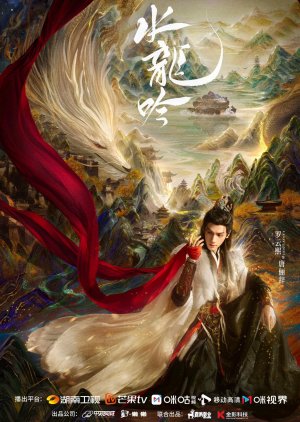
Details
- Title: Whispers of Fate
- Type: Drama
- Format: Standard Series
- Country: China
- Episodes: 40
- Aired: Oct 24, 2025 - Nov 14, 2025
- Aired On: Monday, Tuesday, Wednesday, Thursday, Friday, Saturday, Sunday
- Original Network: Hunan TV, Mango TV
- Duration: 45 min.
- Genres: Mystery, Wuxia, Fantasy
- Tags: Adventure, Action, Friendship, Martial Arts, Jianghu, Adapted From A Novel, Adopted Male Lead, Friends To Enemies, Flashback To Past, Historical
- Content Rating: 13+ - Teens 13 or older
Statistics
- Score: 8.1 (scored by 3,980 users)
- Ranked: #2187
- Popularity: #1760
- Watchers: 15,608
- Favorites: 0


Popular Lists
Related lists from users




Recently Watched By


