

Relations for Titles
Contents
- 1.General Info
- 2.Types
- 2.1Adaptation
- 2.2Compilation
- 2.3Crossover
- 2.4Original Story
- 2.5Parent Story
- 2.6Prequel
- 2.7Remake
- 2.8Sequel
- 2.9Shared Universe
- 2.10Side Story
- 2.11Spin-off
General Info
Relations are not automatic; when connecting one title, you must also ensure to connect the other title in return.
Always clearly explain why you're connecting titles and using the specific relation.
Only use related titles for direct connections; do not link titles based solely on shared historical/real persons, genres, or elements if they aren't otherwise related.
When adding multiple relations with multiple titles, follow the order below:
Prequel
Sequel
Side Story
Spin-off
Original Story
Parent Story
Adaptation
Crossover
Compilation
Remake
Shared Universe
Types
Adaptation
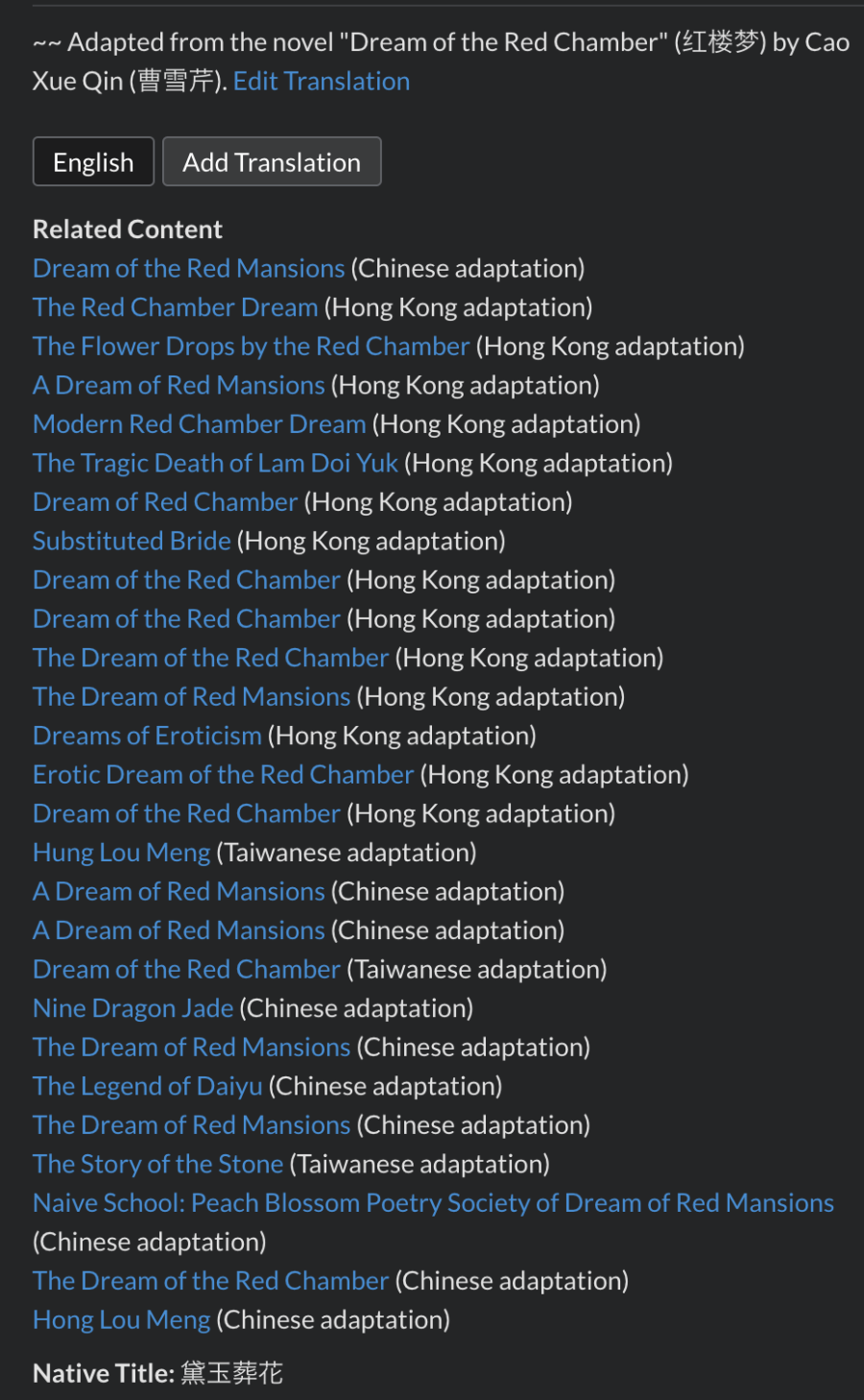
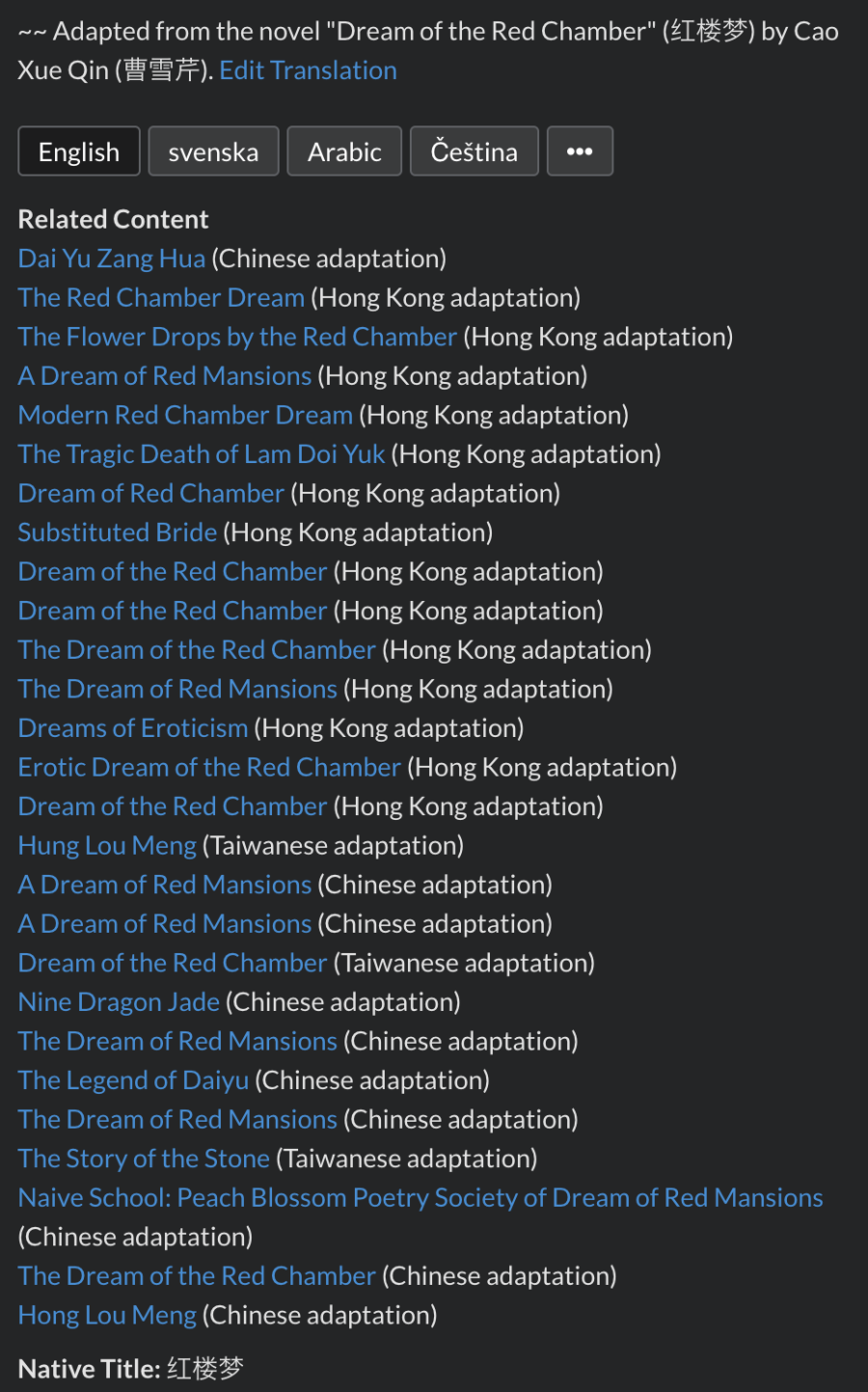
Used when two or more titles are based on the same original material; novel, manga, webtoon, song, play, radio drama, etc.
Each title adapted from the same original material should be connected to each other using only the relation 'Adaptation'.
List adaptations in the order they were released; oldest at the top, newest at the bottom.
Visual example:
Compilation
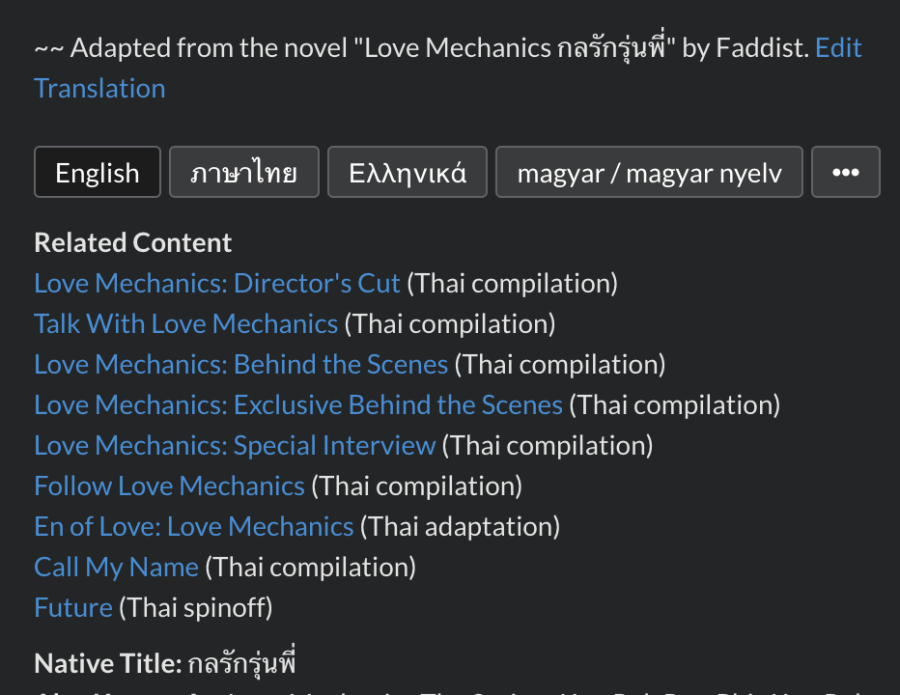
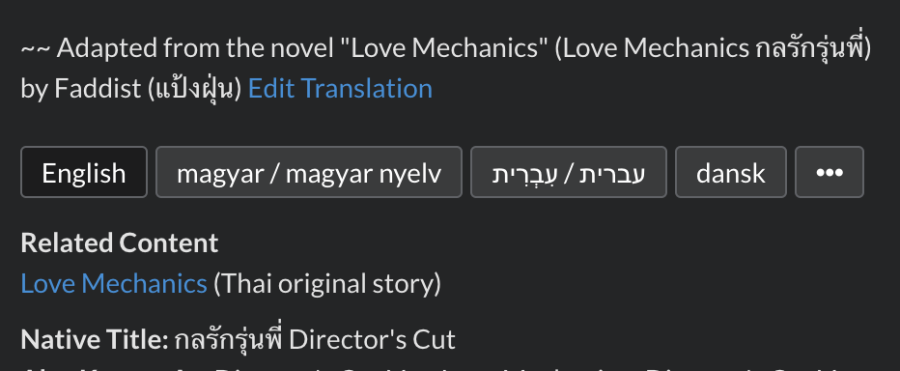
Used when connecting different versions of the original title (i.e. uncut, extended, director's cut, movie, behind-the-scenes, etc).
When connecting the different versions to the original title, use the relation 'Compilation'.
When connecting the different versions back to the original title, use the relation 'Original Story'.
All the compilations should be listed only on the main title; not on all related titles.
Visual example:
Crossover
Used to refer to two or more works that are independent of each other, but have characters, settings, or plot elements that intersect in a single narrative. This interaction is usually temporary and confined to specific episodes or films. After the crossover event, the separate stories continue independently, and there may be no ongoing connection between them.
Not to be confused with the shared universe relation which maintains continuity across various narratives, allowing for ongoing connections and references between different works
Not to be confused with cameo appearances, which are brief incidental appearances of a well-known person or character.
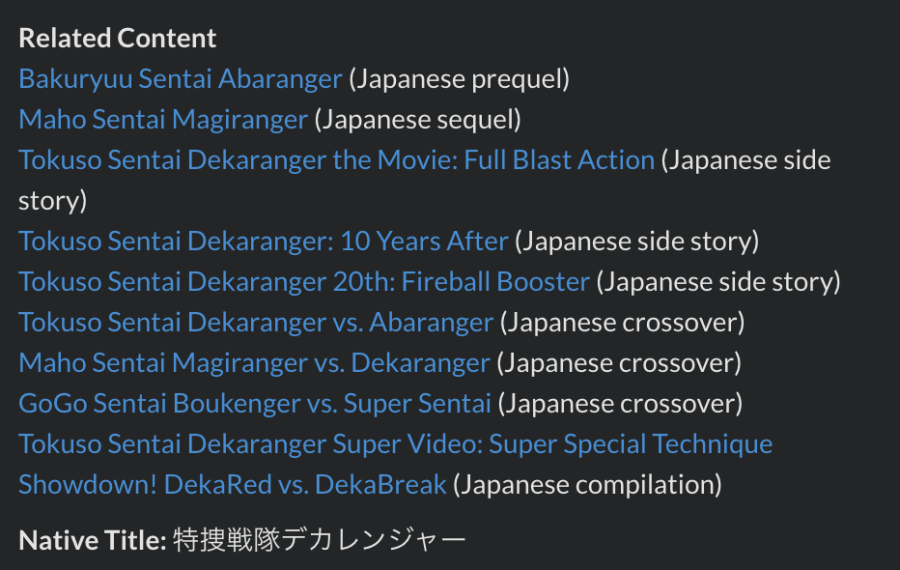
When connecting a title that is a crossover between multiple titles, use the 'Crossover' relation on the main title page.
When linking the crossover title back, use the relation 'Original Story' on the crossover page and connect all the titles it originated from.
Example: https://kisskh.at/6303-tokusou-sentai-dekaranger-vs.-abaranger
Visual example:

Original Story
Used for connecting titles to the original source material from which another story came about. It indicates that the story is derived or inspired by another title found on MDL.
Used to connect back relations such as 'Compilation', 'Crossover', or 'Remake'.
Not used to connect back relations such as 'Side Story' or 'Spin-off'.
Visual example:


Parent Story
Used for connecting titles where the story continues or runs parallel to the original title. It uses the same story set-up, the same characters, and also, mostly the same actors.
Used to connect back relations such as 'Side Story' or 'Spin-off'.
Not used to connect back relations such as 'Compilation', 'Crossover', or 'Remake'.
Example: https://kisskh.at/774321-the-princess-royal-special
Visual example:


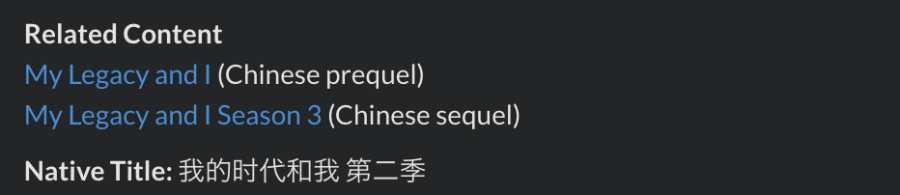
Prequel
Used for connecting titles where the events take place before the original work.
It explores events, characters, or backstory that occurred earlier in the timeline, providing additional context or information that sets up or explains the events that happen in the original work.
Prequels should follow a chronological order, not the production year order. (i.e. Season 1 < Season 2 < Season 3 < ... < Season 50)
Visual example:

Remake
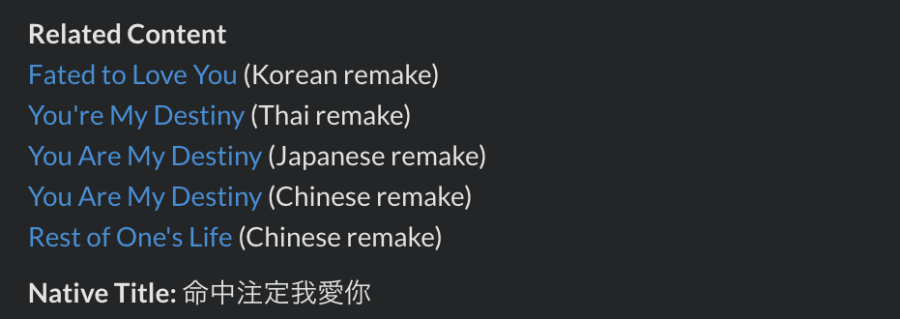
Used for connecting titles that are remade into a new story based on the previous title that already exists on MDL.
It's a new version of an existing story, often updated, reinterpreted, or modernized to appeal to new audiences, while still maintaining core elements of the original.
Not to be used between titles that are adaptations of the same original material; novel, manga, webtoon, song, play, radio drama, etc.
Visual example:

Sequel
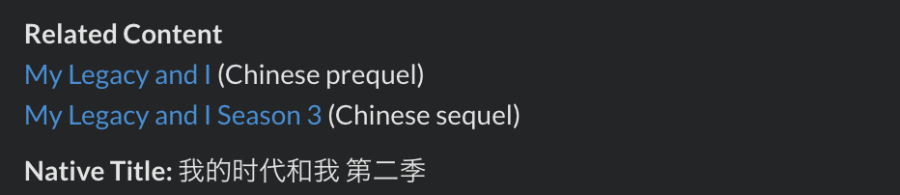
Used for connection titles where the events take place after the original work.
It picks up after the events of the first story, continuing the plot, exploring the consequences of prior events, and often following the same characters as they move forward in time.
Sequels should follow a chronological order, not the production year order (i.e. Season 1 > Season 2 > Season 3 > ... > Season 50)
Visual example:

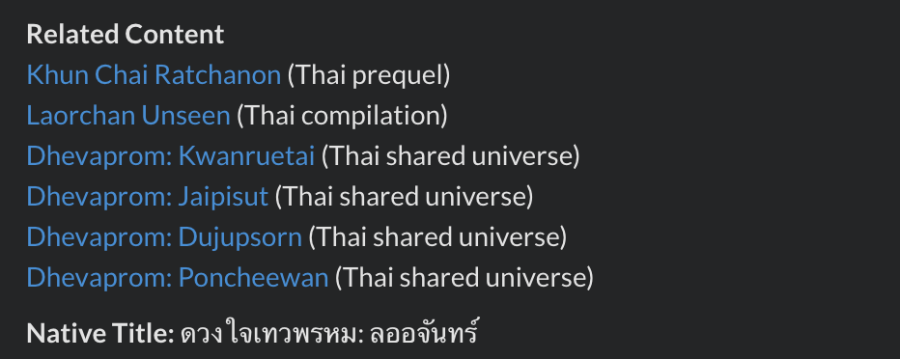
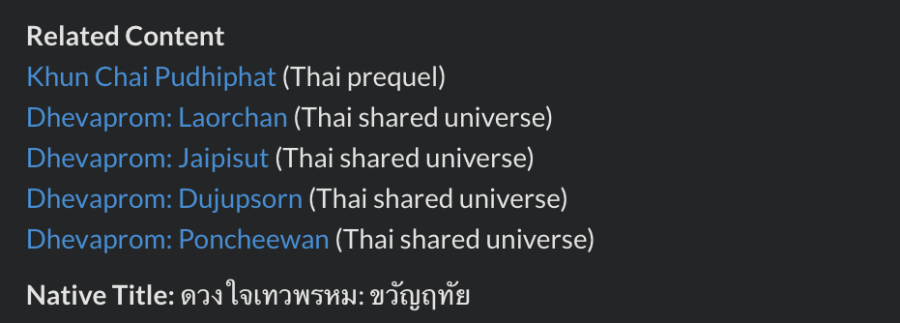
Shared Universe
Used for two or more works by one or more writers that canonically take place in the same overworld setting, or storyline development, within the same continuity, but can also stand alone as separate stories. Characters often make appearances in each storyline.
Not to be confused with cameo appearances which are brief incidental appearances of a well-known person or character.
Not to be confused with crossovers, where the works and characters are independent except for a single meeting.
Example: https://kisskh.at/718777-lao-chan
Visual example:
Side Story
Used for titles where the story features main and supporting characters from the original story that run parallel to the main narrative but are never completely separate from it.
It typically takes place within the same timeline as the original work but explores different aspects or perspectives without straying too far from the core story or characters.
Example: https://kisskh.at/774321-the-princess-royal-special
Visual example:


Spin-off
Used for titles where the supporting characters from one title appear in another title as main characters, around which the story revolves.
It's a new, standalone story that branches out from the original story, often focusing on different characters or a different storyline while still being connected to the original universe.
Example: https://kisskh.at/26399-asa-ga-kita-spin-off-warenabe-ni-tojibuta
Visual example:




