
 Editorials



They don't make dramas like this anymore?
From the very first episode, it sets a gripping tone—blending fantasy, legal thriller, romance, and suspense in a way that feels seamless rather than overwhelming. The premise of characters who can see fragments of the future in their dreams could have easily turned messy or repetitive. Instead, the writer carefully constructs a storyline that is eloquent, layered, and incredibly satisfying.What truly makes this drama exceptional is its writing. Every single character is well-written—no one feels like a filler or a mere plot device. From the determined journalist Nam Hong-joo to the principled prosecutor Jung Jae-chan and the quietly heroic police officer Han Woo-tak, each character is given emotional depth and meaningful growth. Even supporting characters are treated with care, with backgrounds that are articulate and thoughtfully revealed. You understand why they make the choices they do, which makes the stakes feel real.
The writer clearly invested enough time to make the plot engaging while answering all the questions it raises. There are no frustrating loose ends, no abandoned arcs. Every twist feels earned. The pacing balances tension and warmth beautifully—legal cases unfold with suspense while the relationships develop naturally and sincerely.
It’s rare to watch a series and genuinely feel that there is nothing you would change—but this is one of those rare cases indeed.
It’s not just a good drama—it’s the kind that reminds you why you fell in love with K-dramas in the first place.
Was this review helpful to you?
Okayish watch
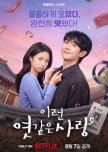
Go Eun-sae, a sharp prosecutor, wakes up amnesiac and gets told by a stranger (Jang Tae-ha) that he's her boyfriend. What could've been a frustrating "will she fall for the lie" plot instead goes somewhere smarter — Eun-sae isn't written as naive or gullible. She questions things, she's not just swept along by a stranger's word, and that alone makes the romance easier to root for instead of wanting to shake her through the screen.The pacing of the love story also works in its favor. It doesn't rush into obsessive butterflies-from-episode-one territory — it builds gradually, which feels more earned even if it means the chemistry never fully ignites. It's warm rather than electric. Not a bad thing, just not a "can't look away" kind of pairing.
One casting gripe, though — Jung Hae-in playing someone with actual gang-boss energy just doesn't land. He's got that soft, boy-next-door face that works great for the boxing-coach-with-a-heart parts, but the "dangerous past" side of his character never feels convincing.
Overall, it's a sweet, competently made show — but something about the total package feels like it's missing an extra gear. Hard to pin down exactly what: maybe the stakes never feel quite dangerous enough, maybe the emotional peaks don't hit as hard as the setup promises. It's the kind of drama you enjoy while watching but don't think about much after.
Was this review helpful to you?
Good but cliche
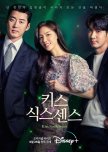
Kiss Sixth Sense was honestly a pretty good watch. What I loved most about this drama was the mature relationship dynamic between the leads. Their relationship felt more grown-up and natural compared to the usual K-drama romances, and I really enjoyed watching how their feelings developed.And the chemistry between the leads? So good. Their interactions, tension, and overall dynamic were definitely one of the strongest parts of the drama for me. They had that comfortable yet romantic vibe that made their scenes really enjoyable to watch.
That being said, the one thing I wasn’t a huge fan of was the story progression. At times, the plot felt like it was taking a little too long to get where it needed to go. The whole childhood connection storyline also felt very cliché and predictable to me. It’s one of those K-drama tropes that has been done so many times that it didn’t have the same impact it probably intended to.
Still, despite those issues, I genuinely enjoyed the drama. The mature romance, the lead chemistry, and the overall vibe made it worth watching for me.
Was this review helpful to you?
A Fun, Fast Watch
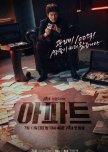
Thi is exactly the kind of show you go into expecting light entertainment and come out having genuinely enjoyed. Twelve episodes, tight pacing, chaos-but-make-it-cozy vibes with the found-family angle between Hae-gang and the residents.It's genuinely funny, doesn't overstay its welcome, and never pretends to be more than what it is — a breezy crime-comedy with heart. The "fake family becomes real family" arc lands because the show earns it slowly instead of rushing the sentimentality.
Ji Sung and Ha Yoon-kyung's characters have an evident age gap, and it does show on screen — but since the show wisely keeps the romantic thread as a minor subplot rather than the main event, it never becomes distracting. A smart choice given the material.
Park Byung-eun as the villain, is the standout of the entire series. He plays it with an off-beat, almost unhinged comic energy that makes every scene he's in more entertaining than it has any right to be — to the point where some viewers online have said he overshadows Ji Sung's lead performance. It's the kind of villain turn that makes you actively look forward to his screen time, which is rare.
Was this review helpful to you?
This review may contain spoilers
Wasted potential
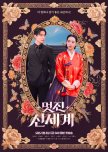
Heo Nam-jun — finally his main lead moment, and he absolutely owns it. Charisma, comic timing, emotional range: all there. Lim Ji-yeon anchors the entire show. Playing a dual role — Joseon villainess and modern actress — she makes both feel real. Jang Seung-jo brings texture as the rival. Even side characters punch above what the writing gives them.This drama showed us that bad writing can ruin a series even when you have a good cast. Time-travel dramas are well-worn territory in K-dramas, yes — but the concept alone doesn't sink a show. What sinks this one is that the writing never bothered to build the world the characters live in. You are handed a cast of people and expected to care about them on faith alone.
No character backstories. Why is the villain brother the way he is? The show simply never explains it. He is mean because the plot requires a villain. That's it. No context, no arc, no reason to understand him — just a function with a face.
The time-travel logic is unexplained and then abused. How did Dan-sim end up in the past? The show shrugs. When the rules of time-travel became inconvenient, they were changed. Going back, coming back, going back again — no internal logic, just drama when the story needed stakes.
The shaman is a narrative cheat code. An all-knowing mystical figure who appears to hand the female lead information, nudge the plot forward, and disappear — used as a shortcut every time the writing wrote itself into a corner. Convenience wearing a costume.
The second half collapses into melodrama. What began as a genuinely funny, warm enemies-to-lovers comedy became a tearjerker — and not a convincing one. Hospital scenes stacked on hospital scenes. The comedy, which was the show's actual strength, got buried.
The show had 14 episodes and still ran out of time for its own plot.
Was this review helpful to you?

This review may contain spoilers
It's more like reality tv than a dance competition
The show had diverse street dance styles including hip hop, locking, popping, krumping, and breaking through intense crew-versus-crew challenges. The participating crews — 1MILLION, Bank Two Brothers, EO-DDAE, Just Jerk, Mbitious, Prime Kingz, We Dem Boyz, and YGX — each bring a distinct identity and dance philosophy, which is part of what makes the show so compelling to watch. You're not just watching individual talent; you're watching entire crews with their own history, culture, and chemistry go head-to-head.The show wasn't without controversy. It faced criticism for perceived biases in judging and editing practices that favored drama over fair competition, with judge BoA accused of favoritism after demanding a rematch in a battle, leading to backlash over the decision. There was also backlash after the chief producer made comments comparing the male crews' dynamics unfavorably to the female cast of Street Woman Fighter, implying jealousy among the female dancers versus loyalty among the men — which doesn't make any sense as this show had more rude comments and cat fights than street woman fighter lol! Eventually Mnet had to issue an official apology.
Was this review helpful to you?

This review may contain spoilers
Are monsters born monsters?
The story consistently references two fascinating and meaningful questions: Are monsters born or made? and What does it mean to be remembered by someone?The trio of Seo In Guk, Park Bo Gum, and Choi Won Young is a genuine treat to watch — their performances trigger a wide range of emotions, and the bonds their characters share feel naturally connected and deeply compelling. The writing of the thriller part, the cases and the side characters were the best part of the show.
The romance was unnecessary, without that also the story could have progressed smoothly but i guess it is a common chracter from pre 2016 dramas, mixing all the genres in one drama, mind you it works well but for "some dramas" not all. Also if the romance was genuinely good i wouldn't have mind it in the story but the romance was invisible, it didn't feel earned, it just happend out of the blue.
Was this review helpful to you?

This review may contain spoilers
Heartfelt But Uneven Coming-of-Age Drama
The strongest element of Twenty Twenty is undeniably its portrayal of toxic parental relationships. Chae Da Hee's suffocating relationship with her overbearing mother feels painfully real, and the drama handles these moments with a sensitivity that's rare in the youth web drama space.The pacing is a persistent issue throughout the series. For a show with 20 episodes at around twenty minutes each, you'd expect things to move fairly briskly — but the drama has a frustrating habit of stretching out quieter moments far beyond what they warrant. It got genuinely boring at times, which is a hard problem to forgive in bite-sized episodes.
The romance felt undeveloped — the chemistry between the leads wasn't properly built, and the love triangle came across as half-baked. There's no electric tension, no butterflies — it's all very flat, and that's a fundamental flaw in a youth drama where the love story is supposed to be the heartbeat.
A-Teen worked because it balanced emotional weight with genuine fun — the characters felt like real teenagers who laughed, bickered, and goofed around. Twenty Twenty almost entirely abandons that lightness. Everyone is remarkably serious, all the time. The one character who attempts to inject some humor feels less like comic relief and more like a caricature — the jokes don't land as clever or even charming slapstick; they come across as clownish in a way that's more awkward than entertaining.
Was this review helpful to you?

This review may contain spoilers
Nothing compared to season 1
A-Teen 2 is a decent but slightly disappointing follow-up to a beloved first season. It trades the magic of first love for the weight of real decisions, which is admirable in intent but not always successful in execution. The romance feels less electric, some characters are sidelined, and the pacing can be uneven.That said, the newer characters breathe fresh life into the show. One of the clear wins of Season 2 is how much the characters have evolved. Kim Ha Na in particular goes through a satisfying arc — moving from the somewhat manipulative figure of Season 1 into someone more honest, open, and self-aware. Also showing more about Bo Ram, a character that was overlooked in Season 1. Her storyline — balancing friendship, romance with Gi Hun, and her uncertain future — is genuinely touching and one of the emotional highlights of the season.
The one thing I really wanted was more on Siwoo and Doha but this gave nothing 😭
Was this review helpful to you?

This review may contain spoilers
Short, sweet, and surprisingly real
It tells a quiet, familiar story of teenagers navigating love and friendship, and it tells it well. The kind of series you finish in one sitting and then just sit with for a while.The series nails the messiness of teen relationships without being dramatic about it. The friends-to-lovers arc feels earned, the friendship fracturing through plain old miscommunication feels painfully honest, and the lingering ache after a breakup — still missing someone even when the relationship is clearly over — is portrayed with a maturity most shows twice its runtime can't manage.
The one thing that might frustrate you — and it's intentional — is the male lead's inability to just say what he feels. The slow tragedy of watching someone hold their feelings back until it's too late is the emotional engine of the whole show. It's the trope many of us love to hate, but here it actually serves the story rather than existing for manufactured tension.
The original ending is quietly devastating and honest: life doesn't pause while you figure yourself out. By the time the male lead finally decides to fight for the relationship, she's already moved on. It's the right ending — uncomfortable, real, and true to how things actually go at that age.
The epilogue, added after audience demand, is a warmer landing — they find their way back. Sweet, yes. But it softens an ending that didn't need softening. It's not unwatchable, but it does slightly undo what made the original conclusion so memorable. Whether you prefer the closure or the sting is probably telling of where you are in life right now.
Was this review helpful to you?

A Heartwarming Standout in the Series
Out of all the Ugly Duckling series, Don't takes the crown for me story-wise—it's hands-down the best. This short, cute series delivers a genuine character development arc that feels earned and satisfying, watching the leads evolve from awkward insecurities to confident connections. The romance simmers perfectly, blending sweet tension with believable chemistry that keeps you hooked without overdoing the fluff.What really shines are the school twists and everyday happenings—they ring true to life, capturing that mix of drama, friendships, and teen chaos in a way that's refreshingly real. Sure, it's full of classic clichés like the makeover trope and love triangles, but they land with such charm that you can't help but smile. Clocking in at just a few episodes, it's a quick, feel-good binge that's perfect for when you want light romance without the drag.
Was this review helpful to you?

This review may contain spoilers
Wow this was sooooo bad
A drama that had all the ingredients to be something special — but squandered every single one of them.The female lead's performance is the drama's most glaring flaw. In a story that demands your sympathy, her acting consistently gets in the way of it. Her crying scenes, in particular, feel less like genuine distress and more like a soundtrack you want to mute. The male lead fares no better in terms of how the script handles him. If he already planned on leaving, why allow himself — and worse, encourage her — to develop feelings? It's a fundamental character logic problem that the writers never address.
At its core, the show's biggest crime is a badly written foundation. You can feel the gap between what the show was trying to be and what it actually became.
Was this review helpful to you?

This review may contain spoilers
Global indeed!
After Street Woman Fighter made waves domestically, Mnet had one logical next move: take it global. World of Street Woman Fighter aired with six crews from across the world battling it out on one stage. The premise alone was enough to send fans into a frenzy. I don't know why there are so many negative comments, I personally enjoyed it (as a avid swf/smf/sdgf watcher). I'm happy that I got more dancers that I wanna follow.BUMSUP's Mega Crew Mission was historic.
The judging panel was a genuine upgrade. Aliya Janell (Beyoncé collaborator), Mike Song (Kinjaz) and many other amazing dancers, brought real credibility — especially compared to the idol-judge controversy of the original season. This was the right move.
I know Ojo Gang's win pissed many people, but it felt earned, and their journey was one of the season's most compelling arcs. Tbh, I have no idea why did they have a rocky start at the beginning, they gave some of the most memorable battles!!! it was so stupid.
YouTube numbers don't lie. WSWF-related videos crossed 460 million cumulative views on The Choom channel — proof that the global format did create genuine international buzz, even if domestic ratings told a different story.
Only con I could sense was international crews were structurally disadvantaged from the start — which makes the format harder to defend as a fair competition.
Was this review helpful to you?
Having BoA and Taeyong evaluate seasoned street dancers was a head-scratcher. They're incredible artists in their own right — but judging professional crews who've spent decades in their craft? The audacity is real. It undercut the credibility of the scoring.
There was a recurring frustration when dancers complained about idol appearances and public voting influencing results. Valid feelings — but this is a Korean variety show on Mnet. The audience vote was always going to matter. The format was never a pure dance merit competition, and the crews' surprise at that felt naïve given the network they signed up with.
Street Woman Fighter is a landmark show for dance culture in Korea and beyond. Its flaws are largely structural — a variety format that can't fully honour the artistry it promises to celebrate. But what it got right, it got spectacularly right. Watch it for the performances, stay for the personalities, and make peace with the fact that it was always going to be a TV show first and a dance competition second.
Was this review helpful to you?
This review may contain spoilers
The best of the ugly duckling series, but not without its flaws
The show starts on a genuinely satisfying note. Watching Junior's fair-weather friends evaporate the moment her looks change is uncomfortable in the best way — it earns the story's premise immediately and forces Junior to confront how shallow her world, and she herself, had been. And honestly? She needed that reality check. The early episodes make it clear she wasn't entirely innocent in buying into that shallow culture herself, which gives her arc something real to work with.What's harder to stomach is her mother's reaction-showing visible disgust toward her changed appearance — treating her like something contagious rather than a daughter who needed support.
Out of the entire Ugly Duckling series, this is the one entry where the central romance genuinely feels built on something. Seua and Junior's relationship develops with enough friction, warmth, and history that you actually root for them — which is more than can be said for some of the other entries in the anthology. Push Puttichai is a big reason for that; his charisma carries the role effortlessly, and it's nearly impossible not to fall a little bit in love with Seua ourself.
That said, there's one moment that doesn't sit right — Seua hugging Junior in his sleep, while still in a relationship with someone else. It's played as a cute, unconscious gesture, but it's actually a strange thing to just... let slide. The show doesn't interrogate it, and it probably should have.
The biggest stumble in Seua's characterisation is his frustrated outburst at Junior. Calling her a gold digger and accusing her of being obsessed with men — because she keeps rejecting him — is a genuine jerk move dressed up as wounded pride. His character did get annoying and irrational toward the end. It's the kind of scene that's supposed to be a low point before the reconciliation, but the specific accusations are mean-spirited enough to leave a mark. The show moves past it fairly quickly, but it's hard to fully forget.
The drama starts with a strong premise — a previously shallow girl learning there's more to life — but as it progresses, the theme gets muddled. It quietly shifts from "don't let shallow judgements define you" to "appreciate the man who liked you when you were ugly." Additionally, the male lead's backstory about being broke and frugal builds interesting tension around a wealth gap, but the show sidesteps all of it by conveniently revealing he was secretly rich all along. It's the easy route, and it slightly undercuts what could have been a more meaningful resolution.
Was this review helpful to you?


