
 Editorials



Sōmai's Direction: He's famous for his long takes. The camera doesn't just observe; it floats through the flooded corridors, capturing the chaotic energy of the teenagers in a way that feels documentary-like, yet dreamy.
Raw Emotion: The film understands that adolescence is a liminal state of mind—between childhood and adulthood, between civilization and instinct. When they dance half-naked in the torrential rain singing pop songs, you feel the mixture of freedom and despair.
Symbolism: The typhoon acts as a catalyst. It cleanses their "old selves," but the price of this purification is high and, for some, tragic.
Contemplative Pace: If you're used to the frenetic pace of modern disaster movies (like Brutal Attack itself), Sōmai's long takes might seem slow at first.
Heavy Themes: The film doesn't shy away from uncomfortable subjects, including harassment and suicidal ideation, treating them with a rawness that might shock those expecting a standard teen movie.
Typhoon Club is essential. It's a film about that exact moment when you realize the world is huge, scary, and you have no control over anything—not the weather, not your own feelings.
Was this review helpful to you?
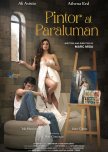
The Plot
The story focuses on Tristan (Ali Asistio), a talented but lonely painter who finds his ideal muse in a mysterious woman named Paraluman (Athena Red). She agrees to pose nude for his work, but imposes one strict rule: he must never touch her.
The film explores the escalating tension between the artist and the model as Tristan struggles to contain his sexual desires and fantasies, attempting to find satisfaction solely through observation and art.
Critical Points
The "Untouchable Muse": The script leans heavily into the concept of prohibition, which creates the central conflict. However, critical reception has been mixed, with some viewers feeling that the chemistry between Athena Red and Ali Asistio isn't always convincing.
Production Quality: As is common with many fast-tracked Vivamax productions, the film suffers from some continuity issues and acting that occasionally feels wooden or over-the-top.
The Erotic Element: The film doesn't hold back on sensual scenes but tries to give them a more "artistic" veneer through the painting sequences and set design, though some critics pointed out that the technical execution (such as certain practical effects or prosthetic work) left much to be desired.
Is it worth watching?
Yes: If you are a fan of Vivamax productions and enjoy dramas with romantic fantasy premises and a heavy focus on sexual tension.
No: If you are looking for real psychological depth regarding the world of fine arts or a refined technical narrative.
Verdict: This is another title focused on the platform's quick adult entertainment, using "art" as a backdrop for scenes of nudity and seduction.
Was this review helpful to you?

🤖 The Plot: Who is Baka?
The narrative revolves around Baka, a "low-caste" maintenance android in a hyper-industrialized futuristic metropolis. After a system error caused by an overload of discarded memory data, Baka begins to manifest something forbidden in his programming: individuality.
The film follows Baka's desperate escape through the city's lower levels as he tries to understand if the memory flashes he sees are his own or just "digital junk" from dead humans.
🎨 Aesthetics and Art Direction
Baka's Identity's greatest asset is its unique visual identity.
Neon-Gothic: The color palette makes extensive use of contrasts between the deep black of industrial areas and the vibrant neon of shopping malls.
Character Design: Baka isn't the elegant robot from films like I, Robot. He's clumsy, asymmetrical, and visibly worn, which generates immediate empathy in the viewer.
Fluidity: The animation mixes traditional 2D techniques with 3D (CGI) layers, creating a depth of field that makes the city seem infinite.
🧠 Central Themes
The short film addresses classic philosophical questions through a new lens:
Planned Obsolescence: Baka struggles with the fact that he was built to be discarded. It's a powerful metaphor for the modern working condition.
Memory vs. Identity: The film questions whether what defines us is what we live or what we remember (even if the memory is implanted).
Failure as Evolution: Baka's "failure" is, in fact, his consciousness. The film celebrates error as the starting point of life.
⚖️ Verdict
Baka's Identity is a "sensory experience." Although the script doesn't reinvent the wheel of the cyberpunk genre, the technical execution and the protagonist's quiet charisma elevate it to a must-see visual work of art for fans of adult animation. It's short, impactful, and leaves a bittersweet "I want more" feeling at the end.
Fun fact: The short film gained notoriety for its synthesized soundtrack, which uses real sounds of industrial machinery recorded in disused factories.
Was this review helpful to you?

Was this review helpful to you?
Was this review helpful to you?

For fans of darker, more thoughtful crime dramas that explore the complexities of morality and the harsh realities of life on the margins of society, “Outside” is a solid choice. It’s a reminder that even for those who seek a second chance, the road to redemption can be brutal and fraught with obstacles.
Was this review helpful to you?

While it may have some dramatic elements that lean toward melodrama (common in productions based on real events), the execution is so engaging and the performances so sincere that these moments are easily overshadowed by the raw emotion of the story. It is a film that captivates the audience from start to finish, leaving the viewer with a sense of admiration for human resilience and capacity in times of extreme adversity. Recommended for fans of disaster films, dramas based on true events, and anyone who enjoys stories of heroism.
Was this review helpful to you?

If you’re looking for two hours of impressive fight scenes, an expansion of the John Wick lore, and a lethal new protagonist, “Ballerina” is a first-class ticket to an adrenaline-pumping ride. It’s a worthy addition to the universe, one that reinvigorates the franchise with new blood and promises a bright future for Eve Macarro.
Was this review helpful to you?

Was this review helpful to you?

The Visuals: Maximalist Aesthetics and Genre-Hopping. Director Han Yan uses this premise to create a literal visual playground. Since the protagonists jump through different realities built by the human mind, the film drastically shifts styles with each action block: we go from a dystopian futuristic shootout to choreographed cutlery battles in Western restaurants, featuring ninjas, warriors, and gangsters. The visual effects (VFX), which actually delayed the film's release for further refinement, deliver a vibrant, highly textured maximalist aesthetic.
The Script: Between Action and Philosophy. While the pacing is brisk and the action sequences are the highlight, the narrative sometimes stumbles while trying to balance so many setting changes. The dynamic between Dylan Wang and Victoria Song carries the film, but the deeper commentary on the dangers of technological escapism—the fact that humanity prefers to live a perfect lie rather than face reality—ends up taking a backseat, buried under explosions and stylish fights.
It is a sci-fi visual spectacle that entertains through its visual creativity and energetic rhythm. If you liked Inception but are looking for something with the aesthetic energy of modern Asian pop cinema, it is an excellent choice.
Was this review helpful to you?

The story revolves around Elias, an elite assassin who operates under a strict code of conduct, and Sarah, an independent investigator who has just uncovered a corruption network involving Elias's clients. The "cat and mouse" cliché is elevated here by a crucial detail: they share a past that neither has been able to fully overcome. When Elias is tasked with eliminating the "obstacle" (which he discovers to be Sarah), the film abandons its pure action structure to delve into a psychological game of loyalty and betrayal.
Cutting-Edge Cinematography: The film utilizes camera technologies that make the fight sequences almost immersive. The art direction opts for cool, neon tones, creating a "cyber-noir" aesthetic that perfectly matches the characters' desolate atmosphere.
Chance Between the Protagonists: The film's greatest asset is its casting. The tension between the couple is built in silence, through glances and hesitations during the fights, making the romance more believable than the sometimes expository dialogue.
Action Choreography: Forget quick and confusing cuts. The fights here are fluid, brutal, and choreographed like a tragic dance, where each blow seems to carry an emotional weight.
My Dearest Assassin is an evolution of the genre. It understands that, in 2026, audiences want more than just explosions; they want to feel the anguish of characters forced to choose between duty and desire. It's a film about the scars that love leaves when forged in violence.
Was this review helpful to you?


