





That brings us to Big Match. They were obviously trying to make one of those Hollywood films. You know, the ones intended for the market without actual depth, loaded with action, big special effects and same old cliché dialogues. It’s regrettable and doesn’t represent the growing South Korean cinema at all.
Leaving that aside, the film was purely a mean of divertissement. The general concept isn’t off. It had the entertainment keys due to a good mixture between humour and action. Well, the comedy part wasn’t exactly ‘hilarious’, but the action half was rather good. Nonetheless, the pacing wasn’t always attention-grabbing. The run time was too long for an action packed-film.
The main reason I watched this summarises in two of my favourite ahjussi’s and Korean cinema veterans: Lee Jung Jae and Shin Ha Kyung. Well, they both did what they had too. I wouldn’t say it took much effort with the kind of characters they were offered. Lee Jung Jae wasn’t a stand-out action lead but he was faithful to the characterisation which is more than enough. Shin Ha Kyung’s ‘funny psycho’ character didn’t come out funny or impressive but the actor’s way of personifying it was perfect. Only a veteran in Ha Kyung’s calibre can make you like (or at least appreciate) an uninteresting character.
Other performers didn’t stand out at all –except for Lee Sung Min. And there were too many useless, repeated, cliché characters to stand.
The action sequences were fittingly edited –a nice work of fiction. The music was nothing different from the usual South Korean films’ soundtrack and the cinematography work didn’t stand out much.
Big Match is by no mean a remarkable Korean film. It doesn’t even hold the identification of South Korean cinema. It was basically a forgettable action comedy led by two big stars.
Was this review helpful to you?
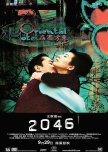
2046 can be considered a loose sequel to the director’s previous smashing piece “In the Mood for Love” but it can be watched for its own merits as well. Despite its abnormal twisty narrative pattern, the film is simply the tale of broken love, unstable emotions and unbearable suffering in the past, present and the future. The protagonist’s monologue was the main focus of driving the plot forward; it held hypnotic significance to the characters’ sensations.
This film leaves a lingering impact. The time frame metaphors Kar Wai used for this film were too impressive for words. He simply tried to tell the past through the future but instead of giving it out bluntly, he went through all the trouble of making this a memorable artistic piece instead. This is the story of a miserable man with love; he can’t seem to keep the women he meets by his side. Is it his broken emotional state or what? He then starts to pour his personal experience and thoughts into his fictional erotic novels. But that’s not it, the writing and editing styles don’t work in an obvious manner, there are always hidden hints and even some transparent humour. Even the apparent limited space holds extravagant and wide meanings behind it.
My blame would be the slow pace sometimes but it never last too long to bore me.
Such a poetic piece had few of the better Hong Kong actors as its main performers plus a Japanese renewed face Kimura Takuya. Tony Leung reprised his role only with a different characterization. Zhang Ziyi led one of her most memorable performances while Gong Li, Faye Wong and Carina Lau had mesmerizing screen presence aided by the top notch writing of their characters. The female department in this film was everything that Wong Kar Wai pictures in women including his passion and his resentment.
That being said, it doesn’t take a genius to state that the best performer was undeniably Wong Kar Wai, the director, the screenwriter, the artist, the poetic, the ingenious and one of the finest filmmakers the world ever knew. His touch was all over the picture; whether it was his overwhelming emotional take, his challenging narrative pattern, his stunning characterization and especially his philosophic and psychological view of love and lust. Let’s not forget his special camera angles, fast cuts and slow motions that he excels at.
Using a specific range of colours, the film was visually dazzling; the cinematography was a drop of brilliance in each scene. Accompanied by a tremendous musical choice and a remarkable production value, the film was wonderfully done. That’s nothing less from Kar Wai, who always manages to impress through his unconventional pictures.
Watch this if:
-You like Wong Kar Wai films.
-You like poetically artistic love stories.
Do not watch if:
-You’re looking for a traditional love story.
2046 is a challenging emotional take about love. It extends from the past through the present and until the future. Such a complicated tale takes a masterful brilliant director like Wong Kar Wai to pull it though successfully.
Was this review helpful to you?
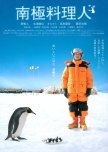
The team of eight have different shores within their posts and they have to stay there for a little more than a year. Their story is mainly told by their easy-going appointed chef. Basically, the film shows bits and pieces of their everyday life and how they manage to survive in such a place. There’s water control, waiting for one’s role, lack of communication, shortage in certain ingredients and surely routine, cold and loneliness.
The characters in this film were very well shaped. Even though the chef was the main character. Every other group member got his exposure. There was an interesting balance between their behaviours and their natural eccentric personalities. You would see a bunch of grown man doing sports activities every morning, a tantrum thrown out of nowhere or several activities to shorten the time. All while helping each other and relying on one another through various situations.
The film’s strength was keeping the storyline very close home. It was humane and quite real. It’s how you would expect of a scientific team to act when they’re thrown in an isolated region. Their quirky humour and delightful situations were a great way to not make this film too melodramatic or overly sentimental.
Led by the versatile Sakai Masato, the acting department was very well illustrated. The cast delivered, as they should have. They were quite faithful to their characters.
It could be that the film got a little slow but it was that exact same building that made it quite delightful to follow. Plus, the funny situations made it a lot shorter than what it seems.
A little warning, try not to watch this on an empty stomach. It will be a complete torture with all the delicious dishes in the film. It’s impressive how a good chef can make a variety of food with little choice of ingredients.
Was this review helpful to you?


