
 Editorials

 2
2 1
1 1
1


We Best Love: Fighting Mr. 2nd — Five Years, One Slap, and a Love That Never Really Left
If "No. 1 For You" is about discovering first love, "Fighting Mr. 2nd" is about discovering what happens when love survives something the people inside it do not understand. The first season ended sweetly enough that the opening of Part 2 feels almost violent: five years have passed, Shu Yi walks into Shi De's workplace, sees the man he once loved and slaps him in front of everyone. My immediate reaction the first time was basically: "What the fuck happened?" That is exactly why the structure works. The drama does not immediately explain the missing years. It makes us experience the reunion before we know why Shu Yi is so furious, so the comfortable university romance from the first six episodes suddenly becomes an adult relationship poisoned by betrayal, resentment and information neither man possesses completely. The question is no longer whether they love each other. That is obvious from the amount of anger between them. The question is how two people who ended Part 1 believing in the same future managed to arrive five years later standing on opposite sides of a room as if one of them destroyed it.The slow reconstruction of those missing years is probably my favourite piece of writing in the entire series. Shi De went to America expecting a temporary separation, circumstances disrupted their communication, Shu Yi saw something he misunderstood, and then Shu Yi's father entered the situation and turned emotional confusion into a five-year test. He demanded that Shi De prove he could become worthy of his son through professional success while staying away, believing that he was protecting Shu Yi and perhaps also testing whether this relationship could survive outside youthful emotion. I hated his interference while loving what it added to the drama. He is not simply an evil homophobic father inserted to create conflict. His problem is control, class, expectation and his conviction that loving his son gives him the right to decide what kind of future is good enough for him. The revelation transforms the five-year separation because neither Shi De nor Shu Yi simply stopped loving the other. Their lives were manipulated by pride, misunderstanding and a parent who thought he understood his son's happiness better than his son did. When Shu Yi finally learns what happened, the entire opening slap changes meaning without becoming meaningless. The anger was real because the love underneath it never disappeared.
Sam Lin and YU are even better in this half because the characters have aged emotionally even if only a short time separated the two productions. The softness of university has been replaced by suits, offices, alcohol, responsibility and years of resentment, and both actors understand that the same couple cannot simply behave exactly as they did before. YU gets some of his strongest material as Shu Yi because anger is constantly competing with the desire to believe Shi De again. Sam has the harder emotional position in some ways because Shi De knows more than Shu Yi but cannot simply repair everything by telling him one fact. He made choices too, including accepting the father's condition without giving Shu Yi the agency to decide whether he wanted that sacrifice. That keeps the reconciliation from becoming "father bad, lovers innocent". Shi De loved Shu Yi but still made decisions for him, and Shu Yi's pain cannot disappear simply because those decisions came from love. Their chemistry becomes less about first attraction and more about whether intimacy can survive disappointment. The drunken confrontation, the anger, the physical closeness and the eventual return of trust work because Sam and YU never play hatred as the opposite of love. Shu Yi's fury is evidence of exactly how much of that love remained.
The ensemble evolves just as intelligently. The heterosexual side romance involving Zheng Wen and Yu Xin has largely completed its purpose, so Part 2 does not artificially drag them back simply because they were present before. Instead, the adult world opens more space for the queer relationships already surrounding Shi De and Shu Yi. Bing Wei and Zhe Yu are now together, turning what had existed around the edges of Part 1 into an established relationship, while Pei Shou Yi and Yu Zhen Xuan become one of the strangest and most interesting secondary stories in the series. Shou Yi's difficulty experiencing and expressing emotional attachment collides with Zhen Xuan's intense fixation on him, creating a relationship that is deliberately uncomfortable and far more psychologically complicated than the main romance. Their story never feels as though it was inserted merely because a BL needs another couple. It grows from Shou Yi, who was already present in Part 1, and gradually reveals why this apparently detached man carries his own unresolved history. Bing Wei and Zhe Yu provide something lighter and more stable around them, eventually reaching a proposal, so the series manages to contain several very different versions of love without making the supporting couples feel like copies of Shi De and Shu Yi.
That ensemble chemistry became even more enjoyable because the actors themselves clearly developed a real bond during the project. Later in 2021, "WBL Boys' Vacation" brought Sam Lin, YU, Ray Chang, Shih Chih-tian, Richard Lee and Evan Luo together away from the scripted roles, and seeing them talk, play and open up about themselves made it easier to understand why the group scenes in "We Best Love" felt so comfortable. I normally dislike using actors' real personalities to explain fictional relationships, because good acting should stand on its own, but in this case the companion reality show simply confirmed something already visible: these people had become comfortable enough with each other that the ensemble never felt assembled only for the camera. For several of them, "We Best Love" would remain an unusual or even singular BL entry in their careers, and I actually like that. They were actors playing a queer story rather than performers who needed to build a permanent BL identity around it.
The workplace material is perhaps the least emotionally powerful part for me, but even that serves a purpose. The merger, Alpha project, corporate sabotage and professional rivalry allow the story to demonstrate that five years have actually passed. These are no longer students whose greatest immediate problems involve swimming competitions and university friendships. Shi De has built a company partly under the shadow of the promise he made to Shu Yi's father, while Shu Yi has entered his father's business and carries the expectation of eventually succeeding him. Their careers therefore become another battlefield created by the separation. The corporate plot occasionally feels more functional than fascinating, but it allows the romance to exist within adult responsibilities rather than simply repeating the first season in office clothes. More importantly, it gives Shu Yi's father something concrete against which to judge Shi De, so the professional success is tied directly to the emotional conflict instead of existing as filler.
Final Thoughts
Taken together, the two parts of "We Best Love" form one of my favourite BL stories because Part 2 does not simply give me more of something I already liked. It changes the question. Part 1 asks whether Shu Yi can recognise that his lifelong rival has always loved him; Part 2 asks whether recognising love once is enough to protect it from pride, distance, family interference and terrible communication. The opening slap works because it destroys the security of the first ending, while the gradual explanation of the five missing years makes the audience reconstruct the relationship alongside Shu Yi. Sam Lin and YU carry that transition beautifully, the supporting couples remain genuinely worth watching, and Shu Yi's father becomes one of those frustrating characters whose interference makes me angry while also making the story much better. I have returned to these twelve episodes again and again since 2021, and they still work because the romance is not the only thing holding them together; the characters, side stories and ensemble are just as easy to revisit.
First love made Shi De and Shu Yi choose each other; five lost years proved that choosing someone once is never the same as learning how to keep them.
Was this review helpful to you?
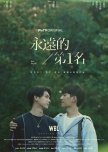
We Best Love: No. 1 For You — Sometimes Losing First Place Is How You Find the Right Person
This review reflects how I experienced "We Best Love: No. 1 For You" in 2021. I am adding it to MDL much later, but I want to keep the perspective of the period in which I first watched it because this series has remained one of my favourite BL stories ever since. I have rewatched both parts several times almost every year, and the strange thing is that repetition has never made me tired of them. The first six episodes tell an extremely simple story: Zhou Shu Yi has spent most of his life furious because Gao Shi De always seems to beat him at everything. First in school, first in swimming, first whenever Shu Yi desperately wants to prove himself. College is supposed to finally free him from that rivalry, only for Shi De to appear again. What Shu Yi does not understand is that Shi De has never been competing because he wants to humiliate him. Being first was simply the only way he knew to remain somewhere Shu Yi would always notice him. That is such a wonderfully romantic reversal of the school-rival trope because the thing Shu Yi hates most about Shi De turns out to have been Shi De's clumsy way of loving him for years.What makes the first part work so well is that the romance grows from personality rather than from a complicated plot. Shu Yi is proud, competitive, emotionally transparent when angry and completely blind to what is happening when the emotion becomes love. Shi De is calmer and appears more controlled, but underneath that control is someone who has organised an absurd amount of his life around staying close to one person. The progression from irritation to friendship and then attraction feels surprisingly natural because the series gives their ordinary interactions as much importance as the confession. The swimming pool, the infirmary, studying together, jealousy, embarrassment and the moments where Shu Yi slowly realises that Shi De's absence bothers him more than Shi De's presence all build toward the same conclusion. By the time Shu Yi understands that Shi De loves him, the real question is no longer whether Shi De's feelings are reciprocated but how long Shu Yi will need to admit something the audience can already see. The script by Lin Pei Yu had the advantage of a writer who already understood Taiwanese BL through works such as "HIStory2: Right or Wrong", "HIStory2: Crossing the Line" and "HIStory3: Trapped", and that experience shows in how efficiently six short episodes can establish not only the main couple but an entire social circle around them.
Sam Lin and YU are a huge reason the story became so memorable for me. Sam was already an experienced performer, while "We Best Love" was YU's acting debut and first leading role, yet that difference never makes the pairing feel unbalanced. If anything, it helps. Shi De is supposed to appear more certain about his emotions because he has loved Shu Yi for years, while Shu Yi is discovering everything almost in real time. YU's slight rawness therefore suits the character beautifully. He can be arrogant one second, wounded the next and almost childishly confused when feelings stop following the rules he understands. Sam gives Shi De a quieter kind of intensity; his expressions often reveal much more than his dialogue, particularly when he is watching Shu Yi without being watched back. Their chemistry never feels as though the production is forcing two actors into romantic poses and hoping viewers will do the rest. They look comfortable enough to argue, touch, stare and eventually kiss without the physical relationship becoming some separate performance labelled "BL scene". That naturalness is especially important because most of the cast did not build their careers around repeatedly playing BL couples. They simply played these characters, and that helped the relationship feel like a romance rather than a genre exercise.
I also love that the side characters are not decorative. Fang Zheng Wen and Jiang Yu Xin could easily have existed only to make Shu Yi jealous or to delay the main relationship, but their own heterosexual romance is given enough space to feel like a genuine part of the same group. Shu Yi begins the series believing he is in love with Yu Xin, only to discover that she loves Zheng Wen, while Zheng Wen is caught between his feelings for her and loyalty to his friend. Liu Bing Wei and Shi Zhe Yu are present with their own dynamic, Pei Shou Yi is far more interesting than the standard school doctor who conveniently gives advice, and Shi De's family gives him a life outside Shu Yi. This is one of the reasons the series remains so easy for me to rewatch. I am not waiting impatiently for everyone else to disappear so the main couple can return. The friendships and secondary relationships make the world feel inhabited, and even when a storyline is small, it usually belongs there.
Technically, "No. 1 For You" is also much better than its modest six-episode format might suggest. Yoiisz International Media was still a very young production company and this was its first major drama project, so there was not an established BL catalogue proving what the studio could do beforehand. What mattered more was the experienced creative team around it, particularly director Chiang Jui-chih and Lin Pei Yu. The production understands water extremely well as a visual element, beginning with swimming and repeatedly using reflections, enclosed spaces and quiet close-ups to make the emotions feel larger than the actual scale of the series. The soundtrack also works particularly well because YU was already a musician before becoming an actor, and music becomes part of the identity of "We Best Love" rather than something pasted over scenes afterward. Nothing about the production needs to be enormous. It simply knows exactly what six episodes are supposed to accomplish.
Final Thoughts
"No. 1 For You" remains one of my favourite first-love BLs because it takes something incredibly simple and executes it with almost perfect emotional clarity. Two rivals discover that the competition between them has never meant the same thing to both people, one boy realises that the person he spent years trying to defeat was actually the person who had spent years trying to remain close to him, and an ensemble of friends makes their university world feel much larger than six episodes should allow. Sam Lin and YU are excellent together, the supporting stories matter, and the ending is genuinely sweet enough that, if this had been the whole story, I could have accepted it as a complete little romance. Fortunately, it was only half of it, because "We Best Love" had something much more painful waiting for us.
Sometimes the person you spend your whole life trying to beat is only running beside you because he never wanted to reach the finish line without you.
Was this review helpful to you?
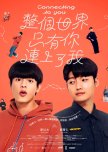
Connecting to You — When a Familiar Thread Still Leads Somewhere New
Are visible threads becoming the new supernatural shortcut for romance? Perhaps. The idea itself certainly isn't new. East Asian stories have been playing with the red thread of fate for generations, and recent dramas have increasingly found ways to make invisible emotional connections physically visible. So when "Connecting to You" introduced Chia-Kai, a young man who can see coloured threads connecting people according to love, friendship, family or hostility, I was not exactly amazed by the concept itself. They could probably have replaced the threads with colours around people's souls and created something equally workable. What made the series interesting was what it did after introducing the gimmick. Chia-Kai can see everybody else's connections but has none of his own, until police officer Da-Wei appears and an unfamiliar silver thread suddenly connects them. From there, the supernatural ability becomes part romance, part comedy and part investigative tool, giving the series an identity beyond simply waiting for the silver line to become romantic red. The source is a BL web novel by Beck, and the television project had actually been in development for years before reaching the screen, appearing in both the Busan Story Market and the Golden Horse project market. That preparation shows because the fantasy rules, police material and romance feel like parts of the same drama rather than three ideas accidentally pushed together.Bruce Chiu Yi-Tai and Liu Yu Ren are probably what made me enjoy it as much as I did. They are absolutely adorable without looking as though somebody selected them from a catalogue labelled "BL top" and "BL bottom". That is something I repeatedly appreciate about Taiwanese BL. Of course different characters have different personalities, bodies and sexual dynamics, but I rarely feel that Taiwanese productions are desperately instructing me to categorise the couple according to who is supposed to dominate whom. Chia-Kai and Da-Wei could simply be two men who become important to one another. Their attraction grows through personality, curiosity, irritation, trust and the strange connection between them rather than through one actor being coded as overwhelmingly masculine while the other is deliberately made fragile. It allows me to focus on why these particular people connect instead of wondering which familiar BL archetype each actor has been assigned. Bruce gives Chia-Kai the right combination of loneliness and eccentricity because someone who has spent his entire life literally seeing everybody else's relationships while remaining "threadless" could easily become either unbearably tragic or ridiculously quirky. He finds a balance between the two. Liu Yu Ren gives Da-Wei enough scepticism to make their early interactions funny without turning him into the predictable emotionally constipated policeman who spends half the series pretending he feels nothing. Their chemistry is soft, easy and very Taiwanese in the best way.
The coloured-thread system also becomes more effective than I initially expected because it gives the story a way to talk about relationships without reducing connection to romance. Red is not the only colour that matters. Family, friendship and even hostility create bonds, while the thickness and appearance of those connections can reveal something people themselves may not want to admit. Chia-Kai therefore possesses an extraordinary advantage and an emotional curse at the same time. Everyone around him is visibly attached to somebody, while he has grown up believing there is apparently nothing connecting him to anyone. The silver thread with Da-Wei matters not simply because it might eventually mean "boyfriend", but because for the first time Chia-Kai has visible proof that another human being is connected to him at all. That makes the romance sweeter because love is not arriving to replace an empty colour with red; it grows through friendship, companionship and the gradual discovery that a bond can change. Using Chia-Kai's ability during investigations was also a smart choice because otherwise the supernatural premise could have become nothing more than a romantic detector. The police setting gives the ability practical consequences and keeps the episodes moving whenever the romantic storyline needs time to develop.
This is also why I continue to enjoy Taiwanese BL so much. Some of my favourites in the genre are Taiwanese, including "We Best Love", "HIStory3: Trapped" and "Secret Lover", and although "Connecting to You" does not enter that top group for me, it shares something I value in many of them. Taiwanese BL frequently feels comfortable being a drama first and a BL at the same time. A police story can remain a police story, a workplace drama can care about work, family members can have lives beyond opposing the romance, and the central couple is allowed to exist without every scene being designed around shipping. Even when the premise is supernatural, the emotions remain surprisingly ordinary. That gives many of these dramas a timeless quality for me. I can return years later without feeling that I am watching something built entirely around whatever BL trend happened to be fashionable during its release. "Connecting to You" is not revolutionary, but it understands that an original story does not require an original ingredient in every single place. A familiar red-thread concept can still produce something distinctive when the characters, rules and surrounding world have enough personality.
The production itself deserves credit for that cohesion. Director Yu Jhi-han had worked in film and queer storytelling before this, but "Connecting to You" was his first television series, and the project had already passed through serious industry-development spaces before production. Force Films does not have a large enough BL catalogue for me to declare that it has some proven formula for the genre, although it had previously worked with Yu on the queer short "Gentleman Spa". What I can judge is what ended up on screen: the series looks controlled, the supernatural visual language is clear without becoming childish, the investigative material never overwhelms the romance, and the relatively compact episodes rarely feel padded simply to reach a broadcast length. The supporting characters also make the world feel inhabited instead of existing solely to push Chia-Kai and Da-Wei together. That balance matters because the easiest version of this story would have been twelve episodes of "What colour is our thread now?" Fortunately, the drama has more curiosity than that.
Final Thoughts
"Connecting to You" did not give me one of my all-time favourite Taiwanese BLs, but it gave me exactly the kind of series I can imagine happily watching again. The central idea was familiar, yet the colour system, investigative element and emotional meaning of Chia-Kai finally developing a connection of his own gave it enough originality to stand apart. Bruce Chiu and Liu Yu Ren were charming together, their relationship never needed exaggerated dominant/submissive coding to make the attraction understandable, and the drama trusted the connection itself to carry the romance. Taiwan continues to remind me that a BL does not have to reinvent love to feel fresh; sometimes it simply has to understand why these two people, in this particular story, belong together.
Fate may draw the first line between two people, but what makes it worth following is everything they choose to build along it.
Was this review helpful to you?

Love Sick 2024 — The Same Story, a Different Generation
I already liked the story of Love Sick. The original 2014 series was historically important and gave Thai BL something that barely existed on television at the time: two schoolboys whose relationship was not simply a tragic gay subplot hidden inside somebody else's drama. But liking what the original represented never meant that I thought everything about its execution had aged equally well. It took a very long time to reach emotional points that should have arrived more naturally, the enormous amount of surrounding school drama often diluted Phun and Noh's relationship, and I never completely believed the romantic ease between the original leads. Ten years later, Love Sick 2024 gave me the strange experience of watching essentially the same story and finally feeling that it had found the form I wanted from it. That is why I think calling this simply a remake understates what worked. The original Love Sick ran for 12 episodes in 2014 and then an extraordinary 36 episodes in its second season, making 48 episodes altogether. The 2024 adaptation takes the same novel by Latika Chumpoo and restructures that world into 15 episodes. That alone creates a completely different rhythm. Events that once seemed to wander eventually toward a destination now feel as though somebody has gone back through the story and asked what actually matters, what needs room, and what can be removed without losing the emotional identity of Phun, Noh and Friday College.The greatest improvement for me, however, was Almond Poomsuwan and Progress Passawish. Casting two genuine newcomers as Phun and Noh could easily have gone wrong, especially when they were inheriting characters already associated with one of the most important early pairings in Thai BL. Instead, their inexperience became part of what made the romance convincing. Phun and Noh are teenagers discovering feelings they do not completely understand, so uncertainty should be visible. The awkward pauses, hesitation, embarrassment and moments where they seem unsure what to do with their own bodies do not feel like experienced actors carefully manufacturing adolescent discomfort. Sometimes they simply look like two young performers discovering how to play intimacy at the same time their characters are discovering it. For me, that was perfect casting. I did not need polished romantic leads behaving as though Phun and Noh had already survived three previous relationships. I needed boys whose feelings seemed slightly ahead of their ability to explain them. Progress makes Noh wonderfully expressive without turning him into a cartoon, while Almond gives Phun a calmer quality that makes the moments where his emotions become visible much more effective. They are also simply adorable together, but cuteness alone would not have carried fifteen episodes. What mattered was the ease between them. Even without relying on a conventional kiss between the central pair, I understood exactly when proximity had stopped being part of their fake-boyfriend arrangement and started meaning something neither knew how to name.
That is where the difference from 2014 felt most obvious to me. I am not interested in speculating about the sexuality of either generation of actors because acting does not provide evidence of someone's private orientation. What I can judge is what appeared on screen. With the original leads, I often felt an awareness that two male actors were performing a male-male romance. With Almond and Progress, that barrier largely disappeared for me. Touching, leaning against one another, invading each other's personal space or simply remaining physically close rarely felt like something the actors needed to overcome before the characters could exist. The decade separating the adaptations matters here. Love Sick first appeared in 2014 at the beginning of modern Thai BL television, when the genre itself was still unusual enough that academic research now identifies the series as a turning point in Thai media. By 2024, these younger actors had grown up in a country where BL actors appeared on enormous billboards, male-male fictional couples had become mainstream entertainment products, Pride was publicly celebrated, and parliament had approved marriage equality. During the broadcast of Love Sick 2024, royal assent made Thailand the first country in Southeast Asia to legally recognise same-sex marriage, with the law scheduled to take effect in January 2025.
That does not mean homophobia disappeared or that every Thai teenager suddenly became completely comfortable with sexuality. Research involving Bangkok adolescents still finds stigma alongside increasing acceptance, although the overall levels of stigmatising attitudes in the studied group were relatively low and positive exposure to LGBTQ representation was associated with lower stigma. I therefore would never use Thailand's reputation for tolerance to make assumptions about Almond or Progress themselves. What has changed is the cultural environment in which young actors learn what two boys being affectionate can look like. By 2024, male-male romance was no longer the strange television experiment it had been when the original Love Sick appeared. That difference affects the entire remake. The school feels younger and more emotionally open. Attraction can be confusing without automatically becoming terrifying. Boys can tease one another about relationships and exist physically around one another without every touch being framed as an enormous violation of masculinity. This is still BL rather than a documentary about Thai teenagers, but the emotional vocabulary has changed. Watching the remake made me realise how much a society can change around a story while the basic story itself stays almost identical.
Cheewin Thanamin was also a sensible person to guide a cast this inexperienced. Whatever anyone thinks about individual dramas in his filmography, by 2024 he had spent years directing young performers in BL and understood the mechanics of the genre. He had worked across comedy, explicit adult romance, school stories and much darker material. More importantly here, he knew not to direct Almond and Progress as miniature versions of experienced BL stars. Their youth and lack of polish were allowed to remain visible, and because the characters themselves are young, that vulnerability becomes an advantage rather than a defect. The supporting cast works for similar reasons. There are moments where the differences in acting experience are visible, and nobody should pretend every performance is technically perfect. But Friday College benefits enormously from looking like an actual collection of boys rather than a room full of twenty-five-year-old professional models pretending they have homework tomorrow. Contemporary viewers were divided about the inexperienced performances, with some praising the authenticity and others wanting much stronger emotional control from the newcomers. I fell much closer to the first group because this particular story needs youthful awkwardness more than it needs technical perfection.
The remake also reminded me why I liked the original story despite my problems with the older adaptation. The fake-boyfriend premise is simple but effective because neither boy initially understands what he is inviting into his life. Phun wants a practical solution to family pressure. Noh needs help with his music-club budget. The transaction gives them permission to behave like a couple before either has to admit that he might actually want to be one. Pretending becomes a safe rehearsal for feelings that are much more frightening when they become real. It is hardly the most complicated plot BL has ever produced, but simplicity is not a weakness when the characters make the emotions interesting. Where Love Sick 2024 particularly improved things for me was in making that transition easier to feel. I could see when jealousy stopped being part of the joke. I could understand the discomfort around girlfriends without needing the drama to continually explain it. I believed that Noh could simultaneously care about Yuri and recognise that what he feels for Phun belongs somewhere else emotionally. The story remains messy because adolescence is messy, but the mess now feels attached to the characters instead of the series simply taking an unnecessarily long route toward the next important scene. I also appreciated that the remake did not attempt to modernise Love Sick by turning it into a completely different kind of BL. The setting, music club, friendships, uniforms, gossip and enormous network of teenage relationships are still recognisably Love Sick. The production understands that the original has an identity worth preserving. What needed updating was not the central premise but the way the story moves, the performances, the production polish and the emotional language between the boys. This is important because the original deserves respect even where the remake improves upon it. Thai BL in 2024 could afford to look more confident partly because Love Sick took the risk ten years earlier. Research on the Thai BL industry repeatedly identifies the 2014 series as one of the crucial starting points for the enormous market that followed. A remake therefore had an unusual responsibility: it had to improve something historically important without behaving as if that older production had simply been a mistake.
For me, it succeeded. The 2014 version was groundbreaking; the 2024 version was simply much more enjoyable to watch. Those statements can exist together. Being first deserves recognition, but being first also means working without ten years of accumulated knowledge about how Thai BL can be written, acted, filmed and marketed. The remake had the enormous advantage of inheriting an industry the original helped create.
Final Thought
What I liked most about Love Sick 2024 was not that it changed Phun and Noh. It was that it allowed me to see the same characters through a different generation. The basic confusion of first love is still there, but the atmosphere surrounding two boys discovering attraction no longer feels the same as it did a decade earlier. Almond and Progress did not need to define anything about themselves for me to believe their characters. They simply needed to appear comfortable enough with each other that Phun and Noh could exist without the actors' hesitation becoming louder than the relationship. That is why using newcomers worked so beautifully for me. Their awkwardness had value. Their uncertainty had value. Even the little imperfections in their performances could resemble the imperfections of teenagers who have no idea how they are supposed to behave when friendship begins turning into something else. I found them extremely cute together, but more importantly, I found them believable together. The story itself remains fairly simple and there are still too many surrounding characters for every storyline to receive equal depth. I would not pretend this was some revolutionary piece of writing in 2024. What impressed me was how much better the same material could feel when the pacing, casting and emotional atmosphere finally worked for me. It was almost like discovering the version of Love Sick that had always existed somewhere inside the original story but had not yet completely reached the screen. And perhaps that is the best reason for a remake to exist. Not to erase the work that came before, and not simply to reproduce it with prettier cameras, but to take something important and ask what another generation can reveal inside it. For me, Love Sick 2024 answered that question very well.
Was this review helpful to you?

You Make Me Dance — A Small BL That Made a Difficult Year Warmer
Note: This review reflects how I experienced the drama when it was released in 2021 and was originally written elsewhere before being added to MDL. I therefore judge it within the BL landscape that existed at the time rather than comparing it with productions released years later.I probably remember You Make Me Dance more fondly than its story alone would normally justify. I watched it in 2021, during COVID, when everyday life already felt unusually confined and repetitive, and something about this little Korean BL gave me exactly the atmosphere I needed. It was quiet, romantic, slightly melancholic and visually warm despite taking place during winter. It certainly wasn't an extraordinary story, and even at the time I could see weaknesses in the writing, but watching these two lonely men gradually become important to one another made those short episodes strangely comforting. Sometimes the circumstances in which we discover a drama become inseparable from how we remember it, and this is one of those cases for me.
The premise is unusual enough to immediately attract attention. Song Si-on is a 22-year-old contemporary-dance student struggling financially after conflict with his family leaves him largely alone, while Jin Hong-seok is a 28-year-old debt collector who has already abandoned his own dream of music. Hong-seok arrives to recover Si-on's debt, Si-on convinces him to wait until an important dance audition, and somehow debtor and collector end up sharing a rooftop home while becoming emotionally entangled. The details are certainly not the most realistic financial arrangement ever written, but realism was never what made the series work for me. What interested me was the symmetry between them: one man is desperately trying not to abandon his dream, while the other already knows what abandoning one feels like. Their romance grows from that recognition as much as from attraction. The drama was also tiny. Eight episodes of roughly twelve to nineteen minutes meant that the complete story was barely feature-film length, and a movie edit was indeed released afterwards at around one hour and forty-six minutes. That format inevitably created problems. Si-on's relationship with his mother needed more development, Hong-seok's history with music could have gone considerably deeper, the rival characters are more functional than complex, and several emotional developments happen because the series simply has no time to let them evolve slowly. Contemporary reviews in 2021 were already divided on exactly this issue: some viewers praised the production and chemistry while feeling that the story was racing against its short runtime and leaving parts of both characters unexplored. I agreed with that criticism even while enjoying the drama much more generously than some reviewers did. But I also think it is important to remember what Korean BL looked like at that moment. W-STORY had already produced Where Your Eyes Linger and Mr. Heart, and You Make Me Dance belonged to that early wave of Korean productions trying to establish BL as something visually polished even when the budgets and episode lengths were much smaller than ordinary K-dramas. It already looked professional. The lighting, winter atmosphere, rooftop interiors, dance studio and framing around bodies gave the series an identity that felt much more deliberate than its miniature format might suggest. A Japanese Blu-ray release later in 2021 even promoted it specifically as the next BL from the company behind Where Your Eyes Linger, which shows how recognisable W-STORY's emerging position had already become.
The dance itself is important because it isn't simply a hobby pasted onto Si-on to make him visually interesting. Dance represents the part of himself he refuses to surrender even after family rejection, financial trouble and professional insecurity. Hong-seok, by contrast, has already surrendered his relationship with music and accepted a life that pays him without fulfilling him. The idea that Si-on's movement can awaken something in Hong-seok is simple, perhaps even slightly sentimental, but I liked it. One is still fighting for the thing that makes him feel alive, and watching him reminds the other that surviving and living are not necessarily the same thing. There is also a fascinating production detail behind that choice. Choo Young-woo's character was reportedly not originally conceived as a contemporary dancer at all. During casting, Young-woo demonstrated dance he had learned while preparing for acting-school entrance examinations, and the creative team changed the character and story around what they saw. That makes sense when watching him because the camera clearly trusts his physicality. Si-on's dancing does not look like a random skill inserted between dialogue scenes; the series repeatedly allows Young-woo's body to communicate loneliness, ambition and frustration. For a young actor making his first screen appearance, carrying both the acting and the physical demands of the role was quite an introduction. Choo Young-woo was very young here, and there are moments where that freshness is visible, but it suited Si-on. He has the vulnerable look of somebody who desperately wants affection while pretending he can survive without it. His expressions can move quickly from stubborn confidence to something almost childlike, which makes Si-on's emotional dependence understandable without turning him into a completely helpless character. This was his first credited screen role, so I could not watch him in 2021 with an established filmography in mind; I simply saw a very attractive young actor with an unusual screen presence who immediately made me curious about what he might do next. Won Tae-min fascinated me for a different reason. He was still credited as Won Hyung-hoon then and was also extremely early in his screen career, but he already had one of those faces that seemed capable of belonging to almost any character. I could imagine him as the good man, the dangerous man, the ordinary office worker, the villain, the romantic lead or the person you should probably avoid following down a dark alley. That versatility is partly physical—his features can look remarkably gentle or very hard depending on expression—but it would mean nothing without control behind it. Hong-seok begins as someone who should be intimidating, yet Won lets little moments of care escape before the character is prepared to admit them. For someone with so little screen experience at the time, he was remarkably captivating. Hong-seok could easily have become ridiculous because the premise asks us to accept a debt collector who essentially moves into his debtor's life and gradually becomes his protector. Won plays the character seriously enough that the absurdity becomes less important. He has a natural stillness that works particularly well opposite Young-woo's much more physically expressive Si-on. One character moves because he is trying to keep his dream alive; the other often barely moves because he has spent too long suppressing his own. Visually, they balance each other. Their chemistry is what ultimately allowed me to forgive the screenplay. It isn't the most explosive romance, but I believed that these two lonely people could become attached very quickly because both recognised something missing in themselves through the other. Hong-seok does not simply want Si-on because he is attractive; Si-on represents passion, youth and the courage to continue wanting something. Si-on, meanwhile, finds in Hong-seok the dependable adult presence and protection he has been missing. That creates an imbalance which the short script never examines deeply enough, especially considering that one is technically collecting the other's debt, but emotionally I understood why they gravitated toward one another.
The physical romance also felt surprisingly comfortable for a Korean BL of that moment. In a 2021 Viki interview, Won and Choo themselves joked that their characters were older than the school-age leads often associated with BL and hinted that viewers would get scenes they wanted to see. The kissing never becomes explicit, but it doesn't feel as though the production is terrified of the fact that these men are attracted to each other either. That mattered in an industry where Korean BL was still defining how much romance it was prepared to show. I also remember the winter atmosphere almost as strongly as I remember the plot. The cold air, rooftop apartment, dance studio, scarves and subdued colour give the drama a feeling of isolation that suits both characters. A contemporary 2021 review described the winter setting as adding to the coldness and loneliness surrounding them, and that is very close to what I felt. During COVID, when so many of us were spending much more time inside and ordinary social life had become strange, that combination of loneliness slowly turning into warmth affected me more than it probably would have under different circumstances. That is also why I cannot judge the drama entirely through technical imperfections. If somebody watched You Make Me Dance only for plot construction, I could understand a considerably lower rating. The mother's storyline is incomplete, the rival dancer is too thinly written, CEO Cha functions more as an obstacle than a fully convincing person, the financial premise is questionable, and the ending resolves problems with the efficiency required by a drama that has almost no minutes left. The story is simply “okay.” What lifted it for me was performance, chemistry, atmosphere and timing. There is a difference between saying a drama is objectively flawless and saying that a drama gave you an experience you value. You Make Me Dance was the latter. I could see exactly where it was underwritten while still wanting to stay inside its little world. The imperfections did not stop Young-woo and Won Tae-min from making the central relationship emotionally pleasant to watch, and the production understood how to create mood despite having very limited time.
Final Thought
Looking at You Make Me Dance as I experienced it in 2021, I understand perfectly why I gave it 9/10 even though I would never pretend every individual component deserved that score. The writing was not a nine. The plot was not a nine. The development of the supporting characters certainly was not a nine. But a personal rating is also about what watching something actually did to you, and during a difficult period this tiny winter romance made me feel better. It also gave me two actors I immediately wanted to remember. Choo Young-woo had the vulnerability and physical expressiveness needed for Si-on despite this being his screen debut, while Won Tae-min already looked like an actor who could become almost anybody depending on what a future director asked from him. Their chemistry was strong enough to make a very compressed romance feel warmer and more complete than the script really allowed it to be.
Korean BL in early 2021 was still finding its shape, and You Make Me Dance was part of that process. It showed that even a drama built from eight miniature episodes could have attractive cinematography, real romantic chemistry, actors worth following and enough emotional identity to stay with somebody after the plot itself had started fading. For me, that is exactly what happened. I don't remember every narrative detail anymore, but I remember the rooftop, the winter, the dancing, those two faces, and how much I enjoyed having them around during COVID. Sometimes that is worth more than a technically perfect script.
Was this review helpful to you?
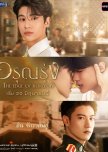
The Edge of Horizon — Thai Drama at Its Finest
Sometimes calling something a BL almost feels too restrictive. The Edge of Horizon is absolutely a BL. Its central love story is between two men, and that relationship is never hidden behind bromance or ambiguity. But after finishing it, I didn't think, “That was an excellent BL.” I thought, “That was an excellent Thai drama.” For me, this was a perfect 10/10.The story begins in Siam in 1932, with Phob, the son of a palace nursemaid, growing up beside Prince Thinnakon. They love each other before they are old enough to fully understand why the world considers that love impossible. One is born into service; the other is born into royalty. Years later, they meet again as adults at the same moment their country itself is moving toward enormous political and social change. That setting is not simply decoration. The series takes place around the 1932 Siamese Revolution, when Thailand was moving away from absolute monarchy toward constitutional government. The changing country therefore reflects the changing relationship perfectly. Phob and Thinnakon are asking whether the social order that decided their places at birth should also have the right to decide whom they are allowed to love. What impressed me immediately was the respect given to that world. Period dramas are easy to make beautiful and much harder to make believable. Putting actors in old clothes and finding an antique house is not enough. Here, status exists in almost everything: the way characters speak, stand, enter rooms, address one another, dress and even look at somebody above or below them socially. The palace does not merely look old. It feels governed by rules.
The actors actually trained for those differences. Inn Jakkrasin explained that the younger Phob required workshops focused on the submissive physical behaviour expected of a servant, while the adult military Phob required completely different preparation. He consulted military contacts about details such as saluting and the positioning of his feet. Ongsa similarly changed his normal fast speech into something slower and more deliberate for Thinnakon, including a different vocal tone appropriate to his character's upbringing. Those details matter because class is the real third person in their relationship. Phob and Thinnakon never seem to believe they are unequal as human beings. The world keeps reminding them that they are. That is considerably more interesting than simply giving us an evil father who says, “You cannot date another man.”
Vasin's opposition is tied to sexuality, certainly, but also bloodline, title, duty, reputation and hierarchy. Thinnakon is not simply his son. He represents a royal family and everything that family believes must survive through him. From Vasin's perspective, his son's life is not entirely private property. And Chai Chatayodom is terrifying in the role. He doesn't need to become some ridiculous screaming villain because his authority already fills the room. This is a veteran actor with decades of experience and multiple acting awards, including major Best Actor and supporting-actor honours, and you can see exactly why. Vasin can frighten me with restraint. His anger feels dangerous because it comes from someone absolutely convinced that his position gives him the right to control everybody beneath him. The best villains rarely think they are villains. Vasin believes he is protecting his family, his status and the order that gave meaning to his own life. That does not excuse what he does, but it makes him much more interesting than a one-dimensional homophobic father. Chai gives him enough humanity that I could understand where the character's fear came from while still wanting somebody to push him into the nearest pond.
Then there is Pond Ponlawit. Yes, my dreamy "I wish he was my boyfriend" gorgeous boy was there, so obviously I was going to notice him. But Prince Chattrathorn is genuinely one of the most interesting supporting characters because Pond refuses to play him as simply unpleasant. Even Inn and Ongsa said they were surprised by what Pond created with the role. Inn specifically praised how much reasoning and detail Pond put behind Chattrathorn's arrogance, while Ongsa said the performance made a morally grey character feel much more dimensional than he expected. That is exactly what I saw. Chattrathorn can be arrogant, cruel and infuriating, but Pond makes you feel that there is an entire internal logic underneath every ugly decision. He doesn't simply walk into a scene carrying “antagonist energy.” He walks in believing he has reasons. And Pond has become very good at that. The real revelation for me, however, was Inn Jakkrasin and Ongsa Tthuchh.
Phob needed strength without becoming the stereotypical masculine protector who solves everything for the softer royal character. He has anger, pride and political convictions, but he also understands that loving Thinnakon means loving somebody whose entire identity was built inside the system Phob increasingly questions. Inn makes that contradiction believable. Phob wants change, but he loves somebody connected to what is changing. He can resent privilege without resenting Thinnakon. He can fight against hierarchy without pretending that history disappears because two men kiss. That is a much harder character to play than a simple revolutionary hero. Ongsa's Thinnakon is almost the opposite, and I loved him. He is gentle, adorable and sometimes painfully easy to want to protect, but the writing never confuses gentleness with stupidity. Thinnakon has been raised inside enormous privilege while simultaneously having very little freedom over his own life. He can command other people and yet cannot simply command the right to love Phob. Ongsa's eyes do so much of the work. Sometimes Thinnakon looks at Phob with the happiness of the child who grew up beside him. Sometimes he looks at him as the adult who already knows exactly how much their relationship could cost. The transition happens without needing constant dialogue. And together, Inn and Ongsa have chemistry. Not manufactured “BL couple chemistry.” Not two actors repeatedly placed close enough together until fandom decides they look cute. They feel attached. There is history in the way they look at each other. Their intimacy makes sense because the relationship began before sexuality even entered the equation. They know each other as children, friends, first loves, people separated by adults, and eventually men who have independently grown into very different positions. So when physical intimacy finally enters the relationship, it feels like an extension of everything already there.
The production treated those scenes with the same care as the rest of the drama. Inn and Ongsa have spoken about establishing trust and boundaries beforehand, while director Kathadeb built the scenes through carefully planned individual shots. The result is sensual without suddenly making the drama feel as though somebody changed channels and put on a different series. That visual control exists everywhere. The cinematography understands how gorgeous period drama can be without turning every frame into an advertisement for expensive costumes. Interiors feel inhabited. Natural light, darker rooms, formal spaces and open landscapes all have different emotional functions. The characters can look tiny inside architecture that represents generations of social hierarchy, then much freer when the world around them physically opens. And the costumes deserve their own praise. Viriya Pongkajorn's work doesn't simply make everybody attractive. Clothing immediately helps separate royalty, servants, military personnel and people occupying different social positions. As characters age and their places in society change, their appearance changes with them. The clothes become part of the storytelling rather than an expensive wardrobe department showing us what it bought. That is what I mean by respect. Respect for Thai clothing. Respect for forms of address. Respect for class differences. Respect for military behaviour. Respect for the political period. Respect for architecture and domestic hierarchy. The production does not treat 1932 Thailand as an exotic background created for international BL viewers. It treats it as Thailand. That distinction may be why The Edge of Horizon feels much closer to a traditional high-quality Thai lakorn than to the familiar BL production model. And one31 knows how to do this. This is the same broadcaster behind To Sir, With Love and, more recently, the large-scale period BL Love in the Moonlight. GagaOOLala even promoted The Edge of Horizon as another grand One31 period production following Love in the Moonlight. This is therefore not a tiny BL company suddenly experimenting with historical costumes. One31 is bringing the production traditions of mainstream Thai television into queer romance.
That may be one of the most important developments in Thai BL. For years, BL often operated like its own smaller industry: younger actors, smaller budgets, university settings, limited casts and productions primarily targeting BL audiences. There is nothing inherently wrong with that model, but The Edge of Horizon shows what happens when a male-male romance receives the same treatment as a major historical television drama. You get Chai Chatayodom. You get Kathaleeya McIntosh and Duangjai Hathaikarn. You get experienced supporting performers standing beside younger BL actors rather than a cast composed almost entirely of newcomers. You get proper historical drama. And suddenly the BL is no longer expected to carry everything alone. The family stories matter. Political divisions matter. Generational conflict matters. The women matter. The older characters matter. Social class matters. Even characters who oppose Phob and Thinnakon have lives beyond simply creating obstacles for the main couple. That ensemble is one of the reasons the eleven episodes feel justified. I never felt that I was waiting through “non-BL scenes” for the romance to come back. Those scenes are the drama. The relationship exists within a family and a country, so understanding those people is part of understanding why loving each other is so difficult.
Even the political conflict avoids becoming a simplistic lesson where monarchy equals evil and revolution automatically equals good. Phob wants social change for understandable reasons, but political movements are still made of human beings, and human beings bring ambition, self-interest and contradictions with them. Thinnakon's privilege does not make him cruel, while Phob's ideals do not make every decision around him automatically correct. History is rarely that clean. The music understands the same idea of hope. Ongsa's “Saeng Raek” (“First Light”) was created around the image behind the title Arun Rung—dawn, the point where light finally appears after darkness. Songwriter-producer Achariya Dulyapaiboon described the imagery through the apparently impossible meeting of sun and earth, mirroring two people whose worlds tell them they should never meet. That symbolism could have been painfully obvious. Instead, it works because the whole drama is about change that initially seems impossible. A servant can become an officer. A prince can question what his title demands of him. A country can transform its political structure. A family can discover that tradition is not automatically the same thing as morality. And two men born on opposite sides of a hierarchy can decide that the line separating them does not deserve more respect than their love. The ending therefore felt earned rather than simply satisfying. I didn't need another tragedy proving that gay historical romances must end in punishment. Nor did I need a ridiculous modern fantasy where everyone suddenly adopts 2026 values in 1932. The drama finds something much better: hope.
Change comes slowly. People resist it. Some traditions survive, others evolve, and the characters themselves have to learn which parts of the world they inherited deserve preservation and which deserve to be challenged. That is what a historical drama should do. It should not simply reproduce the past beautifully. It should make us understand why people lived as they did while still allowing us to question what that world demanded from them.
Final Thought
I went into The Edge of Horizon knowing Pond was there, so that was already one excellent reason for me to watch it. I finished it thinking about everybody. Inn's strength. Ongsa's gentleness. Pond turning an arrogant royal into a genuinely layered man. Chai Chatayodom being absolutely terrifying. The mothers, grandmother, women and servants around them. The costumes. The military detail. The language. The palace. The music. The politics. The intimacy. The history. That is why giving it 10/10 feels easy for me.
The Edge of Horizon never seems embarrassed to be a BL, but it also never behaves as though being a BL means it should accept lower ambitions. The romance receives the same visual care, dramatic weight and experienced supporting cast that a major heterosexual period lakorn would expect. And that is exactly how it should be. I don't want queer historical dramas to feel like modern BL actors playing dress-up in borrowed costumes. I want them to feel rooted in the country, culture and period they are portraying. I want traditions to matter because challenging a tradition means nothing if the audience never understands what that tradition represented. I want older actors capable of terrifying me, mothers whose choices hurt, political change with consequences, beautiful language, carefully designed clothing and romance that belongs organically inside all of it. The Edge of Horizon gave me that. Audience reception also suggests I was hardly alone. Shortly after the finale, IMDb had it at roughly 8.5/10 from around 180 ratings, with individual episodes repeatedly scoring around 9 or higher. That is still a modest international sample, but the consistency is notable, and contemporary reviews repeatedly praised the acting, cinematography, historical setting and the way romance was integrated with class and political change. For me, however, numbers are secondary. I have watched enough BL to know when I am forgiving something because I love the actors, when I am enjoying something despite its flaws, and when a production simply gives me almost nothing I want to change. This was the latter.
The Edge of Horizon is not just one of my favourite Thai BLs of 2026. It is Thai drama at its finest.
Was this review helpful to you?
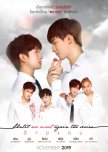
Until We Meet Again — The Most Beautiful Love Story I've Ever Watched
I honestly don't know how to describe what I just watched.I've seen BLs before, and I've enjoyed many of them, but Until We Meet Again is on a completely different level. This isn't simply a romance between two boys. It's a story about love that survives death itself, about family, guilt, forgiveness, and destiny. Every episode made me more emotionally invested than the previous one, and by the end, I had cried more times than I can count.
The idea of connecting two lives across different generations could easily have become confusing, but the writing handles it beautifully. Every revelation fits naturally into the story, and every answer creates an even stronger emotional connection with the characters. The ending is one of the most satisfying I've ever seen because it doesn't simply resolve the plot—it gives every important character the closure they deserve.
Ohm Thitiwat and Fluke Natouch are absolutely incredible together.
Their chemistry never feels forced for a single second. Every smile, every tear, every embrace feels genuine. I completely believed in Dean and Pharm, but I also completely believed in Korn and Intouch. Playing two different emotional layers within the same story is incredibly difficult, yet both actors manage it effortlessly. I honestly can't imagine anyone else bringing these characters to life the way they did.
The supporting cast is equally remarkable. Every relationship feels meaningful, every family carries emotional weight, and every character contributes something important to the story. If I had one small wish, it would simply be to see Somkrit receive more attention in the present timeline. As In's best friend, he deserved the opportunity to have his own emotional journey after everything that happened in the past.
The production is simply beautiful. The cinematography constantly enhances the emotion without becoming excessive, the soundtrack is unforgettable, and the pacing allows every important moment to breathe. Nothing feels rushed. The series understands that sometimes silence says more than dialogue, and those quiet moments are often the ones that stay with me the longest.
Final Thought
Until We Meet Again is everything I want a BL to be. It tells an unforgettable love story, treats its characters with respect, and delivers emotions that feel completely genuine from beginning to end. I laughed, I cried, and I became deeply attached to every stage of the journey. For me, this is simply a perfect drama, and I already know I'll watch it again many times.:::
Was this review helpful to you?

Shark 2: The Storm — Four Years Later, It Was Worth the Wait
Waiting four years for a sequel felt incredibly long, especially after how much I enjoyed Shark: The Beginning. I was worried the momentum would be gone or that the cast wouldn't feel the same anymore. Fortunately, The Storm quickly proved those fears were unnecessary. It feels like a natural continuation rather than a sequel made simply because the first film was successful.The story expands the world while keeping Woo Sol at its centre. He's no longer the frightened teenager trying to survive. He's stronger, more confident, but still carries the emotional scars of everything he experienced before. I appreciated that the sequel never forgets where he came from. His growth feels earned because the film constantly reminds us of the person he used to be.
Kim Min Seok once again carries the entire film.
One thing that genuinely impressed me is how committed he remained to the character. Four years have passed since the first film, yet he still looks completely believable in the role. Physically, he maintained the condition needed for Woo Sol, and emotionally, he slips back into the character as if no time had passed at all. It's also difficult to believe he's already in his mid-thirties. He still has the youthful face that made Woo Sol so easy to sympathise with in the first film.
I've always liked the contrast he brings to action roles. He has this naturally gentle, innocent expression, yet once the fighting begins, you completely believe him. Very few actors manage that balance as well as he does.
The action is even more ambitious this time, but what I appreciated most is that it never replaces the story. Every confrontation has emotional meaning behind it, making the fights feel like the continuation of Woo Sol's personal journey rather than action for the sake of spectacle.
The production also feels larger than the original. The cinematography, choreography, and overall scale all show clear progression, while still respecting what made the first film work. Rather than trying to become something different, it simply becomes bigger.
Final Thought
Shark 2: The Storm is exactly the sequel I was hoping for. It respects the original, continues Woo Sol's journey in a meaningful way, and once again reminds me why Kim Min Seok is one of my favourite Korean actors. Waiting four years was frustrating, but after watching the film, I honestly think it was worth every minute.
Was this review helpful to you?

The Promise of the Soul — Another Proof That Taiwan Knows How to Reinvent BL
Taiwan never seems afraid to try something different, and The Promise of the Soul is another perfect example. On paper, the story sounds almost impossible to make believable: a man is reunited with his soulmate after being reincarnated through his own grandson's body. Yet somehow, the drama makes this extraordinary premise feel deeply human. By the end, I wasn't thinking about fantasy anymore. I was simply watching two souls who had finally found each other again.The story constantly surprised me. Rather than treating reincarnation as a gimmick, it asks difficult questions about love, identity, destiny, and sacrifice. The fact that Ye Hai Yuan is the reincarnation of the wife Xia Cha lost decades earlier gives the romance an emotional depth that few BLs attempt. It's also heartbreaking to realise that this second chance only exists because his grandson lost his life. That tragedy remains part of the story from beginning to end, making the happiness bittersweet rather than perfect.
Martin Wong completely surprised me.
I remembered him as being very slim in his previous projects, but here he looks completely different. His physical transformation immediately gives the character a stronger presence, and he convincingly portrays someone carrying decades of life experience inside a young body. It's not just about looking more muscular. It's about making you believe this young man thinks, speaks, and reacts like someone who has already lived an entire lifetime. That balance is incredibly difficult to achieve, and Martin succeeds brilliantly.
Kenji Fan is equally convincing. He's naturally handsome, charming, and easy to like, but what impressed me most is how sincere his emotional journey feels. As Hai Yuan slowly accepts feelings he never expected to have, every step of that evolution feels believable. Because Martin and Kenji already knew each other before filming, their relationship never feels forced. Their chemistry develops effortlessly, making the romance feel genuine from beginning to end.
I also appreciated that the series never loses sight of its emotional core. Beneath the fantasy lies a simple story about two people who complement each other perfectly. They're complete opposites in personality, yet that's precisely why they fit together so naturally. Watching those differences slowly disappear as they realise they're soulmates is what makes the romance so touching.
The production deserves praise as well. Like many Taiwanese BLs, it doesn't rely on spectacular visual effects or extravagant locations. Instead, it focuses on intimate cinematography, expressive performances, and quiet emotional moments. Those choices allow the story to breathe and make even the supernatural elements feel believable.
Final Thought
The Promise of the Soul is another reminder of why Taiwanese BL continues to impress me. It's creative without becoming confusing, emotional without becoming melodramatic, and original without forgetting that the romance should always remain at the centre of the story. Martin Wong and Kenji Fan make an exceptional pairing, and together they bring a beautiful, bittersweet love story to life. It's a drama that made me believe soulmates might really exist.
Was this review helpful to you?

Depth of Field — Japan Turns the Simplest Love Story into Something Unforgettable
There are dramas that entertain you, dramas that make you smile, and then there are dramas like Depth of Field that quietly break your heart. I cried more than once watching this series, not because it tries to manipulate your emotions, but because everything feels painfully sincere. From the first meeting on the school rooftop to the final episode, I felt as though I was watching someone's most precious memory unfold.I had already enjoyed the manga, so my expectations were high. Fortunately, the adaptation understands exactly what made the original story so special. It never tries to make the romance bigger or more dramatic than necessary. Instead, it embraces the quiet moments, the awkward silences, and the emotions that are often left unspoken. Rather than simply adapting the plot, it captures the soul of the manga.
The real revelation, however, is Usa Takuma.
I honestly think this is one of the greatest acting performances I've ever seen in a BL. Every emotion feels completely authentic. Whether Hayakawa is trying to hide his pain, falling in love without understanding why, or slowly allowing himself to become vulnerable, Usa Takuma never misses a single emotional beat. I didn't just watch his character suffer—I felt that suffering with him. That's an incredibly rare quality for any actor, regardless of genre.
Konno Ryohei is equally important to making the story work. His calm presence perfectly balances Hayakawa's emotional turmoil, creating a relationship built on understanding rather than grand romantic gestures. Their chemistry doesn't explode onto the screen. It quietly grows until you suddenly realise you're completely invested in them. That's exactly why their relationship feels so believable.
One of the things I admire most about Japanese BL is its ability to make ordinary life look extraordinary. Depth of Field doesn't rely on spectacular scenery or luxurious locations. Most of the story takes place at school, on a rooftop, or in everyday surroundings. Yet every frame feels beautiful. Through the cinematography, the lighting, and the careful direction, even the simplest classroom or corridor looks like a cherished memory from a first love. It's a kind of visual poetry that very few countries consistently achieve.
The soundtrack is equally remarkable. Rather than telling me how to feel, it quietly accompanies the story, allowing the performances to carry the emotional weight. Combined with the delicate direction, it creates an atmosphere that stays with you long after the final episode ends.
Final Thought
Depth of Field is everything I love about Japanese BL. It proves that a simple story, told with honesty, beautiful direction, and extraordinary performances, can be more powerful than the biggest productions. The manga was already excellent, but the drama somehow managed to make me love it even more. Above all, Usa Takuma delivered a performance I'll never forget. For me, this isn't just one of the best BLs of the year—it's one of the best I've ever watched.
Was this review helpful to you?

Revenged Love — The Adaptation This Novel Always Deserved
I absolutely loved Chai Jidan's novel, so I went into Revenged Love with very high expectations. After the disappointment of Falling in Love with a Rival back in 2015, I honestly wasn't sure the story could ever receive the adaptation it deserved. Thankfully, this series proves that sometimes it's worth waiting. This is everything I wanted the first adaptation to be.The story remains one of the most original premises in BL. What begins as a ridiculous revenge plan slowly transforms into a genuine love story that constantly surprises both the characters and the audience. The beauty of the narrative is that it never asks whether someone is gay or straight. It asks a much simpler question: what happens when your heart falls in love with someone you never expected? That's what makes the story so compelling. Love doesn't always follow the labels we create for ourselves.
The adaptation is remarkably faithful to the novel. Unlike the 2015 version, which had to compress hundreds of chapters into a handful of short episodes, this series finally gives the characters room to grow. Their emotions evolve naturally, the relationships make sense, and every major turning point feels earned instead of rushed. As someone who already knew the source material, I couldn't have asked for a better adaptation.
The cast is outstanding.
The main couple immediately convinced me, but what surprised me even more was the second couple. Too often, secondary romances exist simply to fill screen time. Here, both relationships are equally interesting, equally believable, and equally important to the overall story. I never found myself wanting to skip one couple to return to the other because both storylines kept me completely invested.
The chemistry is exceptional across the board. Every relationship develops naturally, allowing the emotional moments to land with real impact. Whether the characters are arguing, teasing each other, or slowly admitting their feelings, everything feels authentic. The performances never become exaggerated, which is exactly what this story needed.
The production also deserves praise. Despite the limitations surrounding Chinese BL productions, the series never feels restrained emotionally. The direction understands when to embrace comedy, when to slow down for romance, and when to let the actors carry the weight of a scene without unnecessary melodrama. Combined with an excellent soundtrack and polished cinematography, the result is a series that constantly feels confident in what it wants to be.
Final Thought
Revenged Love is the adaptation I had been hoping for ever since I finished the novel. It captures the humour, the romance, the emotional growth, and the unforgettable relationships that made Chai Jidan's story so popular in the first place. After the failed attempt in 2015, this version finally gives Counter Attack the justice it always deserved. For me, it's simply a perfect BL.
Was this review helpful to you?

SOTUS — Finally, a Love Story That Feels Like Mine
I honestly never thought I would see something like this on television.Until now, if you wanted to watch stories about two men falling in love, you had to look for independent movies, short films, or productions that were often impossible to find with subtitles. Suddenly, here comes SOTUS, a full television series where the romance between two boys isn't treated as a joke or a tragedy. It's simply a love story, and that alone makes it exciting.
What struck me immediately is how normal the characters feel. They aren't exaggerated stereotypes or comic relief. They don't remind me of the flamboyant gay characters we've often seen in older films, where straight actors play them almost like a parody. Arthit and Kongpob are simply two university students. They dress like everyone else, act like everyone else, and slowly discover feelings they weren't expecting. One accepts them more easily, while the other struggles with what they mean. That feels real.
The romance develops slowly, and I loved that. Instead of rushing into a relationship, the series lets the tension build through everyday interactions. Kongpob's determination slowly breaks through Arthit's walls, and watching those small changes becomes just as rewarding as the romantic moments themselves. By the time the relationship begins to blossom, I was completely invested.
Krist Perawat and Singto Prachaya are outstanding together. Their chemistry feels effortless, making every smile, every stare, and every awkward conversation believable. Neither performance feels exaggerated. Instead, they create the impression that these are two young men genuinely trying to understand feelings they never expected to have. I couldn't imagine better casting for these characters.
Another thing I really enjoyed is discovering Thailand through the story. The SOTUS system was completely new to me, and although some aspects are surprisingly harsh, it was fascinating to learn about a university tradition I had never heard of before. The series isn't just introducing me to a new love story; it's introducing me to another culture as well, and that makes the experience even richer.
The production is simple but effective. The university setting feels authentic, the pacing allows the relationships to grow naturally, and the soundtrack supports the story without becoming distracting. Nothing feels overly dramatic. The series trusts its characters to carry the emotions, and they absolutely do.
Final Thought
SOTUS gave me something I had been waiting for without even knowing it was possible: a genuine television romance between two ordinary young men. More than the love story itself, what moved me was seeing characters who felt real instead of stereotypical. I finished the series hoping this wouldn't be the last BL of its kind, because if this is the future of the genre, I definitely want to see more.
Was this review helpful to you?
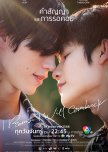
I Promise I Will Come Back — A Love Story That Broke My Heart
I knew from the first few episodes that this wasn't going to be a light romance, but I still wasn't prepared for the ending. By the time the credits rolled, I was crying. Not because the story tried to manipulate my emotions, but because I had genuinely become attached to these characters. Their journey felt so sincere that every decision they made carried emotional weight until the very last scene.One thing I really appreciated is that the drama never mistakes tragedy for depth. The story takes its time developing the relationship, allowing the two leads to slowly build trust, affection, and love. Because their connection feels so believable, every happy moment becomes precious. That's exactly why the ending hurts so much. It isn't simply sad—it feels unfair, just like life sometimes does.
The acting is excellent throughout. Both leads fully commit to their characters, making every emotional scene feel honest rather than exaggerated. Whether they're sharing quiet conversations, moments of happiness, or heartbreaking goodbyes, I completely believed them. Their chemistry carries the entire drama, and without performances of this quality, the ending would never have had the same impact.
The production also deserves praise. The cinematography quietly supports the emotional tone without becoming overly dramatic, while the soundtrack knows when to step back and let silence do the work. Instead of forcing tears through loud music or excessive melodrama, the series trusts its actors and its story, and that confidence pays off.
Some viewers will probably dislike the ending simply because it isn't the happy conclusion they were hoping for. I understand that reaction, but I don't share it. A sad ending doesn't automatically make a story bad. Sometimes it's the ending that stays with you the longest because it feels honest. I may have wished for a different outcome, but I wouldn't change the story just to leave with a smile.
Final Thought
I Promise I Will Come Back is one of those rare dramas that reminds me why I watch BL in the first place. It isn't afraid to make you laugh, hope, and eventually cry alongside its characters. The ending broke my heart, but that's only because the series first convinced me to love the people at the centre of it. For me, that's the mark of an unforgettable story.
Was this review helpful to you?
TharnType Season 2 Special: The Wedding Day
0 people found this review helpful
TharnType Season 2 Special: The Wedding Day — The Perfect Goodbye
After following Tharn and Type through everything they experienced over the past two years, I honestly couldn't have asked for a better ending. The Wedding Day isn't trying to create one last dramatic obstacle or force unnecessary conflict between them. Instead, it celebrates everything the couple has overcome and gives them the happy ending they truly deserve.The story is wonderfully simple because it doesn't need to be anything else. This special isn't about asking whether Tharn and Type belong together anymore—that question was answered long ago. It's about watching two people who fought through countless misunderstandings, personal struggles, and family issues finally reach the point where they can confidently choose each other forever. Sometimes, that's all an ending needs.
Mew Suppasit and Gulf Kanawut remain the heart of the entire franchise. Their chemistry feels just as effortless as ever, and because we've spent so much time watching these characters grow together, every smile, every joke, and every emotional moment carries extra weight. They don't have to convince us that Tharn and Type love each other anymore. We already know it, and that's exactly what makes this final chapter so satisfying.
One thing I particularly appreciated is that the special gives fans time to simply enjoy the couple. Rather than rushing from one dramatic event to another, it allows us to celebrate alongside them. After all the emotional highs and lows of the series, slowing down was exactly the right decision. It makes the wedding feel earned instead of simply becoming another plot point.
The production also feels slightly more polished than before. The ceremony itself is beautifully presented without becoming overly extravagant, and the music fits the atmosphere perfectly. For once, I actually noticed the soundtrack because it quietly enhances the emotion instead of disappearing into the background.
More than anything, this special feels like a farewell—not just to Tharn and Type, but to everything this franchise has represented. It's the final chapter of a journey that began with two completely opposite personalities learning to understand each other, and it ends exactly where it should: with two people choosing to build a life together.
Final Thought
The Wedding Day is the ending I wanted for Tharn and Type. It doesn't rely on unnecessary drama or last-minute twists because it understands that the journey has already been completed. Instead, it gives fans one final opportunity to celebrate one of BL's most memorable couples and lets the story close with happiness rather than heartbreak. As a conclusion to both the series and Mew and Gulf's journey as Tharn and Type, I honestly couldn't have asked for much more.
Was this review helpful to you?

Wandee Goodday — The Gold Standard for Modern Romantic Comedy BL
Every once in a while, a BL comes along that reminds me why I fell in love with the genre in the first place. Wandee Goodday is one of those dramas. It has everything I look for: believable chemistry, mature characters, excellent humour, a relationship that grows naturally, and enough emotional depth to make the comedy meaningful instead of superficial. I loved it so much that I even imported the official DVD box set directly from Thailand. That's something I rarely do, and it says everything about how much this series meant to me.The story immediately stands out because it refuses to follow the typical romantic-comedy formula. Yes, it begins with a fake relationship and a friends-with-benefits arrangement, but it quickly becomes much more than that. Instead of relying on endless misunderstandings to delay the romance, the series focuses on two adults learning to understand themselves before they can truly understand each other. Behind all the comedy lies a surprisingly mature story about confidence, vulnerability, and the fear of not being enough for the person you love.
One of the biggest reasons it works is the sport itself.
Unlike many dramas where the profession or hobby exists only as decoration, Muay Thai is part of Yoryak's identity from beginning to end. His discipline, his emotional restraint, and even the way he approaches relationships are all shaped by the sport. That's why I often compare other combat-sport BLs to Wandee Goodday. It proves that a sport can become an essential storytelling tool instead of simply providing a few training montages between romantic scenes.
Then there are Great Sapol and Inn Sarin.
Honestly... what a pairing.
They're both incredibly handsome, but that's the least interesting thing about them. What truly impressed me was how naturally they complemented each other. Great has an effortless masculinity that never becomes intimidating, while Inn brings warmth, humour, and emotional sensitivity without ever making Wandee feel weak. They completely avoid the outdated "top versus bottom" stereotypes that still exist in parts of the BL industry. Instead, they simply feel like two adults falling in love.
Their chemistry is phenomenal.
It never feels manufactured for fan service. Whether they're arguing, teasing each other, flirting, or sharing intimate moments, everything flows naturally. There isn't a single scene where I questioned whether they believed in their own relationship. By the end of the series, they had become one of my favourite BL pairings ever, which is exactly why I'm disappointed GMMTV doesn't seem interested in continuing to develop them as a long-term ship. I genuinely think they're leaving something special behind.
The supporting cast deserves just as much praise. Drake Sattabut, Pod Suphakorn, Thor Thinnaphan and the rest of the ensemble all contribute to a world that feels alive beyond the central romance. Nobody exists purely to create unnecessary drama. Every supporting character helps the protagonists grow, making the story richer instead of simply longer.
Director Golf Sakon Wongsinwiset also deserves enormous credit. Balancing comedy, romance, sport, and emotional drama is much harder than it looks, yet the series constantly knows when to make you laugh and when to quietly break your heart. The pacing never feels rushed, the humour rarely becomes childish, and the emotional scenes are allowed to breathe instead of being overwhelmed by music or melodrama. Visually, the production is polished throughout, with energetic fight choreography and bright cinematography that perfectly matches the optimistic tone of the series.
Perhaps what I admire most is that Wandee Goodday understands that healthy relationships are actually interesting. So many romances depend on endless secrets, toxic behaviour, or artificial misunderstandings to keep the story moving. Here, the characters gradually learn to communicate, support each other, and grow together. That doesn't make the drama less exciting—it makes it far more rewarding because their love feels earned.
Final Thought
Wandee Goodday is everything I want a romantic-comedy BL to be. It's funny without becoming ridiculous, romantic without becoming cliché, and emotional without manipulating the audience. Great Sapol and Inn Sarin create one of the most believable and charismatic pairings I've seen in years, and I genuinely wish GMMTV had continued building on their partnership. This is one of those rare dramas I know I'll revisit again and again, because every rewatch reminds me just how enjoyable a well-written love story can be.
Was this review helpful to you?


