

 77
77 331
331 10
10 1
1 5
5 1
1 12
12 1
1 2
2 3
3 1
1 2
2 1
1 1
1 5
5 10
10 1
1 1
1 2
2 1
1 2
2 1
1 1
1 3
3 2
2 1
1 2
2 2
2 1
1 2
2 1
1 8
8


Karma is a Court Lady.
Billed as a love story between a reformed rake Sheng Chumu and a court lady Fu Rou, this is really an opulent tragicomedy about the succession turmoil that plagued the latter years of Li Shimin/Tang Taizong's reign. It is a surprisingly empathetic and riveting portrayal of the greatest Tang emperor's disappointing and much reviled crown prince Li Chengqian. It strikes me that his story is what the writer really set out to tell; all the other parallel sub-plots are much more indifferently written.The way the drama is promoted as Fu Rou and Sheng Chumu's love story is misleading and misinforms audience expectations. Yes, I know how adorable they look together but their story is rather pedestrian and is not the main meal so they end up spending an incredible amount of time apart. Neither character has free will and their romance does not drive the narrative; it is in fact subordinated to and frustrated by the main succession plot. That is necessary as these two main parallel, interlocking plots are related primarily from Fu Rou's perspective as a court lady or official 女官 with close access to the workings of the inner palace and the imperial family's private moments.
Although Fu Rou is the eponymous character with the most screen time, this is a cardboard character that is made worse by Li Yitong's anodyne, colourless portrayal. Fu Rou is pretty much superwoman - an incredibly talented, resourceful and daring fixer who finds herself in the middle of every palace conflict large and small. She comes to the aid of anyone that appeals to her bleeding heart, taking on matters well above her pay grade. She has the temerity to lecture and chastise anyone and everyone from lowly palace servants to the emperor himself! I would have loved this character to death if she had a bit of a dark side, an odd hobby or even some tiny flaw like picking her nose in public or something, anything. But no, Fu Rou is a suffocating paragon of virtue, moral rectitude and forgiveness; who genuinely believes that good deeds begets positive karma that pays off in the long run. But if karma is a bitch, then her title is court lady because there are heinous, irreversible and tragic unintended consequences to Fu Rou's meddling and her indiscriminate assistance to wicked people. Due to editing/censorship issues, we never get see Fu Rou reflect upon the folly and irony of her interventions or experience any sense of remorse or regret. Thus there is no character development and by the end Fu Rou to me is just a vapid, righteous prig of a character that I most resent - poor Chumu is so much better off remaining Changán's most notorious playboy.
In sharp contrast, Xu Kai's Chumu is a much more engaging, funny, relatable and outside of a lapse in the middle; a smart character that undergoes tremendous growth. It is a pity he gets so little screen time because he has a wonderful ability to just casually infuse a moment with comic relief. The comical antics of the gruffly hilarious Sheng Xianjing, Chumu, Chuling (shout out to the very funny Kris Fan), the gamine Princess Xinnan and Prince Han go a long way toward diffusing the dark undertones to the drama. Nothing made me laugh harder than Princess Xinnan balancing those dastardly bowls. Unfortunately the denizens of the inner palace and especially Fu Rou and Prince Zhou are humorlessly written and portrayed, resulting in some stifling and overly angsty inner palace arcs and a notable darkening of the overall mood in the second half.
With five or six couples, there is at surface a lot of romance in this drama but they are mostly flawed, complex and maddening relationships. This is due to the surfeit of unsavory, corrupt and chauvinistic male characters, from stalkers to lechers and murderers who simply cannot take no for an answer and lame brained female characters willing to indulge their flaws. As a result, most of the ships are leaky and not seaworthy enough to survive stormy seas. These messy, disturbing love-hate relationships are not consistently well written and there are arguably too many of them. That said, these characterizations are compatible with the times and the illogical pairings seem to curiously "work". They are certainly far more interesting than the usual lighthearted and fluffy standard fare of secondary romances.
The main appeal of this drama for me is Li Shimin, Tang Taizong's succession story, which I feel is what this drama is really about and it is compellingly portrayed. For a fictionalized account that takes a fair amount of literary license, it captures the essence of the main historical figures and remains astonishingly true to the important events of the day. The one dark stain in Li Shimin's history was the Xuanwu Gate Incident, where he personally killed both his brothers from the same mother and forced his father to abdicate in his favor. He went on to be a benevolent and revered emperor, one of the greatest in history. This drama is set in his twilight years as history appears to be on the brink of repeating itself. It is an intimate, at times a scathing expose on the insufferable privilege of imperialism and at times a compassionate account of how impotent, conflicted and utterly terrified this emperor and his beloved empress must have felt as they watch their sons at each others throats. In all the moments that count within this main arc, the writing holds up although towards the end when everything comes together, it is quite obvious that some scenes were lost to censorship.
The most phenomenal, multi-faceted and evocative performance that stands out among an absolutely fabulous cast is Li Zefeng's portrayal of the crown prince. I find it unfathomable that I have not noticed this actor before. He starts out as the highly regarded crown prince, showing so much promise and closely allied with his brother Prince Han. But he is slowly cracking under the immense pressure of being crown prince under the exacting eye of his father and the court and constantly measured up against his other talented brothers. The acting was so good I could understand why he sought refuge in frivolous pursuits and why he needed Chenji. I was surprised by how openly and sympathetically their taboo relationship is explored. It is the relationship that moved me the most, I grieved with him when it ended and I could see how he unraveled and gave in to his worst instincts. Prince Han is the other well written and well acted role. It is tragically comical how their sibling rivalry blew them up and I love how their bond is depicted with a multitude of emotions and a good dose of irony and humor.
I enjoyed this gorgeous and expensive production quite a bit although the story is quite dark and there are too many distracting sub plots and frustrating characters. Although the writing is at times lazy, fantastic acting by the veteran cast more than makes up for it. But it is definitely not the kind of story most viewers thought they would be watching when they picked this up and it definitely will not appeal to everyone. I enjoyed it enough to give it an 8.0 and would probably rate it quite a bit higher if they had diminished Fu Rou's role.
Was this review helpful to you?
No good deed goes unpunished.
This is a melodramatic story about a badass assassin Shen Lige and Liu Yikang, titled Prince Pengcheng who was best known for reforms that heralded a golden age for the short lived Liu Song dynasty (420-479). In real life, Liu Yikang was probably a dull and dusty fellow who promulgated legislation and ably shouldered the burden of tedious administrative tasks artfully dodged by his brother the allegedly sickly emperor Wen. In this romanticized account, Pengcheng falls in love with the beautiful and deadly Lige, who helps him drain the swamp and weed out a bunch of corrupt and rebellious aristrocrats who are disenfranchised by his reforms.Shen Lige (Li Qin) must be one of the strongest, most badass, most lethal and most gorgeous female leads of c-drama. She makes a grand entrance and her character is awesome up until the bitter end and is the strongest selling point of this drama. Li Qin's acting is so superb her Lige is powerful, engaging, fierce yet still feminine and her expressions are nuanced and emotionally on point. Initially I was not convinced on her pairing with Qin Hao - he is obviously quite a bit older and her "lao tou"/old dude jokes did not help. But Qin Hao is a very compelling actor and in no time, I was rooting for Lige and Pengcheng. While their chemistry is not sizzling or deeply passionate, they are both smart characters that are clearly on the same wavelength and make a formidable team. That said, I feel an actor of Qin Hao's caliber was somewhat wasted on a role such as Pengcheng - he would have made a far more compelling villlain. I also did not like the noticeable skin smoothing they did on him which obscured his micro expressions.
All of the characters in this drama are just simply fantastic. How can you not love Prince Jingling who has the best, most subtly comical facial expressions? Or the completely adorable, wholesome loving, humble devoted goodness that is Shen family? Or the mischevious Zijin and Lige's loyal assassin fraternity? There are so many wonderful, well written characters that are charismatically portrayed and interact with so much chemistry and rapport that you can't help falling in love with them. Guard your hearts carefully though because one of the key takeaways of this drama is that no good deed goes unpunished and compassion and mercy is repaid with treachery and murder. Of course we can't expect all of the characters to survive but there have to be enough survivors to keep us invested in the drama and this one barely makes it. The deaths also have to be "good deaths" at the hands of a worthy opponent and not at the hands of say a puny mutant ninja flying cockroach.
Very much like its predecessor Weiyoung, the villains in this drama are quite enjoyable almost cartoonlike caricatures with very dramatic, somewhat comical facial expressions. Lu Yuan is an excellent, overpowering villian. And Consort Sun relishes hamming it up so much at many points she appears on the verge of cracking up with laughter. However, there are also too many repetitive petty villains with cliché motives and too many lives. The main villains and in particular the mastermind in black (whose identity was obvious quite early on) are interesting characters that should have been better developed instead of digressing into sibling rivalry, green eyed monster and excessive bitch slapping tropes. Unfortunately, the villain spotlight was hijacked by the very pretty Shen Leqing, a well acted but two dimensional character with pedestrian motives. I guess in life and in art, men can see better than they can think.
The story writing is where this exhausting melodrama falls down hard. The plot is predictable and smacks of Weiyoung. Heavy suspension of disbelief is needed because from the get go, a lot of things that don't make sense happen. I rolled my eyes so often that I can no longer tell if my right and left eyeballs have exchanged sockets! But the acting is so delightful and there are so many thrilling moments that for the first 20+ episodes I went with it. At some point however, the excessive plotting and the rollercoaster ride of emotional ups and downs as beloved characters are mowed down with reckless impunity while petty villains survive against improbable odds becomes simply too much. The drama peaks in the mid-30s after the most well developed villain is felled and it further loses momentum after some of my best loved characters are gratuitously killed off. It limps through some repetitive sub-plots towards an unexpectedly good ending which I almost missed because I wasn't that motivated to finish. I find the writers of this drama guilty of writing under the influence of alcohol. They tortured my eyeballs with cruel and reckless depravity and are hereby sentenced to writing commercials for the next 15 years. The surprisingly fitting ending qualifies them for probation after 8.0 years, which is also my rating for this drama.
There seems to be some confusion over the ending so I am copying my a spoiler tagged explanation of what happened from the threads to the comment section of this review.
Was this review helpful to you?
Behind every great man is a woman rolling her eyes.
New Life Begins is a fun and funny satire that mocks ancient Chinese feudal society. It is set in the fictional kingdom of Xinchuan, which presides over eight other provinces or chuans. Xinchuan is the poster child for every deplorable aspect of the feudal patriarchal society that prevailed over most of China's 5000 years of recorded history. Every three years as tribute, eligible young beauties from the provinces are sent for selection as wives or concubines of the Xinchuan princes. As these poor unsuspecting scions pore gleefully over bride portraits, little do they know that the very foundation of their kingdom and beliefs are about to be rocked to its chauvanist core.As fate would decree, subversive elements infiltrate that year's bride candidates. These elements are woefully untaught and unteachable in the Rules of Reverent Submission for Women. The kind of marriage envisioned by the Xinchaun royalty could not be further from their minds. The ringleader is Li Wei, a deceptively harmless foodie from Jichuan, an inconsequential province where men and women are equal and monogamous. She finds kindred souls in the scheming Hao Jia, the fierce Shangguan Jing and the savvy and ambitious Yuan Ying. Together, they prevail against the suffocating, often life threatening strictures of the Xinchuan inner palace to carve out an existence with some free will. Their brave and hilarious exploits resonate with the oppressed and fuels a fire across the inner palace and then, the capital. As it turns out, behind every great man in Xinchuan is a woman rolling her eyes. Despite the period setting, the ideals in this drama are very modern. It is a very fantastical utopian depiction of the kind of power women can unleash by simply working together instead of turning on one another.
This is not to say that all ten of the Xinchuan princes are bad fellows even though most of them make exceedingly bad husbands. With some, it is simply a matter of training while others need to be kicked to the furthest corners of the empire. The commercially savvy playboy Prince An who thinks he is the sun that the solar system revolves around when he is really the moon is the caricature that made me laugh hardest. That said, the entire ensemble cast delivers rib-tickling and lively comedic sketches that poke fun at the mundane. In a mostly lighthearted and positive but rather cursory manner, the drama evokes many women's themes. Hua Jia's arc is the darkest and most complex one and sounds a dire warning about disgruntled female employees. The sub-plots are short and even though the villains made my blood boil, they are not that smart or complex. That is because the true villain is the tyranny of the patriarchal feudal system and they are all victims of its shortcomings.
All of the sub-plots unfold around the evolution of the relationship between Li Wei and Yin Zheng, the unfavored sixth prince. Hilarity ensues when this woman who lives to eat finds herself shackled to a man who eats to live! With the help of MVP Butler Su, she attempts to tease out the inner fat dude just waiting to burst out of Yin Zheng. In fact, food is her secret weapon; she worms her way into practically everyone's hearts through their stomachs. Both Bai Jingting and Tian Xiwei have good comedic expression and they are fantastic at seamlessly turning funny moments into heart stopping passionate ones. While theirs is a fun, wholesome story, it is too much of a fairy tale. Neither of them have serious flaws and every cloud has a silver lining. In fact Li Wei's perpetual chirpiness grated on me at times. While Yuan Ying is a fabulous and formidable character and I get that one woman's treasure is another's trash, that entire situation is just too good to be true. I also didn't like how their relationship jumps from courtship to the comfortable rhythm of a long married couple, deferring the best romance part till the end. It breaks the natural momentum of a relationship and distracts audience attention from the other arcs. In truth, this drama is a lot more about sisterhood and women's themes than it is about romance. The production should be more confident that these well written, funny, and touching arcs can engage on their own without dragging out the romance to keep viewers invested.
This is one of the rare times that it is the second couple, Shangguan and Yin Qi that stole my heart. I have a weakness for flawed, colorful and unconventional characters like these. Yin Qi's plight is far worst than Yin Zheng's - he is just as unloved and he is no great talent to boot. In the bride lottery, he finds himself sacrificed to the fierce Shangguan, a princess from the powerful and matrilocal Danchuan. But he has a giant heart to go with his big goofy happy-go-lucky smile that makes the fiery Shangguan forgive him for always saying wrong things. Their clashes and banter made my shoulders quiver with laughter as they humorously navigate true challenges and hardships together. Even though they are not perfect and don't have everything, I somehow get the feeling they couldn't be happier.
Overall this is a gorgeous, lighthearted and highly enjoyable story about women's struggles and sisterhood with some romance thrown in. It lacks depth, is slow in places and is far from a masterpiece but the humour is very well done and has mass appeal. A highly recommended watch that I rate 8.5/10.0.
Was this review helpful to you?
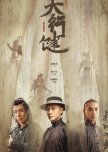
Three Blind Mice.
The Chinese title of this drama 天行健/Tiān Xíng Jiàn comes from a profound phrase 天行健, 君子以自强不息 from the ancient divination classic I-Ching. Loosely translated, it means in a dynamic world, gentlemen should constantly strive for improvement; to be virtuous. In the context of this drama, it alludes to how three very different individuals struggle for relevance against the overwhelming tide of history.This production's rich historical and cultural texture has been widely praised by history buffs. The nostalgic opening sequence seamlessly weaves in scenes from the drama with real footage from that era. It is set in early 1911 which was a pivotal time in modern Chinese history. By then, impoverished by civil strife and foreign incursions, the Qing dynasty was on its last legs. While clearly the time of emperors was ending, China's struggle with what form of government it would adopt went on for almost 40 years. In this story, the court is divided between conservatives (Imperial Household Department) and reformists (Prince Qi); both of whom are trying to preserve some form of constitutional monarchy. Tongmenghui led by Sun Wen (Sun Yat-sen) are rebels who want to do away with the monarchy and go down the path of a democratic republic. The powerful Beiyang Army, (then led by Yuan Shikai, the unnamed fisherman) was a deciding player in Chinese politics right up to 1949 and beyond. At the time, foreign powers including the Japanese, actively meddled in Chinese domestic affairs. Thus while there are indeed too many factions, this accurately depicts the landscape at the time
There is a lot to unpack as this is equally a plot and character driven story. A map leading to a fabled treasure is stolen from the palace. The various factions realize that such a fabulous treasure could make a meaningful difference to the success of their cause. Thus begins a mad dash of a treasure hunt that entangles three individuals who are disenfranchised by the changing times: the personal guard of the deposed Guangxu emperor, a swordsman in the age of guns and a Confucian scholar after the abolition of imperial exams. Can these three blind mice grappling with their own outdated ideals be trusted to see the bigger picture and ensure the treasure ends up in the right hands?
Men Sandao was once the emperor's guard who dared to love a princess. He was imprisoned when the emperor's Hundred Days' Reform failed. Twelve years later, he is freed on the condition he retrieves the fabled treasure that is desperately needed to shore up the national coffers. He is pitted against Zhuo Bufan, the leader of the impoverished Rongtian sect who seeks the treasure as a means to make his sect famous. His nemesis Dagu constable Wang Jialuo doesn't care about the treasure; he just means to hunt down and hold Zhuo Bufan and the Rongtian sect accountable for nine murders in his county. They are all flawed and obsessive characters who are smart yet frustratingly intractable in their beliefs. Even Men Sandao, the fullest and most intriguing character remains true to the only two things that matter to him from the beginning to the end. Similarly, Zhuo Bufan refuses to ditch his cause until his cause abandons him. The greatest zealot is Wang Jialuo, who is the product of everything wrong with the Confucian exam system; a tradition so steeped in rote learning over original thought he is utterly incapable of operating outside of the Qing code.
Men Sandao is Qin Junjie's best role to date, one he delivers with a mastery that matches the stagecraft of the many veteran actors in the cast. The way he habitually held his hands as if they were still in shackles moved me as much as the forlorn tear he shed at Guangxu emperor's grave. His natural chemistry with the rest of the cast elevated the character interactions all around. Despite their conflicting agendas, Men Sandao shared a mutual respect and understanding with Zhuo Bufan and was also able to manage the more difficult Wang Jialuo. I laughed uproariously at how he turned Lucky into his lackey and enjoyed his spirited debates with Liu Lin. I could tell he saw a lot of his younger self in her and their relationship was the one I found most moving. All of the roles that mattered, including the villain roles, were well executed with many memorable scenes featuring Prince Qi, Cunqing and Zhong Haichao. Lin Anjing was the only notable weak link in an otherwise stellar cast.
There is never a dull moment in this well-written screenplay that seamlessly fuses multiple interlocking character stories into the action and adventure. Told with dark humor, wit and irony, the narrative does not shy away from blood, violence and sudden death. Though a bit a bit heavy on slow motion and close ups, the action scenes are intense and well shot; with the occasional dose of bizarre humor. I laughed hardest at Wang Jialuo's Tarantino like foolish bravado in the face of certain death and his absurd resurrections. But laughter aside, I really didn't much care for him or Zhuo Bufan and their romantic entanglements. The only characters I rooted for were Men Sandao, Gege, Liu Lin and the ubiquitous Lucky with his uncanny knack for popping up just when needed. Though some characters got endings they didn't deserve, the ending overall is quite fitting and not surprising. This is ultimately a dark story, reflective of the times. One of the better dramas of 2024 for me that deserves more attention. I rate this 8.5/10.0.
Scroll down for more detailed spoiler ending thoughts.
MAJOR ENDING SPOILER COMMENTS
I found both Zhuo Bufan and Wang Jialuo's ending very fitting and oddly justified. Make no mistake, Zhuo Bufan was not a great guy. He betrayed many jianghu codes of conduct in his quest for greatness and sacrificed his sect members with callous indifference. It is no wonder they turned on him. He arguably would have never really given up were it not for the fact that the Rongtian sect was no more. He also conveniently forgot he promised Wang Jialuo that he would settle accounts with him and tried to ride off into the sunset after abandoning the treasure hunt. There was so much blood on Zhuo Bufan and Huo Qin’s hands including Wang Jialuo's shifu and the poor, heroic Tan Xian that there had to be consequences. Of course Wang Jialuo was no better and ultimately also betrays his true love and his beloved Qing code in his obsession with closing his case. It is both ironic and fitting that he was his own judge and executioner. It cracked me up that Men Sandao went after him in case for the tenth time he didn’t really die dead.
The most undeserved deaths were those of Lucky and Liu Lin, who were the true heroes of this story. They represented the best, most idealistic and hopeful voices of their movement and the future their world had to change for. Their deaths were not necessary and far more cruel and pointless than telling us that Men Sandao and Gege never reunited after Fujian. In any case, there were no lasting good outcomes for anyone during that time in history. Any survivors would have had to face an ugly 40 years of civil war with Tongmenghui ultimately ending up on the wrong side of history. So it has to be enough that they fought the good fight that led to the movement’s finest moments. RIP Liu Lin and Lucky Hao Han who was definitely a hǎohàn/好汉/good guy but just not that lucky.
X
Was this review helpful to you?
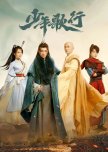
Sword in hand, righteous in heart. 手中握剑, 心中有义.
It was a windy and snowy day. Lei Wujie, a young swordsman wanders into a remote snow-capped inn. Xiao Se, the richly garbed innkeeper is set upon by bandits. The valiant Wujie intervenes and a fiery battle ensues. Appalled by the destruction, Xiao Se travels with Wujie to Xueyue City to collect usurious compensation. Along the way, they are caught in a vicious multi party melee over a mysterious golden coffin. They are swept out of harm's way by Wuxin, a powerful and enigmatic unordained monk. Thus begins the adventures of a loan shark innkeeper, an intrepid airhead and an irreverent monk. On their journey, they make as many deadly enemies as they do lifelong friends. Sword in hand, righteous in heart 手中握剑, 心中有义, the young friends set out on a quest for justice and their vision of jianghu or the martial world. In jianghu there is no absolute right or wrong, just an individual sense of morality and righteousness; the higher values that each swordsman is willing to give their life to protect.This addictive, high fantasy wuxia captures the spirit of rivers and lakes and the thirst of the wanderer to see where the skies end. The hilarious banter and unlimited friendship between the trio and their ever growing circle is immersive and exhilarating. I love that despite his superpowers, Wuxin needs Xiao Se to bankroll their travels and Lei Wujie has no sense of direction and gets Xiao Se lost all the time. Xiao Se (萧瑟; desolate) is a lonely and guarded character with a subtle air of loss and disappointment cloaked in sarcasm and arrogance. From the first instance he shares a curious understanding with Wuxin, another itinerant character with a cryptic past. They are both brilliant, complex and somewhat broken characters seeking answers and redress. Though younger in years, Wuxin is a wise, almost omniscient old soul, who is more at peace with his past than Xiao Se is. They find solace in Lei Wujie's simplistic, pure hearted idealism; his fearless youthful optimism and sense of invincibility. They are the core that attracts other great talents such as the redoubtable eldest martial brother Tang Lian, the strategic Ye Ruoyi, the divine healer Hua Jin and the sticky as fly paper Sikong Qianluo.
There is a lot to unpack in this story, beginning with the abundance of flamboyant and formidable jianghu characters. My personal favorite is Baili Dongjun, lush brewmaster and first city lord of Xueyue City. The prequel 少年白马醉春风 The Young Brewmaster's Adventure chronicles the youthful adventures of the colorful older generation of martial heroes. This explains the richly defined jianghu universe of legendary heroes and weapons and the fully realised characters with deep relationships and substantive backstories. Many surrounding characters are heroes of their own sub-plots that unfold alongside without seeming to digress from the main storyline. Loyalties notwithstanding, all five sword deities are moving and fascinating characters that make me want to know how their journeys begin. This drama is said to stay true to the original and the well loved manhua. This is likely due to the involvement of the novelist Zhou Munan (周木楠), whose prose is witty and simple, yet profoundly zen.
As the heroes converge on the capital, Tianqi City, the plot takes a political turn. The emperor is ailing and they are caught up in the battle for the throne between Prince Bai and Prince Chi. They race against time to unravel the old conspiracy that led to the downfall of Lord Langya many years ago. Fans of Langya List 琅琊榜 or Nirvana in Fire will recognise immediately that beyond the ranking of heroes, large chunks of this story pays homage to that masterpiece. The plot climaxes in an epic and heartbreaking denouement that reveals all the hard truths. While some villains could be better fleshed out and get off too lightly, the ending ties up all loose ends. Nirvana in Fire left me inconsolable but I am uplifted by how this version of the age-old battle for the throne story ends. Heaven's will does not always prevail over man's will; we have a choice in whether to take the lonely road or the one that is filled with friends.
It is obvious from the production values that the budget is modest at best but money is spent in all the right places. The styling of each characters is distinct and eye-catching and their weapons are badass. The fight scenes are intense, well choreographed, fast moving and exciting; the hallmark of a good wuxia. Each sect and swordsman have signature battle techniques and advantages that are well conceived and awe inspiring.
The acting is impressive and anchored by charismatic portrayals and compelling chemistry between Liu Xueyi's Wuxin and Li Hongyi's Xiao Se. Both characters are by far the fan favorites. Many characters were so well portrayed they deliver lingering impact beyond their screen time. The only notable exception is Sikong Qianluo, a cartoon character that has zero chemistry with Xiao Se. Someone must have sent them the wrong script because they seem to be acting out the role of the lovesick fangirl accosting a celebrity actor. But romance is peripheral in this saga and there are more riveting ones such as Li Hanyi and Zhao Yuzhen's story as well as that of Tang Lian and Fairy Rui.
This is a must watch wuxia, one that delivers all the best loved aspects of the genre. It has small flaws but I enjoyed it too much to want to pick at them. I will just leave it at that it would have been nice to see more of Wuxin and while the final fight scene was meaningful and satisfying, there were a few other clashes I would have loved to see. All considered, I am happy to rate this 9.0/10.0 and crown it the best wuxia of 2022.
PS - Don't forget to watch the 5 minute special ending episode.
Was this review helpful to you?
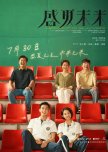
I kissed a girl just to try it.
This crisp, cleverly written coming-of-age movie with a bit of a twist, explores the usual themes of first love, rejection, self-discovery, and accepting your family for who they really are. It is carried by persuasive and heartfelt performances by both Wu Lei and Zhang Zifeng whose restrained, nuanced portrayals convey the confusion of awakening youth and the utter depth of despair of first love and rejection. In this genre, young actors tend to lose my empathy by over-dramatizing and overacting in such angsty moments but these two truly moved me by not doing so. I also appreciate the well-timed light humor that diffuses tense moments and captures the ultimate resilience and optimism of youth.Zheng Yuxing and Chen Chen couldn't be more different - he is a bit of a rebel, the cool kid with a bit of internet following while she is a good student with bright prospects who unexpectedly flunks out. Thrown together by an outrageous lie, a mutual understanding that becomes a touching, unexpected relationship blossom between them. They embark on a most excellent adventure together as Chen Chen convinces Yuxing he must confront Ming, who is breaking his heart. Instead, they end up facing their feelings for each other and what it means for each of them culminates in an "I kissed a girl just to try it" kiss that says all that needs to be said. The chemistry between both leads is incredible and is exactly as it should be. I can't praise enough how these two young actors effortlessly show us rather than tell us the complex multitude of emotions they are experiencing.
Unfortunately for Yuxing and Chen Chen, there are too heavy consequences for their actions. Once again we see that young people are so much better people and I am left hoping these two stay that way on their long journey ahead. The ending is realistic with the right touch of wistfulness and hope.
So now is the time to confess that I only watched this because I wanted to see my favorite Wu Lei of unforgettable Fei Liu fame's first screen kiss. Needless to say, I got much more than I bargained for. While this movie has received backlash for not being upfront about what it is about, I think that criticism reflects a lack of understanding that that is the whole point. Who is Ming? That is the most irrelevant detail because it changes nothing. Yuxing's emotions, Chen Chen's emotions, our emotions, and our experiences are the same regardless of certain aspects of our identity.
The premise of this movie isn't the most original but the way it communicates its simple message is. And the acting deserves a standing ovation. This is an 8.5 for me with a strong recommendation to watch.
Was this review helpful to you?
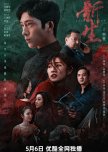
Fake it till you make it.
Regeneration is an excellent short suspense thriller. The narrative opens with a reporter He Shan witnessing the kidnapping of her contact Fei Ke. In classic Christie style, five strangers including He Shan are summoned to an island mansion for the reading of Fei Ke's will. They are each asked to share their memories of Fei Ke before the will is read. As implied by the homonym of his name, Fei Ke was not who he appeared to be; he showed a different self to each of them. As they piece together their memories, a complex, disturbing and moving picture of Fei Ke emerges.Jing Boran delivers a compelling portrayal of Fei Ke as a charismatic, amoral "fake it till you make it" kind of character. I don't think any other actor could have evoked such complex and contradictory reactions. At many points in the narrative when I wanted to absolutely despise his Fei Ke, I found myself searching for excuses for him. Yet when I could have and should have empathized with him, I found myself judging him. All of the characters have many layers that peel off like an onion. Like Fei Ke, they all have at least one moment of hesitation before they almost willfully make a fatal, life changing decision that takes them down the path of no return. By the end of this web of lies, the only story that moved me was that of the two lovers star crossed who ended up as collateral damage. Everyone else reaped what they sowed; even Fei Ke who believed his own lies to the point he deceived himself more than anyone else.
The plot pulled me in from the start and kept me wanting more with each reveal. However, at the point of reversal, changes were deliberately made to the original novel plot, likely to avoid book spoilers. I think this was big mistake. As a result, plot holes emerged and the final three episodes did not come together as well as they could have. In the novel, the group gathered because the main antagonist wished to make amends. That is simple, straightforward and easy to understand. In the drama, they gather as a result of a convoluted and rather far fetched revenge plot. Some of the character designs and motives were changed in to make this work. Some of it just didn't make sense as those parties could have achieved their objectives in more direct and effective ways. This is made worse by the melodramatic storm at the end where everyone does silly things for some cheap thrills.
Even though the ending was overly dramatic and could have been more tightly written it was dark and consequential. All things considered, this is a suspenseful and thought provoking watch with many unexpected twists and reversals. And If you need a shallow reason to watch it, Jing Boran looks yummy in every scene. My rating 8.0/10.0.
Was this review helpful to you?
Miss Truth of the Art of Death.
I was excited by this drama because the backstory sounds like a Chinese version of a favorite mystery series "Mistress of the Art of Death" which is also about a medieval female crime solving coroner who teams up with a sexy man to solve cases. Like Miss Truth, the novel is about a strong and smart woman, ahead of her time in both forensic knowledge and life attitude. I was both disappointed and relieved that this drama does not dive into the forensic aspects of the cases with the chillingly thrilling gruesome detail of my beloved novels. Indeed all of the gory props are almost cartoonishly fake and any macarbe detail is rather cursorily handled. While set in Tang dynasty, the story-line barely acknowledges the main historical characters and events of the day. Nonetheless it is a short and very enjoyable watch that really stands out in its repudiation of common tropes.The drama is about a talented and adventurous young lady coroner's journey of self discovery. As she helps solve cases, unearths Marquis Sui's legendary pearl and unveils a grand conspiracy; she also finds herself and discovers the truth of her heart's desires. The drama starts with a bang by establishing Ran Yan's credentials as a brilliant forensic analyst as she is extorted to solve a murder by the criminal underworld in exchange for her shifu's gambling debts. This tosses her right into the crosshairs of both Xiao Song, a nobleman and the emperor's trusted investigator and fixer and Su Fu, a mysterious assassin who saves her life. They are both tasked by different masters to recover Marquis Sui's pearl, which is part of a larger conspiracy that is the drama's overarching plot. The drama maintains an exciting pace, with danger and intrigue lurking around every corner and builds to a strong finish on a high note with a surprise reveal. I was only able to identify the ultimate mastermind by elimination; there were not enough clues or hints along the way to figure out their identity or motives.
As a big fan of strong, smart female characters, I was baffled by how difficult I found it initially to like newbie Zhou Jieqiong's Ran Yan. She is almost immediately and recklessly infatuated with the thrillingly inscrutable Su Fu and is unquestioning of his motives. Yet this sharp tongued vixen is distrustful of and lashes out inexplicably and ungratefully at Xiao Song, who appreciates her talents immediately and employs her as his coroner. This gives her the means to escape an unwanted marriage arranged by her indifferent father and cliche evil stepmother and half-sister. She snidely calls him a merman in a tone that implies fish face or worse, dead fish and bristles when he affectionately refers to her as his foxy lady. Nonetheless they companionably squable their way through a number of well constructed cases and become a likable and effective crime solving team. While Ran Yan is the titular character, veteran actor Toby Lee's Xiao Song is the sleuth that puts all of the clues together and truly anchors all of the cases and the drama. His character was well written and masterfully portrayed - between his teasing banter, merciless goading, stern rebukes and unyielding support he managed the prickly Ran Yan perfectly. While he arguably cut her too much slack, he knows exactly how to get under her skin. He is no doormat either and knows when enough is enough. The surrounding characters are cleverly and realistically written in a way that reacts to the other characters' flaws; for example I could totally relate to the shrewd and loyal Bai Yin's dislike and ranchor toward Ran Yan for treating his master Xiao Song so poorly.
For once, I actually enjoyed the dreaded love triangle in this drama, something I normally have zero patience for. Initially I didn't like Ran Yan so I didn't really care if she made a bad decision. Ultimately she is a resilient, strong willed character who knows her own mind, is not just defined by love and can roll with the punches so there is no tragically wrong choice for her. It is completely in character for her to break all the rules, throw caution to the wind and indulge in a dangerous, exciting and most unsuitable man - something hopefully every woman gets to do at least once in a lifetime! So does she stay with the one who loves her or go back to the one she loves? All I will say is that the triangle was fittingly, somewhat poignantly and DECISIVELY resolved. She totally manned up and picked the one with the nicest chest (a purely subjective but well researched opinion)!
While I never got to like Ran Yan (she is deliberately written to be really not that nice) and didn't emphatize with her, I reluctantly admired and respected her. This drama really showed me, someone who pounds on the table for strong female leads, that I may have been more socialized to like and accept the conventional c-drama female lead than I would like to admit.
I think all things considered (production value was not that high) this drama should be a 7.5-8.0 but I gave it a 8.0 for being so different in the best of ways in terms of avoiding most (not all) cliches, very smartly written and unconventional characters, hot male leads, exciting pace and cases and ending at the climax.
Was this review helpful to you?
You can't bring a sword to a gun fight.
Like many wuxia fans, I consider Jin Yong / Gum Yoong (Cantonese) the greatest wuxia writer of all time. Side Story of Fox Volant 飛狐外傳 is one of his early works. It was written shortly after The Flying Fox of Snowy Mountain 雪山飞狐, which is both a prequel and a sequel. Unlike many versions that combine both novels, Side Story of Fox Volant is adapted as a stand-alone story. Despite some meaningful changes, this adaptation captures the essence of the original story, the spirit of martial heroes or daxia/大侠 and the vagaries of jianghu/江湖.The drama is action packed with fast paced, intense, starkly violent and brilliantly choreographed combat sequences that will satisfy any hard core wuxia buff. Slow motion is used sparingly for maximum brutal impact. No one has magic qigong or special powers. The main fighters - Hu Yidao, Miao Renfeng, Hu Fei and Tian Guinong are swordsman with distinct combat styles and battle advantages. When they clash it is very muscular and lethally up close. The nimble Yuan Ziyi's weapon of choice is a whip, which minimizes close encounters to compensate for the physical disadvantage of being a woman. With each episode I think the action has to be as good as it gets but to my surprise and delight, the production keeps delivering into the final wulin arc. The wulin arc in terms of both plot design and action is the best I have seen. While Miao Renfeng and Hu Fei's martial teamwork in episode 22 may be the best of the best, the ending battle encounters are inventive, exhilarating and savagely satisfying. The action scenes are this drama's strongest point and are worthy of multiple thrilling re-watches.
I am not a fan of the trend of whitewashing characters, especially Jin Yong's characters. Jin Yong is the master of multi-faceted characters. His heroes are flawed. His villains have redeeming features. Nobody is perfect in the Jin Yong universe. So when writers have the audacity to tweak his characters, they usually muck it up. When it comes to earlier, less refined works like this, I don't mind so much as there is room for improvement. While this version does a good job with Yuan Ziyi, Hu Fei is disappointingly adapted beyond recognition. The attempt to make Tian Guinong and Nan Lan empathetic is nauseating and boring. This is one of the four don'ts Jin Yong specifically warned against in the preface to the latest edition of the novel.
This is one of the author's darker, more cynical works. Most of the characters love too well but not wisely - Hu Fei, Miao Renfeng, Cheng Lingsu, Ma Chunhua, and Nan Lan. The heart wants what the heart wants, consequences be damned. Nan Lan and Ma Chunhua are selfish and don't care who they hurt in the process while Cheng Lingsu, Hu Fei and Miao Renfeng are noble idiots. They all pay a terrible price for following their hearts. Yuan Ziyi is the only exception; she dares only to hate but not to love.
Yuan Ziyi is one of Jin Yong's most under appreciated and saddest heroines. She is the only heroine who is not an extension of the hero; she is on her own independent path to salvation. Born from an act of violence, she is consumed by self loathing; doomed by unkind karma to seek justice and then live a life of atonement for the sins of her father. In the context of her beliefs, if she breaks her solemn oath she will only prolong her bad karma. In the novel, she acts out and does very controversial things. These actions drown out her piteous backstory and make her a widely disliked character. This adaptation deftly writes out those events, enabling us to see her in a more empathetic light. Her shifu should have been left offscreen as her pressure obscures Ziyi's own resolve to keep her vow. I always feel terribly sorry for Ziyi; she never had free will. She is alive but she does not live. I am not sure that chanting sutras into oblivion is a better fate than death, which is final liberation from all suffering. I don't love Liang Jie's acting but her Ziyi impressed me. The slightest shadow of regret in her eyes in a stone cold face and her ability to convey so much beyond her words moved me to tears several times.
Even though Cheng Lingsu is a clever character, I never found her relatable because her entire reason for existence is Hu Fei. But to my surprise, I like Xing Fei's warm and personable rendition of Lingsu. Her Lingsu is devoted to Hu Fei without coming across as a doormat and she gets him out of many tight spots with her quick thinking. The complex entanglement between the three of them is well portrayed. Hu Fei's chemistry with Ziyi is tangibly different from his dynamics with Lingsu, making it immediately obvious who he loves and who loves him. He is much more of one heart with Ziyi and they instinctively act in unison with little need for communication or explanation. Whereas Lingsu is constantly reining Hu Fei in and giving him instructions that are at odds with his natural instincts. When he can't help disobeying, he appears reckless and unintelligent. This character flaw arguably contributes to what happens to Lingsu at the end. There are better ways to show that Hu Fei is less in sync with Lingsu without throwing his character under the bus.
Lin Yushen's Miao Renfeng steals the show in this drama. Criticism that his Miao Renfeng is too much like his Yang Xiao in Heaven Sword is fair but he is so cool and he pulls off the character's inner conflicts and emotions so well that I don't mind. This performance anchors the drama for he is the martial hero of this story, His code of honor demands that he does the right thing even when it is the wrong thing for himself and those he loves. I wouldn't object if they call this the Legend of Miao Renfeng because of this compelling portrayal of what it means to be a daxia. Even though he is movingly handsome when he is suffering, the story wallows in Miao Renfeng's betrayal and loss for too long. The tawdry Nan Lan/Tian Guinong arc is a boring extended digression. The opportunity missed is that Hu Fei and Miao Renfeng do not get enough scenes together. They have remarkable combined chemistry and their joint fight scene is the one of the drama's best.
As for the titular character Hu Fei 胡斐, (which is a homonym for fox volant or flying fox), I always loved his character design. Far from being infallible, he is a work in progress - young and smart with tons of potential but a bit hot headed and too idealistic. He is the people's hero; the guy who demands justice for the underdog regardless of the cost to himself. His best traits, this strong sense of righteousneous and his willingness to fight the unfair fight is dumbed down to recklessness and even stupidity in this adaptation. He is written off as a bull in the China shop whose hot headedness could wreck the Red Flower Society's mission to save wulin. He doesn't accomplish much on his own and without Ziyi and Lingsu, he'd have died many times. It does not help that despite his phenomenal acting, Qin Junjie looks a bit too mature to play an 18 year old.
Despite good pacing, the plot digresses into too many dull sub-plots and arcs. This is an issue with the original work, which this adaptation already cleans up considerably. The Nan Lan and Poison Valley disciple arcs are the least interesting and Hu Fei deserves to be less peripheral in the reveal of the conspiracy behind Hu Yidao's death. The wulin arc brings the story to a climax, one that exceeds that of the novel on some fronts but is a let down in other aspects. Good characters die in wuxias, it is par for the course. But their deaths must be worthy and not gratuitous. What I dislike most about the ending is that it unnecessarily sacrifices a knight errant after they capture the king. It is a futile sacrifice because you can't bring a sword to a gun fight. Sadly, the advent of guns heralds the demise of jianghu and martial heroes.
This is a good adaptation overall that is limited by original works that lack the finesse of Jin Yong's subsequent masterpieces. The novel is already too dark and unbalanced. It is not necessary to outdo Jin Yong in how incredibly cruel he is to Hu Fei. Despite its darkness, the novel still ends on a note of optimism because Hu Fei's journey continues. But in the drama Hu Fei seems to be left to live largely in the past with two women, one too old and too icky for him and another so young it would be too icky. Thus to me this is at best an 8.0 in terms of storytelling that I bump up to an 8.5 for the not to be missed fight scenes. Nonetheless, this wuxia takes you on a stirring and addictive journey that is well worth it - as long as you do not need a Disney ending.
Was this review helpful to you?
The mountains are high and the emperor is far away 山高皇帝远.
Under the Microscope takes a detailed look at some of the ancient financial shenanigans that eventually collapsed a dynasty. It is an adaptation of a documentary written by Ma Boyong based on rare ancient folk archives from the Ming dynasty. The Ming dynasty's demise was in large part due to the inability of the government to properly manage its finances, particularly with respect to tax revenue collection. The mountains are high and the emperor is far away 山高皇帝远/shān gāo huángdì yuǎn; thus local fief lords and officials in remote locations were able to do as they please. Social unrest frequently erupted as a result of local officials' failure to carry out central government directives due to both incompetence and corruption. That is the backdrop against which this ancient tax puzzle cum murder mystery unfolds.Shuai Jiamo is an orphaned peasant and a math savant. He is known in Renhua county as a simpleton and is probably either Aspergic or mildly autistic. He makes a simple living providing field measurement services. In his spare time, he counts cards for his only friend Feng Baoyu, playboy and scion of the prosperous Feng's Ham Shop. He is obsessed with accuracy and when he discovers discrepancies in land records, he tries to track it down. In the process, he stumbles across a misallocated tax that awakens long-dormant memories of the day his whole life changed. Without considering broader consequences, he obstinately decides it must be made right and single-mindedly sets out to rectify these errors. All sorts of vested interests from fief lords to various county officials are affected and conspire to frustrate him. First they turn Chen Renqing, a wily lawyer whose justice and honour can be bought by the highest bidder, loose on him. They also inflame peasants across all eight counties of Jin'an Prefecture, ensuring that chaos, murder and mayhem ensues.
Zhang Ruoyun steps out of his comfort zone in this role of a character that is not always in the moment and relates to others in a different way. Although he seems to over-act in places, the brilliance in his overall interpretation is how insidiously he plants the seeds of doubt. Is the over-acting deliberate and in character? Is the real Shuai Jiamo the one who chastises Feng Baoyu for not paying more heed to his sums and observes that he will soon have a brother-in-law? Or are the glimpses of cunning, empathy, even wit and humour just inconsistent characterisations? Is Shuai Jiamo really that simple and traumatised or does he have complex hidden motives? His nemesis the shrewd and cynical Chen Renqing certainly believes the latter. Leaving these questions largely unanswered makes this yet another fascinating and memorable characterisation by Zhang Ruoyun. His incredible chemistry with Wang Yang thrills and delights in new ways as their roles here force them to connect across entirely different wavelengths. Wang Yang is always at his best in morally ambiguous roles and delivers a wicked and empathetic performance as this lawyer on a white horse. It is also nice to see the limelight shared by Fei Qiming (Feng Baoyu) and Qi Wei (Feng Biyu), who also deliver hilariously engaging portrayals.
This is a beautifully shot production with a detailed eye that captures the humble, tattered and vivid humanity of the common people and the contrasting texture of their venal overlords. The devil is always in the detail with these kinds of accounting and mathematical puzzles that do not lend themselves well to screen adaptation. But this production creatively and humorously dresses up the inherently dry subject matter and does its best to avoid too much exposition. The plot is well paced and the conspiracy builds to a climax that shook me and left me speechless with my heart in my mouth. The villains are well foreshadowed but the reveal still satisfyingly ties up loose ends. Some bad guys got off too lightly but this is realistic and somewhat dictated by historical fact. This is a superbly well-written and entertaining ancient grassroots story that will appeal to anyone on the lookout for fresh themes and stories. 8.5/10.0.
Was this review helpful to you?
Buns of Steel.
Blossoms in Adversity / Xī Huā Zhǐ/惜花芷 is the story of superwoman Hua Zhi's feel-good romp through feudal China. When Imperial Censor Hua dares to criticize the monarch, he is exiled along with all the men in his family. A bevy of helpless women and young children are left to fend for themselves. Hua Zhi takes charge and rallies the women together to triumph against overwhelming odds. When she flexes her buns of steel, no feat is beyond Hua Zhi! She parleys a candied hawthorn business into a pastry and restaurant empire, picks up stray royal children, foils a few palace plots, build schools and a canal, rescues the Hua family men and even manages to find time to fall in love! All in the space of a 2-3 years!!! Phew! Even superwoman would surely stagger from sheer exhaustion!This narrative paints a distressing picture of how oppressive life was for women in hierarchical ancient Chinese patriarchal society. The best part of this drama is how in order to survive, the women defy social conventions, set aside petty differences, learn to trust each other and work together towards shared goals. While the sheer scale of their financial and other achievements are preposterous, there is something very cathartic and satisfying about how flamboyantly they flourish. The storytelling is squarely centered on Hua Zhi and speeds through many of the supporting character arcs, leaving their motivations and struggles under-developed. This is a pity because family dramas like this are most compelling when important supporting characters are given enough agency to be the main characters of their own arcs.
This is one of those dramas that is best enjoyed superficially and with heavy suspension of disbelief. Upon closer scrutiny, the overarching empowerment theme is contradicted by some of the sub-plots. I was disturbed by the different treatment of domestic abuse in Hua Jing and Hua Xian's case. But what I disliked most was what happens to Hua Rong and her child. It is as if she learned nothing from her family's struggles about resilience in the face of adversity. There are a few poorly developed sub-plots like this that the writers raced through without thinking carefully about the messaging.
As much as I like Zhang Jingyi, this is not her best role. Her interpretation of Hua Zhi is too perfect, too calm, too understanding and too reasonable. This has led to many Mary Sue comments about the character. But Hua Zhi is actually written to have many flaws - she can be over confident, she cannot mind her own business, she is reckless and like her grandfather, she cannot hold her tongue. In the canal arc, she is the architect of her own downfall but because everyone unites around her, she never suffers any consequences for her actions. This character has too much plot armor and is already so smart and capable that she shows virtually no growth from beginning to end.
Hua Zhi's relationship with Gu Yanxi is similarly whitewashed to the extent that it appears too ideal to be true; it lacks passion, conflict and intensity. Hua Zhi lets Gu Yanxi off too easily for deceiving her in the beginning when any normal person would be at least a little bit angry at him. She also never communicates any discomfort with his role at the Security Bureau; indeed she seems quite happy to use his authority there to serve her purposes. Thus, it came as much as a surprise to me as it must have to Yanxi that it could be a deal breaker for her! So much for their so called mature, open and communicative relationship! I don't know why young actors like to make their characters so perfect all the time and have such a hard time embracing more complex but perfectly natural human relationship dynamics and emotions.
Hu Yitian delivers a more nuanced portrayal of Gu Yanxi as the emperor's sharpest knife. His fight scenes are phenomenal and he is menacing and ruthless as the commander. He shows us he is a different person; more open, at ease and happier when he is with Hua Zhi. While this is one of Hu Yitian's better roles to date, he shies away from showing us the true extent of his affection for the emperor and his inner conflict. This is a missed opportunity because Hai Yitian delivers a compelling portrayal of the lonely, paranoid and manipulative emperor. Because Hu Yitian's portrayal of Gu Yanxi does not meet him halfway, the emperor's affection for his nephew comes across as borderline obsessive and a lot more one sided than it really is.
Even though it seems her character Shaoyao is dumbed down from the novel, Lu Yuxiao is once again a scene stealer in this drama. This kind of beguilingly innocent, simple minded savant kind of character is extremely difficult to portray well but Lu Yuxiao pulls it off brilliantly. She doesn't get enough screen time to steal the show but I was more invested in her character than I was in Hua Zhi who is too perfect to be relatable.
The ending of this drama really cracked me up. It is one of the few times that the villain actually saves the day by doing what Hua Zhi and Gu Yanxi could never have done. Although it is also possible that Gu Yanxi learned his lesson not to look for needles in hair stacks and had the good sense to show up a just a tad late at the ceremony. Despite some flaws, this is a very appealing feel-good drama for those seeking light entertainment. My rating 8/10.
Was this review helpful to you?
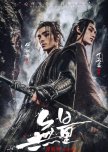
The boundless promise.
Feng Ren is a Gushi/骨仕, an enigmatic, lethal sworn blade whose sole reason of existence is to protect the coveted Wuliang/无量/Boundless Heart Sutra. He intercepts a blind boy Po Xiao, who may just be a decoy or may be the true custodian of the Wuliang Heart Sutra and together, they flee the city. On their perilous journey they learn each others secrets. Underneath all the half-truths and deceptions between them, an inexplicable bond, an unspoken shared understanding and trust grows between then. For such a short length story, the actors' chemistry and the depth and complexity of emotions they conveyed shook me. Every twist deepens their bond and the boundless promise they make to each other. The important message of this story is that with great power, comes great responsibility. This is dark and heartbreaking wuxia but the break of dawn that pierces the darkness is blinding and immensely powerful.Everything about this movie smacks of Guo Jingming's fabulous taste and hallmark aesthetics. If like me, you watch this after My Journey To You, it is quite clear that the drama expands upon many ideas in terms of style, plot and character design from this 37-minute movie. Feng Ren makes me think of Han Yasi and Po Xiao of Xue Gongzi. The narrative also explores how best to deal with a weapon of unaparallelled power. Due to its short length, the plot is tight with no unnecessary digressions and everything comes to a full circle at the end. It perfectly illustrates the power of a short story in how it captures the heart and the imagination with all that is left unsaid and untold. This is a simple, well executed plot that is a must watch and one that I am happy to rate 8.5/10.
Was this review helpful to you?
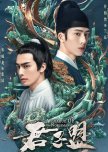
Cat's paw.
The disturbingly elegant and noble Lan Jue, courtesy name Peizhi, is the picture of a rising young Vice Minister of Rites. Beneath his urbane facade, he conceals a burning purpose to clear his father's name in a two-decade-old treason case. In this quest, he is quite bendable with regard to the means that justify his ends. He is stymied at each turn by Zhang Ping, an impecunious scholar, noodle maker, and truth seeker. Zhang Ping is convinced Peizhi is a villain and is determined to bust him. Peizhi is cynically amused by Zhang Ping's naive righteousness and impressed with his deductive talent. He means to make use of him if he can and if not, dispose of him. Watching Zhang Ping go from being Peizhi's cat's paw to someone he raises kittens with is the best part of this drama for me.This high-production-value drama conjures a sinister, suspenseful aura that permeates the stylish, lavish existence of the Dayong elite. Everything from the set design to that ridiculously mysterious and beautiful opening dance, to Peizhi's floaty diaphanous costumes, to Peizhi's long, sensuous unbound hair reflects, elegance, refinement, and impeccable taste... aside from Song Weilong who obviously drew the short style straw starting with the rigid wig and the way his outfits look like they were slept in. It is no wonder Peizhi's old flame is less than impressed with the goofy, big-boned, toothy peasant with a big nose to boot that Peizhi traded down to. It does require suspension of disbelief considering how utterly appealing both the ardently devoted Mowen and frostily sophisticated Shulin are. The only explanation is Peizhi must be an eyelash man.
This is a bit unusual for the mystery genre in that it is far more of a character-driven story than it is plot-driven. As far as the cases go, they are well executed and unfold more as procedurals. Outside of certain aspects of the main conspiracy, the viewer is not given a fair chance to solve any of the cases. There are plot design shortcuts such as resorting to the water illusion trick to bridge memory gaps and uncover long-lost evidence and there are logic holes, such as crime scenes staying undisturbed for too long. While the over-arching conspiracy is well conceived with decent twists, it is not that original. The villains reveal themselves early on so it is also anti-climatic. But for once I don't really mind because Jing Boran's Peizhi is just too bloody distracting. How can a man look so damn indecent, almost naked with just his hair unbound? And my mouth goes dry at the subtle multi-partied flirtations - those deep searching and revealing looks these gorgeous men keep exchanging with one another. It is such a big upgrade from the typical stunned dead duck stare of conventional romances. I freely admit my brain went on strike so often I am grateful the solutions were just spoon-fed to me.
This drama is superbly well executed and gets all the important things right. Any shortfalls in the plot are made up for in excellent character design and heartfelt, immersive performances by the cast. Jing Boran and Wang Duo deliver standout performances but even Song Weilong, whose acting is still a work in progress, is so well cast he just somehow fits this Zhang Ping character. It is a shame that his scenes with Jing Boran obviously suffered heavy cuts. After all of the build-up, I was really looking forward to seeing Zhang Ping and Peizhi shine in the final arc. Instead, it is pretty much hijacked by Shulin's unfinished business with Peizhi and his abandonment issues. Everyone else including Mowen and the emperor is sidelined. As much as I love Shulin's complexity and Wang Duo's phenomenal acting, I have mixed feelings about the final arc. The tone feels a bit off and succumbs to a tad too much cliched, dog's blood melodrama. I think that Zhang Ping's newfound pragmatism and epiphany that the right outcome can be more important than the truth is fitting. It demonstrates enormous character growth even though justice proved to be ultimately elusive.
Moral of the story: Don't be a cat's paw - be careful who you date!
Overall a feast for the eyes and the senses - 8/10.
Was this review helpful to you?
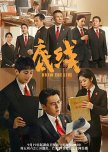
Justice is blind and not heartless.
I have never had a good impression of China's opaque legal system so I was both curious and skeptical about Draw the Line. This drama is a fascinating tour of the inner workings of China's grassroots level judicial system. It shines a surprisingly candid spotlight on gaps in the Chinese judicial system from rapid economic growth, modernisation, changing social values and the proliferation of the internet and social media.Fang Yuan is the presiding judge at the Xingcheng District Court, a local people's court of first instance which handles both civil and criminal cases. Fang Yuan's division handles civil cases while criminal matters are adjudicated by his colleague Song Yufei, a deputy chief judge of the intermediate people's court. What surprises me most is how hands on the grassroots judges are in the Chinese legal system. They do a lot of field work themselves from directing the gathering of evidence to personally interviewing plaintiffs, defendants and witnesses. The role of lawyers is so passive and marginalized it is as if they are for decorative purposes only. For civil cases, the court first seeks to resolve conflicts through court sponsored mediation. If an agreement, is reached, it becomes legally binding once it is reviewed and documented by a judge. Mediation can be a draining process, especially when dealing with less educated, unreasonable and belligerent citizens. Thus beyond legal knowledge it takes a combination of investigative and persuasive skills and a healthy dose of patience to be effective as a grassroots judge in China.
The arrival of Ye Xin, a young researcher from the Supreme Court is met with speculation and trepidation by the close knit community at the Xingcheng District Court. She is an annoying character in the beginning because she has no practical experience, and adopts a rigid by the book approach to interpreting the law. Experienced grassroots judges like Fang Yuan and his mentee Zhou Yian are more pragmatic about bridging the inevitable gaps between static legal codes and the myriad complexities of real life cases. Still it is never easy to figure out where to draw the line between the letter of the law and the spirit of the law. Beyond the heavy case load, the courts also face the challenge of social media, where cases are tried in the court of public opinion on distorted facts. Although the judges do their best to weigh the the practical, moral and humane aspects of their decisions, they don't always get it right. They have their own flaws, biases and personal or familial pressures. These dynamics set Chinese Supreme Court down the path of judicial reform, where case law is increasingly implemented instead of just statutory law.
The impeccably curated cases create a fascinating mosaic of moral, familial, commercial and social issues great and small confronting the Chinese public today. They are based on thought provoking and relevant real life cases; some of which have sparked public debate and controversy. The drama is very even handed about presenting both the plaintiff and defendant's point of view. The writers very effectively showcase resembling cases to illustrate the range of different human emotions, motives and outcomes. There are cases where two sons are driven to kill because of their mother, sexual harassment cases with different power dynamics and common reasons for the breakdown of marriages and related child custody disputes. From the mundane and petty to the serious and complex, the cases strike a riveting, sometimes heart rending chord because we have all read about or heard about or experienced something similar. At the same time, these cases deftly illustrate the many challenges faced by grassroots judges. They are the everyday heroes who navigate the grey areas of the law and morality with compassion to deliver justice that is blind and not heartless.
The cast in this drama needs no introduction and does a stellar job in drawing out the complex human aspects of the cases. Jin Dong delivers a multi-faceted Fang Yuan who is everything to everyone at work - a stern and impartial judge, a tireless and persuasive mediator, a wise mentor and a playful colleague. This leaves him with much less to give at home as a father and husband. We see a very down to earth version Cheng Yi as the introspective Zhou Yian, the young judge who must surely cut his own hair! He convincingly navigates a crisis of conviction after making some mis-steps. Both Yian and Cai Wenjing's Ye Xin are the characters who show the most growth in this drama but the characters that move me most are either defendants or plaintiffs in some of the more heart rending cases.
The best, most thought provoking case to me is the one about the roommates that is analogous to tripping a friend to escape a bear attack. Even though all the cases are interesting, there are too many of the cases in the back half that personally entangle various court personnel. This requires repeated suspension of disbelief in terms of how impartial and self sacrificing the various protagonists managed to be. It also highlights in my opinion an area that still needs judicial reform, which is how conflicts of interest are handled. It seems there is no requirement for judges to recuse themselves when their colleagues end up as defendants. The ending case is just too personal with too many coincidences and conflicts and an outcome that I find the least equitable with some defendants getting off too lightly while others are very harshly indicted. It is not the right note to end on and as a result I rate this an 8.0 instead of an 8.5. Overall a highly recommended, eye opening, thought provoking and fascinating watch with heart felt performances from some of my favourite Chinese actors.
Was this review helpful to you?
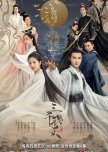
This review may contain spoilers
I always feel like somebody's watching me.
I struggle to contain my anger at the monumental disappointment this drama turned into because it could have been a huge hit. I am so irritated I need to get it off my chest with a spoiler heavy review, something I really dislike doing. I think I figured out the confusing ending that I explain below. Do not read this if you don't want to be spoiled.The story is a very simple, poignant enchanted fairy tale. Fu Jiuyun (Zheng Yecheng) is an immortal who falls for a mortal with an indomitable spirit in a magical painting his shifu left him and stalks her across ten incarnations over a thousand years. In her incarnation as Yanyan, a Li princess, she is destined to marry her childhood sweetheart and live a happy life. Jiuyun cannot stay away from her and in the guise of a dissipated genius artist Gongziqi gifts her a magical painting of a peach blossom tree and a magical song that she performs for her mother's birthday celebration. Note that the painting and song are key in the ending interpretation. The dance is truly captivating and if nothing else, just watch that. At this point I was addicted and fully invested in both leads.
An ambitious neighboring prince makes a deal with demon forces, invades her kingdom, massacres her family and enslaves her people. A devastated Yanyan vows vengeance and embarks on a quest to obtain a magical lamp that can absorb the demon forces and free her people. She assumes the appearance of her maid Ah Man (note the name) and calls herself Qinchuan. This is where they replace the actress Jiang Yiyi with the more well known Zhao Lusi. First mistake - it was not just confusing throughout but I had to get over the first actress whom I liked and get invested in the female lead all over again. The switch worked at first because Lusi is a really funny actress and her antics with Jiuyun, Xiao Bai and Er Meng were entertaining. However, the couple's interactions fell short of the seamless transition from humor to intimacy that was so well done in Under the Power. As a result, Jiuyun initially comes across one of those oily old dudes that misbehaves with young girls. While their chemistry eventually "clicked", Lusi's initial indifference made Jiuyun's overtures seem unwelcome to the point of harassment.
Just when their romance takes off, the show separates them and shifts into the revenge plot. This is where Qinchuan becomes all bravado and no brain - she has no credible plan and has to be rescued multiple times. She works with Er Meng and Xiao Bai; Jiuyun only bails her out from afar. The show peaks too early with the take-down of most of the bad guys and then digresses further into the super boring second couple. I suggest skipping all of their scenes in the middle. They could have easily cut 6-10 episodes to avoid the fatal loss of momentum in the storytelling. Then Jiuyun decides to help Qinchuan fulfill her mission even though it means a certain end for him. He is the wick of the lamp that once lit, eventually burns out.
Once the tone shifts away from largely comedic, Lusi struggles to get into the moment in action and emotional scenes. She is not versatile and is mostly just excellent at comedy. Her performance was flat through most of the second part of the show and only saved by some of the steamier romantic scenes with Jiuyun. By then, I had enough and just wanted it to end. Zheng Yecheng's performance on the other hand was consistently stellar - he really carried the show. Apart from being smoking hot (I can watch him all day), his interpretation of the hard core romantic good guy that disguises himself as a world weary, cynical, indifferent and dissipated immortal was spot on. His eyes shine with unshed tears at all the right moments and as he protects Qin Chuan from the truth of what she asks of him.
The ending is confusing and to me it is quite sad in a Butterfly Lovers kind of way (major spoiler):
Qinchuan realizes that Jiuyun is not coming back ; even Meishan admits that his soul has scattered. She completes her ritual with the lamp - she had already bonded with it earlier on. She wakes up as child Yanyan who dreams an old man (her shifu?) tells her that she gets a fresh start. I think the lamp takes them all back in time for a do over. She grows up and intuitively makes way for Zichen to fall in love with Xuanzhu. Her maid is no longer Ah Man but a Xiao Cui. She has more sad dreams where Jiuyun tells her that she will soon forget him. As the time loop starts to replay her mother's birthday she forgets how to play the song Jiuyun/Gongziqi wrote for her and the pipa disappears into the painting. In this new life, Yanyan will marry Er Meng and their kingdoms will be at peace. She never becomes Qinchuan so eventually Qinchuan and Jiuyun's relationship also gets erased or never happens. Jiuyun snatches the last bits of her memory of Qinchuan and escapes into the magic painting with Qinchuan and the pipa. It is the only place where they can be together but they may be just shadows or memories of who they were. I initially thought she was sucked into the lamp where Jiuyun creates an alternative world for her but if that were the case, he wouldn't have to put her into the painting. This is where they should have used both actresses to make it more clear by leaving Yanyan behind while Qinchuan goes into the painting with Jiuyun. It makes me feel a bit better to imagine that Qinchuan and Jiuyun cultivate together in the painting and after thousands of years both become immortals that live happily ever after. The novel ending is different, more straightforward and much happier - essentially Jiuyun eventually reappears and they are together.
Despite the poor execution and confusing ending, it is still a beautiful fairy tale with some gorgeous scenes and amazing moments that is worth watching. Best be liberal with the fast forward button through the middle parts. My low rating reflects the poor execution that prevented this from being an unforgettable and addictive love story.
Was this review helpful to you?


