



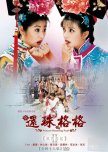
In the first series Xiao Yan Zi was a wily, street smart girl capable of taking care of herself and others. In this series she turned into a village idiot who always needed to be saved from her own stupidity. This was not Vicki Zhao’s finest hour, as her acting was so over the top that it hurts to watch. The lowest point was when Xiao Yan Zi carelessly abandoned Zi Wei in the market. What happened to their everlasting bond of sisterhood?
Zi Wei in part II changed from a level-headed girl to a love-obsessed woman (that kissing scene between her and Er Kang was one of most awkward things ever filmed). Her betrayal of her own father was completely out of character. I find it laughable that she and Xiao Yan Zi were hailed by commoners as “The People’s Princesses.” Unlike Princess Diana, they’ve done squat to support the lives of poor people.
Emperor Qian Long, who was so regal in the original series, was reduced to a leering old man here. Wu A Ge went from being a voice of reason to an insecure, angry guy. Er Kang was given more love scenes but not much else to do besides being Zi Wei’s constant rescuer. He was supposed to be the emperor’s bodyguard, but you hardly ever see him at work.
In this sequel, author Qiong Yao gave us more princesses, more costume changes, more lovey dovey scenes, and more Xiao Yan Zi antics. There was more of everything, except a credible story. Sometimes being a good writer is knowing when to stop.
Was this review helpful to you?
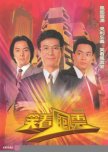
The show’s success was in the good writing and perfect casting. I say perfect casting because not all the actors were great actors. They just fit their roles, or rather the roles fell within their abilities. That’s not to say there were no great actors in this series. There were plenty.
TV legend Adam Cheng played Wong Tin, a billionaire with a heart of gold. He was brilliant and idealistic, which could be boring if not done right. Adam played this character with enough vulnerability to make him interesting. Your heart will go out for his Wong Tin. This man was under constant attack by business rivals, his own daughter, and even fate. Instead of brooding about it, he took control of his own destiny. He was not just the leading man, he was an inspiration.
I applaud Kiki Sheung and the writers for creating the character of Cheung Hok Wah. This was one of the strongest female characters I’ve seen in Asian dramas. Wah was cool as ice and ruthless when she wanted to be. When sitting around the table with a bunch of male scumbags, she always had a card up her sleeve. When with Adam, she was his equal and his match in every way.
Ekin Cheng and Adia Chan earned their reputation as the golden couple of that era. Their love was not flashy, but simple and touching. These two were so sweet they even made littering look romantic. And despite all the emotional baggages, their relationship stayed healthy and was built to last.
The most annoying character award went to Amy Kwok’s Wong Lui. She was a whiny poor little rich girl who blamed everyone but herself for her problems. Luckily, Amy was able to pull the character back at the right moment, before you really hate her.
Finally, there was Roger Kwok as Poon Long Ching. This guy was smart enough to do damage, but really too stupid to do anything productive. He was a horrible excuse for a human being, although he never saw himself as a villain. He rationalized and made excuses for every lousy, selfish thing he ever did. I’m sure we all came across a Long Ching in our lifetime, or have had a Long Ching moment ourselves. Watch Roger's acting here, then watch him again in Square Pegs. Calling him a fantastic actor is an understatement.
The plot relied too much on coincidences (was Hong Kong really that small?) and felt contrived at times. Many scenes were clearly designed to tug at your heartstrings. If you have a heart, you will cry buckets and buckets. When Wah asked Tin if he can live life without her, he gave a short but profound answer: “Every time I think of you, I know only happiness, not sorrow. Whether you are by my side or no longer exist in this world, there is no difference.”
Was this review helpful to you?
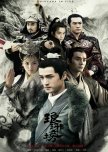
Hu Ge, with his chiseled good looks, is the undisputed Su Zhe. I always think his face is far too thin and his shoulders too narrow, but this makes him physically perfect to play the sickly Su Zhe. He has a naturally melancholy face and a haunted look that’s almost eerie, fitting for a man coming back from the dead. The best part of his acting is his body language. You can see the subtle differences in his posture when he is calculating and determined, compared to when he feels hurt and tortured. His is a carefully crafted and deliberate performance. Credit to the director for taking advantage of Hu Ge’s strength as an actor.
Wang Kai, with his chiseled good looks, is the undisputed Prince Jing. This man is hotheaded, impulsive, and inflexible at times. He will stand by what is right even if it kills him (and possibly his followers, too). The good thing about him is that he's fully aware of his own faults and willing to shoulder the consequences of his actions. Unlike the stoic Su Zhe, the prince wears his heart on his sleeve, which is why Wang Kai is ideal for the role. Other than looking ultra-masculine, he has very expressive eyes that hint to all sorts of emotions boiling beneath the surface. In real life, a man with such a pure heart will find it near impossible to make it far in politics. But if Prince Jing ever make it to the top, you know he will make the world a better place.
Su Zhe and Prince Jing do make a great team, with one serving as the brain and the other the heart of the operation. They are each other’s foil, each making up for the qualities that the other person lacks. Their friendship and their struggle give us hope that we can change the world without sacrificing our integrity and the very things that make us human. Hu and Wang is one of the greatest onscreen duo ever. Every scene with the two of them is worth watching and rewatching.
Also worth rewatching are scenes where the men engaged in a battle of wits and will: Su Zhe vs. Xia Yu, Su Zhe vs. Xia Jiang, Xia Jiang vs. Yan Que, Su Zhe vs. Emperor, Prince Jing vs. Emperor. These scenes are a thousand times more suspenseful than the bloody battle sequences. They lead you to question what kind of life is worth living, and what kind of things are worth fighting and dying for.
Romance is never the focus here. Prince Jing’s wife is barely a blip and Su Zhe’s relationship with Princess Ni Huang is sidelined for most of the series. Liu Tao really shines as Ni Huang in the last few episodes. I never knew she has such a beautiful singing voice.
The first 20-plus episodes are draggy, to the point that I almost quit watching. There is an excessive use of deus ex machina. Minor characters that you really don’t care about pop in and out of the story. A lot of time is wasted on watching people bow to each other and walk around. I get the need to properly set up the story and characters, but this is just an inefficient use of screentime.
The direction is weirdly inconsistent. It feels like there’s two different directors at work here. The acting can be “pose-y” and a little unnatural in some scenes. Sometimes the actors just stand around like mannequins on display. Maybe it’s a stylistic choice, but it’s not one that I personally like.
Despite the flaws, this series will always be a classic to me.
Was this review helpful to you?
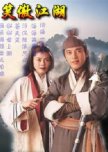
Even the most diehard fans can’t deny that this was a low budget production. The fight scenes and special effects were sloppy, given that TVB invested a lot more in “Journey to the West” which aired in the same year. The costumes were cheaply made and ill-fitted. The glue on the actors’ wigs were peeling off. The makeup was so bad you can actually see the pores on people’s faces.
You could ignore these flaws, if you watch it for Jacky Lui. He was, and still is to this day, Linghu Chong. It was as if the character jumped out from the pages of Jin Yong’s novel. You see it in Jacky’s expressions, the way he talked, and even in his swagger. Linghu Chong had a devil-may-care attitude that was comical, bordering on disrespectful. Underneath all that was a thoughtful and sensitive man. Jacky was one actor who could show all the facets of this character. It looked like he was having fun with the dialogues, which were witty and true to the book.
The other highlight of this series was its gallery of villains, each with his/her own distinctive style. Timmy Ho had a boyish smile that can easily turn into an ugly sneer. You get to decide for yourself if his Lin Ping Zhi was truly rotten or just a pitiful victim driven to the dark side by his enemies. Chan Hung Lit looked exactly like the sly old fox that was Zuo Lengshan. Law Lok Lam added a caring, fatherly side to the bloodthirsty Ren Wo Xing. Wong Wai, who can play both a good and bad guy with ease, was the ideal choice for Yue Bu Qun. His acting was so finely tuned here, especially his facial tics and subtle shifts in manner.
Last but not least, there was Dong Fang Bu Bai. He had very little screen time but was a looming presence throughout the series. Nowadays, it’s politically incorrect to call him a monster, but that was what Jin Yong intended him to be. The scariest monster was one that was a warped, twisted version of ourselves. It showed us what we are capable of becoming. Lo Chun Shun didn’t get nearly enough recognition for his work. His Dong Fang Bu Bai was one of the most iconic bad guys of the wuxia genre.
This story marked the start of Jin Yong’s transition away from the conventional hero and villain. In a way, it was a literary milestone. The screenwriters did right by staying faithful to it. They did add extra scenes to develop the characters. Some of it was good (Ren Wo Xing’s backstory), some of it not so good (Yue Ling Shan’s despair over Lin Ping Zhi). I like the added subplot for Linghu Chong and Ren Ying Ying, even if it came a little too close to “Romeo and Juliet.” It was nice to have that light touch of romance after so much violence and death.
Was this review helpful to you?

I didn't think the animation looked pretty at first, especially Rumi's scorpion hairstyle. But I completely changed my mind the moment I saw the OG demon hunters with their graceful flourishes. There's beauty in the movements, the dance choreography, and the facial expressions. The characters have so much personality to them, even minor ones like the kooky doctor and the lesser demons.
The screenplay strikes the right balance in keeping the plot simple and focusing on Rumi and Jinu's personal journey. The dialogue is a little clumsy at times, but the writers still manage to show more than tell. They show that you can rise above your flaws and failings instead of letting them define you. The ending is a little rushed, though, not allowing time to mourn the loss of an important character.
The people who put together the OST are insane perfectionists. Sure, they used autotune, but it makes perfect sense in the context of the modern setting. The songs don't just sound amazing, they're cleverly written and an integral part of the storytelling. “Free” is one of the most romantic songs I ever heard, full of yearning and vulnerability. It reminds us of why we fall in love.
Korean culture is nicely featured here. It's not in-your-face, but lovingly woven into the little details, used as a world-building tool and a way to ground the fantasy. They leave out the dark side of idol culture, although it's hinted at in the sinister number “Your Idol.” The fans here are portrayed as a purely positive force, which is ironic for a movie about acknowledging your flaws. But I respect the writers’ decision not to go there.
People are clamoring for a sequel. Even the director wants to do it, saying that there are so many questions left unanswered. That's a bad sign. You should never make a movie just for the purpose of “answering questions.” Some things are best left to the viewer's imagination (and fanfiction). I worry that in their hurry to meet demands, the filmmakers will churn out trash instead of another gold.
Was this review helpful to you?
The story ends up making no sense. The theme is supposedly about sacrificing romance for the greater good. The problem is that the movie never spend any time showing us what that greater good is, and why it is worth the sacrifice. So the poignancy is lost as we waste our time watching pointless scenes (e.g. the Monkey and Co chasing this one piece of paper).
The Women’s Kingdom is one of most intriguing fictional land in classical literature. Yet that never translates onto the big screen. Besides being all female, this place does not have a distinctive look or culture of its own. Even their clothing flashes between xianxia, Tang-era, and Chinese ethnic styling. The costume department and set designer couldn’t agree on one cohesive vision, just as the writers couldn't settle on a clear plotline.
Actors, no matter how talented, cannot save a bad movie. CGIs, no matter how awesome, cannot replace a good story.
Was this review helpful to you?
The Voidwalkers carry most of the comedy here. Special mentions to Chen Mu Zhi, who has the most priceless of expressions, and Cao Bo as the best sidekick ever. Yuan Ran as Consort Xue is delightful as a mother who is sly yet supportive. It’s hilarious to watch these guys run around trying to outmaneuver each other and manipulate the poor, oblivious Qing Kui. Their generally attitude is “yeah, Kui is a naïve and dumb princess, but she’s *our* naïve and dumb princess.” The Void itself feels more real than our Mortal realm with so many rich details woven seamlessly into the dialogues and subplot. They also get the best costumes: dark, form-fitting, and downright sexy, especially the palace maid outfits. And it doesn’t hurt that the Void men have great physique (yes, the Void King rules in more ways than one).
By comparison, Heaven and Mortal realms are bland. Maybe it’s the cast, maybe it’s the direction, or maybe it’s a little bit of both. Ye Tan and Xuan Shang are ok as our Heavenly lead couple. Their chemistry is like a flickering light, sometimes it’s there, a lot of times it’s not. Their best moments are when he is in his La Mu form. Their worst moments come when they try to be funny and cute. While Landy Li and Chen Xing Xu are capable dramatic actors, they are not comic actors by nature and it shows. Chen Xing Xu’s dubbed voice is much too deep and detracts from his performance.
Watch this for the Void realm and its deliciously cheeky denizens. Watch this for Qing Kui and Zhao Feng's bad boy and naïve girl romance. Watch it for the great looking cast. Most of all, watch it with your FF button close at hand.
Was this review helpful to you?
The murder cases themselves aren’t exactly mind blowing, mainly because the source material (Kerry Greenwood’s Miss Fisher) isn’t the best. The way the screenwriters work the clues into the dialogue is clumsy and very obvious. If you are truly a mystery buff, you will correctly guess the murderer every time. There are flaws in the logic, but the story moves along so fast you'll hardly have time to dwell on them. The show wants viewers to think, but not overthink.
A lot of effort goes into the sets and costumes. I just can’t get used to this Candyland version of Shanghai. The colors are oversaturated and downright fake. The sets look too busy, especially the inside of Miss Su’s mansion (that portrait in the main hall scares me). Instead of appearing classy, it comes off as cheap. The same goes for the clothing. If the designers would tone it down just a tad, the dresses would have been perfect.
The acting is mostly competent, if not a little unnatural at times. What makes this show a must-see is the sexual tension between the main leads, Ma Yi Li and Vengo Gao. As Miss Su and Detective Luo, they are a rare gem of a couple. Neither is the other one’s first love. They never say “I love you” outright. They don’t even declare their feelings. Their relationship builds slowly from case to case, culminating in the moment where Detective Luo pummels the bad guy, definitively saying “How dare you hit my woman!” And there’s nothing more intimate than a woman tenderly shaving a man who clearly does not need shaving. These two don’t need to lock lips to show that they are hot.
I love the series’ catchy theme song. It’s a jazzy instrumental that pays homage to the original Miss Fisher series.
Was this review helpful to you?
Shui Ling and Athena Chu shined here as the Xiao sisters, Yu Feng and Yu Juan. Both looked beautiful albeit in very different ways. The wardrobe department made sure their outfits matched their personalities. Yu Feng wore soft pastels while Yu Juan wore bright and vibrant prints. Their musical numbers were absolutely charming. I rewatched this series just to see them sing their hearts out (yes, I know it was dubbed).
The plot was mainly driven by the Xiao family tragedy, which was supposed to heart wrenching. Yet my heart didn’t feel wrenched in anyway. The actor who played the father was not convincing in whatever little screen time he was given. You never get a sense of the happiness and security that the Xiao children had and lost. By extension, you don’t empathize with Yu Juan’s need for revenge. You certainly don’t get Yu Feng’s self-loathing when she fell for Zhan Yun Fei, the son of the family responsible for her father’s death.
The Zhan family dynamic was much better developed. The veteran actors who played Mr. Zhan and his first wife were excellent and had the best lines. They showed us a couple whose marriage seemed fine but had hidden cracks and festering wounds. Mr. Zhan, as the patriarch, was clueless when it came to his own wives and sons. His family was the polar opposite of the Xiao family - filthy rich in money and dirt poor in love.
Zhan Yun Fei could have been the most interesting character. He had his own personal tragedy that led him to live a double life, one as the heir of the richest man in town and one as a lowly traveling writer. His relationship with his father and younger half-brother, Yun Xiang, was complicated. Tuo Chung Hua failed to grasp this in his portrayal of Yun Fei. Instead of being the complex man he was written to be, Yun Fei came off as wildly inconsistent. Well, he was consistent in one thing: his love for Yu Feng.
It was strange to see Vincent Jiao as the villain. He was not good. His Yun Xiang was mostly a caricature who looked more silly than scary. Vincent is obviously a much better actor than this, so I resent the director for making him act so hammy.
Fans of the classic Hong Lou Meng would be thrilled to see Deng Jie here. She once again played a strong, practical female character. The other major guest star was Liu De Kai as the chivalrous Mr. Zheng who swooped in and solved everyone’s problems. It was deus ex machina, the hallmark of lazy writing. I never expect anything clever from Qiong Yao's writing anyways. Her strength was in laser-focused family dramas.
This story had so much potential that I wish they would do a remake. With the right cast and a good director, it could become a hit.
Was this review helpful to you?
David Chiang as Huang Yao Shi was an awesome sight to behold. With his martial arts background, he knew how to make an entrance at each fight scene. Since Huang was a man of action and very little word, you can read him through David’s body language and micro-expressions. It was smart and subtle acting. Watch for the scene where he learned that his wife was pregnant. His reaction was priceless, in keeping with his eccentric nature.
Fiona Leung was at her most beautiful in this series. Her Feng Heng looked at Huang Yao Shi with such longing eyes that you can almost see his heart melt. Their relationship was as unique and unconventional as Huang himself. Even when surrounded by enemies, these two seemed to be in a world of their own. That's why it made zero sense when she left him hanging and ran off to try and save her father on her own. That was a stupid move and very unlike her intelligent self. It was sloppy writing and one of few flaws in an otherwise tight plot.
The writers really delivered a nice version of Chen Xuan Feng and Mei Chao Feng. They were less Bonnie-and-Clyde and more like Romeo-and-Juliet. Julian Cheung was just plain cute and so very likeable. His Chen Xuan Feng was much like Guo Jing, naive and principled and just a little shy. He and Mei Chao Feng were a case of opposites attract. Emily Kwan as Mei Chao Feng was surprisingly good. She may not be the prettiest actress, but Emily did have this fierceness to her acting. Unlike Feng Heng, Mei Chao Feng wasn’t ok with being helpless and protected by the man she loved.
This series had all-around good acting and character building. Ou Yang Feng was menacing yet pitiful. Liu Kai Chi was his usual best as the hilarious, no-filter Zhou Bo Tong. In fact, the whole of Quanzhen Sect was unexpectedly fun to watch. The plot had a good pace and didn’t linger unnecessarily. The fight scenes can be confusing with lots of cuts and shaky cam. Even so, the final frame with Huang Yao Shi catching a single flower petal with his sword was pure art. It was one of the most symbolically beautiful ending I’ve ever seen.
Was this review helpful to you?
First of all, Yue Lao still lives up in the clouds, hooking people up with magical silk threads. He still has a list of couples who are predestined to be together. He now has a divine assistant, the Red Maiden, played by a fresh-faced Jessica Hsuan. She’s clumsy and chatty, has a weakness for chocolates, and tends to go rogue when it comes to matchmaking. Jessica can do comedy and is quite lovable here.
The rest of the cast are mere mortals in love, sometimes hilariously so. The leading man, Deric Wan, works as a parrot trainer at Ocean Park (and no, he never rises to become the park’s CEO). Joey Leung has a small but memorable part as his insecure best friend. Cutie Mui and Louis Yuen play a mismatched couple whose romantic hijinks will crack you up.
Amy Kwok always seems to be stuck in unlikeable roles. Her character is unreasonable to the point that she dumps a guy who genuinely loves her, all because of a stupid lie from her ex. Fact-checking is clearly not in her book. Neither is trust and good communication. She’s supposed to be the female lead, yet somehow ends up looking like “the other woman.”
Without giving away too much, I will say that the ending is so bad it almost ruins the whole series. In the end, are we to believe that destiny trumps free will? That you can’t be with the person you love and must accept whoever Heaven ordains for you? If the show wants us to believe in true love, then it has failed miserably.
Was this review helpful to you?
The main cast was gorgeous. The girls were stylish and the guys suave. Try as they might, the actors couldn’t save themselves from the trainwreck that was the writing.
Hawick was born to play this type of leading man. He was hot, cool, and ideal as the romantic hero who would do everything for the one woman he loved. Tony Yang, equally hot and less cool, was not so convincing as the blind lover. They made him reenact that dancing scene from “Scent of a Woman,” but he just couldn’t channel his inner Al Pacino.
Yang Rong may be too cute to play a menacing murderess. That said, she nailed the smug look so well that you want to slap it right off her face. Her evil schemes were predictable and dumb. She only got away with it because the script made her victims much, much dumber. Her biggest victim, our female lead Jiang Xin, was the dumbest one of all.
Tiffany Tang was very sweet and dainty, but still the weakest of the four main actors. She mostly acted towards the camera instead of towards her co-stars, thus ensuring that there was zero chemistry with Hawick and Tony. Her body language was awkward at times. It didn’t help that whoever dubbed her voice sounded so childish. Her acting was quite simplistic, too. She went from scene to scene, yet unable to make them connect. This was most obvious in the episode where her Jiang Xin faced a dilemma: do the righteous thing that might get people killed, or walk away to protect your loved ones. Of course she chose to do the “right thing” which led to a night of mayhem and death. She shed beautiful tears as they cued heart-wrenching music. The next morning, when asked if she slept well, she smiled cheerfully and said yes. No sign of emotional scarring or guilt, whatsoever.
This is one of those shows that I really want to love, but can't.
Was this review helpful to you?
Our leading man is Yuen Wah doing what he does best: physical comedy. Unlike his useless role in Marvel’s Shang-Chi, he gets to shine here as the quirky Taoist master Chong Tin. He is well-matched with an equally quirky Louisa So. Their relationship is a refreshing change from your typical dreamy romance. For those who like to see a younger and hotter pairing, there is Halina Tam with a baby-faced Daniel Chan to drool over.
This show wouldn’t be nearly as interesting without the supporting characters. Who could forget the bumbling police chief played by Woo Fung? Who wouldn’t cry for the elderly Mr. Yam who sacrifices much for his despicable son and grandsons? Who wouldn’t be intrigued by Dong Siu Hong? He looks like someone who could be the hero, the leading man, until he makes some questionable choices and sinks deeper and deeper into a hell of his own making.
The jiangshi myth has ties to the opium trade, a crisis that crippled China and left it at the mercy of the west. The writers do not shy away from this dark topic. We see China undergoing a great shift, during which its people must either adapt or be left behind. There are those who adapted to do good, like Chong Tin. Then there are those who lost their way, like Siu Hong. The series showed us that change is poignant. Change is also scary, for who would want to be turned into a jiangshi?
Was this review helpful to you?
Don’t expect this show to be anything like Jin Chao Qun’s Judge Bao. This young version of Bao Zheng is not a judge, but more of a snoopy detective. Each case is like an Agatha Christie’s “whodunnit” with a lineup of suspects and twists designed to keep you guessing. I wish the writers are more creative in setting up the mysteries, though. After the second case, most people can spot the pattern and figure out who the murderers are.
Zhou Jie is an actor who puts 110% into understanding his character, even if he tends to overact at times. His Bao Zheng is goofy and even a little sly, but has enough conviction and gravitas to show how he would grow to become a Chinese symbol of justice. Like him or hate him, the series would not be the same without Zhou Jie’s talents.
The show has a great ensemble cast in Ren Quan, Li Bing Bing, Shi Xiao Long, and Liu Yi Jun. Their bantering and teasing of each other feel very warm and natural. You can’t help but smile. It’s like watching a bunch of sibling bicker, except for some flirting between the Zhou Jie-Li Bing Bing and Ren Quan-Liu Yi Jun coupledom.
Finally, a shout out to Chen Dao Ming as the 8th Prince. This man oozes shrewdness. He looks totally relaxed and bored, but you can tell that nothing escapes his notice. He steals every scene he's in. When it comes to acting, Chen Dao Ming is in a league of his own.
Was this review helpful to you?
Alex Fong lives up to the idea of dream man Fei Yun Fan. He was debonair in "Before Dawn" and he is still debonair now, if not even more so. The man ages like fine wine. He oozes confidence, but is vulnerable when it comes to the leading lady. He has such sex appeal that you hardly notice their age gap. So, must Yun Fan be old enough to be Zi Ling's father? Probably not, but this is Qiong Yao's semi-autobiography and she was similarly involved with a much older man. This is her fantasy, after all.
Next to Alex, Bao Jian Feng doesn't compare favorably as the second lead. His Chu Lian seems dazed and confused half the time. In the other half, he is dull. He's cute certainly, but still dull as dirt. Bao Bao's fans would be better off watching his other works.
Qin Lan's talents are wasted in the role of Lu Ping, who is more of a plot device than a person. Like Chu Lian, she is eye candy but not too much so. As a couple, their main purpose is to be outshined by Yun Fan and Zi Ling.
The character of "613" is annoying and not funny at all. Qiong Yao has been trying to add humor to her remakes and it invariably fails. She really should stick what she can do: romance and family drama.
Zhang Jia Ni as Zi Ling is surprisingly not annoying, which nowadays is an accomplishment. She has chemistry with Alex, but it doesn't make up for her lack of acting experience, which is painfully obvious in many scenes. They should've cast a capable actress who can add more depth to the character, or at least give a more convincing performance. Qin Lan herself would make a better Zi Ling.
It would be wrong not to mention how beautiful this series is, visually. It has the feel of a European fairy tale. We get to see Paris and Provence in all their glory. There are many romantic shots of our couple standing in a sea of lavender, by a stone castle, or on an ocean side cliff. The views just take your breath away.
Was this review helpful to you?


