
 News
News 


 3
3 4
4 1
1


70% relationship, 30% revenge, 100% great.
I absolutely adored this drama. I’m a sucker for a badboy/girl drama, and this one ticks every box and more. Yes it does have some faults, and I will discuss them, but don’t expect me to mark it down because of them. I’m just going to be blatantly biased…At heart, this is a story about relationships that are entangled with a competition/revenge plot. But it’s 70% relationship and 30% revenge. And it examines not only the relationship of the central couple, but beautifully realises a whole raft of other connections and gives all of them depth and time to progress and change. So, if you are someone who moans about pacing being slow, forget it and move on elsewhere. The pace slows down to accommodate the depth and it’s an intelligent and perceptive depth at that.
The drama sets up and defines the attitudes that can deliver success in the cutthroat world of IT, where survival demands not only ruthlessness but also the ability to engage with, or accept that immorality is a necessary component. It requires you to be willing to employ the tactics that will destroy any competition particularly if it is superior to your own offering. That this is a reflection of the real world is backed up by the history of IT. In the 1980s-90s Bill Gates foisted onto the world a mediocre operating system (Windows) with a substandard suite of office software (MS Office). He did not create his original operating system (MS-DOS) on which Windows was built, but reputedly purchased it for $75,000. Other operating systems and office software with superior performance were thrown to the wall in the marketing hype. This is the world of the story, and it examines how characters are crushed, survive or thrive in this environment and the personality traits and abilities which inevitably seal their fate.
One of the really attractive aspects of this drama is that there are no clear lines that mark good and bad, right and wrong. All the characters have flaws and reasons for them, and virtues that define their core. So this is not a simplistic revenge plot where a notional good triumphs over a notional evil. It is an unfolding of the damage that revenge and competition wreak on individuals and an examination of what they are willing to sacrifice and learn in order to survive. As a consequence it has a high believability rating. There are some moments in which credibility was lost for me, but overall it mesmerised me and carried me through those times with ease. This is not a drama for those looking for wish fulfilment, it’s full of flawed people and the flawed relationships that they have. But they are viewed through a compassionate lens.
Structurally, the story falls into three distinct phases. Each phase has its own vibe and focus and this helps to a large extent to refresh the drama and keep the viewer interested across the 36, 35 minute episodes. The drama opens in the present (2019), then flashes back to 2012 and works through sequentially. I’m not sure why the director chose this cut and it does, to some extent, take away the element of surprise later on. One possible explanation is that they wanted to establish this as a serious drama from the off, and not just a University romance. And I must admit, that the start hooked me right in there and I was not as entranced by the next few instalments. But stay with it, it is necessary to watch the whole development of the characters from start to finish to really appreciate the story.
This was a dramatisation of two novels. I’m not sure how closely they were followed and where the credit for the dialogue and characterisation should go, but the script in this drama was beautiful. It was subtle, nuanced, multi-layered and deep and often left me feeling I wanted to stop the action to mine the meaning of some of the lines. There is so much in here that a second time through can only improve your understanding and enjoyment.
In so many ways, space and time were taken by the director, actors and cinematographer. No-one was afraid to linger, whether over a pause before a line delivery or a close-up on a facial expression. It really gave the viewer time to appreciate the layered meanings hidden within the dialogue. Could it have been improved by editing? Yes, I think it could have benefitted from some pruning, especially in the middle section where things did seem to be visited repeatedly. But overall, it meant time to savour, rather than gulping things down and rushing on to the next course.
The beating heart of the drama is the relationship between Zhu Yun (Zhang Jing Yi) and Li Xun (Chen Fei Yu) and it is superbly realised. There are tensions, arguments, heartache, loyalty, love and chemistry by the bucketload but also the most beautifully improvised playful moments for which we can thank the director Lui Jun Ji for having faith in his cast. I can only imagine that these two actors get along together. Their interactions were so credible and powerful that you often feel you are a fly on the wall. Chen had the more complex part and he rose to it, providing a real sense of the inner vulnerability of the character. Zhang was less impressive earlier on, but as the character development demanded more of her, she brought it to the table.
I was a little disappointed in the performance by Zhao Zhi Wei as Gao Jian Hong. I thought he performed brilliantly in the first half of the drama, but failed, for me, to really show me the subtlety of his motivations and inner feelings in the second half. I don’t think that it was entirely his fault. The script was thinner than previously for the character and maybe the director failed to bring out more nuance.
The director really captured the abundant humour. Nothing was overstated or obvious, but with the co-operation of the actors and cinematographer, a wry smile or a sidelong glance never went to waste. This is not laugh-out-loud stuff, but the sort of appreciation that time spent observing people can bring. It really added so much to the characterisations.
The cinematography was clean and crisp, with some well thought out angles that supported and reflected the action. I think its real value lay in the way it captured emotional responses. I wouldn’t say it was brilliant, but it was definitely good enough to contribute to the high quality of the overall production. The music was used to help the viewer appreciate the current state of feelings of the leads. The lyrics, large chunks of which were in English, were really a series of spoken thoughts. I didn’t find the music itself exceptional.
When a drama can force you to binge watch and make you regretful that you are nearing its end, then you know it’s a special one. My last comment is for the drama poster — REDO IT!!
What my rating means: 9+ A drama I totally fell in love with and is endlessly re-watchable. It ticked all the boxes and had some serious wow factor. It would go on my personally recommended list.
Was this review helpful to you?
Individuality that grew on me as the show progressed.
At first I was not convinced by this drama, but it drew me in. Mainly because it told the story straight and didn’t try to avoid or gloss over the character failings. It has the feeling of something outside the normal Kdrama style of story. Perhaps that comes from being an adaptation of a novel. Novelists are often freer to express themselves and less pressured to the accepted norms of the entertainment industry.This is not for the morally squeamish. If you like your male leads to be whiter than white this is not the drama for you. It is not afraid to dabble in the sort of dirty dealings that are the bread and butter of competitive and cutthroat industries like sport.
It has a simple straightforward plot which showcases the character development that forms the heart of the story. This is a strength in the second half of the show, but for me it didn’t work well in the first half.
At the beginning the FL appears too innocent for the traumas that she had experienced when young. This made it difficult to fully believe in the relationships and interactions she had with others. She is a character that knows how to use aggression to win, however, when she is harassed she doesn’t fight back but allows herself to be pushed into something that she could have escaped from. I think that more insight was needed into her internal feelings and reasonings to make this part work. However, increasingly, Kim So Hye came to the table and visibly grew up.
Lee Sang Yeob (an actor I like watching) convinced as the unscrupulous agent, but I had to do some hard work to overcome the ambivalence created by some of his character’s actions early on. Congrats to the director for not forcing the melo too much. It helped to keep the viewer grounded in the reality of the story.
A quick shout out for Park Ji Hwan, who made a great job of the hypocritical asshole villain. My skin crawled every time he was on screen.
If you have come for the romance, you will probably be disappointed. It is there but not in the forefront. This is more a story about shining a light on yourself, facing your weaknesses, taking responsibility and changing. I didn’t find the romance part of it particularly convincing. But having said that, I did feel that Kim So Hye found the innocence of the character early on in this regard and played it sweetly.
Finally, a quibble that I have, and this goes for a number of sports/action type shows, is that the industry requirement for female actors to be rake thin means that their body types are not credible for the physicality which these roles demand. In reality, bantam weight boxers are pretty muscled up, so there is constantly a huge credibility gap to be negotiated.
Overall, not a brilliant show, but with enough edge to make it stand out as individual.
Was this review helpful to you?
A cry from the heart about the current state of arts education in Korea
Ahn Pan Soek always chooses to highlight a social issue in his dramas and essentially this drama explores the current state of arts education in Korea with a romance blended in. If you hope it’s the other way around you will not only be disappointed, but probably miss the point entirely. Having said that, the romance that does unfold is beautifully written, directed and acted. And the lesson in arts education is a rallying cry to bring it back to life and reveal it’s passionate, emotional heart.He likes to find writers who can reveal both the underbelly and the heart and here he has collaborated with yet another subtle and mature writer, Park Kyung Hwa. She only has one other credit to her name which is delighting in the rating of 7.1 on the MDL richter scale. Obviously not earth shaking. Unfortunately there are no reviews, so I have no idea why it was rated so low. But here she is ably proving herself to be a typical Ahn Pan Seok collaborator with a nuanced and obviously well-informed script. She manages to highlight the different responses made by each character in pressure situations and handles the character development well, giving the viewer enough verbal information to follow along with the complex internal emotional landscapes that she is playing with. The emotional games that get played out in the final two episodes are especially good.
The pacing is very even and focuses on slow studies of people’s reactions. The life lessons learned here are not on a romcom level, they are difficult questions around the intersection between ethics and ambition, and, compassion and competition, requiring some thought and sensitivity to follow and appreciate. It really takes off about two thirds of the way through, at a point where often a drama flags.
The characters are closer to realistic so have good and bad about them, but are not exaggerated. For some they might be too ordinary, but I think that the actors do a good job at showing the hidden undercurrents and the depth is there if you look for it. At the start the FL makes some quite unprofessional moves and the ML bludgeons his naive way ahead. But this slice of life story leads you through the realistic steps that will change both their minds and their attitudes. At times there’s a moral superiority at work which might be a little difficult to swallow. But this is dramaland after all and the antagonists are kept within the bounds of credibility.
As with other Ahn Pan Seok dramas, the love story at the heart is sensitively portrayed. High five to Jung Rye Won and Wi Ha Joon who have great, believable chemistry. The uncertainty and awkwardness of the beginnings of intimacy are beautifully brought out. And the bedroom scene is such a joy. Full of warmth and naturalness. Ahh Pan Seok and his crew obviously manage to create an environment on set that allows the actors to feel comfortable and easy, so that their laughter and intimacy seem more real.
The supporting cast is a panel of very familiar faces if you are an Ahn Pan Seok stan. All of them are good and there are no two-dimensional cardboard cut-outs. As for Seo Jung Yeon’s hair, it is a sculpture in itself. It’s got enough product in it to hold up the Sydney Harbour Bridge and she wears it with impressive style. Who needs Medusa when you’ve got her death-stare boring into you from across the desk.
Overall the drama is a damning indictment of the Korean arts education system and the forces that keep it on the straight and narrow, where free thinking and self-learning is sacrificed to conformity and examination grades. In terms of thinking it creates more of the same, rather than individuals who can think outside the box and move in unique directions.
The majority of my working life was spent in “western” universities and I watched them change in order to accommodate the rote learning styles of the many countries whose students provide the financial survival of western education, once political policies turned them into businesses. Much has been lost in the process.
A PhD was once an entirely original piece of research in a field not previously studied. It required breaking new ground in an area carved out by the scholar. Now it has often become being included in someone else’s research programme to write papers and includes taught courses. Many students flounder if they are not told exactly what to do and how to do it.
Gone is the education in imaginative and original thinking and the confidence to explore academic freedom. This was the actual purpose of an arts education. But the drama reveals how that is undermined, such that the student never gains this skill, but only learns to parrot what is thought by someone else. At one point the character Lee Jun Ho (Wi Ha Joon), in his battle to teach differently, says “The smart ones… understand it will become an asset of their lifetime.” The whole essence of this thinking is carefully revealed in Episode 12 and it is explicitly delineated in step by step terms like a cry from the heart.
I won’t elaborate on, imo, how self defeating it is to push children in this way to rote learn so that they can get into a university (Seoul National) which is currently (June 2024) ranked at 62 on the THE scale of global universities, 14th in Asia, with an arts and humanities ranking of 176-200. (https://www.timeshighereducation.com/world-university-rankings/seoul-national-university) That’s indicative of a good university, but nothing exceptional. Children who get into the top university in the world - Oxford University - do not study in this way or for such punishing and unsustainable hours. Go figure…
Where Ahn Pan Seok and I completely part company is the music. My musical taste is pretty eclectic and I’m willing to embrace almost anything if it’s good. But banal and bland, predictable and pedestrian - nah. It’s not even as though you can just ignore it as background noise, tbh it’s often so cheerfully twee it attracts the ear. How he can be so subtle in his directing, yet have such naff taste in music is beyond me to understand. I’ve never watched a drama of his where the repetitive songs have not annoyed the hell out of me in every episode. Look, I’m sure there are people out there who love them, but I’m simply not one of them.
What I do like about his approach to music though is that he doesn’t always use it. His directing and the quality of the acting allows him to sometimes let emotional scenes play out without having to manipulate the viewers’ responses. They are good enough to stand on their own and silence is the thing that adds poignancy. Then immediately afterwards he’ll use something with brass and percussion at max reverb that wouldn’t sound out of place in a Marvel movie. What can I say…
As I have experience in the field and care very much about education I was probably able to read the message more thoroughly than most and as a result I really enjoyed this drama.
Was this review helpful to you?
Insightful content with average execution
Don’t be deceived by the impression the first couple of episodes make, this is not a mundane, trope-filled series. On the contrary, it unfolds a complex examination of marriage. The drama places adultery in the wider context of already fractured relationships and explores it as a symptom not a cause.It rings the changes and thoroughly deals with all sides of the situation, identifying every nuance and plunging into everyone’s complex and conflicted feelings. The excuses, evasions and dishonesty, not only with their partners, but with themselves. The selfishness and procrastination that accompany the slow move towards emotional honesty, self knowledge and self acceptance. It leaves no stone unturned, no nuance uninvestigated. To its credit, I often thought that I knew where it was headed, only to become unsure again. Very much like the real life process of negotiating relationships.
And this is its strength. It is a mature reflection on the fragility and messiness of relationships which can probably only be fully appreciated by people who have some life experience.
However, with so much to pack in, there is little subtlety in the way the next angle is manufactured. We shift from one perspective to the next like factory processes on a conveyor belt and the final episode is one conveyor belt too far imo. You can see the spreadsheet with the plot points divided up into the number of episodes and the flow charts for the character developments. The writing is not quite subtle or smooth enough to be wholly convincing.
Having said that, there is so much material that it could have benefitted from a longer unfolding. This is really not something I say very often, normally I want to get in there with the blue pencil and drastically prune things back. But only eleven, forty-five minute episodes cramps its style. Although I don’t think the writer (Okazaki Satoko) is top notch, I think she has enough skills to have eased the flow if she had been given a longer opportunity.
The performances are mixed. For me, Nao and Nagayama Eita make a much more convincing pairing than the other couple. There is greater transparency to their internal emotions. I found Iwata Takanori unconvincing. The right expression is on his face but the emotion isn’t there in his guts.
With so much opportunity to overplay the melo, it is a credit to the director (Nishitani Hiroshi) that he underplays it in true Japanese fashion. As a result the pathos of the situation is enhanced. But it could have been more so if he had made more use of silence and pauses. Possibly the pressure of time disallowed this.
There’s some inexcusably bad editing, where the screen flashes black in the middle of a scene, possibly where ad breaks have been sloppily removed. And whoever edited the soundtrack should be demoted. Too often it was too loud, too obvious, too repetitive, too random and so noticeably truncated that it was like a shock to the system.
All the way through I was wavering between giving this 7.5 or 8, but in the end, even though the insightful content merited the 8, the execution disappointed.
What my rating means: 7+ A watchable drama, but nothing exceptional. Good enough to qualify for the race, but finished with the pack. The sort of thing that promises more than it delivers.
Was this review helpful to you?
Same-same then product placement… Repeat.
I’m a rookie reviewer for this genre of fluffy romcom. This one seemed standard to me even though it’s the first time I’ve go through to the end of one. Standard plot of misunderstandings, standard character types of rich and ordinary, standard production values, standard slapstick humour. There wasn’t anything that struck me as original about it.I understand that this production was not aimed at me, however, that does not excuse lack of quality. To keep up quick fire momentum takes more than just energy—which for the first half was at a good level—it also requires imagination and inventiveness and I’m afraid this didn’t cut it. About two thirds through I began to find the TV drama everyone was watching more entertaining. Ultimately keeping a flow of fresh ideas is the responsibility of the writer and director and here the treatment was repetitive and unsophisticated.
It made a good start but quite quickly the script and plot became predictable. The acting tended to follow suit, with a lot of stock, same-same expressions and reactions to the manufactured situations. The first couple of times it’s funny, but very quickly becomes irritating. For example, the constant hiding begins to pall during Episode 3, but is still going in Episode 4, and then gets dragged out into Episode 5 by which time it is long past its use-by date. Ditto the pretending to be someone else theme.
There is a heavy emphasis on wealth with a lot of ostentatious display, along with the assumption that popularity and acceptance can be easily bought with a credit card. This message is backed up by the wall-to-wall product placement. Seo Hye Won’s part in the early episodes seemed to exist solely as a product placement vehicle. By Episode 10, scene after scene was built around it, reducing the dialogue to meaningless rubbish, destroying character integrity and disrupting the momentum.
On the plus side… there is plenty of fun with a load of eye candy. The couples have reasonable chemistry but lacked any sort of pizzazz. Kim Se Jeong and Ahn Hyo Seop were most believable in the tender scenes rather than the passionate ones. Seol In Ah and Kim Min Gue were more unevenly matched. I liked Seol In Ah’s performance, it had life and energy, whereas Kim Min Gue struggled to give depth to his more reserved character.
Shin Ha Ri’s family added the warmth and acceptance missing from the others. It’s a common theme that the wealth that is deemed so desirable comes at the cost of dysfunctional family relationships. But here the obligatory overbearing rich parents/family were not too forceful, just enough to provide a reason for our male and female leads to flex their muscles and prove their credentials.
The serious emotional interactions, which happened towards the end of the drama, were convincing. Kim Se Jeong especially made a good job of the hospital scene with Ahn Hyo Seop. But the ending was weak and unsatisfying, it just fizzled out without any real impact and needed to be much stronger to justify the build up given earlier in the episode.
The cinematography is okay, but nothing special. The colour palette was pleasing, with bright, engaging colours and an endless parade of cool clothes.
One of the things I really liked about the subs in this one was what I think is the literal translation of Korean sayings, which totally cracked me up. Thank you Choi Su In! Absolutely loved, “A face like a company perk” and “Like putting lipstick on a pig”.
What my rating means: 6+ Some aspects of it were OK but it had serious flaws. It will pass the time but you can find something better.
Was this review helpful to you?
A cerebral appreciation rather than an emotional enthusiasm. An intelligent watch.
If court intrigue is your thing, then you won’t get better than this. Half of the script is concerned with the delicate manoeuvring required to send indirect layered messages that have different meanings to different people, whilst the other half is concerned with bringing about the downfall of your enemies whilst keeping your hands clean. It’s an elaborate dance in which no-one touches anyone directly, but guides their steps by blocking or revealing pathways. A sinister pavane where one wrong step can lead to a blind alley, death and disaster.In a world where there is no real warmth, compassion or security,
emotional manipulation is raised to an art form and the devastating results displayed. This is contrasted with the cool, rational manoeuvring of the female lead, abetted early on by the Grandmother, which is outwardly praised as moral righteousness, but owes a great deal to power playing and more subtle manipulation. It is scheming that uses the predictable weaknesses of others to bring about their downfall. It is revenge served ice cold and does the moral character of our heroine no real favours.
In this suffocating world of just a handful of families, there is a sense of the overbearing weight of society and the machinations necessary to survive in it. In particular it focuses on the role of women and the means by which they can find and assume power, though ostensibly in a powerless situation.
The world of the men is less well crafted and believable than the domestic setting of the women. Whereas the female parts had an almost slice of life feel, the script for the men is not edgy enough. In the main their lines and performances are far too soft and “nice” for the characters that are being portrayed. No such sleight of hand was shown with the female characters and they emerge much more forcefully and credibly, triggering ambivalence in the viewer.
The overall complexity is down to a magnificent script which is full of subtlety and cleverness. Even in translation there is a clear sense of having to read between the lines and there is plenty of brainwork to be done to fully appreciate all the undercurrents. This is not the sort of thing that you approach in your pyjamas, curled up on the sofa half asleep after a long hard day at work.
I had a problem with the casting of Feng Shao Feng as the ML, I thought he was too old for the part. Unlike Kim Tae Ri who dropped some 13 years in “25-21” and totally convinced me that she was a teenager using her body language and mannerisms, FSF’s acting didn’t convincingly portray the energy of youth (my calculation was that the character was in his late twenties, early thirties at most), or the hard core determination that was his stated character. He was unconvincing as a reformed ne’er do well and ruthless soldier with a streak of rashness, and seemed more like a pleasant, middle aged burgher.
All praise though to Zhao Li Ying who was hardly ever off screen and put in a great performance as Ming Lan—the wolf in sheep’s clothing. She was more than ably supported by the other cast members and there was plenty of character differentiation to give a credible feeling of a real world dynamic. it is really fair to say that this is a magnificent ensemble piece.
It has that epic quality of “War and Peace” with a large cast of characters, grouped in families, that wonder on and off the stage when required to inch the plot forward. Everything takes a circuitous route, even, or perhaps especially, the romance. But unlike most examples, the obligatory indirectness does not feel manufactured here but natural. And the relationship of the two leads is a joy.
It was designed to be shown once a day and the slow pace of daily life would really suit this unfolding. It’s not the sort of show that you can easily binge and is better taken in smaller bites of a few episodes at a time. Because the pace is so slow the plot is almost fully realised, but occasionally there were important scenes that were papered over or not shown, leaving an unnecessary sense of dissatisfaction. Neither was I a fan of how the complete final plot line was constructed.
On the down side, it is very long and repeatedly showcases the same type of scenario. I must admit that after episode 50 I was getting a little weary and had to muster up some determination to continue. Not least because it needed a bit more variation in pace and setting to liven up the overwhelmingly cerebral work that I was doing and the plot also became fragmented and uncohesive. But it picked up about ten episodes later and proved, yet again, it wasn’t afraid of the dark side. Displaying both the physical and the mental savagery necessary to survive and thrive. But to be honest, I was flagging and found the last haul to the end a bit of an effort. I think that splitting it into two series would have helped me considerably.
Although the historical aspects are well realised, the military settings in the story are less credible and it obviously never had the budget to be an action spectacular. In the midst of such realism however, the impossible sword fights, miraculous escapes and sporting competitions (which all end without a hair or a belt out of place) stand out as somewhat ridiculous. But heh, I’m not going to nitpick here when the overall quality is good.
Cinematography-wise, the slice of life approach is beautifully realised in muted colours and subtle lighting that help to give the feeling that you are a part of the family. In the hands of lesser cinematographers and lighting designers, filming in dark interiors can appear dull and murky, but so skilful is the lighting, that the faces are always highlighted in a way that seems natural without disturbing the muted note of the surroundings. The bright colours of the costumes also lift the atmosphere and provide contrast to the browns and greys of the environment.
The soundtrack is simple and effective, supporting the historical aspect without being too literal or noisy. And a shout out to the translation team, who took the time to give helpful comments all the way through.
What my rating means: 8+ A great drama with interesting content and good writing, direction, acting, OST, cinematography. But didn’t quite have the requisite sparkle to bump it into my all-time fave list. Worth watching.
Was this review helpful to you?
Points for trying.
The plot sequentially introduces you to the suspects and invests in their stories such that you are drawn in to empathise with their choices. This is an approach which tends towards slice-of-life and resists the temptation to tell half-stories in order to either demonise or create saints. But it is at the expense of tension and suspense. On the whole the drama has a consistent pace which lacks the expected adrenaline hits, but makes up for it with a deeper characterisation than is normal for a crime drama. This is the strength of the drama and what keeps you watching.However, there are some insurmountable credibility gaps for me in the script, which often feels like a couple of naive wannabes imagining what grown ups do. It was in desperate need of a butt ton more research and a great deal of beefing up.
For instance, I’m totally underwhelmed by the credibility of the FL being the CEO. With her attitude she wouldn’t have survived the first 5 nanoseconds, let alone three years. A CEO of a large company is constantly beset by politics and aggression, both internal and external. The purpose of their job is to lead from the front, forge a path through the political crap and preserve the integrity of the business whilst moving the company forward. You have to be a fighter, not someone who bows down to internal critics and arrives at a crucial board meeting with nothing concrete prepared other than an apology, only to be saved by some random and an emotional plea. Give me strength… This one dug a hole as deep as the Mariana Trench in the believability stakes for me, which I found really hard to get past.
Then there is a load of stuff around the journalism sub-plot. Without going into spoilers it was so clumsy and obvious that in some places it just undermined the characters making them look unprofessional, incompetent or incapable of fulfilling the role the plot demands. Okay (maybe) in a let’s-suspend-our-disbelief thriller, but in something claiming cred in the slice-of-life stakes, it’s a real non-starter.
This type of stuff is totally unnecessary. Are the writers just incapable of writing a strong, competent female role? Because a good script writer will find credible ways to work their plot rather than undermining the belief the viewers have in the characters.
Oikawa Mitsuhiro was laughably awful as Goto, but otherwise there were some nice performances. The script really held back from plumbing the depths so all the characters were not too far from bland, but within that the actors managed to capture the empathy of the viewer.
If you want PP at its worst then you will find it in the costuming of the FL. Most of the time she looks like a frumpy sack of potatoes. Who wears this stuff? As her costumes all look suspiciously like mature age maternity wear for a fundamentalist sect I was wondering if Yoshitaka Yoriko was pregnant at the time. There are occasions when she wears a belt, however, it’s never tight and the dress looks 5 sizes too big, so I’m still undecided on that one. Imagine turning up for the shoot of Ep6 and seeing that black and white monstrosity hanging up for you to wear. You’d be seriously thinking about breaking the contract.
I began to really take appreciative notice of the soundtrack about half way through. The composer is Yokoyama Masaru and his entry on MDL lists a long history of composing for drama and film. Here, he uses an edgy, contemporary style, utilising synth, strings and pianos with a dash of atonal emphasis, non-melodic structures and gritty rhythms. It really helps to create some tension and provide an undercurrent of texture in a crime drama that has it’s focus elsewhere.
What my rating means: 6+ Some aspects of it were OK but it had serious flaws. It will pass the time but you can find something better.
Was this review helpful to you?
A cyclone disaster area
I’ve just struggled through a public education broadcast on behalf of the Korean Meteorological Administration with a driving snowstorm plot and a dreary fog romance. And to be frank I deserve an endurance medal. Right from the opening credits the beige-through-brown colour palette screamed mediocrity and to give it credit, it advertised itself correctly, even down to the sickly sweet soundtrack. Don’t be deceived by its listing on Netflix as a “Charming, Romantic, Comedy”, it’s not.The main problem was that everything was sacrificed to a dominant plot structure that drove the action and permitted no deviation. I felt as though I was on a tourist bus with a punishing schedule—and on your left… now on your right… no time to stop, move on, move on… I was stepped through the paces at a rate that ensured I skimmed the surface and had no time to stop and investigate the depth. Then, at the end, the plot just sort of drizzled and fizzled out leaving a last episode full of slushy melting snow.
The sacrificial lamb for this plot-centric drama was any sort of credibility. The inflexible structure required all couples to be in step with each new twist which meant they were pushed through emotional hoops with no believable motivation and the whole thing reached a ludicrous, eye-rolling climax in episode 13 and went downhill from there. Neither of the main couples had any sense of relationship, all behaved self-centredly and took staggering, unrealistic, unilateral decisions without any prior discussion. The characters changed direction at the drop of a hat and I lurched along with them in increasing disbelief and incredulity. The result was not mature adults dealing with complex relationship issues but volatile, petulant teenagers throwing temper tantrums and fits of the sulks. But this is not a story pitched at a young audience. It is talking to an older audience that will either be married or thinking about it. In which case, some sort of approximation to reality and maturity are sort of essential.
There was a great deal of out-of-character dialogue and far too many unbelievable situations and artificially manufactured crises. If they were all to try and illustrate a theme, I’m afraid I missed the point, because the messages were confusing and random. Although there were interesting ideas surrounding relationships and marriage to be explored there was no discernible coherence.
The storyboard and editing was confused with multiple unnecessary time jumps, presumably to try and create some tension. The whole of episode 11, for instance, was a cyclone disaster area that ended in the same place as it began after whirling through a series of haphazard time shifts and an inexplicable tour of the local zoo. I was left with a sense that I had walked in a circle and gained nothing.
Unfortunately, one of the problems of office centred dramas is the difficulty in providing visual stimulation. Flat and stilted scenes with static positioning of actors delivering their lines, didn’t help with the dense dialogue. There was little to stimulate the senses or provide kinetic energy. Even the camera angles and lighting were unimaginative. It’s a director’s responsibility to think of innovative ways to keep viewing interest and the direction by Cha Young Hoon was at fault. He is a very experienced director, but he made a dog’s breakfast of this series.
The actors tried hard with the lacklustre script they were given. The most convincing of the scenarios, both in terms of the writing and the acting, was the one between Lee Sung Wook and Jang So Yeon as the older married couple. They both put in a credible and mature performance.
The weakest performances were the main couple. Song Kang was not particularly convincing in the role and looked uncomfortable. Park Min Young started strongly but didn’t go anywhere and the fixed expression on her face became wearisome. And their chemistry was less than convincing.
There was some nice (damned by faint praise) cinematography, but given the opportunity to film the weather they could have done much more with it.
As for it being a comedy, I don’t remember laughing but I do remember curling up in sympathetic embarrassment for the actors having to act the script.
On the vaguely positive side… I learned a lot about weather forecasting.
Overall this was an incoherent mess. A superficial look at marriage and relationships that merely spouted clichés whilst scratching at the surface. It was a very disappointing performance from the writer Eun Kyung, who made a much better job of “Dr Romantic”. If you want a more cohesive exploration of issues surrounding marriage, with a shower of humour and some sunny romance, then try “Because this is my first life”.
What my rating means: 4+ I forced myself to go through to the end of it, but only because I was committed to writing the review. It annoyed the hell out of me. Actively avoid.
Was this review helpful to you?
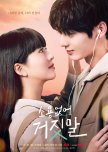
Let down by a random plot
It seems that quite a number of dramas I’m watching at the moment have a lot going for them but are let down or even ruined by inadequate plot structure and this one is no exception.So what went right?
Well the first half of the drama worked well for me. The premise for this show was good and could provide plenty of opportunities for tension. It gave a credible necessity for the superpower which featured throughout the unfolding layers of the plot.
The driving force behind the story was well handled, of being wrongfully accused and the resultant lack of trust destroying a life. It created sympathy for the character, Kim Do Ha, played by Hwang Min Hyun, as he struggled to release himself from the hole he had crawled into. I liked his performance but I can imagine that it was just a bit too underplayed for some. However, I wasn’t very enthused by Kim So Hyun’s performance as Kim Sol Hee. I think an opportunity was missed here (either by the actor or the director, or both) to beef up the character a bit. Given her character’s background, she could well have shown more edge. The blandness didn’t help the chemistry between the leads which was tepid rather than fiery. I think the most notable performances came from Yun Ji On as Deuk Chan and Lee Si Woo as Syaon.
There was enough differentiation in the secondary cast to keep me interested but that leads me into a discussion of how the plot was handled, because as far as minor characters went, the cup runneth over…
Nothing is more unsatisfying than loose plotting that requires an army of insignificant characters whose only purpose is to pass on information, overhear conversations or create contrived meetings. Knowing characters are being introduced for these purposes alone really gets annoying. Their fragmented stories float around the central plot like misshapen asteroids.
It smacks of the writer having a problem with the flow of information because of a lack of forward planning, and rather than thinking creatively, just introducing a convenient character to solve the problem. Sol Hee’s parents for instance had little impact on the plot and could have been easily dispensed with. Then there were journalists, gangsters, shopkeepers, composers, security guards and on and on.
Getting rid of most of them could have helped to change the story from an XXXL baggy sweatshirt and trackies into a designer suit. There was a lack of sophistication and it simply wasn’t sleek enough to create and maintain the tension, slobbing around like it had all the room in the world. The plot was fairly predictable from early on but the playing out of it was padded with over-complicated details (such as the rings) which failed to convince and required uncharacteristic motivations.
The flow wasn’t smooth either, with false resolutions splitting the whole story into segments sandwiched together with filler episodes. It felt like a revolving door that was clumsy and repetitive in nature.
So it’s back, yet again, to my favourite saying: Less is more. The real skill in plotting is to weave something close fitting with a few characters. Keeping things tight so that the viewer is wrapped up and has nowhere to turn to escape the tension. Then occasionally loosening a belt to allow them to breathe, before cinching it up again by a couple of notches. OK, I’ll accept that’s a bit OTT, it wasn’t ever supposed to be Through the Darkness. But the principle still holds and it could have been a much better drama with a little more attention and an editor’s blue pencil.
Was this review helpful to you?
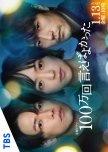
Why Didn’t I Tell You a Million Times?
11 people found this review helpful
Even the superhuman efforts of Satoh Takeru couldn’t save this one.
After a rough week I was just wanting something relatively brainless to drop into and when Netflix offered me this I conceded that Satoh Takeru is more than just a good actor, he’s a very pretty face and was seduced into trying it.It was 6 episodes in that I found out, to my disappointment, it was a 10 episode drama rather than an 8. You may wonder at this point if I am simply incapable of dropping a show. Well, Black Knight went down the tubes 10 minutes in… But this was one of those compulsively bad dramas you just have watch to the end. Boiled frog syndrome. There’s a totally perverse pleasure, or perhaps it’s a morbid fascination, in seeing just how valiantly good actors will struggle to put on a show as the writing progresses from almost passable, to unfortunate, to cringeworthy, to bad, to embarrassing, to execrable, to finally arrive at the only remaining destination—hysteria. Wah, the professional pride of this cast was impressive!
There’s something about Satoh Takeru that makes virtually anything he takes seriously totally believable, but even this superhuman quality of his was unable to save the farce of episode 9 (Thunderbolts and lightening, very, very frightening me…) and the sentimental quagmire of episode 10. And btw who the hell thought of adding that jaunty song into the mix? Wtf were they thinking…
The idea was marginally interesting and could have been made to almost work in the hands of a writer who could have taken the theme of death and relinquishment and given it some pathos. But I’m afraid Adachi Naoko either doesn’t know what those experiences are made of, or is just unable to write an insightful account of it. I suspect the former (forgive me if it’s the latter but it really has no impact on the end result). At first I thought it was going to be a whimsical approach but then it gradually became clear that keeping everything “nice” and above the murky waters of real feeling was the driving factor.
The character of the policeman was bordering on nauseatingly sickly and he was forced into that profession by the writer’s necessity for someone to solve a crime. In fact I swear he’d been training for the priesthood before she hijacked him for the part. And that’s the core of the problem really, the conveniences and problem-solving adjustments just got more and more ridiculous as the drama progressed. Everything was halfhearted and superficial, from the romance to the crime, which sort of lurked in dark corners. Well, I suppose I got what I wished for - something brainless.
What my rating means: 4+ I forced myself to go through to the end of it, but only because I was committed to writing the review. It annoyed the hell out of me. Actively avoid.
Was this review helpful to you?
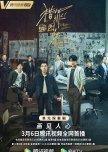
Mr Plod the Policeman plays Cluedo with Sherlock Sigmund da Vinci
Okay, suckered again by the rating and reviews. This is the first Chinese cop show I’ve watched and as this one is reputedly the crême de la crême (MDL rating 8.7, March 2023), then it will probably be the last. Don’t be deceived into false hope by the quality of the murals at the start of Ep 1. It’s not going to live up to them. Every time I thought, oh this is getting better maybe it’s actually quite good, something eye rolling would happen.Having said that, the ideas are not all bad and in better hands, given more time and depth, some could have been good. However, it’s got a cater-to-the-lowest-common-denominator type of script with dialogue that’s way too banal and explainy. That’s coupled with a shallow and pedestrian execution complete with impossible leaps of logic and events that catapult you forward way beyond the bounds of credibility. It does improve as you get further into it, and has flashes of inspiration, but you have to wait until the last few episodes. Overall it never really manages to be anything other than heavily flawed.
I was hoping for something deep and convoluted, but it mainly comprises sequential procedurals of unrelated crimes lasting one or two episodes, that are far too easily solved with:
1) a remarkably surprising lack of leg-work;
2) a forensic artist who could put a collaboration between Sherlock Holmes, Sigmund Freud and Leonardo da Vinci into the shade;
3) criminals who obligingly fess up before they’ve even been asked to, or roll over and spill the beans the moment they get rumbled.
The police characters have no real distinguishing marks and range from featureless to faceless. For the first 6 eps no one shouts, no one laughs, no one reveals much emotion and about the most impolite you get is entering the boss’s office without knocking. Any aberrant, impulsive behaviour needs to be (quote) “supervised”. Wow, what an ordered, stress-free life the Chinese police lead.
The most interesting character, and the best performance, is the forensic artist, Shen Yi, well played by Tan Jian Ci and mercifully he is centre stage for the majority of the time. This paragon embodies every speciality that is needed to solve the crime, including that of a handwriting expert. But you have to wait until Ep 8 for his story to really begin to unfold.
It’s a story shared with his cop partner and as it is the most interesting part of the drama it would have made a good central focus with the whole thing built around it. But instead it’s just a hastily composed fragment rushed through at the end.
Look I’m prepared to stretch credulity on occasion, but there were a lot of scenes in this drama particularly regarding client confidentiality, colour blindness, gun procedure, DNA extraction, virus tracking, lack of procedure and the take down scene at the end, that had me snorting with laughter. I mean really folks, handing out guns to untrained people like candies to children—there’s a limit… Research! Just do your job and research before you put fingers on the keyboard to write the script unless you intend for it to be comedy.
On the upside, the creative artwork and cinematography are a total joy. You also get to learn a lot about the world of the forensic artist and the techniques they employ, even though, I swear, some of it is lifted from a fairy tale.
What my rating means: 6+ Some aspects of it were OK but it had serious flaws. It will pass the time but you can find something better.
Was this review helpful to you?
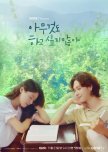
More of a dog’s breakfast than a degustation.
Is it a crime mystery, slice of life, healing drama, melo or a romance? Take your pick 'cause they are all in there. But far from being a degustation of delicious, beautifully crafted dishes, it’s a dog’s breakfast.It is ludicrously ambitious to think that all these themes can be squished into 12 episodes and then served up elegantly. In fact it’s a half-baked crumpet with raw veggies and Korean BBQ belly pork. Which is a real shame because there was some great main-course potential there in amongst all the side dishes.
If I was going to choose where to put the emphasis, I’d say that by far the strongest part of it was the slice of life. If they’d settled for that and thrown in some more detailed romance and much better character development, the actors and director would have delivered an OK drama. As it was the crime mystery dominated the second half, dragged in characters that were totally peripheral, set up non-credible police investigations and generally smeared ketchup over everything.
There were some nice performances in amongst the hash. I particularly liked the secondary couple and think that Shin Eun Soo as Kim Bom was the standout. However, Yim Si Wan as An Dae Beom was the sort of bland that could challenge a béchamel sauce.
There was some nice writing in there with some good ideas and it didn’t always take the easy path, but the temptation to go for big dramatic showpieces really trashed the credibility ratings for me. It didn’t need foie gras and caviar, country pâté served with crusty bread would have been so much more satisfying.
What my rating means: 6+ Some aspects of it were OK but it had serious flaws. It will pass the time but you can find something better.
Was this review helpful to you?

A failed experiment
I’ve always really liked Ahn Pan Seok as a director and commented that he invariably found good writers to collaborate with. After this production, I’ve realised that good writers found an able but not inspired director to produce their work. Because this production has all the hallmarks of an Ahn Pan Seok piece, in that it is quiet, has a slow and steady pace, keeps itself close to life and involves lamentable music choices (aside from the credits song, which is probably the best thing about the whole production), but without the insightful, clever writing, it’s as dull as ditchwater.What was this anonymous writer (can anyone provide a name for MDL) thinking would make a good story? There was a perfectly usable and interesting backstory to the ML, which was barely hinted at until late in the piece and then rushed through in the last two episodes. It had all the potential for a great thriller which in capable hands could have been a good watch. But instead, the writer chose to fill the first ten episodes with random case studies on how to negotiate mergers and acquisitions. Well, I suppose it lived up to its title, but in the process lost much of its dramatic interest. It watched like the sort of thing that an enthusiastic but unfortunate training manager might dish up as modules in an Art of Negotiation course.
As a public education exercise it worked very well, because it involved an abundance of explainy, unrealistic conversations between executives about finances, all expressed in layman’s terms. And I admit that learning about the topic did keep me interested and watching. But on the other hand it came complete with Chairman/CEOs of the company supposedly not understanding the importance of the stock market to their existence and what rumours could do to their share price. As well as Board Members surprised to hear for the first time that the company had racked up a debt of eleven trillion won. (1st episode so not a spoiler) If that was supposed to be trillion and not billion, you can’t get into that much bother in the few months between board meetings without someone noticing and if you did you’d be calling a board meeting well before that figure was reached. In the real world they would be dead in the water before the week was out. An M&A team of only four people? I don’t think so. And that wasn’t where the credibility gap ended, there were endless far too convenient and timely events to push the feeble plot along. Educational? Yes. Credible? Hell no!
To say it lacked tension is an understatement. It was tedious. You need to really understand the ins and outs of corporate finance and the implications of events to fully experience the wind-up. Maybe it’s because I don’t know enough to feel the heat, but I do know that what would have helped me is some emotional investment and there was precious little of that. There was no character development and the attempts to attach the viewer to the bland-on-bland characters were only partially successful. If you are not emotionally engaged then tension is so much more difficult to generate, as you only have cerebral anticipation to work with.
As for the performances, the actors did an average job with a very average script. Lee Ja Hoon tried hard with his tsundere character but for me the best performance was from Sung Dong Il as the Chairman.
Ahn Pan Seok has strayed from his usual genre—romantic interest slice of life—to experiment with a thriller. Every genre has its own methodology and thrillers require variations in pace, clever timing and emotional investment. In order to achieve that, the events in thrillers are not normally real world and as a viewer we accept that because the story unfolds in its own make believe world. But here, Ahn Pan Seok’s style is very real world, so for me, the credibility gap is so glaringly obvious and uncomfortable that I can’t ignore it. Perhaps if he had chosen a scenario that needed less explaining to the audience he might have been able to make a better thriller, even though, admittedly, the last scene is chef’s kiss.
Was this review helpful to you?
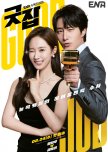
Good Job that’s over…
Full of the usual inconsistent characters, ridiculous plots and incredible coincidences. What do I mean by that? Well characters that are action heroes one minute and goofballs the next; plots that require people to do things which in real life simply would not/could not happen and are so incredulous that it is impossible to suspend disbelief; coincidences that require huge manipulation of motive or span 20 years etc. And what’s with the fantasy element that never went anywhere but hung around like a fart.Having said that, these things are par for the romcom course and I found this one better than usual for the first two episodes. The comedy was not too cringeworthy, the characters were not too annoying and there was a lot of fun to be had. But then, starting with episode three, everything got explained to within an inch of its life, the script became unbelievably clunky, it morphed identity into a hilarious (in all the wrong ways) melo-mystery and just went downhill from there.
Clunky like it’s a story being told by an eight year-old—and then the man goes… and then she does… and then they… oh yes, I forgot, before that, he said… Yes you get the basic story but all the subtlety is lost in translation. It feels just like: we’ve got this plot worked out and now all we need to do is move the characters around and give them some explainy lines. That’ll work…
I don’t think either set of romance couples did it any favours either. Their collective chemistry was about as exciting as a study in inert gases; definitely no fizzing potassium or sparkling magnesium anywhere in the vicinity. In fact the whole thing was an organic chemistry demonstration on the various properties of wooden.
Yep, I’m not really a fan of Korean romantic comedy, especially when it has an identity crisis and thinks it’s a crime melodrama, but somehow I keep coming back to them. (There’s a real shortage of good dramas at the moment.) This is the worst one I’ve actually completed but just because it was only 12 episodes and the last two were really hard going. I keep hoping that they will be better than they are. I live in hope but I’m not sure how long I can hold out.
Off to another genre—
What my rating means: 1 - 3+ Totally unbearable, but often compulsively watchable as you really can’t believe that it can be this bad.
Was this review helpful to you?
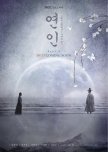
A never ending struggle to the end and not just for them…
I'll apologise in advance, this isn't going to be my best review I simply can't find the enthusiasm to go into any depth.I never thought it was going to finish. And by the time we did end up at the beach, I was less than interested and definitely not convinced. I felt like I’d been dragged kicking and screaming through a series of fragmented plot-lines, rushed developments and overused clichés. Amnesia once is unfortunate, twice is unforgivable and tbh I got to the point of hoping to be touched with it myself…
The actors battled hard against an ever loosening plot, but were unable to save it falling apart into a weird time-loop at the end. The costumes were very pretty and far too clean, and the cinematography was also pretty.
An attempt to be epic that simply became unmanageable.
Was this review helpful to you?


