
 News





This review may contain spoilers
Artistic
I find that most C-dramas are tailored to be profitable rather than artistic. Tragedy, beauty, and romance are so excessively used that they become meaningless. I am pleased to say that "Twelve Letters" does not fall into that category. There is tragedy, but there is also boundless resilience and hope. There is beauty, but it is not ungrounded. There is romance, but it is neither insecure nor saccharine. "Twelve Letters" is real, and because it is real, it is deeply moving.It is a slice-of-life, so I'll refrain from overelaborating on the plot. I will say—for those who are sensitive—that there are significant mentions of poverty, abuse, assault, homicide, and suicide. However, the story refrains from being maudlin given its decisively hopeful tone. "Twelve Letters" features moving found-family relationships; the purest of young love stories; and flawed but ultimately good characters whom life dealt bad cards.
While there are plenty of stories with similar concepts, "Twelve Letters" differs in its fantastical element and level of execution. The fantastical element of the story stems from a mailbox which can deliver and receive messages from the past to the present (and vice-versa). Throughout the story, a young couple from 1991 messages their future children (living in 2026) through this mailbox. This messaging—appearing to be somewhat of an authorial afterthought at first—later becomes critical in solving the story's main mystery. Additionally, it introduces questions regarding the cost of trade-offs, sacrifice, and love. This supernatural element meshed well with the slice-of-life premise to create what is one of the only "magical realism" adjacent C-dramas in recent times.
As for the level of execution, few Chinese dramas are on par with "Twelve Letters." The cinematography is breathtaking. Every single shot in the show is beautiful, especially in the 1991 Mei-Wan Zhen (梅湾镇) setting. What I particularly love is how artfully the scenes are shot. Each frame is a masterclass in proportion, and there is a bittersweet green tint applied to the footage. Despite the pursuit of beauty, nothing is overdone. The actors are not wearing jarring amounts of makeup or clothes the characters could not afford, and film is not aesthetic for aestheticism's sake. Here, grittiness is not compromised by misplaced romanticism.
This extends to the actors' portrayal of their characters. Wang Yinglu egolessly blends into every role she plays; Zhou Yiran never sacrifices sincerity for superficiality; and every supporting actor/actress performs with utmost conviction. There is not a single weak link, which is almost unheard of in recent C-dramas.
Finally, "Twelve Letters" musical choices are extremely effective at building both joy and suspense, especially in the first seven episodes. After episode 7, I found the OST to be overused or forced in certain moments (despite its excellence, it was probably unneeded). I was introduced to the band FloruitShow (福禄寿) through this drama, and they are now my absolute favorite (they are also unfortunately barred from performing as a trio now; they now perform as a duo under the name DOUDOU).
To be honest, I initially dropped this drama after the fifth episode and only recently picked it back up. The pacing can be slightly slow at times, but I found the ride to be worth every minute and every tear.
Was this review helpful to you?

This review may contain spoilers
Slightly more niche and refreshingly reasonable romance between CEO and employee
As another reviewer mentioned, this show is truly nothing special. You go through the typical tropes of CEO-employee romance, VR/video game dating, family-influenced breakup, etc.The difference between "Love Between Lines" and many other scripts that follow the same formula is how excellently the pacing is executed. Despite the fact that the story is nothing to write home about, the storytelling is never completely stuck or too rushed. You can watch an episode without skipping scenes if you'd like, or you can skip scenes yet still understand the plot. Few shows allow both to be viable options.
Anyhow, the first standout of this show lies in the romance. The female lead, Hu Xiu, is mature, independent, and loving, but she can also be clumsy and somewhat "easily appeased". The male lead, Xiao Zhiyu, is an ingenious yet cold architect, but he can also be both socially and romantically awkward, willing to grow (especially in the area of communicating feelings), and clingy. My purpose for the obnoxious "character-trait listing" is to say that both leads are imperfect, making them more interesting, human, and likable than many of today's "perfect leads". It goes without saying that Lu Yuxiao (who I find extremely endearing) and Chen Xingxu both performed their roles wonderfully; anything less would flatten the show's romantic core.
The romantic development between the leads was executed in a similarly compelling fashion. There is no unexplainable "love-at-first-sight" or irresolvable sexual tension to hinge the relationship on. Instead, the relationship between the leads progresses organically (this is difficult to explain without overt spoilers). There are many small bumps on their journey to love, but most (if not all) are realistic and avoid the pitfalls of melodrama. While I dislike that a lot of these bumps are resolved through make-out sessions with a small side of communication, the conflict-resolution mechanism is internally consistent with the male lead's awkwardness/touchiness. The relationship is not perfect, but it is—truly—romantic.
The final thing I'll address concerning the romance is the breakup. I understand that the most skepticism for potential viewers comes from fearing the breakup that commentators have argued is "out-of-character" for the smart female lead. I actually don't agree here. The female lead is shown to be altruistic, family-oriented, and prone to small bouts of guilt. Considering the then-unresolved tension and grief between the two leads' families, I found Hu Xiu's decision to break-up reasonable and in-character. If the break-up still sounds bothersome, know that it lasts only one-and-a-half to two episodes.
The second stand-out is the integration of the game "Ju Ben Sha (剧本杀)". I found it to be a compelling vessel for communication between the leads, and much of the dialogue that happens in the game is implicit but critical direction for the plot. I did hope to see a few more game scenes, but I understand that, for both leads, some part of the past must go.
All in all, I believe this show is worth a watch! I apologize for the abstractness in the review; I would be more concrete if not for the risk of spoiling too much.
Was this review helpful to you?

It's a lot.... but yes, we got through it :)
I think this had an interesting direction. I was wondering how they were going to incorporate medical and crime and romance all together, but I'd just label this mostly a romance drama. Anyhow, my thoughts are pretty simple here:1. Acting is pretty good and I like the lead couple and 3rd lead couple. There's a lot of communication and chemistry in these relationships, as well as cuteness. Obstacles have NOTHING on Xing Kelei and Mi Ka. I really appreciate the realism in the portrayal of first love (shy, a little bashful).
2. Pacing and story are a little muddled though. There are super long arcs, the second lead couple just made me skip all their scenes and the story doesn't really effectively navigate crime and medical arcs. They don't feel necessary, to be honest, and that bothers me a little. Just a tad?
I think if you do something in a drama, do it well. If not, don't do it at all. I do also think the romance did get in the way of realism for depicting special forces and hospital activity. I think the drama definitely serves in bringing your attention to first responders, but it's pretty damn romanticized.
3. I did watch all of it. It's pretty binge-worthy, and I am a binger. I did keep on pressing the forward five seconds button though :/
I could honestly see myself rewatching this.
Was this review helpful to you?
Your reunion with family and life dramas
This one is pretty popular in the mainland, but ceases in popularity here. I think that's unfortunate. Huang Lei and Hai Qing (as well as all the other actors) are a masterclass for acting, and the easygoing storyline hides intricately written character development for both the students and their parents going through the 'gaokao' (college testing) period of their life.There's a lot of themes explored here too, including depression, stress, parental pressures, single parenthood, etc. It all comes together wonderfully to make a heart-warming yet sometimes heart wrenching drama.
My only criticism is that this drama does get into nitty gritty things. I think that it's kind of the point with a drama like this, but I find family dramas have the potential for a lot of fluff for how much substance they have. Here, the fluff is interesting, but it doesn't mean it's necessary.
For OST lovers, the OST is fine, but not great... I don't think this drama focused its budget on the OST more so than the actors (a lot of famous veterans here).
Was this review helpful to you?
Cute dumpster fire that I couldn't summarize even if you asked me to
One-dimensional characters, unresolved love triangles, miscommunication break-ups, foolish FL, typical CEO ML, cliche plot done badly, know-it-all BFF who knows nothing, dragging, dragging, dragging plot...If you like this, I don't know what to tell you. If you don't, you probably shouldn't watch this drama unless you're trying to support some of the actors (who honestly did fine, the script was just... unbearable).
I did like Qin Shiyue though, and I liked how Shen Yujie portrayed her. Will keep looking out for this rising actress because she's adorable : )
These dramas make me wish that good actors and actresses could genuinely get good, thought-provoking plots sometimes. You know?
Was this review helpful to you?
It definitely had potential. Key word is HAD : (
Zhou Ye was experimenting here with a new type of personality for her, and she definitely pulled it off. The outfits and set were cute. The romance could've been cute. The script was not, throwing all potential this could've had into the gutter.Like every other comment here, the whole thing ended before anything actually started. You get some 18 episodes of bickering, weird coincidences, and basically nothing else? It's interesting to see though, because this drama seemed like it aimed for the no-love-triangles and no-weird-breakups trope which I actually appreciate. I guess it was a good effort, but it also proves that conforming to stereotypes and following the trends don't actually make for good works sometimes : (
That being said, if you love Zhou Ye and Lin Yi, you might give this a try. The first few episodes are funny and fine. In fact, I probably enjoyed them. That's my two cents : )
(Review written 4/11/24 and published 5/30/24)
In case I ever edit this which I probably won't
Was this review helpful to you?
Misleading Trailer but Decent Show Nonetheless
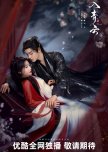
"Love in the Clouds" is advertised as a dark, angsty enemies-to-lovers romance in the trailer.However, the drama itself is much more a fluffy, light-hearted fantasy romance than anything angsty. While there is a healthy dose of both trauma and lies in the leads' interactions, the love story itself is incredibly pure; there is no true hatred or vengeance despite the hurt both characters experience. For those who enjoy watching intimacy, there's a surprising amount of those scenes that somehow passed the CCP's censorship. The chemistry between the ML and FL elevated the romance significantly and may have "carried" the show a little.
Regardless, I would say, overall, that this show was enjoyable. The abundance of comedic sound effects and one liners (cue 27) combined with the beautiful visuals give the show a distinct, charming quality. This lighthearted charm helps the show balance poignancy, reality (well, as much as a fantasy can afford), and romance without spiraling into the C-drama "tragedy and angst" rabbit-holes where emotion is singlehandedly delivered through crying scenes, betrayals, and blood-vomiting.
Additionally, I found the use of "strong FL" tropes to be well-executed in this show. Both the FL and the 2FL are imperfect but resilient in different ways, and they genuinely have personalities that are likable and extend beyond being symbols for the feminist empowerment movement (this year, many C-dramas seem to be set on the strong FL trend and as a result create characters that are a little too obviously manufactured to fit a certain mold).
My only and main gripe with the show is its one-dimensional antagonists. While the protagonists all undergo reasonable character development and have mostly flushed out character arcs, the villains are underdeveloped and carry underwhelming/simple motivations. The lack of complexity in the antagonists sadly flattens a lot of otherwise dramatic climaxes in the show and makes some episodes/arcs feel slower pacing-wise.
All in all, I found "Love in the Clouds" to be a cute show that's honestly worth a watch!
Was this review helpful to you?
This review may contain spoilers
"People do not pass away... they die and then they stay."
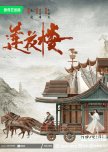
This is a drama deeply close to my heart; I thought extensively about this review before writing it. While there may be some articulation errors in my writing, I hope that it compels you to at least consider watching Mysterious Lotus Casebook (MLC).At first glance, MLC is nothing more than typical. It has all the elements of your conventional Wuxia C-drama: an overpowered protagonist; an up-and-coming Jianghu hero; some jealous one-dimensional antagonists; uncomplicated female characters; not-so-difficult to solve mysteries; and many more I am too lethargic to name.
But as commonplace as it may seem, MLC refreshingly breaks convention. Unlike most Wuxia stories, there is no real climax or overblown melodrama. The story's events—no matter how curious—proceed with a slice-of-life-resemblant matter-of-factness. Furthermore, MLC evokes genuine skepticism of the too-often-glorified Jianghu. Through the lens of our protagonist, the Jianghu is an uncertain environment where heroism—driven by ruthless ambition and self-righteousness—costs human lives. Most importantly, though, is that MLC's protagonist Li Lianhua is not on a legendary journey to becoming a Jianghu hero; he is a former Jianghu hero accepting a lonely and tragic decline.
The character Li Lianhua (formerly Li Xiangyi) is what single-handedly elevates MLC from a mediocre, enjoyable watch to a haunting and empathetic story. Li Lianhua is indubitably a case of "overpowered protagonist", a trope I harbor deep skepticism for; there are simply too many opportunities for characterization inconsistencies, over-indulgent author self-inserts, and extreme uses of plot armor. However, Li Lianhua is a character designed so intricately that he not only avoids those common pitfalls but is relatable for average audiences. He is perspicacious yet uncertain; cold yet kind; arrogant yet penitent; a compulsive liar yet honest; and accepting of fate yet deeply loyal to those he loves from the past. The contradictions and his struggling attempts at reconciling them make Li Lianhua thought-provoking, likable, and most importantly, human. Cheng Yi's performance of Li Lianhua is superbly compelling but may tend over-empathetic for some.
However, in the same way that a good conductor cannot singlehandedly "carry" an orchestra, the characterization of Li Lianhua cannot single-handedly define MLC's quality. While the remaining cast of characters are comparatively one-dimensional (with the possible exception of Di Feisheng), their relationships/interactions with Li Lianhua give their presence meaning. For one, the doomed romance between Li Lianhua and his former love interest (Qiao Wanmian) is portrayed with an unusual level of maturity, modernity, and sensitivity (in the context of Wuxia dramas and historical gender structures). Additionally, while the main antagonist has independently shallow motivations, his relationship with and perception of Li Lianhua create plot intrigue. In the show's more cliche and over-explored relationships (E.g. Li Lianhua and Fang Duobing), MLC successfully uses clever dialogue and surprisingly worldly insight to substitute for the lack of storytelling direction.
Finally, I'd like to talk about the BGM. While the OST is catchy, the BGM is immersive and extremely beautiful. Much of (40-50%) the BGM is structured around 4 sets of "Variations on [X] Theme". Despite revolving around the same theme, the separate variations are rhythmically and creatively diverse enough to feature in scenes with vastly different emotional tones. The fact that they all revolved around the same theme, however, added a subtle and effective additional layer of cohesiveness. Beyond the variations, there are tracks that are intimately beautiful (my personal preferences are for "涟漪" and "诉说“, which both have excellent guzheng solos).
MLC may begin slow, so perhaps give it 10-15 episodes before deciding whether or not you like it. But while the production is simpler than many of today's high-budget cinematographic "making-of-a-myth" stories, MLC—through its simplicity—leans into inquisition, normalcy, and the destruction of kitsch, apathetic Jianghu myths. Even though it is by no means perfect, it has left an indelible imprint on my heart.
Was this review helpful to you?


