



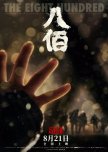
A dance of optics, but with little emotional pull
The set-up of The Eight Hundred is immediately an intriguing one. A last Chinese battalion is left at an abandoned warehouse in Shanghai to make a final stand against the Japanese. Their struggle is not just one of bloodshed. It's also a performance.Because just a stone's throw across the river is the international concession where the Shanghai elite and entertainers – as well as foreign journalists – gaze on as the Chinese battalion endures assault after assault from the Japanese.
This dynamic is what makes this film stand out, in my opinion. You have this interesting dance of the concession-side watching the warehouse soldiers as if the entire thing is a show. But then you also have the soldiers watching the concession-side, pulled in by the dazzling performers and lights.
It's not only about watcher/watched either. Individuals from both sides attempt to make crossings from one side to the other. The film seems to refrain from judging the actions of anyone too harshly – including deserters and snobby journos – which keeps the watcher/watched dichotomy all the more fluid. Except the Japanese, of course. Their sole purpose in this film is to be condemned.
I think a lot of this analysis may be my projection, however. As ultimately, The Eight Hundred doesn't dwell with much depth on this interesting dichotomy. A massive chunk of run time is consumed by massive action scenes which, while essential for war films, are my least favourite part of the genre. (No shade to The Eight Hundred, I just don't like war films that much generally).
Normally, I can forgive super long battle scenes if there's strong emotional pull. Unfortunately, this was the big let down for me. The Eight Hundred tried to follow the storyline of too many characters. The result was breadth, but no depth.
Like c'mon, pleeeease, I'm such a sucker for having my heartstrings pulled. I can jump from six to eight stars so damn fast when you tap into my soft side, but The Eight Hundred missed the opportunity. Which is a shame. Because there were some potentially gorgeous characters, they simply weren't fleshed out.
Was this review helpful to you?
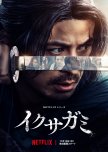
Swords spark but the pacing perishes
I went in to watch Last Samurai Standing with one desire: well choreographed swordplay. And the series certainly delivered there. Big tick from me.Also big tick for the death game format. I don't really understand the critique of 'we've seen this before'. I mean, we've seen heaps of spy movies before, but people keep returning to Mission Impossible and James Bond. Don't change a good thing, right? The death game set up is something I enjoy because it immediately introduces high stakes, not because there's anything novel about the trope.
Otherwise, I was pretty underwhelmed by Last Samurai Standing. There are too many characters with back stories, resulting in breadth rather than depth. Back stories should provide a) emotional attachment to a character and b) an explanation for their motivation. I found the former to be superficial at best, and the latter to be often too far-fetched.
So while I didn't mind any of the main characters, I wasn't too fussed about their fates. If I was interested in anyone, it was the Ainu character who received fleeting screen time and no backstory.
That said, this series has overall stellar production quality. There are more than just a few impressive shots, and the colour grading itself is beautiful. I'm curious to see in which direction the second season goes.
Was this review helpful to you?
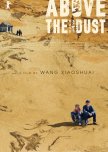
Ask for a water pistol, get intergenerational trauma instead
This is an odd movie. Firstly, Above the Dust isn't your usual Chinese production. Chinese film faithfuls will note the lack of dragon seal in the opening credits: the usual sign a movie has passed Chinese government film regulations (i.e. censorship).Director Wang Xiaoshuai did submit Above the Dust for review, but he ended up having it screened overseas, after the censorship process dragged on.* And I can see why regulators would take issue with the film's substance. It casts a critical eye on the cultural revolution via the viewpoint of a family descended from a rural landlord.
Second, the movie is also odd in its storytelling approach. Narrating through the eyes of a modern-day child who encounters the ghost of his grandfather is a well used narrative device. Using the kid's obsession with a water pistol as a springboard into major political themes was a clever move.
However, it felt like narrative cohesion suffered due to split focus. It touched on family betrayal, connection to land, urbanisation, and contradictions within state governance. Yet with so much to chew on, I felt the storyline didn't delve deep enough for me to digest any of this properly.
In terms of visual style, I'm not sure why, but the blanched colour grading felt grating to me after a while. I know its purpose was to emphasise the dry land and provide a dream-like quality. However, to me I felt like it was...obscuring something? I don't know. I just kept constantly wondering what the scenery really looked like.
Still unsure if I can say whether I liked this film or not. I'll need to sit with this one for a bit.
-----
* Source: https://variety.com/2024/film/news/wang-xiaoshuai-china-berlin-above-the-dust-1235913938/
Was this review helpful to you?
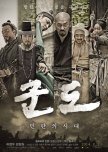
Robin Hood plays it safe
Kundo feels as if some film bro wanted to play around with some Western genre tropes and picked up the first script that would suit his purpose.It's a typical Robin Hood style narrative. The underdog protagonist and his tight crew give their all as they fight against the tyrannical overlord. Swords swing, arrows fly. And a female character is even allowed a few lines.
The result is a patchwork of horses, fields, and fight scenes. And by patchwork, I mean patchy. The entire thing is very roughly sewn together. Once every 20 minutes there's an awkwardly inserted Western trope, after which the film awkwardly limps until the next one.
That said, there's a couple of well choreographed fight scenes in here that helped lift the production value a little. And just to help me get past the halfway mark is Kang Don Won who plays a captivating villain, aided by the fact that he's quite hot. Thank you for your service.
Was this review helpful to you?
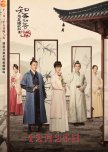
One for the Austen girlies
To lovers of Pride and Prejudice: I strongly recommend The Story of Minglan. You will easily find familiarity in this drama. A sharp-minded protagonist. A well-off but extremely hectic family striving for status. Leisurely pacing to match the domestic world to which Minglan is mostly confined.The class perspective is also parallel. While there is much empathy for Minglan’s plight as the lowest on the rung within her own family, that empathy is not extended to the servants who follow the usual loyal/disloyal trope that I’ve spoken about in other reviews.
But it also feels a bit mean to make the Austen comparison. I found the Story of Minglan to be thematically richer than Pride and Prejudice. Here’s how:
1. The drama knows to condemn the Bingley character (Yuanrou) for his lack of backbone and perspective, no matter his polite manners and intent. Big thumbs up from me (My ex’s major flaw was lack of backbone,).
2. More importantly, the Story of Minglan acknowledges what so few Western romance stories do: a wedding isn’t the end. In this drama, a wedding can mark either relative freedom or eternal hell. It was quite convenient that Darcy’s parents in P&P are dead. Darcy’s domineering aunt is outside of the immediate household and so Elizabeth need not mind overbearing in-laws. On the other hand, all three Sheng sisters must contend with oppression in their new household in one form or another, whether that’s domineering in-laws or neglectful spouses. The man who Minglan ends up with is depicted as a perfect match not only because he understands the struggles of women but also because he accepts and celebrates her, warts and all.
3. The inner chambers are just as dangerous as any battlefield. While the patriarch may be the source of authority in the household, he is not always the wielder of power. These women wage war and men are factors in their calculations.
There’s much more I could praise about this drama. It’s beautifully intricate and the characters are superb thanks to exceptional acting. Give it a go.
Was this review helpful to you?
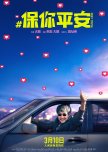
Laugh one minute, cry the next
I watched Post Truth while at home sick and it was exactly the heartfelt pick-me-up I needed. This movie is a seamless blend of comedy and sincerity, with everyone giving their all to the bit.The comedy element comes mostly from Wei Ping'an's wild goose chase as he hunts down the source of a bad rumour about a dead woman, Hu Lan, who he had briefly met when she had bought her grave plot from him. Special mention goes to Li Xue Win – who plays Ping'An's sister – for her performance in catfishing a guy essential to Ping'An's chase. This gag was extra funny as I definitely have friends who would do the exact same thing if called for.
The heartfelt part of the film comes from Ping'An's relationship with his daughter who, parallel to her father's quest, also grapples with doing the right thing, despite the steep cost. Their storyline was the perfect balance to the absurd hilarity that meant that Post Truth kept strong pacing.
A good romp if you need one.
Was this review helpful to you?

Hidden gem of a documentary
Hidden Letters is not an academic documentary. Instead it reveals history through the present, following two modern Nushu writers. Except for the opening frames (I'll address those below), the documentary is a delicate and thoughtful exploration of Nushu in its present form.The documentary explores the modern-day contestation around Nushu – through the women who engage with it – but also the opinions of men who think they know what they're talking about. (It turns out that mansplaining is the same in every language.) Unsurprisingly, it's the discussions between women about Nushu which come across as the most sincere.
The two Nushu writers meet with their own struggles as women, in part related to Nushu and in part related to their existence as women in a patriarchal society. Of course, these two things are enmeshed with one another. It is through their lives that Hidden Letters drives its emotions and messages.
For me, the only downside of this documentary is the opening frames. These are simply lines of text on a black background:
"For thousands of years, women in China were born to obey their husbands, fathers and sons.
Forbidden to read and write, their voices were silenced. Most left no record of their lives."
I'm not sure why Hidden Figures opens with such sa weeping, homogeneising statement (and in English too?). Particularly when what follows is a nuanced and complex insight into the evolution of Nushu. In a historical sense, Nushu itself was limited to the women of the inner chambers (and therefore not relevant to peasant women). But even saying "their voices were silenced" is in direct contradiction to the existence of Nushu itself – as well as other written records left by Chinese women of the past.
I'm not saying that oppression of women didn't exist - on the contrary, it was under such conditions that Nushu came into being – but I think Hidden Figures does itself a bit of injustice by opening with such a reductionist introduction to a deeply complicated form of communication.
That said, I highly recommend this documentary. It's well crafted and provides an intriguing insight into the intersection of Nushu and the everyday struggles of women.
Was this review helpful to you?
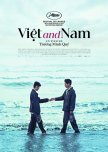
Meandering but exquisite cinematography
Still not sure how I feel about this film. Although at first glance, Viêt and Nam appears to be a romance, the complex storytelling makes it far bigger than just the story of two miners finding solace in one another.The film meanders, geographically and temporally, between the search for war martyrs and the vacillation of characters Viêt and Nam as they decide whether to leave the country. This film is exquisitely shot. And honestly, I was so wrapped up in the composition of some scenes that I wasn't really paying much attention to the blurring of reality and dream. You can totally see how this made it to Cannes.
Ultimately, I would say Viêt and Nam is more about the processing of post-war trauma than it is about romantic love. Or rather, the latter is a manifestation of the former.
I have mixed feelings about the ending which, though based on true events, feels trope-y compared to the rest of the film. I also feel like that level of pessimism is a bit of a cop out, regardless of whether its depicted as dream or reality, but happy to be convinced otherwise.
Was this review helpful to you?
An intimate view into the life of a North Korean loyalist and massacre survivor
With a shaky cam, home video style of filming, Yang Yonghi takes you into her family home in Osaka and documents her interactions with her aging Zainichi* mother.The documentary opens with a startling intro: Yang's mother is a survivor of the Jeju 4.3 massacre. And although the documentary starts and ends with a focus on this event, the documentary isn't really about the massacre itself.
Much of the doco sees Yang spending day-to-day family time with her mother while also trying to figure out why her mum has made the decisions that she has made. A key focus is Yang's simultaneous understanding and perplexion around her mum's decision to send her three sons to North Korea.
Initially, I was a little worried about the run time. Two hours is a long time for these types of home video style productions. But there's clearly been a lot of thought put into the narrative structure that balances well the family quotidian and the political themes.
The big weakness of this doco, I feel, is the animated sequence past the mid-way point. The purpose of this sequence is to provide background into the Japanese colonisation of Korea and the eventual split between the ROK and the DPRK. But this comes far too late in the program and, given the ground already covered at that point, feels repetitive. It would have been far more effective near the beginning for those unfamiliar with the history. The animation itself seems muddled with different styles that gives it a uni-student feel.
What this doco does deliver well is intimate insight into how family relations are bound up in broader historical and political dynamics. It's touching and sentimental without straying into romanticisation.
*Zainichi are Japanese citizens with Korean heritage.
Was this review helpful to you?
Very lowkey smut (by mainstream Chinese standards)
Honestly, this is the first vertical drama I've watched all the way through so perhaps I've been too harsh with my star rating. That said, I don't want to get anyone's hopes up.The premise of this drama is a slightly different take on the contract marriage trope: the FL and ML have already been married for three years (but are still keeping their relationship secret under the guise of love/hate coworkers). This allows the storyline to skip the usual ML chasing FL convention and cut to the chase: steamy intimate scenes. These are really the closest thing Chinese media can get to sex scenes. They quickly get repetitive, but the first couple get a solid thumbs up from me.
For what it's worth, the FL and ML have decent chemistry, although I feel the actress does most of the heavy lifting. However, the story isn't particularly engaging and I ended up watching this drama as a way to help me get to sleep. I definitely got to the point where I was scrubbing through whole episodes to see if there was anything worth watching for the last 30 mins of episodes (spoiler: no, not really).
Anyway, I guess this was an ok way to dip my toes into the vertical drama world.
Was this review helpful to you?
You gotta be here for the cast.
I mean, what can I say? You think I'm gonna say no to a cast like this, even with poor production quality?I needed something fun and low brow to watch while I was home sick and The Heroic Trio ticked the boxes. It just so happened that I was watching this on a summer's night with the din of Têt firecrackers going off in my neighbourhood, which added an extra something to the chaotic atmosphere of the movie.
The Heroic Trio is as camp as it is crass. The three women are allowed full flamboyancy but, as exei aptly points out, with little attention paid to either plot or effects. And yes, at times it's so bad that it's good. I'm not sure if you can even give this anything other than a 7/10.
Take yourself on this quick and whacky ride if you're looking for a flick with some wild energy.
Was this review helpful to you?
Squandered potential
The premise for Bat War is ripe with potential. A strict military colonel comes onto the scene to enforce a ban on traditional Thai music. But there's an exception. While he holds traditional Thai music practitioners at gun point, one house of music is allowed to continue playing and teaching.Trying to slap comedy onto this premise was not the best idea. Music is such a drawcard for film because of how its pulls at the heartstrings. Music practice is a deeply personal thing, imbued with meaning for both the musician and their audience. I think Bat War could've been a beautiful production if there'd been both this emotive quality AND the comedic elements. Alas, no.
As such, the comedy falls flat. Having soldiers run around brandishing their guns at old guys playing their music just isn't very 'ha ha' material. It doesn't help that the acting is Hallmark Movie quality. The dialogue and cuts are awkward and stilted. And the music doesn't get to shine.
I dropped this around 30 minutes in. But not before I had scrubbed ahead to see what the motivation behind the music ban was, only to find it trivial and disappointing. I had originally thought when I first saw this movie pop on my Netflix recs that it might've been based on a real historical ban - but quickly realised in the first couple of scenes this was not the case.
Was this review helpful to you?
Just enough laughs to keep you watching
Too Cool To Kill was a pleasant surprise. I'm not normally a comedy watcher but I was just flicking through SBS for something easy to watch to wind down after work and decided to put this on. The set up in the beginning is a little slow and it takes a while for things to warm up. However, after almost giving up in the first 30mins, I'm glad I stuck around.It's all hats off to Wei Xiang. He's certainly the star of this show and plays a character who's an amateur actor, fooled by a director and his actor sister to pretend to be a hitman. One layer of the comedy is that he, unwittingly, is in life and death situations with gang members. And giving his all to the bit. (Or, at least, as best he can with his rather absurd acting abilities).
The movie has just enough slightly unexpected punchlines to keep you watching. I think the story overall could've done with some serious tightening to make it more snappy. But I respect that, even for a comedy, Too Cool To Kill is deeply unserious.
Was this review helpful to you?
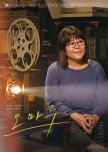
A tender film but with not enough meat to chew on
Hommage is the story of a middle-aged film director who's gone from award-winner to box-office disappointment. She is solicited by an indie theatre to restore a film called The Female Judge, a movie made by a Korean female director in the 1960s. However, half the audio is missing. And, as it turns out, are whole scenes. Thus, director Ji Wan embarks on a mission to recover the lost parts of The Female Judge.Hommage spends little time on The Female Judge itself or its director. Instead, these serve as conduits for Ji Wan's own story as she grapples with everyday sexism that seems to wear her down even more that she's reached middle age. It's clear as she meets with the various people who were connected with The Female Judge that Ji Wan is also drawing parallels with her own life. It would seem that much – but not enough – has changed for South Korean women since the 1960s.
At times, Hommage feels like a film made for filmmakers. A bit like when writers write for other writers. It's not navel gazing at all, but I wonder whether I would have appreciated some elements of the story a bit more if I had a better appreciation for the craft of filmmaking.
It definitely felt like it was lacking something. I didn't really get to know any of the characters properly – even Ji Wan – and so while there were a couple of touching scenes in the film, I think these could've packed more of a punch with better character development.
All in all, Hommage is a gently paced film with moments of tenderness and humour sprinkled throughout.
Was this review helpful to you?
This review may contain spoilers
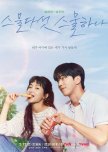
Incredibly endearing but with a massive mid-way lull
It looks like I hold the relatively unpopular opinion that the last two episodes featured some of the best writing of the entire series. More on that soon.What initially captured my attention for Twenty-Five Twenty-One was a) Kim Tae-Ri and b) the time period setting. The latter actually didn't seem to have much of an influence on the story as a whole but rather intervened in key moments at the beginning and the end. I think that's ok. And, of course, it goes without saying that Kim Tae-Ri put on a superb performance.
Nevertheless, it took me TWO YEARS to finish this drama. Yep. That's right. Essentially after the conflict between Na Hee-Do and Ko Yu-Rim was resolved, I felt like I was wading through molasses at the mid-way point of the series. I wasn't invested in any of the romantic plot lines and felt like at least half of the screen time between Hee-Do and Yi-Jin should've been slashed. I was desperate for more screen time between Hee-Do and her mum as well as Hee-Do and her daughter. In fact, it was the relationships between the women that meant that after a lottttt of dipping in and out, I was eventually motivated to finish watching the latter episodes.
Personally, I don't think this could've been a true coming-of-age narrative if those last two episodes had been any different. Putting aside the wish for more screen time between the characters mentioned above, what the last two episodes satisfied was the really annoying itch that had bugged me throughout all of Hee-Do's high school years. Yi-Jin felt like a teenage first love. And because he felt like someone trapped in that naive bubble, I struggled to invest myself into their relationship. But in the last two episodes, the two characters grew independently so quickly - while also growing apart from one another - that I rapidly became invested in that romantic storyline at the same time that I was crying over its poignantly inevitable demise.
At the end of the day, I believe the strength of the story actually comes from Hee-Do and Yu-Rim's relationship. Honestly, this is despite some hella bold choices from the drama's creators. Picking Hee-Do as the protagonist was risky. I think this could've been just as strong a story if it had been told from Yu-Rim's perspective (and I do think some of the class elements were fumbled a bit). But I think they made it work nonetheless. The other major risk was choosing fencing as the feature sport given it's relative lack of popularity and that it's - let's be real - super wanky. But, again, I think it ultimately worked.
In my opinion, Hee-Do and Yu-Rim's relationship should've been more central than the romantic one. I don't think it's a coincidence that I found the overall pacing slowed down when the pacing in the development of Hee-Do and Yu-Rim's relationship slowed down. Otherwise, maybe I could've squeezed out another star for this drama.
Was this review helpful to you?


