The writer herself has said the Jing is XY's lover. It is him who is in her heart.
The only story that would be hard to adapt to live action is YaoLiu (one would need someone who is very strong at visual storytelling and cinematography), and perhaps YaoXuan. But YaoJing is just a stereotypical romantic comedy hidden in a book filled with poetry—it's not that deep. Maybe that is why the Lover's Bugs and blood oaths are hard for them to understand—it transcends beyond their need for trashy romances.
The writer herself has said the Jing is XY's lover. It is him who is in her heart.
Continuously citing TH's interview (one that can no longer be cross reference) about her work is still only one perspective and does not constitute a counterargument to shut down anyone else's interpretation. An artist has some responsibility to explain their artistic decisions, but once they put their work out there, the work lends itself to interpretation in any way its audience perceives.
The following character analysis will be based on the novel, using Kaola as well as an AI translation.As we may…
According to some people who have read the leaked script, TSJ's character receives an upgrade at the expense of CX's character development and XL's efforts to secure the things needed for XY to achieve her dream of a peaceful life. This also means that the YaoLiu love story is significantly downgraded—regardless of any changes made, TSJ as a character is considered flawed due to his decision to prioritize XY by abandoning his adopted son, thus perpetuating a cycle of childhood trauma.
According to an interview or a now unavailable Weibo post, TH doesn't create outlines for her characters, instead writing spontaneously. In relation to this improvisation, I would say that his character may have been unintentional at first, but were then decided to be kept as is after editing.
Settling and learning to love out of comfort is a kind of love too, I guess. However, since this is a fantasy story, we probably expected more fantastical decision-making.
Some people still find the 15-year promise romantic, and if you didn't delve too much into how the oath hindered XY's ability to heal and become her own woman, it might have been seen in a different light.
If it wasn't already apparent, TSJ is also my least favorite character. I just couldn't comprehend how a grown man with deity status and socioeconomic power could not have his affairs in order.
The eclipse has caused some odd phenomena to happen, so I thought I'd add to the mix.While we wait for the second…
The following character analysis will be based on the novel, using Kaola as well as an AI translation.
As we may all know, Tu Shan Jing, the second male lead and endgame character in the world of 'Lost You Forever,' was crafted by Tong Hua to be praised as the merchant prince, heir to the Tu Shan clan, the most influential and powerful family of the Central Plains. He may be memorable for his contemplative behavior and calm demeanor around Xiao Yao; Jing’s strength, as well as his weakness, to a subset of audiences, is kindness.
When we first meet Jing, he is a beggar, crawling on the ground, waiting for death. As the story progresses, the audience, like XY, develops a sense of pity and care for him. Our initial response is that of a savior. We hope and root for his recovery, but unlike XY, we, as the audience, are awaiting when he becomes someone worth remembering and whose character will change the lives around him for better or worse.
Yet, after reading the novel three times, I cannot pinpoint what kind of character Jing is. I had originally thought of him as a mild antihero, but as the story progresses and definitely after the third read, TSJ as a character becomes anything but an antihero. In the end, he is not a hero, antihero, or villain in any literary sense. He can't even be regarded as an anti-villain. In order to cast TSJ as any of the above categories would require strong character development. The best heroes and antiheroes achieve self-awareness, gain a heightened ability to protect loved ones, and overcome shortcomings--a transformation that proves they are worthy of every word the author has penned. While villains and anti-villains transform into the antithesis of our heroes and antiheroes. Even the poorest written heroes and antiheroes change their circumstances through their decisions. Yet, TH's penning of Jing stays consistent throughout the story, in a continuous cycle of disappointment, incompetence, and pity. Frustratingly, all his actions require the drive and intelligence of others (CX and FL), and the solving of his own personal problems in the hands of more capable characters (XY and XL). For a majority of the story, TSJ’s character functions like a chest piece to be maneuvered by the strongest characters, for favors, bargains, promises and obediences.
Unlike CX and XL, both of whom, as antiheroes, undergo heroic journeys, Jing's character does not experience growth where he overcomes his shortcomings to become a better version of himself. I can only speculate that his character remains throughout the story, perhaps, intentionally to reflect and counterbalance XY’s need for security and stability. Whether TH had intended or not, she had meticulously crafted Jing to a point that one can't even analyze his existence without comparing him to other stronger and more fleshed characters, or independent of XY's emotional and psychological deficiencies. In addition, while CX and XL are more self-reliant and don't constantly need rescuing, Jing's character development is hampered by being a damsel in distress, and how others perceive him--CX views him as unworthy due to his weakness, while XL is simply unafraid of him.
I've encountered several posts that refuted that Jing's character doesn't need to go through character development, heroic arcs or any sort of growth. Others had simply argued, TH wrote him to be the perfect character and therefore didn't need any transformation. How naive to think an author of Tong Hua's calibur would think a character is perfect that they don't require development at all? In fact, in TH's creative journey to craft a story unlike her previous works, her decision to keep Jing a consistent character degrades his value and importance to that of a plot device.
As a character, TSJ exhibits codependency, low self-esteem, and a lack of self-value. “Since I was a child, I have always been the pride of heaven. There was a woman who practiced dancing for ten years just for me to glance at her. There was a famous man who traveled thousands of miles to Qingqiu and stayed there for seven years just to play a game of chess with me. Some people asked for a painting at any cost, and some people called me a master of one word. I once thought that was who I was...I came to truly understand that, without those beautiful coats, I was nothing, but then God made you appeared." He had spent his whole life pampered and tied his self worth to his status and materialistic things. When all those were taken from him, he found new meaning in attaching his manhood, self worth and existence on XY’s random act of kindness and her blushing. Tong Hua writes, “But when I took a shower that day, you saw my body and your face turned red. At that moment, I felt really alive. In your eyes, I was still a man who can make your heart....”
He views his life so worthless that he is willing to die with her and die for her. He literally drank poison on purpose just to prove his loyalty, but can’t find the inner strength to save them both from the cherry blossom orchard, because without her, there’s no meaning left. When he wakes up from his 37 years of slumber, he tells XY he is willing to be her slave.
However, Tu Shan Jing has a pattern of failing to fulfill commitments. He failed to honor his mother’s and grandmother’s promise to marry FFYY because he desired to be with XY. Subsequently, he couldn't keep his promise to XY because he couldn't free himself from his familial obligations. Ultimately, he failed to fulfill his role as a father to Tu Shan Zhen in order to remain with XY. How can someone who consistently fails to follow through be deemed worthy of a lifelong partnership? The answer is simple: Jing has positioned himself to rely on XY to resolve his personal problems and save his life. He has made it clear to XY that she is indispensable and therefore inadvertently manipulates her emotions to his existence.
Tu Shan Jing possesses a narrow and selfish worldview. While he may be perceived as kind, his kindness is limited to his immediate family and does not extend beyond that. Furthermore, due to his narrow perspective, TSJ utilizes kindness as a tool of manipulation, making him an emotional manipulator.
It's no secret that Jing has made questionable decisions in the past, prioritizing his family business over his moral compass. In the ongoing conflict between the Xiyan Empire and the remnants of the Chenrong army, he has engaged in business dealings on both sides. As hinted by Xiang Liu, ‘You underestimate him! Just a palette of medicine, to him, it’s nothing. The Tu Shan Clan engages in all types of business. Back then, he sold far more dangerous items to the [Chengrong] army.' Throughout thier interactions, especially those post meeting Xiao Yao, even Xiang Liu feels obligated to save his life for XY.
Additionally, he has been credited as the financier of gambling dens that host demon slave fights. Li Rong’s family feels indebted to him because he saved their family from downfall with his financial support. In retrospect, it was the slave dens that created Xiang Liu, and the root of suffering for so many demons. Yet, Tu Shan Jing, the compassionate gentleman, has no problems forking over financial support of such an evil, because his family business reeps to profit.
In his narrow and selfish worldview, Jing excels in business but grapples with personal issues. He's willing to bravely face danger for Xiao Yao, yet hesitates when dealing with his own family. Ironically, while he can source rare medical herbs globally, he struggles to comprehend or anticipate the schemes of his own family members, especially when his grandmother and fiancée entrapped him. This perplexing situation leaves him in emotional turmoil until his FL intervenes. Furthermore, he can offer substantial support to CX and FL, while supplying XL with military rations, but struggles to protect himself from his brother and FFYiying.
Another example of Tu Shan Jing’s kindness doesn’t extend outward is seen in securing XL's blood oath to steal Xiao Yao from her wedding with FL. He knowingly purchases her blood oath from XL for 37 years of rations, despite knowing that XL and XY cannot be together. After all, XL, impoverished and desperate to provide for his people, bore the weight of thousands of lives on his shoulders. Jing was well aware of this, yet he contradicts his kind and compassionate persona by using the lives of thousands of men as leverage. In Jing’s mind, his kindness and compassion, in this moment, are directed towards XY, because he doesn't want to see her unhappy. How can I begin to believe this? When this trade-off is acceptable to him because XL, FFB, and the FF family will bear the brunt of the humiliation. He gains everything---his family's reputation intact, XY’s forgiveness and her single-hood.
TSJ channeling his support for CX through Feng Long, using FL as a shield for his family, is another example of TSJ's limited kindness. Partly due to his family rules forbidding him to openly support a political party, TSJ employs FL as his messenger. This strategy ensures that if things turn sour and out of his favor, all blame falls on CX, Feng Long, and the Chuisui clan. This method ensures that the Tu Shan family remains untouched.
However, it is XY who will bear the burden of TSJ’s kindness, as she will end up doing everything for him while he promises only to live for her. To Jing, everything is a matter of gains and losses; familial preservation trumps all else.
Yet, I digress. What should count as character development? How does one conclude that a character has become a better version of themselves? Unfortunately for TSJ, Tong Hua decided to write in a particular way that makes him throw away his opportunities to overcome his shortcomings. He remains steadfastly codependent, with low self-esteem, continuing to attach his self-worth to XY. By the end of the story, TSJ’s worldview reduces to just XY. He continues to use his kindness as leverage for pity, leaving with XY into the world as the same person we met in chapter one.
Astrid Leong-Teo (from 'Crazy Rich Asians') once said, 'It’s not my job to make you feel like a man. I can’t make you something you’re not.' Yet, for XY, TSJ is determined to fail at becoming the man he ought to be. In the end, he finds himself as the man XY wanted: a weak person who would not dare to abandon her. He will also become dependent on her to literally keep him alive, weak and sickly due to in his inability to protect himself.
The eclipse has caused some odd phenomena to happen, so I thought I'd add to the mix.
While we wait for the second season, here are my two cents about TSJ as a character. Note, this is not an analysis of the actor. Proceed with caution. 👇👇
What is the plot of this drama? What does the FL have to do with all these ML? Who does she end’s up with at…
If you pass on this one, you might miss out on some beautiful storytelling and good acting. Everyone has a bias, and mine may not be end game but he was the best part about this whole drama.
While we wait for season 2, here's a character analysis of Lord Xiang Liu. 👇👇🫡
"You either die a hero, or you live long enough to see yourself become the villain."— Harvey Dent, The Dark Knight
When I think about Xiang Liu, I think about this quote from Christopher Nolan’s "The Dark Knight." Xiang Liu maybe an antihero, but unlike Cang Xuan, all of his decisions and actions appear selfish on the surface, yet they actually stem from a place of heroic unselfishness, filial piety, and true love. Everything he does, has done, or will do results in him gaining nothing—no praise, no victory, no glory, and certainly no love. Somehow, he has portrayed heroic traits as well as antiheroic attitudes, transforming himself into a villain in the eyes of the people of Dahuang, and even to some audiences/readers.
Tong Hua put a lot of thought into Xiang Liu. The stream of maybes, I could imagine, as she sat in her place of comfort, sipping tea (or coffee) and pondering the what if’s.
What if a demon with a heart of gold falls in love? Will he become a hero? If so, to whom does he become a hero? Will he confess, hide his love, or demand her love in return? What if this young demon was greatly misunderstood, just learning to be human? Will love transform his demon heart into a human one?
Whatever was Tong Hua’s intention, in the end, she has written one of literature’s most complex antiheroes I’ve ever encountered. In Xiang Liu, we see a character who embodies Nolan's quote, walking the fine line between heroism and villainy, and challenging our understanding of morality and love.
Approaching Xiang Liu with a black and white understanding of Good and Evil, as well as clinging to Christian ideals of Gods and Demons, would hinder a nuanced understanding of his character, as he defies such simplistic categorizations and invites a more profound exploration of moral ambiguity and the depths of his persona. In the world of Dahuang, gods, demons, and humans are intermixed, characterized by the length of their lives and demons' inclination toward more primal, animalistic instincts. Yet, they all share the capacity for both good and evil, showcasing the complex moral spectrum that defines their existence.
Therefore, depending on the fence, and perhaps which side of history, you are standing on, you may see XL as a hero or a villain. He's regarded as a hero by the remnants of Chenrong and deemed worthy as an heroic rival by his opponents (CX even once tried to convince him to come to his aid), while others see him as a villain to be feared. The only person who truly understood this complicated persona was Xiao Yao.
Xiang Liu's character undergoes a remarkable transformation, evolving from a cold-hearted and aloof general into a symbol of the principle of repaying kindness. His journey is a testament to the profound impact of relationships on his character development. Initially, he is driven by the need to repay the kindness of FFB, his adopted father, Jing and Xiao Yao. His heart, once distant and unyielding, gradually softens as he falls deeply in love with XY, an emotion he never expected to encounter.
As Xiang Liu's love for XY grows, so does his determination to honor his fallen soldiers and ensure her peaceful life. He lays intricate plans, demonstrating the lengths he's willing to go to protect her. His heroic journey isn't just one of physical courage on the battlefield but also a transformation of his inner self, driven by love and the desire to secure a future of peace and happiness for XY.
XL has nine lives: one for himself, one for his adoptive father, and six for Xiao Yao—two to save her life, three to last her a lifetime and one for the man she wants to marry. He is willing to die nine times, while continuously crushing his only heart. In a paradoxical blend of antiheroic self-destruction and heroic self-sacrifice, Xiang Liu's demise ultimately ushers in peace to the world of Dahuang, serving as the catalyst to fulfill Cang Xuan's mission for a world where XY can lead a tranquil life with the one who will never abondon her. As he departs this world, leaving behind nothing but the legacy of a villain, to XY, he becomes the irreplaceable loss she'll carry with her always, a poignant tragedy, as she may never come to know the extent of his sacrifice.
Delving into Xiang Liu's sacrifices will invariably prompt a discussion of XY's own battles with selfishness and her inability to overcome the trauma of loneliness and abandonment. These two intertwined narratives illuminate the profound complexities of their relationship and individual character development.
Time and time again, Xiang Liu has demonstrated an unwavering ability to summon strength from the depths of his being to protect Xiao Yao. Regardless of injuries, diminished spiritual power, or even facing formidable armies, he fearlessly charges into battle for what he holds dear, showcasing his profound commitment to what he believes in and loves.
Xiang Liu has impressively prioritized XY while simultaneously balancing his filial devotion to his adopted father and commanding thousands of soldiers on the battlefield. However, within this intricate web of emotions and unspoken affection, they discover themselves entangled in an intense and uncharted emotional terrain. Yet, their relationship bears the strain of unresolved tensions, stemming from XY's self-centered yearning for love and fear of abandonment, and Xiang Liu's ongoing battle with his multitude of responsibilities, all of which contribute to the friction between them.
Adding to the intricacy of their relationship, they are star-crossed lovers, trapped in the never-ending conflict between the remnants of Xiyan and Chenrong, a war that further complicates their already intricate bond. In their tumultuous journey, Xiang Liu and Xiao Yao have faced countless challenging encounters. Despite the hardships, XY harbors no blame toward XL; however, she finds it incredibly difficult to overcome the emotional scars left by their turbulent moments. Strangely, she manages to let go of the violence inflicted by Cang Xuan, the scars of which heal more readily than the wounds inflicted by the man she loves.
Her inability to let go of the trauma also serves as a barrier to Xiang Liu's approaches. He has faced rejection multiple times by XY and has been deemed unworthy to enter her dreams, a reflection of the lingering wounds in their relationship that both struggle to mend. XL, using these rejections as fuel, inadvertently pushes XY away, inflicting pain on his own heart, all while secretly laying plans for her to find happiness with Jing, despite the turmoil in his own emotions.
Yet, despite the pain, Xiang Liu served as Xiao Yao's mentor and protector, teaching her archery and life lessons during their dates. He encouraged her growth and offered fresh perspectives on life. As a poignant gesture, he gave her a map of the ocean, symbolizing his preparations for a future without him. These actions showcased his deep care for her well-being and left a lasting impact on her life.
"After decades of teaching you archery, you now have the ability to take care of yourself. You don't need your own body to shield someone you treasure when danger is around. You no longer have to endure solitude as your constant companion; you now have the right man to rely on. The sky is vast, and the oceans are deep. You now have a sanctuary to seek, free from the pursuit of others, and a place to call home. Xiao Yao, from now on, I can no longer stand watch to protect you. You have to take care of yourself. Wishing you a lifetime of worry-free happiness." — Xiang Liu
I'm the only one who does not want her to end up with either male lead? She has been tortured physically or mentally…
Many viewers like myself do feel that XY needed to be her own woman. The reason is because she never quite had the time and space to just be one. The moment she became a princess, aside from using herself as a shield for CX, she had no goals and ambition but to find a companion for a peaceful life without really thinking what that kind of life really meant, which is kind of pathetic. Maybe some people think the tiny character growth she experiences is admirable, but when compared to the majestic magnitude of the world building of Dahuang, where women could be anything, XY's actions or lack thereof, is a let down.
I think that CX and XL were both pretty abusive towards XY in different ways, while TJ always tried to put her…
XY and Jing are also abusive. If you've never been psychological or emotionally abused, it would be hard for you to see it . XY's abuse comes in her consistently needing validation, so she tests people in her life to see if they are worth her time. Whereas, Jing consistently uses emotional manipulation to keep XY by his side, gaslight FL and uses his kindness to hold people by thier heartstrings.
I have a question for those of you that read the novel.After watching and reading both the drama and novel, which…
XL was the reason I picked up the drama. The summary and trailer wasn't very interesting, but the clip where Lord XL appeared in his ice mask, smirked at XY, I was floored. I picked up the novel after episode 15.
XL is more suitable for XY in terms of compatibility. They really understand each other, have similar interests and values. XL is also emotionally and psychologically stronger than her, so he actually is the one who could help her heal.
The person she ended up with serves only one purpose: to fillfill her abandonment and attachment issues.


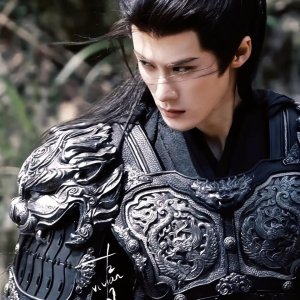
 2
2  1
1 


According to an interview or a now unavailable Weibo post, TH doesn't create outlines for her characters, instead writing spontaneously. In relation to this improvisation, I would say that his character may have been unintentional at first, but were then decided to be kept as is after editing.
Settling and learning to love out of comfort is a kind of love too, I guess. However, since this is a fantasy story, we probably expected more fantastical decision-making.
Some people still find the 15-year promise romantic, and if you didn't delve too much into how the oath hindered XY's ability to heal and become her own woman, it might have been seen in a different light.
If it wasn't already apparent, TSJ is also my least favorite character. I just couldn't comprehend how a grown man with deity status and socioeconomic power could not have his affairs in order.
As we may all know, Tu Shan Jing, the second male lead and endgame character in the world of 'Lost You Forever,' was crafted by Tong Hua to be praised as the merchant prince, heir to the Tu Shan clan, the most influential and powerful family of the Central Plains. He may be memorable for his contemplative behavior and calm demeanor around Xiao Yao; Jing’s strength, as well as his weakness, to a subset of audiences, is kindness.
When we first meet Jing, he is a beggar, crawling on the ground, waiting for death. As the story progresses, the audience, like XY, develops a sense of pity and care for him. Our initial response is that of a savior. We hope and root for his recovery, but unlike XY, we, as the audience, are awaiting when he becomes someone worth remembering and whose character will change the lives around him for better or worse.
Yet, after reading the novel three times, I cannot pinpoint what kind of character Jing is. I had originally thought of him as a mild antihero, but as the story progresses and definitely after the third read, TSJ as a character becomes anything but an antihero. In the end, he is not a hero, antihero, or villain in any literary sense. He can't even be regarded as an anti-villain.
In order to cast TSJ as any of the above categories would require strong character development. The best heroes and antiheroes achieve self-awareness, gain a heightened ability to protect loved ones, and overcome shortcomings--a transformation that proves they are worthy of every word the author has penned. While villains and anti-villains transform into the antithesis of our heroes and antiheroes. Even the poorest written heroes and antiheroes change their circumstances through their decisions. Yet, TH's penning of Jing stays consistent throughout the story, in a continuous cycle of disappointment, incompetence, and pity. Frustratingly, all his actions require the drive and intelligence of others (CX and FL), and the solving of his own personal problems in the hands of more capable characters (XY and XL). For a majority of the story, TSJ’s character functions like a chest piece to be maneuvered by the strongest characters, for favors, bargains, promises and obediences.
Unlike CX and XL, both of whom, as antiheroes, undergo heroic journeys, Jing's character does not experience growth where he overcomes his shortcomings to become a better version of himself. I can only speculate that his character remains throughout the story, perhaps, intentionally to reflect and counterbalance XY’s need for security and stability. Whether TH had intended or not, she had meticulously crafted Jing to a point that one can't even analyze his existence without comparing him to other stronger and more fleshed characters, or independent of XY's emotional and psychological deficiencies. In addition, while CX and XL are more self-reliant and don't constantly need rescuing, Jing's character development is hampered by being a damsel in distress, and how others perceive him--CX views him as unworthy due to his weakness, while XL is simply unafraid of him.
I've encountered several posts that refuted that Jing's character doesn't need to go through character development, heroic arcs or any sort of growth. Others had simply argued, TH wrote him to be the perfect character and therefore didn't need any transformation. How naive to think an author of Tong Hua's calibur would think a character is perfect that they don't require development at all? In fact, in TH's creative journey to craft a story unlike her previous works, her decision to keep Jing a consistent character degrades his value and importance to that of a plot device.
As a character, TSJ exhibits codependency, low self-esteem, and a lack of self-value. “Since I was a child, I have always been the pride of heaven. There was a woman who practiced dancing for ten years just for me to glance at her. There was a famous man who traveled thousands of miles to Qingqiu and stayed there for seven years just to play a game of chess with me. Some people asked for a painting at any cost, and some people called me a master of one word. I once thought that was who I was...I came to truly understand that, without those beautiful coats, I was nothing, but then God made you appeared." He had spent his whole life pampered and tied his self worth to his status and materialistic things. When all those were taken from him, he found new meaning in attaching his manhood, self worth and existence on XY’s random act of kindness and her blushing. Tong Hua writes, “But when I took a shower that day, you saw my body and your face turned red. At that moment, I felt really alive. In your eyes, I was still a man who can make your heart....”
He views his life so worthless that he is willing to die with her and die for her. He literally drank poison on purpose just to prove his loyalty, but can’t find the inner strength to save them both from the cherry blossom orchard, because without her, there’s no meaning left. When he wakes up from his 37 years of slumber, he tells XY he is willing to be her slave.
However, Tu Shan Jing has a pattern of failing to fulfill commitments. He failed to honor his mother’s and grandmother’s promise to marry FFYY because he desired to be with XY. Subsequently, he couldn't keep his promise to XY because he couldn't free himself from his familial obligations. Ultimately, he failed to fulfill his role as a father to Tu Shan Zhen in order to remain with XY. How can someone who consistently fails to follow through be deemed worthy of a lifelong partnership? The answer is simple: Jing has positioned himself to rely on XY to resolve his personal problems and save his life. He has made it clear to XY that she is indispensable and therefore inadvertently manipulates her emotions to his existence.
Tu Shan Jing possesses a narrow and selfish worldview. While he may be perceived as kind, his kindness is limited to his immediate family and does not extend beyond that. Furthermore, due to his narrow perspective, TSJ utilizes kindness as a tool of manipulation, making him an emotional manipulator.
It's no secret that Jing has made questionable decisions in the past, prioritizing his family business over his moral compass. In the ongoing conflict between the Xiyan Empire and the remnants of the Chenrong army, he has engaged in business dealings on both sides. As hinted by Xiang Liu, ‘You underestimate him! Just a palette of medicine, to him, it’s nothing. The Tu Shan Clan engages in all types of business. Back then, he sold far more dangerous items to the [Chengrong] army.' Throughout thier interactions, especially those post meeting Xiao Yao, even Xiang Liu feels obligated to save his life for XY.
Additionally, he has been credited as the financier of gambling dens that host demon slave fights. Li Rong’s family feels indebted to him because he saved their family from downfall with his financial support. In retrospect, it was the slave dens that created Xiang Liu, and the root of suffering for so many demons. Yet, Tu Shan Jing, the compassionate gentleman, has no problems forking over financial support of such an evil, because his family business reeps to profit.
In his narrow and selfish worldview, Jing excels in business but grapples with personal issues. He's willing to bravely face danger for Xiao Yao, yet hesitates when dealing with his own family. Ironically, while he can source rare medical herbs globally, he struggles to comprehend or anticipate the schemes of his own family members, especially when his grandmother and fiancée entrapped him. This perplexing situation leaves him in emotional turmoil until his FL intervenes. Furthermore, he can offer substantial support to CX and FL, while supplying XL with military rations, but struggles to protect himself from his brother and FFYiying.
Another example of Tu Shan Jing’s kindness doesn’t extend outward is seen in securing XL's blood oath to steal Xiao Yao from her wedding with FL. He knowingly purchases her blood oath from XL for 37 years of rations, despite knowing that XL and XY cannot be together. After all, XL, impoverished and desperate to provide for his people, bore the weight of thousands of lives on his shoulders. Jing was well aware of this, yet he contradicts his kind and compassionate persona by using the lives of thousands of men as leverage. In Jing’s mind, his kindness and compassion, in this moment, are directed towards XY, because he doesn't want to see her unhappy. How can I begin to believe this? When this trade-off is acceptable to him because XL, FFB, and the FF family will bear the brunt of the humiliation. He gains everything---his family's reputation intact, XY’s forgiveness and her single-hood.
TSJ channeling his support for CX through Feng Long, using FL as a shield for his family, is another example of TSJ's limited kindness. Partly due to his family rules forbidding him to openly support a political party, TSJ employs FL as his messenger. This strategy ensures that if things turn sour and out of his favor, all blame falls on CX, Feng Long, and the Chuisui clan. This method ensures that the Tu Shan family remains untouched.
However, it is XY who will bear the burden of TSJ’s kindness, as she will end up doing everything for him while he promises only to live for her. To Jing, everything is a matter of gains and losses; familial preservation trumps all else.
Yet, I digress. What should count as character development? How does one conclude that a character has become a better version of themselves? Unfortunately for TSJ, Tong Hua decided to write in a particular way that makes him throw away his opportunities to overcome his shortcomings. He remains steadfastly codependent, with low self-esteem, continuing to attach his self-worth to XY. By the end of the story, TSJ’s worldview reduces to just XY. He continues to use his kindness as leverage for pity, leaving with XY into the world as the same person we met in chapter one.
Astrid Leong-Teo (from 'Crazy Rich Asians') once said, 'It’s not my job to make you feel like a man. I can’t make you something you’re not.' Yet, for XY, TSJ is determined to fail at becoming the man he ought to be. In the end, he finds himself as the man XY wanted: a weak person who would not dare to abandon her. He will also become dependent on her to literally keep him alive, weak and sickly due to in his inability to protect himself.
While we wait for the second season, here are my two cents about TSJ as a character. Note, this is not an analysis of the actor. Proceed with caution. 👇👇
When I think about Xiang Liu, I think about this quote from Christopher Nolan’s "The Dark Knight." Xiang Liu maybe an antihero, but unlike Cang Xuan, all of his decisions and actions appear selfish on the surface, yet they actually stem from a place of heroic unselfishness, filial piety, and true love. Everything he does, has done, or will do results in him gaining nothing—no praise, no victory, no glory, and certainly no love. Somehow, he has portrayed heroic traits as well as antiheroic attitudes, transforming himself into a villain in the eyes of the people of Dahuang, and even to some audiences/readers.
Tong Hua put a lot of thought into Xiang Liu. The stream of maybes, I could imagine, as she sat in her place of comfort, sipping tea (or coffee) and pondering the what if’s.
What if a demon with a heart of gold falls in love? Will he become a hero? If so, to whom does he become a hero? Will he confess, hide his love, or demand her love in return? What if this young demon was greatly misunderstood, just learning to be human? Will love transform his demon heart into a human one?
Whatever was Tong Hua’s intention, in the end, she has written one of literature’s most complex antiheroes I’ve ever encountered. In Xiang Liu, we see a character who embodies Nolan's quote, walking the fine line between heroism and villainy, and challenging our understanding of morality and love.
Approaching Xiang Liu with a black and white understanding of Good and Evil, as well as clinging to Christian ideals of Gods and Demons, would hinder a nuanced understanding of his character, as he defies such simplistic categorizations and invites a more profound exploration of moral ambiguity and the depths of his persona. In the world of Dahuang, gods, demons, and humans are intermixed, characterized by the length of their lives and demons' inclination toward more primal, animalistic instincts. Yet, they all share the capacity for both good and evil, showcasing the complex moral spectrum that defines their existence.
Therefore, depending on the fence, and perhaps which side of history, you are standing on, you may see XL as a hero or a villain. He's regarded as a hero by the remnants of Chenrong and deemed worthy as an heroic rival by his opponents (CX even once tried to convince him to come to his aid), while others see him as a villain to be feared. The only person who truly understood this complicated persona was Xiao Yao.
Xiang Liu's character undergoes a remarkable transformation, evolving from a cold-hearted and aloof general into a symbol of the principle of repaying kindness. His journey is a testament to the profound impact of relationships on his character development. Initially, he is driven by the need to repay the kindness of FFB, his adopted father, Jing and Xiao Yao. His heart, once distant and unyielding, gradually softens as he falls deeply in love with XY, an emotion he never expected to encounter.
As Xiang Liu's love for XY grows, so does his determination to honor his fallen soldiers and ensure her peaceful life. He lays intricate plans, demonstrating the lengths he's willing to go to protect her. His heroic journey isn't just one of physical courage on the battlefield but also a transformation of his inner self, driven by love and the desire to secure a future of peace and happiness for XY.
XL has nine lives: one for himself, one for his adoptive father, and six for Xiao Yao—two to save her life, three to last her a lifetime and one for the man she wants to marry. He is willing to die nine times, while continuously crushing his only heart. In a paradoxical blend of antiheroic self-destruction and heroic self-sacrifice, Xiang Liu's demise ultimately ushers in peace to the world of Dahuang, serving as the catalyst to fulfill Cang Xuan's mission for a world where XY can lead a tranquil life with the one who will never abondon her. As he departs this world, leaving behind nothing but the legacy of a villain, to XY, he becomes the irreplaceable loss she'll carry with her always, a poignant tragedy, as she may never come to know the extent of his sacrifice.
Delving into Xiang Liu's sacrifices will invariably prompt a discussion of XY's own battles with selfishness and her inability to overcome the trauma of loneliness and abandonment. These two intertwined narratives illuminate the profound complexities of their relationship and individual character development.
Time and time again, Xiang Liu has demonstrated an unwavering ability to summon strength from the depths of his being to protect Xiao Yao. Regardless of injuries, diminished spiritual power, or even facing formidable armies, he fearlessly charges into battle for what he holds dear, showcasing his profound commitment to what he believes in and loves.
Xiang Liu has impressively prioritized XY while simultaneously balancing his filial devotion to his adopted father and commanding thousands of soldiers on the battlefield. However, within this intricate web of emotions and unspoken affection, they discover themselves entangled in an intense and uncharted emotional terrain. Yet, their relationship bears the strain of unresolved tensions, stemming from XY's self-centered yearning for love and fear of abandonment, and Xiang Liu's ongoing battle with his multitude of responsibilities, all of which contribute to the friction between them.
Adding to the intricacy of their relationship, they are star-crossed lovers, trapped in the never-ending conflict between the remnants of Xiyan and Chenrong, a war that further complicates their already intricate bond. In their tumultuous journey, Xiang Liu and Xiao Yao have faced countless challenging encounters. Despite the hardships, XY harbors no blame toward XL; however, she finds it incredibly difficult to overcome the emotional scars left by their turbulent moments. Strangely, she manages to let go of the violence inflicted by Cang Xuan, the scars of which heal more readily than the wounds inflicted by the man she loves.
Her inability to let go of the trauma also serves as a barrier to Xiang Liu's approaches. He has faced rejection multiple times by XY and has been deemed unworthy to enter her dreams, a reflection of the lingering wounds in their relationship that both struggle to mend. XL, using these rejections as fuel, inadvertently pushes XY away, inflicting pain on his own heart, all while secretly laying plans for her to find happiness with Jing, despite the turmoil in his own emotions.
Yet, despite the pain, Xiang Liu served as Xiao Yao's mentor and protector, teaching her archery and life lessons during their dates. He encouraged her growth and offered fresh perspectives on life. As a poignant gesture, he gave her a map of the ocean, symbolizing his preparations for a future without him. These actions showcased his deep care for her well-being and left a lasting impact on her life.
"After decades of teaching you archery, you now have the ability to take care of yourself. You don't need your own body to shield someone you treasure when danger is around. You no longer have to endure solitude as your constant companion; you now have the right man to rely on. The sky is vast, and the oceans are deep. You now have a sanctuary to seek, free from the pursuit of others, and a place to call home. Xiao Yao, from now on, I can no longer stand watch to protect you. You have to take care of yourself. Wishing you a lifetime of worry-free happiness." — Xiang Liu
XL is more suitable for XY in terms of compatibility. They really understand each other, have similar interests and values. XL is also emotionally and psychologically stronger than her, so he actually is the one who could help her heal.
The person she ended up with serves only one purpose: to fillfill her abandonment and attachment issues.