
 Editorials




This review may contain spoilers
A dark, locked-room detective story with highly vivid characters and excellent chemistry
A dark, locked-room detective story filled with Jianghu flair and heightened emotions.A murder takes place at Taohua Estate. In the first episode, the household consists of the head of the family, his two sons, two daughters, a daughter-in-law, and a guest. The only servants shown are a eunuch, a steward, and a maid. One of the characters is about to die, and Guard Han Dao must identify the killer among the rest. The case is complicated by the fact that everyone in the estate is either a sadist, a victim, or a twisted combination of both. To make matters worse, the guest is the guard’s senior fellow disciple, who once killed their master right before his eyes.
Everyone has a motive, many have the opportunity, and overall, the residents of Taohua feel like spiders trapped in a jar, making it genuinely hard to find the culprit. On top of that, Han Dao is hardly a skilled investigator.
The plot was gripping from start to finish — I felt the pacing was perfectly tight with no drag, even though different parts of the drama shift slightly in focus. At first, we get an immersive look at the estate's atmosphere and a detailed breakdown of the characters' personalities. They turn out to be so unique and eccentric that they easily steal the spotlight from the actual detective line. But then new deaths occur, more dark secrets and backstories surface, and the murder suspicion passes from one character to another like a game of hot potato. The last few episodes are packed with plot twists. Even though the drama slightly overuses this trope, the surprises felt completely earned and appropriate.
My review might sound a bit dry, but the drama actually triggered a storm of emotions in me. It definitely earns its "domestic violence" tag. The abuse happens right on screen, and the victims don't just heroically grimace when beaten — they scream and lose consciousness. The execution is dark, atmospheric, and raw. The actors deserve massive credit for this; their maniacal glints and crazed smiles gave me literal goosebumps. I was especially impressed by Feng Zi Yi, who only has three dramas on his MDL profile. Here, he absolutely shined as the eldest son, Yun Yang — arrogant and brutal to everyone except his younger brother.
Feng Yi Yang, who played the younger son Yun Ming, did a brilliant job portraying devotion bordering on obsession and madness, leaving a very complex impression. He has several highly emotional monologues. At first, the acting might seem overly exaggerated, but you quickly realize that this is the very essence of his character and the drama as a whole: excessiveness and sheer theatrical drama.
The head of the estate, Yun Su (played by Ross Chen), is a completely unhinged character. In his pursuit of immortality, he resorts to disgusting and filthy methods, including murder (though not the one the main leads are investigating). He is essentially the root cause of all the chaos in his domain. The fish rots from the head — and that is exactly the case with Taohua.
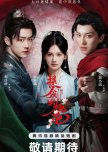
The female characters are equally impressive. On the poster next to the leads stands the eldest sister, Yun Qing Xian (Han Le Yao) — composed, proper, and good. She is so good that it actually makes her suspicious, because it feels impossible to live in such a viper's nest and remain righteous.
The daughter-in-law, Hong Xiu (Bu Zi Ying), is the character that evokes the most pity. The patriarch conducts experiments on her, the younger brother sleeps with her, and her husband beats her and tattoos her in an excruciatingly painful way.
The servants are complete wild cards. You never know whose side they are on—the patriarch’s, the eldest son’s, or their own, driven by personal grudges and tragic backstories.
The supporting cast turned out to be so colorful and memorable that the main leads almost got lost in the background, simply because they are the only sane people in this madhouse. But as the saying goes, "almost doesn't count." Watching the leads was pure joy. Their chemistry is excellent, and they make every shared scene enjoyable to watch. Wanyan Luo Rong, as the performatively carefree Yan Shi Yi, and Liu Hao Qun, as the serious, responsible Han Dao, looked great together—a classic bromance pairing. They have touching moments, teamwork scenes, a fight, and even a bit of fanservice.
Aside from the gripping story and stellar acting, the drama features an excellent soundtrack. It’s subtle where needed and appropriately grand during dramatic scenes, perfectly setting the right mood.
I also want to note the beautiful cinematography and editing, especially during the fights. There aren't many action scenes, but for a mini-drama, they are remarkably well-choreographed.
The only thing I wanted more of was the bromance. The chemistry between the leads was fantastic, but they were given too little screen time.
The only thing that caught me off guard was the final episode. It feels very unusual and a bit rushed; in a full-length drama these events would have been pushed into a special episode. Here, the investigation smoothly transitions into a confrontation and relationship resolution between the main leads, and the story doesn't just stop once the killer is found. Most importantly — there is absolutely no angst or tragic ending here, which made me incredibly happy.
Overall, I loved this drama. It's a solid, locked-room mystery free of grand cosmic conspiracies and tedious palace politics. It features highly vivid characters and excellent chemistry between them, wrapped up in a satisfying, albeit unexpected, ending. I don't regret a single minute spent on this show.
Was this review helpful to you?

This review may contain spoilers
A Delightful Vertical Drama to Turn Your Brain Off and Just Relax
This is a good little drama to unwind and turn your brain off. You shouldn't expect the quality of a full-length series from vertical dramas, but within its own segment, it is a very decent story. Logic is present, there are no confusing or overly tangled intrigues, and no heavy angst. The costumes are excellent, and the acting is honestly wonderful.The plot is cliché—a modern girl ends up in a harem. Of course, she meets the Emperor without knowing who he is. Of course, he falls for her because she is "not like the other concubines." And of course, they get into a bunch of funny situations before they finally figure out the truth. By the way, they didn't drag this part out, and the leads figured out each other's identities relatively quickly.
There is a female rival, a third wheel for a love triangle, and the FL's superpowers that help her survive in the Cold Palace (I was especially impressed by the weather forecast and the scene where a eunuch begged her for a cold beer). It’s cliché after cliché. But I liked it, probably because of the actors—they are just so charming.
Li Hao looks solid and impressive as the Emperor. You look at him and honestly believe that such a charismatic man could rule an empire. The fact that he isn't very knowledgeable about palace life and doesn't visit his harem is just the screenwriters' whim, which doesn't spoil his image. By the way, his costumes are great, and he has a lot of them.
The female lead didn't impress me quite as much, but my bar for female characters in vertical dramas is lower anyway—as long as they aren't annoying. Well, Zhang Qi Xuan was not only not annoying, but she also fully fit the image of a modern, cheerful girl in a historical setting.
I also liked the actors in the minor roles, especially the chubby guard from whom the FL brushed off dust while eavesdropping on the officials' conversation. In general, all the actors in this drama felt real, attractive, and so sweet that it was a genuine pleasure to watch them.
There is no erotica or even real kisses here—it’s a different type of story. But it’s completely watchable; the ML’s charisma alone was enough to keep me glued to the screen.
The music and audio effects weren't distracting and didn't pull attention away from the story. This isn't always the case with these shows, so I wanted to note that fact.
I doubt I’ll rewatch it (does anyone actually rewatch vertical dramas?), but the 2.5 hours flew by unnoticed and with great pleasure.
Was this review helpful to you?
A Manifesto Against Family Tyranny Wrapped in Luxury
I went into this drama expecting a fun "harem" style rom-com, but the very first scene shattered those expectations. What I found instead wasn't just a romance; it was a stark manifesto against family tyranny and social inequality.The drama immediately establishes an incredible level of matriarchal supremacy. The female lead, Rong Shan Bao, is so powerful that the men around her often appear powerless, even pathetic. It’s rare even for a mini-drama to showcase such raw female dominance — not as an erotic trope, but as a rigid, harsh hierarchy where men are humiliated, beaten, and forced to their knees.
The first episode introduces Lu Jiang Lai as a brilliant detective and a ruthless judge. I was looking forward to an intellectual "clash of titans" between him and the arrogant FL. However, this battle of wits quickly became a one-sided game. While the ML didn't technically lose his intelligence, the plot focuses so heavily on the schemes of the Rong sisters that Lu Jiang Lai often feels intellectually overshadowed.
Throughout the drama, Lu Jiang Lai occupies a subordinate position. While he was an amnesiac servant, this was justified. But even after regaining his title, his dependency on Rong Shan Bao shifts from social to emotional — driven by "limitless love." In some scenes, he feels less like a powerful official and more like a cunning, moody "favorite concubine." By the final arc, his active problem-solving is replaced by passive resistance; instead of taking charge, he goes on a hunger strike and weeps in captivity. While Hou Ming Hao suffers beautifully on screen, the transition from the enterprising official of episode one is never fully explained.
The supporting male characters sometimes appear stronger than the ML. Yet, they still lose to the women when it comes to weaving intrigues. I might be wrong, but the complex plans with many variables devised by the female characters always turned out to be more well-thought-out and led to success, while the men's plans inevitably crumbled when faced with reality. The FL herself resembles a Mary Sue in her ability to execute intricate schemes and predict the consequences of others' actions.
Despite all this, the drama is a real "one-breath" watch. The characters evoke deep emotions, the plot twists are intriguing, and everything looks aesthetic and impactful.
The tea plantations are breathtaking — I often wished for more scenes in nature rather than the manor.
The costumes are well-thought-out, beautiful, and highlight the characters' personalities.
Overall, the drama is visually luxurious, as is the cast.
Gulnezer Bextiyar did an excellent job playing the heiress of a great clan. All her arrogance and lack of emotion are part of the character and are fully justified by the plot. Rong Shan Bao is used to hiding her true feelings and intentions, and she behaved the same way with the ML.
Hou Ming Hao fit every image created by the screenwriters amazingly well — the smart and cunning official, the powerless servant, the powerless lover, the devoted lover, the caring brother and the rebellious son. Lu Jiang Lai went through a compelling arc, and watching every stage of his journey was fascinating.
The supporting characters turned out to be no less vibrant than the main leads. I would especially like to mention a few:
Ma Wen Yuan created such an annoying character that one cannot help but admire the actor's talent. Especially knowing his other works where he played sweet and kind lovers (just remember his sweetheart in Word of Honor).
Another acting talent that amazed me is Liu Qing. He played the Yang twins, and these brothers turned out to be so unlike each other that such differences couldn't be achieved by hairstyle and costume alone.
Hu Jin put so much emotion into the monologue about her character's terrible fate that it gave me chills and brought tears to my eyes.
Zhang Lei is again in the role of the despicable "Father of the Year." If I hadn't seen in other dramas how wonderfully he can play this image, I wouldn't have written anything — the ML's father turned out to be quite forgettable here, even if repulsive. Zhang Lei can make the audience hate his character with a single fleeting glance. Here, I felt that was missing.
It’s a bit strange to return to the plot at the end of the review, but I have a few thoughts.
The drama is divided into two unequal parts — about the FL's family among the tea plantations and the ML's family in the capital. At first glance, they are completely different: matriarchy and traditional patriarchy. But both are "snake pits" with a cruel leader and bitter, cunning, vengeful, and essentially unhappy family members.
All the characters' problems stem from the fanatical behavior of the head of the clan. Both the FL’s grandmother and the ML’s father bet on strength, discarding all other qualities and especially the feelings of their offspring. As a result, the younger family members and their husbands/wives weave intrigues, frame each other, and even kill — just to avoid being humiliated and killed themselves. Perhaps the cult of strength is considered acceptable for a feudal society, but within the family unit, it feels cruel and shatters lives.
Speaking of society, there is no obvious attempt in "Glory" to adjust to 21st-century moral standards. This is a world of brutal class stratification, where striking a servant is an absolute norm that requires no justification. Because of this, it is extremely difficult to empathize with the characters: they live in a system where human dignity depends solely on a title.
Overall, the drama left me with a mixed impression, but specifically because of my not-quite-justified expectations. If I try to evaluate it objectively, it is a very worthy work. With well-thought-out details, luxurious costumes, beautiful cinematography, a gripping plot, and most importantly — interesting characters that evoke a whole spectrum of emotions.
I think this story is not that simple, and during a single watch, it was difficult for me personally to simultaneously follow the plot development, admire the aesthetics, and identify all the meanings that the creators put into their creation. But, to be honest, I don’t know if I will rewatch it.
Was this review helpful to you?


