





The Weight of Beauty
It’s not just a Korean rom-com: it’s a cruel fairy tale disguised as a musical. Hanna sings like an angel, but no one really sees her. Her voice fills the stage, the crowd cheers… but the idol in the spotlight isn’t her. It’s someone else lip-syncing, while Hanna stays hidden in the shadows, crushed under the weight of her own body and broken self-esteem.The scalpel becomes her magic wand. She’s reborn as Jenny: beautiful, thin, flawless. Finally, she has the body for her voice, the face for her talent, the smile that opens doors. But the film never lets you fully enjoy this transformation: behind the glitter, the same sharp question lingers — if they love you now, do they really love you? Or just the mask you wear?
What’s left is not the usual romantic comedy. It’s a light punch to the gut — it makes you laugh, but leaves a bitter aftertaste. It’s the kind of movie that has you singing “Maria” at the top of your lungs, then staring at your reflection wondering how much of you is real and how much was built just to be liked.
It’s not perfect: there are clichés, easy laughs too. But if you let it in, 200 Pounds of Beauty hits deep, especially for anyone who’s ever felt “too much” or “not enough.”
Was this review helpful to you?
This review may contain spoilers
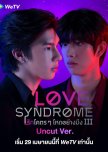
When Abuse Disguises Itself as Love: the Disaster of Love Syndrome III
Ed. Note I’m reposting the same review here in the uncut version, since the difference between the two is almost nonexistent.I grew up watching movies and TV series, falling in love with stories and, over time, with the psychology behind them. I’ve always sought works capable of digging into you, disturbing enough to haunt you even after watching, to unsettle you and keep you awake at night. I’ve survived Cannibal Holocaust twice, and I know how to recognize when a story really wants to hit hard.
Love Syndrome III, however, doesn’t belong to that category. It’s not disturbing, it’s not extreme, it’s not cruel. It’s simply annoying. And it is so because it does something I deeply hate: it takes violence and romanticizes it, turning it into a sick fairytale.
The annoyance I feel towards this series is the same I feel every time a story tries to convince me that “even a psychopath can fall in love if they meet the right person,” or that the victim, sooner or later, will bend until they realize that deep down they feel love for their abuser. These clichés are not only banal: they are dangerous, and Love Syndrome III is a toxic concentrate of them.
---
A necessary premise
I know this isn’t the first part of the story, and that Love Syndrome III is the third chapter of a saga, drawn precisely from the third part of the novel. After finishing it, I looked for information about the story to understand how much was different and what the author’s true intent was. From what I could gather, the author of the novel wanted to portray two equally toxic characters, two damaged individuals destroying each other. There was no “good guy” or “bad guy”: they were two sides of the same toxicity.
The series, on the other hand, chose to turn it all into a romantic melodrama, simplifying the characters and turning the dynamic not into a war between two toxicities, but into the glorification of an abusive relationship disguised as love.
For those wondering: yes, I finished the series. Not because I liked it, but because I don’t like leaving things unfinished. I never leave anything halfway: even after months or years, I always pick up what I started. For me it’s like an open door that has to be closed. And in this case, I also watched it because I trusted the recommendation of someone I know well, who knew very well how much these dynamics annoy me.
---
SPOILER RED ZONE
How the series builds dependency (not love)
The very first “thesis” of the story is stated outright: Day wants Itt to be dependent. Not “loved”: dependent. The text makes it explicit — Day spoils him, conditions him, isolates him so that “you’ll never think of leaving.” It’s behavioral programming, not tenderness. The series shows/tells us that Day takes pride in his method: making sure Itt cannot live without him. This isn’t subtext between the lines: it’s staged and discussed in the early episodes.
On a psychological level, this is conditioning: reinforcements, punishments, emotional blackmail. It’s gaslighting when useful and love bombing when convenient. It’s the deliberate construction of an emotional dependency bond (what audiences often call “Stockholm Syndrome,” though it isn’t a clinical diagnosis).
---
The amnesia device: a moral reset that absolves the abuser
Then comes the accident: Day loses his memory of the last three years, meaning his entire relationship with Itt. Dramaturgically, amnesia works like a clean slate: it erases past responsibilities, justifies new cruel treatment (“I don’t remember you”), and forces the victim to start from zero to “earn back” affection from the one who already devastated them. It’s a narrative device that shifts guilt from the abuser to fate. Yet even without memories, Day continues to react with instinctive jealousy and control: the behavior remains, but the story dresses it as “instinctive love.”
---
The perimeter of control: not only over Itt
Control doesn’t stop at the couple. The series shows Day ordering one of his men (Nan) to “discipline” Mac, Itt’s obsessive/infatuated high school friend. It’s punishment by proxy: Day uses his subordinates to police anyone orbiting Itt. Jealousy becomes management of other people’s lives, and instead of condemning it, the narrative treats it as “romantic” jealousy.
---
The crossover that doesn’t hold: Day in Unforgotten Night vs Love Syndrome III
As if that weren’t enough, the series seems to wink at a connection with Unforgotten Night. In Love Syndrome III, Kamol and Kim appear (though played by different actors), leading many viewers to wonder if the two narrative universes belong to the same world.
And here’s the shock: if the Day of Love Syndrome III were truly the same Day of Unforgotten Night, we’d face an inexplicable psychological leap. In the first context, Day doesn’t come across as hateful or irredeemably toxic, and his relationship isn’t depicted as sick. In the second, he becomes the embodiment of manipulation and romanticized violence.
The result is a narrative short-circuit: two irreconcilable versions of the same character, a discrepancy so abysmal it leaves the viewer more confused than engaged. If the intention really was to create a “BL multiverse,” the attempt only undermines the story’s coherence and credibility further.
---
“It’s not love, it’s acceptance” — staged
What the series calls “love” is, scene after scene, forced acceptance.
Itt endures insults, coldness, and emotional blackmail “because Day doesn’t remember” and because “one day he’ll go back to how he was.”
The script rewards surrender: the more Itt endures, the more the story rewards him with crumbs of tenderness.
Itt’s literal mantra is: “I have to be patient with Day.” Not “I have to care for myself,” not “I deserve respect”: patience towards abuse until it gets reframed as passion.
---
“Redemption” on command
The so-called moral turning point comes because it has to: it’s not psychological growth, it’s a genre requirement. Day apologizes, has “cute” jealous scenes, does protective gestures: the reward mechanics realign the viewer. It’s emotional engineering to normalize dependency. The result: the audience is asked to root for the “tamed bad boy” — without a true path of accountability.
---
Aesthetics that betray the artifice (yes, even the wig)
Visually, the series sabotages itself. The styling choices for Itt (the wig fans had called “horrible” since the promotion) are the perfect symbol: nothing is authentic. It’s hard to engage with trauma if the image reminds you in every frame of its artificiality. And when acting and direction swing between stiff and forced, suspension of disbelief collapses. Even genre-friendly viewers pointed out cringy performances, weak directing, and even a phony final fight.
---
Psychological anatomy (brief but sharp)
Day: behavioral profile of a coercive partner. Instills dependency (spoiling/limiting), uses jealousy and isolation, delegates punishments, then seeks absolution through amnesia/“I’ve suffered too.” It’s the grammar of the romanticized abuser: guilt dissolved in backstory, passion as an excuse.
Itt: written as a functional victim. His agency is sacrificed on the altar of “stay and wait”: he endures, self-blames, trains himself not to react. The series rewards him when he’s most compliant — and that’s the most painful part, because it teaches the audience how you get trapped in the cage.
Social system (family/friends/boss): a framework that validates. The brother believes jealousy will “trigger memories” (so jealousy = cure). The boss in love who visits “normalizes” the idea that even crime can be redeemed through romance. Henchmen carry out punishments “for love of the boss.” It’s a world telling you: endure, because love justifies everything.
---
“Why it hurts” (more than explicit cruelty)
For those who’ve lived through abuse, seeing these mechanisms glorified is a trigger. For those who haven’t, the risk is normalization: jealousy = passion, possession = protection, surrender = proof of love. The series doesn’t put violence on display to condemn it: it translates it into romantic language and feeds it to you as medicine for tender hearts. This, to me, is the gravest irresponsibility.
---
Method note (on the “facts” of the Love Syndrome world)
Within the franchise and fan discussions circulates — and the series winks at — a backstory of kidnapping/rape as the origin of Day/Itt’s bond, an element made even more explicit in the spin-off movie and novel materials. Even when the TV season tones it down or moves it to flashbacks/backstory, the point remains: the core is violent, and the story uses it as a romantic spark.
---
Technique and packaging (for fairness)
Cast & setup: Lee Long Shi (Day) and Frank Thanatsaran (Itt) lead a 2023 drama produced as a 12-episode miniseries, with amnesia as the main engine.
Writing & editing: reinforcement structure (cruelty → affection → jealousy → affection), punitive subplots (Mac/Nan) to reiterate systemic control. A finale that simulates “growth” but in fact rewards surrender.
---
Closing (no discounts)
Love Syndrome III isn’t “raw”: it’s manipulative in the worst way. It uses amnesia to wash away abuse, cross-series fanservice to legitimize universal redemption, and romantic language to teach you that suffering is proof of love.
It’s not love: it’s acceptance, dependency, annihilation.
A handbook of romanticizing abuse disguised as a love story.
Was this review helpful to you?

Bright, Breezy, and Delightful
A Business Proposal is the quintessential 2022 K-rom-com: adapted from the webtoon (The Office Blind Date), briskly paced, packed with gags, and powered by a lead couple that grabs you from their disastrous blind date (which is great for the story). It’s a series that knows exactly what it wants to be: sparkling entertainment, without pretending to be dramatically profound beyond its scope.- Plot in two lines (no spoilers):
Shin Ha-ri agrees to stand in for her friend on a blind date with the goal of getting rejected; opposite her sits Kang Tae-mu, a young CEO determined to marry quickly and get it over with. Thanks to that initial mix-up, a fake relationship kicks off—soon colliding with the workplace and with real feelings creeping in beneath the facade.
- What works (objectively):
1. Chemistry & comic timing: Kim Sejeong’s timing is spot-on; Ahn Hyo-seop plays the “aloof/rigid” contrast that gradually melts in a natural way. The secondary couple (Seol In-ah & Kim Min-kyu) isn’t mere garnish: they inject energy and often steal the scene.
2. Direction & pace: tight episodes, lively editing, zero dead weight. Many rom-coms drag; here the short run (12 eps) keeps it snappy.
3. Physical comedy & visual gags: the show uses facial expressions, micro-reactions, and controlled slapstick well, without tipping into full cartoon.
4. Trope management: fake dating, contracts, hidden identities, “grumpy x sunshine”—they’re clichés, yes, but the script orchestrates them with craft and polishes them just enough to feel fresh.
- Where it wobbles (without sinking the ship)
1. Workplace-romance ethics: there’s a hierarchy (CEO/employee). The show treats it in a romantic, glossy key without really problematizing it; if you want a serious take on power and boundaries, this isn’t the one.
2. “Light” conflicts: obstacles and misunderstandings resolve quickly and painlessly; the emotional stakes remain medium-low by design.
3. Product placement: visible and frequent (part of the commercial package); if it bothers you, it’ll pop out of the frame now and then.
Themes (without pushing beyond the genre):
The series brushes against family expectations and class/image (family name, “useful” marriage), but doesn’t truly open those files: it uses them as framing to legitimize romantic choices. Consistent with the goal: comfort rom-com rather than social critique.
Performances:
1. Kim Sejeong (Ha-ri): natural charisma, musical comedy sense (eyes/voice/timing), and a non-syrupy warmth in serious beats.
2. Ahn Hyo-seop (Tae-mu): starts rigid, gradually finds tender shades without losing the “CEO” imprint.
3. Seol In-ah & Kim Min-kyu: the secondary couple delivers an excellent comedic-romantic counterpoint; many memorable moments come from them.
OST & Look:
Catchy OSTs—no instant classics, but they do the job for a bright tone. Polished styling, luminous palette, cinematography that “dusts” every setting: the aesthetics are clean and consistent with the promise of lightness.
Personal impression:
I had fun—not because it reinvents the genre, but because it keeps its promise: lively, well-acted, with chemistry that holds even when the script chooses the easy road. If you’re looking for moral complexity or grounded realism, this isn’t it; if you want a well-packaged romance, it hits the mark.
Conclusion:
A Business Proposal is an efficient, sparkling rom-com: it lines up the tropes, polishes them, snaps them together with pace, and serves them with leads in great form. It isn’t deep, but it doesn’t pretend to be—and in its lane, it plays like a frontrunner.
Was this review helpful to you?

An Original and Mysterious BL — Imperfect but Memorable
“609 Bedtime Story” is a series that blends romance, mystery, and fantasy in a way that feels quite original for the Thai BL landscape. The premise is already unique: two young men, Duan and Mum, begin to connect through an inexplicable link that happens every night, at the same time — 00:09. From this bond, suspended between dream and reality, unfolds a story that moves across fate, time, and love.Narratively, the series stands out because it doesn’t rely only on romance, but intertwines elements of thriller and time travel. This makes the plot more complex compared to the usual university rom-coms many BL viewers are familiar with. Some episodes are engaging and well-constructed, while others get slightly lost in confusing explanations or sudden twists. Even with these imperfections, it’s clear that the show aimed to deliver something more ambitious and different.
The directing and cinematography are polished, with an atmospheric style that matches the mysterious tone of the story. The soundtrack supports both the tense and intimate moments, enhancing the contrast between reality and the dreamlike dimension.
As for the cast, Ohm Thitiwat (Duan) and Fluke Natouch (Mum) carry the series with intensity. Their performances make even the surreal situations believable. The chemistry between them is strong, working well in both the romantic and dramatic scenes, which keeps their relationship at the heart of the story.
Personally, I found 609 Bedtime Story to be a bold attempt: not always perfect in its writing, but admirable in its effort to stand out. It surprised me to see a BL that tries to go beyond the usual formula, combining different genres. It’s not a light watch — it requires attention and the willingness to get lost in its unusual plot — but for viewers looking for something different, it’s definitely worth it.
In conclusion, “609 Bedtime Story” is a half-successful but fascinating experiment, remarkable for its originality. Not every detail is perfectly explained, and some parts feel confusing, but it remains a memorable series thanks to its courage and the intensity of its lead couple.
Was this review helpful to you?
Great staff!!!
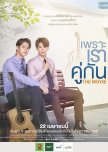
I only found out later that there was also a behind-the-scenes for this movie, and of course I had to watch it — it just felt necessary. I don’t like leaving anything out when I follow a saga, whether it’s a series or an extra.I really enjoyed watching the whole creative process from start to finish. It’s something I always do and simply can’t resist: behind-the-scenes content has a special charm for me, and it makes me appreciate the final product even more.
Was this review helpful to you?

Just My Personal Opinion — Neither Negative nor Positive, Please Respect It
“2gether: The Movie” is a cinematic adaptation of 2gether: The Series and Still 2gether, condensing the entire story of Tine and Sarawat into about two and a half hours. It includes a few new scenes and bridging moments, but for the most part it retells the same plot already seen in the series.The film follows the couple’s journey: from their fake relationship that starts as a joke to their everyday life as an official couple. The structure feels like a large recap, which comes with both strengths and weaknesses. On the one hand, it makes the story more compact and smoother, cutting out filler and secondary episodes; on the other hand, it sacrifices much of the context and little moments that originally gave the characters more breathing room.
From a technical perspective, the directing and cinematography are consistent with the original production, without much innovation. The added scenes are nice — especially those designed to give a more definite closure — but they aren’t enough to make the film feel like a truly new experience. The soundtrack remains one of its strongest elements, with Kan Goo and other familiar tracks immediately bringing back the atmosphere of the story.
Bright and Win deliver the same performances that viewers already know. If some people felt their chemistry was lacking in the series, the film doesn’t really fix that: the compressed storytelling gives even less time for emotions to develop naturally. They remain charismatic, but overall the result feels more like a “best of” than a new chapter.
Personally, 2gether: The Movie felt more like a product made for fans who wanted to relive the story on a big screen than a standalone film with its own strength. It’s pleasant, it makes you smile, and it does provide a clearer sense of closure, but it doesn’t add much for those who have already seen both series.
In conclusion, “2gether: The Movie” works as a celebration and summary of the phenomenon the series once was, but it doesn’t have the narrative weight to stand as an independent film. It’s a light, nostalgic bonus that will mostly appeal to viewers already fond of Tine and Sarawat.
Was this review helpful to you?
Just My Personal Opinion — Neither Negative nor Positive, Please Respect It
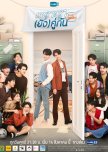
“Still 2gether” is a special sequel made as an epilogue to 2gether: The Series. Released only a few months after the main show, its goal was to give fans a little more time with Tine and Sarawat, showing them as an official couple navigating their everyday university life.The plot is extremely simple: there are no major conflicts or twists, just short and light episodes focused on the couple’s daily relationship. The struggles are minimal — small jealousies, minor misunderstandings, and interactions with the music club and cheerleading club. The overall tone stays consistent with the original series, but feels even “softer” and almost free of tension.
From a technical perspective, the production keeps the same quality as the main series: straightforward directing, fresh university settings, and an easy pacing. The soundtrack remains a highlight, with Kan Goo and other familiar songs reinforcing the sense of continuity.
Bright and Win reprise their roles without difficulty, and while they seem more comfortable with their characters, the spark that could have added depth to this sequel still feels missing. The chemistry between them, for me, was not fully convincing, and in a story that relies almost entirely on the couple, that limitation becomes more noticeable. The supporting cast is largely sidelined, serving more as background presence than true subplots.
Personally, Still 2gether didn’t feel necessary. It plays more like fanservice than a real continuation of the story: it entertains, it makes you smile, and it delivers some sweet moments, but it doesn’t bring anything new or essential. If you already loved 2gether, you’ll likely enjoy this extra; but if the first series didn’t win you over, this sequel might feel even less substantial.
In conclusion, “Still 2gether” is a pleasant and light epilogue, but lacking in real depth. It doesn’t harm the main series — in fact, it extends its positive atmosphere — but it remains little more than a bonus treat for the fans.
Was this review helpful to you?

Just My Personal Opinion — Neither Negative nor Positive, Please Respect It
“2gether: The Series” (2020) quickly became one of the most popular BL dramas, reaching audiences far beyond Thailand and sparking a global wave of attention for the genre. While I can understand why it became such a phenomenon, for me it was more cute than unforgettable: a light series that made me smile, but not quite as special as many describe it.The story starts from a fun rom-com premise: Tine asks Sarawat to pretend to be his boyfriend in order to shake off a persistent admirer. From there, the fake relationship develops into something that is supposed to feel more real. It’s an entertaining setup, but one that doesn’t really add much new to the genre.
Technically, the series is nicely packaged: the directing is clean, the university setting feels believable, and the pacing is steady. The soundtrack is probably one of its strongest points — especially the song Kan Goo, which became iconic and perfectly matched the lighthearted tone of the show.
What didn’t work for me, however, was the heart of the series: the chemistry between the leads. Bright and Win both have strong charisma individually, but together I didn’t feel the intensity or emotional pull I was hoping for. Some of their interactions came across as a bit forced or too playful, making it hard for me to get fully invested in their romance.
That said, 2gether still manages to entertain. It made me smile on several occasions and gave me some fun, easy-going moments. But for me, it’s not “the series of the century.” It’s more of a light guilty pleasure than a truly memorable drama.
In conclusion, “2gether: The Series” is a pleasant and fun watch, but not quite deserving of the massive hype surrounding it. If you’re looking for something light, easy, and smile-inducing, it definitely works. But if you’re expecting an intense love story or a groundbreaking BL, it may leave you wanting more.
Was this review helpful to you?

Silly, Sweet, and Surprisingly Fun
a romantic comedy that perfectly captures the spirit of early 2000s Korean rom-coms. It’s full of clichés, over-the-top situations, and slapstick humor, but also capable of making you laugh and giving you a pleasant, lighthearted experience.The story begins with a completely absurd encounter: Ha-Young, a high school student, accidentally damages the car of Hyung-Joon, a wealthy and arrogant college student. From there, a 100-day contract forces her to serve him, creating a relationship filled with quarrels, provocations, and comic mishaps. The plot never aims for realism—quite the opposite. It embraces the absurd premise and uses it as the foundation for both comedic gags and unlikely romance.
From a technical standpoint, the directing is straightforward and nothing groundbreaking, but it keeps a lively pace that avoids boredom. The script is predictable and sometimes forced, with very obvious twists and dynamics that may feel naïve by today’s standards. Yet, that’s exactly what makes it nostalgic: this film is a snapshot of a very specific era in Korean cinema.
The performances add a lot to the story’s charm. Ha Ji-Won, despite playing the stereotypical clumsy student, brings genuine energy and makes her character endearing and funny. Kim Jae-Won embodies the classic “arrogant male lead” archetype, slowly softening as the story unfolds. While exaggerated, his character works in this context. Together, the two leads create enough chemistry to make their transition from enemies to lovers enjoyable and believable.
The soundtrack isn’t particularly memorable, but it fits the comedic and romantic tones well. There are no standout musical moments, but it stays consistent with the film’s lighthearted atmosphere.
Personally, I wouldn’t call it a masterpiece, but it’s impossible to deny that it entertains. I found myself smiling a lot while watching, and a few of the gags genuinely made me laugh despite the simple writing. I loved the ending—it was sweet, heartwarming, and left me with a positive feeling that lingered even after the credits rolled. It’s the kind of conclusion that makes you think that, for all the absurdity along the way, it was worth it.
In the end, “100 Days with Mr. Arrogant” is an adorable guilty pleasure: imperfect, naïve, and dated, but charming precisely because of that. If you’re looking for a light comedy with no pretensions, something to make you laugh and leave you with a lighter heart, this is the right pick. It’s not a film that will make history, but it carries all the carefree energy of a rom-com that knows how to deliver a couple of hours of genuine fun.
Was this review helpful to you?

This review may contain spoilers
I don’t know how to put it into words, but my feelings are definitely positive.
What struck me most about this drama was its intimate and quiet structure: it tells the story of three generations of women, seen through the eyes of two of them — mother and daughter. But more than that, it’s a story about everything we fail to say to each other, even when love is present.IU was simply wonderful. Her acting is subtle, precise, never out of place. She doesn’t just perform emotions — she inhabits them, as if they were truly her own. Every gesture feels real, every scene quietly moving. And then there are the two men who love the main characters. So different, so gentle, imperfect, yet somehow bringing light into the emotional worlds of the women. I loved them both deeply.
I grew up in a family where memory, genealogy, and passed-down stories are part of who we are. Maybe that’s why I always feel drawn to dramas that explore the weight and grace of family legacy, the scars passed down through generations, and the quiet attempts to heal or protect what we carry. This drama gave me exactly that: an emotional space where I could see myself, and reflect on the ways we become, survive, and try to mend.
It’s not a perfect series — and maybe it doesn’t want to be. But it’s honest. Deep. Unapologetically human. And that’s why I believe it’s truly worth watching.
Was this review helpful to you?

changing your appearance isn’t enough to feel different
I really enjoyed this series because it talks about something that, in a society obsessed with beauty, is rarely addressed with honesty: changing your appearance isn’t enough to feel different, if you don’t also change the way you see yourself from the inside.The protagonist undergoes plastic surgery to finally be accepted by others, after a lifetime of bullying and humiliation. And yet, even with a new face, she realizes that the pain doesn’t just vanish. Because real change can’t only come from the outside.
And that’s perhaps the strongest message of the series: you can change your body as much as you want, but if you don’t allow yourself to be worthy beyond your looks, you’ll never truly be free.
At the same time, the series conveys something else that’s just as important: anyone who chooses to change has every right to do so. Self-acceptance isn’t always easy, and sometimes loving yourself takes a radical step. It’s not weakness — it’s survival. It’s a choice. And it should never be judged.
The only thing that felt a bit weaker to me was the classic cliché of the perfect guy who “liked her before the surgery.” It’s sweet, yes, but it seems like an attempt to give the love story more depth by holding on to who she was, when in reality, what matters isn’t who you were, but who you want to become.
I just wish this aspect had been developed further, pushing beyond the romantic storyline to dive deeper into the characters’ individual journeys.
What resonated with me the most wasn’t the romance itself, but the personal stories of the two main characters. The way they learn to see themselves, to acknowledge their own loneliness, to search for something more.
That’s what makes the series truly moving. And what makes me remember it fondly.
Was this review helpful to you?
Love it!!!
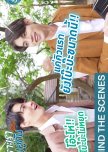
This is exactly the kind of extra content I love watching. I’ve always been a fan of behind-the-scenes footage, and this special gave me everything I usually look for: funny moments, bloopers, and a closer look at the cast when the cameras aren’t strictly focused on the story.Unlike the main series, this is not about plot or character development — it’s about atmosphere. We see Bright, Win, and the rest of the cast being themselves: laughing between takes, making mistakes, and sometimes struggling to keep a straight face during filming. It’s charming because it humanizes the actors and shows how much fun (and sometimes how much chaos!) went into creating the show.
Technically, it’s very simple: just a collection of clips and interviews edited together. But for me, that’s exactly the point of a behind-the-scenes feature. It doesn’t need polish or depth — it’s meant to make fans feel closer to the people behind the characters.
Personally, I enjoyed it a lot. I found myself laughing out loud more than once, and it made me appreciate the effort and chemistry of the whole cast, even more than the scripted scenes sometimes did. For someone like me who has always loved watching BTS specials, this was pure fun from start to finish.
In conclusion, “Still 2gether: Behind the Scenes” is a delightful bonus for fans — not essential, but absolutely entertaining if you enjoy seeing the cast in their natural element. If you, like me, love behind-the-scenes content, this one is definitely worth it
Was this review helpful to you?
Love It!
What can I say? Ever since I was little, I’ve loved watching documentaries and behind‑the‑scenes features of shows and movies — discovering how they were filmed, the incredible work behind them, and the cast and crew’s feelings and emotions. What I tend to watch less are actors’ reactions to their own work, even though they’re quite trendy these days.I truly enjoyed watching this BTS documentary of the series, especially because I adore this show. Seeing all the effort they put into it and hearing such positive, passionate comments made me want to rewatch it from the very beginning, all over again.
In short… I love it! ❤️
Was this review helpful to you?
Love, love and just Love!!!!
This is one of my favorite series, and it’s actually the first time I’ve watched this kind of “behind the scenes.” I must say, it was really fun! I highly recommend it to anyone who, like me, usually doesn’t spend much time on this kind of content (I’ve only done it on rare occasions) — it’s truly worth it.Was this review helpful to you?

This review may contain spoilers
Absolutely on my list of favorite series.
One day, by chance, while trying to pass the time, I saw the poster for this series on Netflix, and I started thinking it would be fun to watch, because it seemed to feature an actor I really like and I was curious to see him. Even though the actor in question doesn't appear right away, I have to say it was worth it, because I fell in love with Petch! And I adored Belle! And then Tay finally showed up. I think the whole story is really intriguing, and I loved every single episode. This was truly a series that surprised me! And I'm immensely happy about it..
.
.
.
.
.
.
.
.
.
.
SPOILER ( I know this isn't exactly a spoiler, but I'd rather warn you anyway. )
The only thing that honestly makes me turn up my nose is the ending. If you create a character with psychopathic traits, make him stay that way until the end. Or at least explain why certain attitudes don't match what should theoretically be a well-known disorder, even if I still consider it unpredictable.
I think that's the only flaw, but apart from that, I loved everything.
Was this review helpful to you?


