

 4
4 1
1


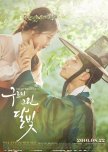
When Love in the Moonlight first hit my drama radar, everything about it put me off. The promo posters just radiated cheesiness, so much so that I’m pretty sure I internally gagged. Not to mention, everything about its premise was overdone and oftentimes badly so. The crossdressing girl, the handsome prince, the political intrigue mixed somewhere in there...Was it worth the risk of watching and likely being disappointed?
The thing about Love in the Moonlight is that it is definitely a good show. Well, partially. It suffers from what I like to call “K-drama syndrome,” where it starts off at its peak and then plunges down into its inevitable doom, where the plot and characters deteriorate in a cesspool of their previously glorious existences. It's exactly as revolting to us viewers as it sounds.
The storyline of Love in the Moonlight is incredibly unoriginal. Its desire to take on the tropes of a crossdressing female who falls in love with a higher-class man was quite impressive, and for a good half of the drama, the execution was phenomenal. I found myself practically twitching while I waited to watch the next episode upon release.
There’s something about cliches done well that’s just as appealing as a never-before-seen storyline, and that’s what Love in the Moonlight accomplished. Its cheesy romance was bolstered by a talented leading couple, and its political aspect was intelligent, yet not overly difficult to follow. Not to mention, the characters were all lovable, each with their defining characteristics that made you love to see them. I admired the drama's ability to make the usually predictable storyline both unpredictable and addicting, and making me take back all my doubts from the beginning. Touche, writers; but that victory only lasts for a little while.
The problem with Love in the Moonlight is that as time goes on, you begin to see the infection of K-drama syndrome more and more. I'll admit, the writers keep you on your toes enough so that you barely even notice the problems unless you take a glance backward. But holy cheese, did this show throw away its potential at being perfect.
The romance is great, that much I will stand by. However, I attribute that much more to the capabilities of the leading actors than the characters themselves. I adored the Crown Prince at the beginning, and I likewise appreciated Ra On’s quirkiness. But over time, the writers lost sight of what made these characters unique and reduced them down to “male lead” and “female lead.” I don't even want to talk about the atrocities of the side characters, particularly Ha Yeon, who faded further and further into the background. It got to the point where she would come on screen and my reaction would be, "who is dis," because she had become that irrelevant. I’ve seen static characters, but I was puzzled with how the ones in Love in the Moonlight somehow managed to all move backward in development - their quirks disappeared. To me, there was nothing sadder than the moment I admitted to myself that the only reason I still liked the Crown Prince was because of Park Bo Gum.
Additionally, I have to say that the writers really lost themselves nearing the end of this show. It was cliche in the beginning, but at least they carried it out well. By the end, they were throwing so many tropes in your face that it almost bruised me. Most of which, I didn’t appreciate at all. There’s a difference between using previously-seen plot elements to better a show, and using them just because there is a need to. By resorting to the latter, the writers failed what could have been an absolute gorgeous ending.
For me, the one trump card of this drama was the cast, and this is the one basis I will recommend this drama off of. I sat down in front of the first episode knowing no one out of the main cast aside from Kim Yoo Jung, who I sneered at for being far too young for her role. By the end, I was impressed with everyone’s ability to portray their respective roles.
Park Bo Gum is phenomenal. He’s obviously goodlooking (those puppy-dog eyes though hehehehe), but the level of emotion he puts into every line and movement is awe-inspiring. Everything about his acting feels real, from the look in his eyes and - I swear - each shift of his facial muscles. He brings the Crown Prince to life in a way that I’ve honestly never seen another actor do with their character. And now I have posters of him on my walls. I wish this were a joke, but I guess I’m prouder to say that it’s not - he was just that good.
Yoo Jung is where I’m split. There’s no doubt she’s talented, but I’ll still enforce the idea that she was too young for the lead role in a romance drama. If you’re going to forget how weird it is morally that 23-year-old Bo Gum is interacting romantically with a minor, just know that her acting was far better in scenes where there wasn’t any handholding and whatnot. I’ll give it to her that she tried, and did well alongside Bo Gum, but she still needs more experience to pair with that acting talent. Soon enough, she’ll have a scary level of skill.
I would also like to comment on the music, most of which I loved. They chose a good collection of strong singers for it, and the instrumentals were beautiful (I listen to some of them when I work now because they’re that entrancing). I am going to go out on a limb here though, and say that the song they gave to Park Bo Gum was subpar. I know he’s capable of better music, and I just wish that they provided him the chance to blind us even more with his unlimited talent.
I’d say that Love in the Moonlight is worth the watch, if only to see how the actors are able to bring quality to a usually mundane plot. Despite the bits of disappointment I felt at the ending, I am still glad that I watched the whole thing through and I can say that I enjoyed myself for the most part.
Was this review helpful to you?
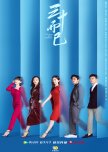
30 – the step from optimistic youth to realistic maturity
The arsenal of feminist dramas grows by the day, and China has pulled out the big guns this year with Nothing But Thirty.Nothing But Thirty focuses on three women, each of whom are approaching their thirtieth birthday in the first episode. Each of them represents a different “type” of woman, in turn pawing through hosts of problems that their “type” suffers: Gu Jia, married with a kid; Zhong Xiao Qin, married with no children; and Wang Man Ni, single with no children. Obviously, this is an oversimplification of their circumstances, but even these basic characterizations define how they go about their lives – you can imagine, for example, that someone with a child has drastically different considerations to make than someone without.
From a female standpoint, these three characters are written as close to perfection as possible (before all the events that happen in latter third of the series that made me roll my eyes). That realism, paired with the leading ladies’ superior acting skills, are what makes this show worth watching. Each of the women are strong at times and weak during others. They allow themselves to have emotions, be stupid once in a while, but resolve to become stronger at the end of the day. Their worldviews are unique to themselves and their personal struggles, meaning that viewers can relate to one character and learn to sympathize with another.
Where the waters get very muddy is when it comes to the plot. Everything that happens in the first 20–30 episodes isn’t unrealistic at all. You get to see the oh-so-relatable financial and workplace struggles. A couple of scumbag husbands here and there. It induces a ton of frustration and outright anger (mistresses, anyone?), but that means the drama is doing its job in presenting real problems and riling you up over them.
Hit what I call “Act III,” meaning the final episodes of the show, and you really begin to question the morality of the writer. Every problem the ladies encounter is something that happens to a good amount of women in real life. But I would be hesitant to claim that the way these problems unfold down the line is representative of how most women actually live.
I want to preface my criticisms of the realism by saying that I’m closer to 20 than I am 30, and I do not live in Shanghai; thus, I don’t understand what it’s like to be Gu Jia, or Wang Man Ni, or Zhong Xiao Qin. (However, I did watch this with my Chinese mother; and while she is far from the 30-year-old mark as well, she had similar qualms.) I’ll put it this way; as a younger woman who is trying to find a way to be independent by the time I reach 30, I find the way that this show wrapped up certain issues to be extremely problematic and detrimental to the overall message of the show.
You get a pretty solid sense of the capabilities of each character with every episode and how much they grow when life begin to test them. Yet, this growth abruptly stops right when it matters the most. Perhaps it even goes backwards. And not in a way that depicts internal struggles, but in a way that’s hullabaloo, garbage writing. Because of these sudden about-faces, there are certain supporting characters who get off the hook far too easily. Others make net gains from terrible behavior and are subsequently put on a pedestal by the writer for having “redeemed themselves.” And I’m well aware that in real life, bad people get away with things. But I feel like there should be a pretty clear difference between getting away with things, and being seen as a saint just because you’re marginally less terrible than the total asshole next to you. This is a pretty bizarre and harmful message to be sending in a drama that's supposedly about women becoming stronger in the face of adversity: some people will hurt you, and you just have to...take it? Let me just say, if episodes were to continue to be written post-ending, I'm not sure luck would be in our girls' favor.
I’m not denying that Nothing But Thirty is a worthwhile watch, but it would be a painful stretch for me to claim that it’s amazing. In the end, I don’t think that the character development was satisfying enough. For the genre, though, I did find sufficient enjoyment in the process of watching. Hopefully, more female-centric dramas will be to come that take this is almost a beta of what types of female characters should be represented in the future.
Was this review helpful to you?
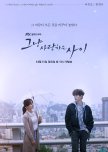
The biggest danger of being on this platform (or any similar site, really) is getting swept up in the mob mentality that is a high rating. Time and time again, I begin watching a drama with high hopes just because so many other people loved it. Sometimes, I agree. Other times, I find that I have basically scammed myself through other viewers' preferences. One of those other times was my recent experience with Just Between Lovers.
Just Between Lovers is, by far, not a bad show. I completely understand why so many viewers fell into it. The casting choices, the cinematography, the soundtrack. There’s a lot to brag about. The plot choice is a challenge, but one I commend the writer for choosing. PTSD, survivor's guilt, depression; these things are incredibly difficult subjects to put into a drama without being insensitive, inaccurate, or both.
While I’m not entirely dissatisfied with how the writer depicted these mental conditions, I do feel that she should have gone much further. I didn’t really get into the heads of the characters as much as I expected; so my heart didn’t hurt for them at all.
For Just Between Lovers, the characters should have been the main point. We can understand the technicals of what they went through just by reading a synopsis. In that case, it’s the show’s responsibility to show us more about them; not merely history, but who they are down to every nerve in their body. Okay; maybe that's pushing it for a 16-episode drama, but you understand what I mean? I want to relate to them on some level. Instead, the writer relied too much on the fallacy that “tragedy” automatically equates to a sympathetic audience. In trying to make us viewers feel sad with a truckload of melodrama, we end up not feeling too sad at all.
While I admit that I'm frequently too much of a stickler for well-written characters, I firmly believe that this oversimplification of characters was what failed this show. There were just too many characters to deal with effectively and all at once. The writer was trying to show that everyone is dealing with their own inner demons, which is fine; but then why do I not feel anything for any of them except for the smallest shred of pity? The experience was very similar to when you watch news broadcasts about car accidents: you might wince, feel bad because of what happened. But you most likely don’t have a great enough connection with the victim to truly feel bad for him as a person. That’s a big issue for a drama in which it’s all about seeing the characters as real and human.
Amongst everything, I think that the writer wasted the most time on the romance aspect. (The irony of naming a script “Just Between Lovers” and have a viewer hate the romance. Ouch.) This might’ve just been a trickle-down effect of me not liking the character development enough to appreciate the relationships. I tried to like it, and the pairing was cute; but not anything groundbreaking. It seemed as if the romance was an excuse for more melodrama that the show didn’t need.
The saving grace for Just Between Lovers was the acting. I may have felt lukewarm toward their characters, but I’d be spitting lies if I claimed I wasn’t immersed by Junho and Jinah in each of their more intense scenes. I only completed this show because of them. The amount of emotion that these two harbor in their eyes, namely when they’re crying, is appallingly wonderful. Especially Junho; the amount of acting talent that this singer has is unfair. It’s a real shame that their characters weren’t written better, otherwise the acting would have been explosive.
Altogether, the writer could have done more with the characters instead of focusing on the story alone. Had there been more focus in the character department, I would hardly have any complaints.
Was this review helpful to you?
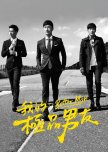
To me, the story was your fairly typical romance; this show just mixed things up a bit by including three couples: three brothers from one family, paired with another's two sisters and their best friend. It tried dealing with the idea of age gaps (a whopping 18 years between the eldest brother and the youngest sister!) which can be difficult to address.
Despite attempts at creating problems for the characters to deal with, I felt that the writers didn't include much real conflict that built each relationship. The consequence of this is that by the end of the 60 episodes, the most sentiment I had was 'oh dang they're cute together' - as opposed to what I think the show was trying to go for; 'they're finally together, after going through so much for each other.' I view this as a failure on the writers' part: they tried to create the sentiment of how relationships can help build each participating individual as a person, but fell short of that goal. Perhaps three couples in one fell swoop was a bit ambitious.
For the most part, this show's strong point is in that it's a pretty easy watch. You have small intense moments that are almost always immediately solved, but almost no anxiety-inducing scenes in which you nervously wonder how the characters can get past a particular hurdle. It's always nice to have a drama on hand that won't cause you constant worry.
Acting wasn't the best I've seen, but it was enough to get by. For the most part, everyone played their roles well; for me, the pair of Jolin and Hope were the most convincing and certainly the most entertaining.
I was split on the soundtrack - the opening ('Faded Pictures' by Vanness Wu) I found incredibly addictive and memorable, but some of the others actually became fairly annoying. It's not a big surprise though, considering that you listen to them basically for 60 episodes straight.
Overall, a pretty fun show. 60 episodes at around 50 minutes each is quite the commitment though, but also necessary to get things rolling with each of the couples. So, there was definitely potential for the allotted 80 episodes, so I'm unsure why they cut it short.
Better Man's main strength lies in its lightheartedness, so I'd find it perfect for kicking back and relaxing.
Was this review helpful to you?
I had a lot of fun with this one.)
Ooh, baby. Should’ve jumped aboard this hype train sooner because this is quite the ride.
From my perspective, Ashes of Love is the definition of a dark horse drama. It possesses a star cast with Yang Zi and Deng Lun at the top of the list, but its synopsis only lets on that this is a rather typical romance in which everyone happens to be dressed in layers of colored silk. And everything about it proves me wrong.
For all intents and purposes, the story of Ashes of Love is not the strongest I’ve seen. It’s fairly creative, but still incorporates the tropes of “aloof male lead,” “let’s kill the person that killed this person that I rather liked,” etc. However, the writing allows you to not mind any of those stereotypes as they surface because of how the characters grow and evolve in the grand scheme of things. Though set in a fantasy land of immortals, the struggles of every character in this story is poignantly human and wrenches at your heartstrings. I might even argue that the romance isn’t even the star plot of this show. While the main couple is very enjoyable to watch, my lasting impression lies with the revenge story of the second male lead—and I usually despise revenge stories.
But let me rave about the characters some more. Their success was half due to writing and half due to acting. May I shake the hand of the casting director; because I can’t remember the last time I was this impressed with every single actor. I entered for Yang Zi, but stayed for Yang Zi, Deng Lun, Luo Yun Xi (this guy makes me speechless and I could talk about only him for ten hours if someone would listen); even the “minor” characters add so much emotion to the story. The depiction of each individual is amazingly spot-on, whether it be in comedic moments or scenes that make you exhaust your tissue supply. You may be able to identify someone as good or bad; but you absolutely cannot point a finger at anyone and define them as purely one way or the other. That acknowledgement of a dual human nature is Ashes of Love’s true strength.
All things considered, I find it somewhat of a blessing that I charged into episode one with no knowledge of the emotion that was about to slap me in the face. It’s quite a pleasant (and heartbreaking) surprise when you get deeper and find that this isn’t just a pretty drama with pretty actors and pretty visuals. It is those things, too, but the value of Ashes of Love lies much further beneath the surface.
Was this review helpful to you?
I'll start off by saying that I enjoyed this show. I was a little skeptical going into it because I've had my fair share of terrible rom-coms, but decided to give it a chance (for Sang Yoon...what). I was glad that I went into it, because it hooked me really early on. I would be alert for whenever the new episode would be released online so that I could hurry and see the newest plot developments. This is, altogether, a very good show that held itself together in a lot of spots where rom-coms generally lose points for me.
The story itself has been seen once or twice before, although I'm not sure that the other shows handle it quite as well as this one did. There are many problems with Mom going to school, especially under the objections of her husband and son. She hits heaps of problems before even setting foot on campus, let alone afterward. The show does a good job depicting her struggles, not only with school, but with herself and her relationships. This is definitely a strong point to the drama, especially for those of you who enjoy the typical rom-com but wish for something just a little deeper.
In general, the cast chosen did very well. Both the main and supporting actors come across as very real people and they carry their personalities consistently. (And let's be honest, you need a little Lee Sang Yoon to boost everything a bit.) The acting falls short with Min Jae and Na Eun, who, frankly, are the weakest links of the entire show and are the least believable in both character development and chemistry. Luckily, they're fairly minor in the scope of everything else and don't ruin the show for me.
I did enjoy the music and found myself humming along at some points. Like with most other shows, the soundtrack was mixed between cutesy and emotional, and it was pretty typical as far as drama OST goes. Nonetheless, the music went along well with whatever the scene called for.
Rewatch value is quite high. Being that this is a rom-com, it's fairly light-hearted. The pace keeps you interested really well throughout but there's nothing so heavy that would keep you from rewatching it.
Altogether, this was a pleasure to watch. It's a fairly simple show, but not boring in the least and I think it could be fair game to try out for most anyone, especially if you're looking for a cute yet more mature romance.
Was this review helpful to you?

I like to believe that I'm a patient spirit when it comes to television. I can take ridiculous cliches and stereotypical characters. If a show is bad enough, I can watch it through to the end out of pure curiosity—how bad can it get? But holy moly, you’d have to pay me a year’s salary plus benefits to get through this entire thing.
In the Chinese dramasphere, there’s this phrase: “gou xie”, literally “dog’s blood." Created by combining the Chinese word for “enough” and the transliteration of the elegant English word “shit,” this umbrella term is applied to a TV show’s components when they become preposterously intolerable.
Can you see where this is going?
What about "Pediatrician" would make me call it out as being "gou xie"? A more challenging question would be what about it isn't so cringeworthy. The worst offender is the romance, the poor execution of which also happened to be the sole reason I refused to continue watching.
The female lead is gross. Less than five minutes into the second episode, you quickly realize that she treats Shen He like garbage. When the summary says that their marriage is a secret, it’s 1% because her dad would bring hell upon them and 99% because this chick is constructed from grade-A wench material. She demands that her husband tell no one that they’re married; no, that they’re even a couple! Why? She doesn’t want to be seen as an old, taken woman. Yes; in China—the same place that shames women for not getting married by thirty—this lady in her mid-twenties thinks being single is more socially-acceptable...okay, let's not get sidetracked.
She gets pissed whenever Shen He isn’t unconditionally on her side about everything since as her husband, he should always agree with her. I’m sorry; since when does the relationship status of “married” only apply based on convenience? She’s constantly playing with his feelings, calling him irrational when he tries to reason with her and dismissing his discomfort with her misbehavior. This is not how someone should act toward anyone, let alone toward a loved one.
There is literally nothing about this relationship that appeals to the audience. Forget that she’s an unlikeable character; the issue is that she’s unlikeable, but we’re supposed to believe that she matches well with the sweet male lead. The interactions between these two are basically the same as a brother trying to subdue his baby sister whose default state is that of throwing tantrums. No chemistry is possible between these two people, yet each episode shoves them in your face until you’d rather not see either of them. At all. Ever.
Sadly, the medical end of the story isn't much to brag about, either. Looking at the problems surrounding medical care of children is such an interesting topic, yet this show somehow even ruined that. Putting aside all the technicals of hospital operations, there is hardly any emotion put into the issues of these kids. With too much showtime given to the nightmare of a romance, there isn't enough given to fleshing out each of these children’s stories. Also, it's very hard to focus on Jia Jia as a responsible doctor when all you can imagine is how she'll screw over her husband within the next fifteen minutes.
The only reason I even began this drama was Luo Yun Xi. This guy’s acting abilities soar through the roof and he has an excellent face to boot (though his hair in this one is…well, we don’t talk about that). But apparently, there's a limit to my adoration and that limit goes by the title of "Pediatrician." There was nothing more that Yun Xi could have done to cool down this hot mess of a drama. This really goes for all of the actors—I get the feeling that some of them are actually good at acting, but the subpar writing just doesn’t allow any of them to show their potential. Instead, they end up being very stiff and awkward; and you can't blame them.
Even not having finished it, dragging myself through 18 episodes is enough to recommend a solid “pass” for this one. The romance leaves a bad taste on one’s tongue and the medical drama is lukewarm. If you're looking for quality, this is not worth the time at all.
Was this review helpful to you?


