

 521
521 659
659 96
96 13
13 12
12 32
32 3
3 2
2 66
66 50
50 63
63 53
53 14
14 19
19 98
98 12
12 11
11 6
6 31
31 9
9 4
4 3
3 16
16 39
39 43
43 11
11 17
17 131
131 195
195 135
135 42
42


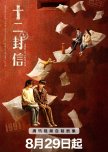
What would you do for those that you love?
What would you do for those that you love? Would you give up your happiness? Would you give up your life?These are the questions at the heart of Twelve Letters, a fantasy and mystery drama about love, found family, sacrifices, hope, and the power of choice. The story is set across two timelines — Meiwan Town in 1991 and Beixing City in 2026 — and it revolves around our two protagonists, Ye Hai Tang and Tang Yi Xun. The world was not kind to them in 1991; their lives were filled with pain, suffering, and darkness. The only glimmer of light was them meeting each other due to unfortunate circumstances. For reasons initially unknown to the audience, one moment changed the course of their lives forever, resulting in a heartbreaking separation and a lifetime of longing and regrets. That is, until one day when a letter from 1991 arrives via an abandoned and mysterious mailbox in the year 2026, opening a connection between the past and the future. Will fate intervene, alter the timeline, and rewrite this tragic love story?
Right off the bat, the first thing I notice about Twelve Letters is its gorgeous cinematography. It is intentional and artistic — flawlessly capturing the beauty of Meiwan Town in 1991, with its natural rivers and mountainous backdrop in every frame, along with the run-down buildings of its residents that even the breathtaking sceneries cannot hide. There is a greenish tint to the color grading, giving the feel of a different era, teleporting us back in time. The Cantonese music, VHS tapes of old HK movies, landline phones, fashion — everything adds to the 90s aesthetic, making this a believable and nostalgic period piece. With the hauntingly beautiful osts cleverly used throughout the drama, I can't help but praise the love and thought that was poured into this drama. However, the stunning visuals do more than just set the scene; they are a reflection of our protagonists' shattered inner worlds.
Ye Hai Tang and Tang Yi Xun are two broken souls who find solace in each other. At first glance, they seem like polar opposites — a bright student and a troubled delinquent — but they are actually two sides of the same coin. They are pitiful, weary, and yet still so loving, selfless, and kind. They make me want to wrap them both in my arms and protect them from the cruelty of this world. The way they care for each other, only wishing for the other's safety and happiness, is so pure. Their relationship proves that chosen family can be stronger than blood. Like beautiful mosaic art, these two broken souls feel whole together. The raw and powerful performances from Wang Ying Lu and Zhou Yi Ran truly stand out.
And it isn't just the main couple who embodies this spirit of unconditional love and sacrifice — the supporting characters are wonderful as well. I love Cha, Rat, Xin, Nian, Cheng, Manyu, Guan, and Miao Miao. Each has their own distinct personality; all of them are flawed but endearing. There is an overarching theme in this story about how ordinary people have the ability to ease the suffering of others even if they feel like they are insignificant. These characters are prime examples of that value. The sacrifices they make on the behalf of Ye Hai Tang and Tang Yi Xun are selfless and heart-wrenching.
This was not the type of drama I normally watch and it emotionally devastated me. It was dark, brutal, and at times painfully realistic, and I took a considerably long time to complete it despite its short 12-episode run because I had to keep taking breaks in between episodes to catch my breath due to its heavy themes. This drama did not shy away from showcasing domestic violence and toxic family dynamics, putting the ugly reality of growing up in broken homes on display for the world to see. There were many times when I felt sick to my stomach and I cried my eyes out until my shirts were drenched in my own tears. Twelve Letters is one of those stories that will touch your soul and make you feel a dozen emotions all at once, and it is not for the faint of heart. And yet, the story drew me in unlike any other.
Despite how dearly I loved this drama, I couldn't give it a perfect score for one main reason: the dual-timeline structure was tricky to follow at times. The 2026 timeline had a linear flow, meanwhile the 1991 timeline jumped a few months forward only to jump a few months back inconsistently. This created disjointed moments in the narrative, and I had to pause the drama a few times in order to understand the chronology of the events. Even with this issue though, it did not detract from the genuine impact this story had on me.
After a rollercoaster of emotions, and many days of dragging my feet, I can finally say that Twelve Letters is worth all the tears that were shed. This story will stay with me for a very long time. It is not a drama for everyone. It is triggering for those who are sensitive to topics such as domestic violence, child abuse and neglect, gambling addiction, and violence connected to poverty. But for those who love character-driven mysteries and are brave enough to watch and make it to the finish line, you will uncover a heartfelt and unforgettable journey of selfless sacrifices, persistent love, and hope shining through the darkness.
Was this review helpful to you?
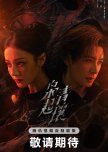
A beautiful but fleeting moment.
If I could rate purely based on the visuals alone, Love on the Turquoise Land would be a 10/10. The cinematography was stunning. The director knew exactly how to create an atmospheric and moody world that was easy for me to immerse myself in and fall in love with. There were so many times when it felt like I could actually smell the dampness of the trees and feel the mist of the fog kissing my bare skin. If I were to reach my hand through the screen, I just might be able to touch whatever was in front of me. The lighting, artistic camera angles, cinematic framing — every scene was a magazine-worthy shot. The vibes? Immaculate. The beauty of this drama was my biggest motivation to keep watching.Unfortunately, looks can only get you so far. In the end, depth and substance are what matter most, and that is what this drama lacked. For 32 episodes, not a lot happened. We fell into a trap of repetition; the cat-and-mouse games the hunters and earth fiends played got exhausting really quick. The slow narrative pacing held this drama back from being exceptional. I understand the suspense the writers were trying to build, but the void of urgency, accountability, and consequences for the majority of the drama was what dropped this from a potentially thrilling epic about protecting humanity from a greater evil down to a low-stakes story of generic heroes vs. villains.
Which brings me to my next point: the characters left me feeling conflicted. I rooted for the hunters because I believed in their mission, but subjectively speaking, I thought the earth fiends were more compelling. Compared to their mortal enemies, the hunters lacked personality and charisma. Their relationships felt curated like a group of coworkers united by a common duty. Their bonds were like the visuals — pretty to look at and made sense in theory, but missing genuine heart. In contrast, the earth fiends' connections felt more organic; they came off as a real family bound by a shared desperation to survive in a foreign world. I liked both groups of characters, maybe one a little more than the other, but I never felt a deep emotional attachment to either of them. During pivotal moments that should've devastated me, when their lives were at stake, I found myself mostly unaffected. And that was the problem.
While I enjoyed the experience of actively watching this drama, the storytelling was underwhelming. It didn't have the pull needed to make me pick it back up once I walked away, which was why it took me over a month to complete this. In another month, I'll probably only remember the cinematography and the vibes, but forget everything else. Because of that, I would summarize Love on the Turquoise Land as a beautiful but fleeting moment — like the warmth from light that is pleasant to bask in, but ultimately destined to fade once the screen goes dark. I don't recommend this for those who require more depth to their characters and more excitement in their plots, but those who love a visually rich drama and don't mind a slower-paced story will find many things to appreciate in this.
Was this review helpful to you?
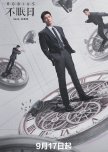
The never-ending case: Who is Squid?
If you are reading this, just know, you have probably been here before. Or at least, that is a possibility in the world of Mobius. The average person might only have 24 hours in a day, but not Ding Qi. After a near-death experience, he obtains the ability to relive a random day on a loop, with the day resetting five times before time resumes chronologically. This gives Ding Qi an unique advantage, making him exceptionally qualified for his job as a detective. When the executives at the biotechnology company MOMA starts getting murdered one by one, Ding Qi is tasked with protecting the life of Mo Yuanzhi, the founder of the company, and uncovering the identity and motives of the killer, Squid. With the power of time-loops on his side, he expected to be two steps ahead of Squid... until he realizes that there might be another time-loop perceiver manipulating the outcome of this case.I'm going to be honest — it feels like I have also lived through more than five long and exhausting loops after watching Mobius. One thing I've always appreciated about western crime thrillers is their use of an episodic format that features a main conflict alongside smaller and often related subplots. This familiar formula reliably prevents a show from losing momentum, keeping individual episodes fresh and engaging. I had hoped that Mobius would follow a similar pattern, but unfortunately, it did not. The writers' decision to focus solely on the MOMA case, without sprinkling in any smaller cases, sacrificed the story's momentum. It doesn't help that time-loop stories are also inherently repetitive, making the narrative feel even more drawn-out. While I found the drama watchable, the drastically slowed pacing made it difficult for me to give it my undivided attention.
The sluggish pacing wasn't the only issue; the connection between Ding Qi and An Lan was also surprisingly weak. In my opinion, these two characters function better as friends than as love interests, as they have no romantic chemistry at all. They are attracted to each other, because the writers want us to believe they are, but little else is established. Aside from their looks, why do they like each other? If we were to remove the topics of An Lan's mother and her work, would these two characters even have anything to talk about? Beyond their initial attraction, their relationship lacks any deeper foundation. While I don't expect the romance to be central to a crime drama's plot, Ding Qi and An Lan's love arc feels forced and inorganic. This left me uninvested in their storyline.
In contrast, I actually really liked the dynamics within Ding Qi's team, specifically his relationship with Duan Zheng. They make an endearing duo. Duan Zheng serves as a mix of mentor, friend, and father figure to Ding Qi. His character balances a playful nature with the wisdom of a seasoned detective, and his genuine care for the people he serves makes it easy to understand why Ding Qi looks up to him so fondly. We see this affection in scenes where Duan Zheng teasingly scolds Ding Qi for his reckless actions, but then immediately follows up with a look of genuine concern. Similarly, when Ding Qi is overwhelmed by the high-stakes of the MOMA case, Duan Zheng offers him grounded advice and unwavering support that reminds him of his purpose beyond the confusing time-loops. These small moments established a strong foundation of trust, a welcomed foil to the more superficial relationships in the story, and their scenes were a highlight for me.
Another aspect that pulled me into the world of Mobius was its outstanding cinematography. The director has a keen eye for interesting shots, beautifully capturing the urban cityscape of this fictional world, which is perfectly fitting for an action-packed crime thriller involving advanced technology and time-loops. The camera work is constantly in motion, with frequent long drone shots that glide through the streets, following Ding Qi as he races across the city to investigate the secrets of MOMA and their ties to Squid. These shots create a sense of continuous motion and urgency, even when the plot is moving slowly. The stunning visuals of the cityscape — the striking architecture, intricate streets and freeways, and illuminating lights — set up an almost futuristic atmosphere that offers a nice distraction when the narrative gets repetitive.
Despite its significant flaws — including a prolonged central case and an unconvincing romantic subplot — Mobius provided a passable viewing experience. The draggy pacing is offset by the engaging dynamic of Ding Qi's detective team and the urban cityscape cinematography. These were the very strengths that motivated me to complete the drama even when the repetitive time-loop mechanic wore thin. While it is certainly not a binge-worthy thriller for everyone, the drama’s visual style and likable characters make it potentially worthwhile for dedicated fans of Bai Jingting or time-loops.
Was this review helpful to you?
This review may contain spoilers
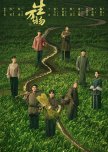
Beyond the filters: a mesmerizing story of love, life and land.
Land is the most valuable possession a farmer can own. It increases the potential for food security, financial stability, and social influence. Some will kill for it. Some will die for it. Some will even sacrifice their own kin for it.Unfortunately, Ning Xiuxiu learns these harsh truths in the cruelest way imaginable in This Thriving Land. You see, she is the daughter of the wealthiest man in Ox Temple Village. Her father, Ning Xuexiang, owns 700 mu of land. She was born into privilege, never having to lose sleep over hunger, cold, or manual labor. But that all changes on the day of her wedding when she gets kidnapped by bandits. They have one demand for her father: 5,000 silver dollars in exchange for her life and well-being. Because Xiuxiu had been doted on her entire life, she wholeheartedly believes her father will come save her... until he doesn't. He loves her, but his greed makes him reluctant to sell his lands for the ransom money, not even to redeem her. When Xiuxiu finally escapes from the wrath of the bandits, she returns to the village with her reputation in ruins and the life she once knew gone. Hurt and betrayed, she makes the ultimate choice to marry a poor farmer, Feng Dajiao, to spite her father, vowing to cut him out of her life forever. Set during the Republican Era of China, this drama chronicles the lives of Ning Xiuxiu and her loved ones as they try to escape poverty and navigate times of great unrest.
I confess — I am usually hyper-fixated on the visuals whenever I watch a drama, often pausing every few minutes to screenshot beautifully composed scenes. But with This Thriving Land, I found myself ignoring those urges more often than I expected. Is it because the aesthetics are mediocre at best? Or is it because I was so immersed in the story that I no longer cared about saving picture-perfect screenshots? Maybe, it is a little of both. The production is not flashy, but that is intentional. The cinematography doesn't glorify poverty. In fact, it unapologetically puts a spotlight on what many other dramas are afraid to embrace: rundown homes, broken and mismatched furniture, trash on the street, etc. It also captures every detail of sun-kissed tans, deep wrinkles, and tattered clothes. I vividly recall a scene from episode one, when a child took a dump in the middle of the street, and to my surprise, the camera zoomed in on the piece of poop. The accurate portrayal of the devastation caused by poverty is ugly and heartbreaking, and that is precisely what makes this drama so impactful. When we strip away the filters and pretenses, we allow the story's true depth to shine through. It is a reminder that only by looking past fleeting beauty can we be rewarded with a priceless gem such as this story.
The true strength of This Thriving Land resides in its cast of characters and how deeply flawed each and every person is. We see this complexity starting with our two protagonists, Ning Xiuxiu and Feng Dajiao. Though easy to root for, Xiuxiu's pride repeatedly holds her back from receiving the help she truly needs. It was a trait that infuriated me when I was watching the drama, even though it was fully justified, given her circumstances. Similarly, while Dajiao is my absolute favorite character and seems nearly perfect, he also has his own issues: he is so kind that sometimes he lets others disrespect him. The drama makes even the unlikable figures, such as Xiuxiu's father, Ning Xuexiang, become sympathetic over time. He is often selfish, but his choices make perfect sense for a man whose identity is so closely tied to the land he owns. We see those same nuances reflected in many of the other supporting cast. Ning Kejin is an amazing brother, incredibly loyal, but he isn't always a great husband. Dajiao's father, Feng Er, is a prickly grump who has thorns for words, yet his actions are consistently steeped in love. The writers' dedication to creating such imperfect individuals and the actors' ability to breathe such life into them make them feel like people I might even know in real life.
The relationships are exceptionally compelling to me because they are relatable. I can't recall specific moments in the drama where the characters explicitly say the words "I love you" to each other, and yet, I have no doubt that they do because of their loyalty, sacrifices, and actions. This feels familiar to me, and others like me, who grew up in traditional Asian households where hearing "Have you eaten?" was the closest we got to receiving verbal affection from our old-school parents. Sometimes, love is what's tucked quietly between the lines that aren't said and hidden behind the gestures, big or small. We see this when Xiuxiu's mother weeps for her misfortunes, Dajiao's father bravely shields his family from bandits, Dajiao's mother butchers their only chicken to cook a meal for an ill Xiuxiu, the Ning siblings stand up for each other without hesitation when confronting their father, and Dajiao puts up a curtain as a divider between their bed to respect Xiuxiu's boundaries after her traumatic experience. Many of these characters are incredibly poor, but where they lack in material possessions and wealth, they make up in profound devotion. Although the drama unflinchingly depicts the cruelty humans are capable of committing due to desperation and greed, these unspoken acts of love and support give us hope that there are still good things worth fighting for even in the darkest of times.
In the end, I was fully mesmerized by This Thriving Land. It had a way of stabbing me where it hurt the most and twisting the knife to further the pain. But the angst made the victories feel so much sweeter to me. It might not have always been an easy watch, but there wasn't a single boring episode. It deserves all the praise it is receiving in China. In a way, it is a love letter to those who came before us, to thank them for the life we have. Some of the characters' attachment to land was often distorted and led them to poor choices, but their fixations were rooted in generational trauma. They saw firsthand the destruction brought on by poverty and life without land ownership. I might not have always agreed with how they guarded what belonged to them, but I understand the reasonings behind their obsessions now. The struggle to secure a better future for their descendants is what makes Feng Er's simple wisdom so hard-hitting: "If you take care of the land, the land will take care of you."
I highly recommend This Thriving Land to those who can appreciate an authentic and historical slice-of-life drama with its clever portrayal of family, resilience, and sacrifice.
Was this review helpful to you?
This review may contain spoilers
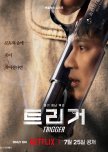
Trigger lacks depth and substance.
Our story begins when an influx of illegal guns fall into the hands of ordinary citizens in South Korea, a country where guns are outlawed and its population is unaccustomed to such threats. This abrupt change causes mayhem around the country, specifically in Seoul where our story takes place, as it forces the people to confront their biggest fears, frustrations, and the fragility of their society. We follow Lee Do, a righteous cop and former military sniper, as he tries to navigate the chaos, uncover the source of the illegal weapons distribution, and stop the gun violence from escalating.Trigger is supposed to be an exciting thriller packed with action and suspense. It is a typical crime story that has been done a hundred times before successfully. And yet, even with all the variations in the world, the writers of Trigger still fail to take notes. With a weak script, the drama ends up being an underwhelming viewing experience. I fear I need to steer clear of action and crime kdramas made by Netflix from now on, as I also have many criticisms for Mercy for None, another Netflix original that is riddled with the same shortcomings too. Trigger is just the latest to let me down.
The villain here is a joke, the police force being the punchline.
And I have so many questions.
Why are multiple trained police officers unable to fight off and defend a police station against one sex offender who most likely have less experience with guns and less training than they do? Even with a whole armory at their disposal along with their combined strength and expertise, saving the lives of everyone in that precinct still falls entirely on Lee Do. What makes the situation worse is that as the only man to save lives that night, Lee Do still ends up being the one who is reprimanded with a suspension.
How is it possible that a teenage high school student with no connection to any organized crimes is able to gain access to free guns by simply typing "I want to purchase a gun" into the internet search bar, but the entire police force is oblivious as to how the guns are being acquired? In an age of technology, not a single one of them stopped to think about checking the internet first? South Korea is one of the most heavily surveillanced countries in the world, why isn't anyone monitoring the internet for suspicious activity?
And don't even get me started on the plausibility of Lee Do surviving multiple gunshots to the chest and recovering in time for the final showdown shortly after — how is this man not dead?
Everyone around Lee Do have two braincells that they collectively share and pass around among themselves, meanwhile Lee Do is the only one who is competent, intelligent, and indestructible. There are just too many plot holes to keep count of. The lack of realism and logic stops me from immersing into this world.
What disappoints me most of all is perhaps the fact that the illegal guns flooding the country are not distributed for the purpose of profit, but for the amusement of the villain who just wants to cause a disturbance in society and watch the world burn.
Trigger is a glorified action and crime drama about senseless killings for the sake of violence, masquerading as something deeper than it really is. There are real concerns that the drama brings up — such as class disparity, school bullying, a flawed justice system, and mental health — but the themes are just too ambitious for the writers to grasp and they fail to explore these issues properly, leaving the story feeling shallow and the characters underdeveloped. The gunshot sound effects have more depth and substance than the characters and overall story itself.
In conclusion, there isn't much to gain from Trigger, but you will probably enjoy it if you like Mercy for None. Both have different concepts, but they are similar in execution.
Was this review helpful to you?
This review may contain spoilers
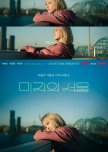
This one is for the lonely souls.
A very kind and thoughtful stranger recommended Our Unwritten Seoul to me last year, but like so many other dramas, it sat on my PTW list collecting dust until I eventually forgot all about it. Then, during the 2025 MDL challenge, I kept seeing it mentioned again and again. That piqued my interest and got me wondering, did I actually miss out on a gem of a story? Out of curiosity, I decided to take it out of its cold prison and make it my first kdrama of 2026 — and what a fantastic choice that was. This is a story for the burnouts, the aimless wanderers, the dreamers, the brokenhearted, and the lonely souls.You need an exceptionally capable cast in order to bring a character-driven drama like this to life — and this production delivered exactly that. Every single actor gave an outstanding performance, but Park Bo-young was in a league of her own. She was essentially playing four different roles all at once: Miji, Mirae, Miji cosplaying as Mirae, and Mirae pretending to be Miji. Some of the other characters might have had difficulty telling the sisters apart, but as a viewer, I always knew who was who because each version was convincingly distinct. Miji carried an insecurity hidden behind a wall of defensive fire and Mirae possessed a quiet exhaustion that made it feel as though she was suffocating under the crushing weight of her life’s burdens. Park Bo-young's ability to create chemistry with every single one of her costars? Chef's kiss. She had to sell two different love stories as two different characters and she was so good that she made both feel equally important. This woman deserves her flowers, and then so much more.
Healing and self-discovery were the heart of the story, but the bond of love and family was what truly gave it a pulse. Our Unwritten Seoul doesn't just rely on the typical family structure that many of us are familiar with in kdramas — a man, a woman, and their child — it goes above and beyond. It shows us that sometimes family is a widow and her son clinging onto each other in the aftermath of loss. Sometimes it is just a woman taking her daughter away from a toxic and abusive household because that is the only way to protect them both. Sometimes it's two sisters refusing to let go of each other's hand even if it means they both fall. Sometimes it is two women creating a life together despite societal norms. The drama's exploration into unconventional yet vital family dynamics is what makes this story so brilliant. As the drama put me in the characters' shoes, I became an accomplice to their mischievous schemes and ended up on an intimate journey through their lives. Each character and relationship felt as beautifully written and complex as the next.
What could've been just a cliché identity-swapping trope turned into a deep dive on how different people react to hardship. Do you walk away to avoid the sting of failure like Miji? Do you bottle it all inside like Mirae? Do you fake it until you make it like Hosu? Do you hide behind humor like Sejin? Do you wear harshness as a shield like Ok-hui? Do you turn your pain into wisdom for others like Wol-sun? Or do you ignore your troubles entirely in fear of making things worse like Ro-sa? I love that this drama never judges the choices the characters make. In a world where we are afraid of how society perceives us — something our protagonists Miji and Mirae understand all too well — the writers gently remind us "it’s okay." It’s okay to hide when you are feeling overwhelmed. It’s okay to start over if life isn't what it is supposed to be. It’s okay to start later than never starting at all. It’s okay to try, and fail, and try again. Our fate isn't set in stone; it is unwritten. And Grandma Wol-sun said it best: "No matter how pathetic or messy it looks, anything you do to survive is brave."
I adore this drama to pieces and there are only two drawbacks if I am to nitpick. For starters, the episodes are quite long — about 80 to 90 minutes each — making it more emotionally draining to sit through than it needs to be. Each time I completed an episode, instead of hopping onto the next, I had to take a break to recharge my energy. The upside to this is my time never felt wasted. For those who have the patience to stay with the characters from beginning until end, the drama generously rewards them with heartfelt moments (that feel wholesome and earned!) My other minor gripe was the cinematography. I read so many praises for it, but for me, it was nothing special. Just okay. Although, I will give it credit for the way certain scenes were shot based on their locations. For instance, Seoul — the place that caused Mirae's depression — looked and felt sterile and cold; meanwhile Miji and Mirae's hometown — the place where their loved ones are — was bathed in warmth and coziness. It was a nice touch.
With that said, I'm so glad I finally gave Our Unwritten Seoul a chance. It is everything that everyone said it would be — relatable, healing, and inspirational. It didn't just consume my time; it occupied my mind, leaving me to ponder how survival is often messy, progress isn't always linear, and growth requires a lot of patience. It made me feel seen in a way I didn't expect, and even though I watched it later than most, I think it found me exactly when I needed it. This story will stay with me for a very long time and that is more than I could ever ask for.
Was this review helpful to you?
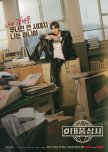
The biggest villains of this story were the writers.
I have a lot to say, but I feel like so much of my time has already been wasted, so I will keep this short.Typhoon Family was introduced with so much potential — a strong foundation, an ensemble of endearing characters, and its setting in the nostalgic 1990s. Even though the story was slow from the beginning, I really enjoyed the first half. Unfortunately, my interest diminished when the repetitiveness in the plot became too glaring to ignore. I was expecting a heartwarming story of good people overcoming hardships, with a balanced amount of wins and losses to inspire hope, and a healthy narrative progression to keep me on my toes. This was not it. The only things that were consistent in this drama were the disappointments and setbacks our protagonists suffered. Every episode was the same story of failure, just told slightly differently.
In general, I liked the cinematography and the characters. They were the reasons why I kept tuning into this drama week after week. However, as charming as they were, they just weren't enough to offset the messy writing that hijacked the plot in the second half. The Pyo father-and-son duo might have been annoying antagonists for constantly trying to sabotage the Typhoon Trade crew, but the biggest villains of this story were actually the writers. There were so many times during my watch that I wondered, what happened to the compelling storytelling that was present in the beginning? It was nowhere to be found since the Thailand arc.
I'm happy for those who loved Typhoon Family from the start until the end, but sadly for me, this was a missed opportunity. It did not have enough substance and momentum to sustain sixteen episodes, which was probably why the repetitiveness was so obvious. On top of that, the way the writers dealt with the antagonists — both the traitors and the rivals alike — was unsatisfying. The story dragged until the finale, where the writers lazily crammed all the action into the last episode as a means to wrap everything up. No matter how much I initially cared for the characters, their relationships, and their journeys, by the end, I was just thankful that everything was over. It was a mentally draining experience, taking one too many hours of my life that I won't be getting back.
Was this review helpful to you?
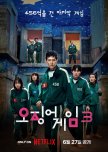
Not every story needs a sequel.
Just like what Seong Gi Hun should've done, Squid Game should've taken its winnings while it was on top, left things as they were in season one, and never looked back.Season two and three (they honestly should've just been combined into one season) focused too much on casting famous faces and not enough on giving these new faces some depth. With the exception of one new character who made an impression (iykyk), these two seasons lacked compelling characters with relatable or emotionally impactful backstories. Unsurprisingly, well-written characters are the heart and soul of any good story. Everything here was surface-level, and as a result the entire story suffered. Why should we be emotionally invested in these characters' well-being and mourn their deaths if we don't even know who they are as people?
This season gave too much screentime to the VIPs — they were the worst characters and actors in this entire show. I don't know how it was possible, but they managed to come off as both stiff and cartoonish simultaneously. They made an insufferable season even more unbearable with their presence.
And I'm just a viewer, so the writers should know better than me: more brutal deaths + crazier obstacle courses ≠ good. Bigger don't always mean better. I am tired of these repetitive sequels that recycle old plots from the originals only to give them disappointing "twists" for the sake of pumping out new content and easy cash grabs. A lot happened between season two and three, and at the same time, no progress was made at all. Season 3, Episode 8 should've hit me harder, but instead, I was left feeling regretful for the time I've wasted here. Because seriously, after all the struggles and sacrifices, what was it all for?
I don't know who to blame — the writer, Netflix, or just capitalism as a whole — but Squid Game ironically became one of those greedy players in the game who foolishly risk it all by gambling for more... only to end up losing everything. Money really is the root of all evil.
It is unfortunate that while Squid Game season one started off with a bang, season three ended with a whimper.
Was this review helpful to you?

Immaculate vibes, hollow script.
I was scrolling through Netflix when I stumbled across Left-Handed Girl. Right from the beginning, the visuals in here are enchanting. Taipei is beautiful with its blur of vibrant lights and humming traffic. I liked that some of the scenes were shot at the eye level of I-Jing; it perfectly emphasizes how vast and wondrous the world feels when you're only five years old. Nina Ye, the child actress who played her, is my favorite part of the entire film.Sadly, aside from the aesthetics, everything else fell flat for me. There isn't much of a plot, but somehow there are plenty of plotholes and unanswered questions. I'm not entirely sure what the film was trying to achieve with the story, but the way it uses cultural superstitions — such as the left-hand taboo — feels more like an afterthought than anything else. It comes across as superficial rather than thought-provoking. The characters aren't just infuriating; they are poorly written and lack depth. Except for I-Jing, I didn't care for anyone else.
An underwhelming film, I don't recommend.
Although, thanks for the stunning cinematography, I guess?
Was this review helpful to you?

This review may contain spoilers
A heartfelt action-thriller with some missed opportunities.
When I think about what makes a great action-thriller, a drama like A Shop for Killers is what comes to mind. It has all the right elements: interesting characters, exceptional acting, intense fight scenes, and gripping storytelling. From the very beginning, the dark and suspenseful cinematography alone entices us as its audience, and the strong characters and engaging plot hold our attention, keeping us on the edge of our seats. The story is told in two timelines, and although I am usually not a fan of a non-linear narrative because it is often implemented poorly, A Shop for Killers manages to successfully weave the past and present seamlessly into a cohesive story for us.We get to follow the uncle-and-niece duo, Jeong Jinman and Jeong Jian, as they start off as estranged relatives, to being forced to rely heavily on each other, to Jeong Jian abruptly and tragically becoming the sole surviving member of her family. Neither are prepared for their roles as parental figure and orphan — no one ever is — but both somehow make it work with a lot of time, trial and error, and tough love. The way these characters are able to tug on my heartstrings is something that I really admire. This is one of those stories that have minimal dialogues, and yet, every subtle action and expression is more than enough to evoke strong reactions from me. There are a few times when the drama leaves me in tears because of how wonderfully performed the scenes are. Raw emotions at its finest.
I love the child actress, Ahn Se Bin, and her ability to showcase Jian's childhood trauma and resilience. She brings this character to life, making the audience root for her survival and wish for her prosperity. And I love Lee Dong Wook's depiction of Jinman — on the surface, the character comes off as cold, strict, and unaffectionate, but there are moments when his vulnerability and hidden tenderness seep through and you can see the pain and guilt he carries deep down. In fact, from the child actors to the veteran actors, every performance in this drama is spectacular.
The action sequences are fun and enthralling. They are a composition of strategic maneuvers and split-second decisions. Some scenes, I really have to suspend disbelief in order to appreciate, but for the most part, I enjoy the intensity behind every fight in this drama. They are well-choreographed, no dull moment in sight.
However, nothing is without its faults, and A Shop for Killers has a few.
We are introduced to an unique concept: what if there is a shop for killers? In this shop, each customer must follow a set of rules placed by the owner, and anyone who breaks these rules must face the wrath of the entire network. This sounds cool in theory, and I would have loved to see this executed to the fullest extent possible, but I feel like this part of the pact is never fully explored. Which leads me to ask: what is the point of teasing us with such a compelling premise of killers coming to our hero's aid if most, not all but most, of the killers involved don't honor the agreement? What is the point of having rules, if there are no consequences for those who break the code of conduct? I expected a refreshing twist on the classic revenge story, and this drama missed an opportunity to do just that. The idea that initially drew me in is overshadowed by a more conventional but predictable revenge arc.
Even in death, the memories of Jeong Jinman haunt every episode, and it is in these moments that we learn who he really was. For fourteen years, he was not only a prisoner of his past in his nightmares but also its prey in his reality. His demise was the result of the choices he made to appease his conscience. The revelation of his old enemies and the reasons for their grievances is where, in my opinion, the plot starts to deteriorate and collapse in on itself, because unfortunately the villains are walking contradictions. If what Jinman did in the past was an isolated incident, and no one else has committed similar past actions, then their desire for revenge would be understandable to me. However, that was not the case. So, why was he the exclusive target of their vengeance?
Along with my frustrations for how the revenge aspect is handled, our protagonist, Jeong Jian, is someone I also have conflicting feelings for. She starts off as this quick-witted child, and we see glimpses of her intelligence and strength once she grows up as well, but for some reason, she becomes a muddled mess by the end. Throughout the entire drama, the audience is constantly reminded, "Jeong Jian, you are just like your uncle." But when push comes to shove, she proves that she is, in fact, not. While she is supposed to be this very capable character, she continuously makes bad decisions, one after the other. And when cornered into a confined space, her ability to combat danger is inconsistent — sometimes she is able to evade and deflect, other times, she freezes while her allies suffer.
I think my disappointment stems from the fact that I expected more from her. She was such a fighter when she was young, she had the spirit of a lion; I thought she was going to deliver the same kind of excellence when the enemies arrived at her door. Instead, the side characters are the ones who step up and do what she cannot. It is hard for me to believe that her speech is impactful enough to stop the mercenaries from collecting the bounty on her head. I try to tell myself that her crashout is PTSD induced, and this does make a little sense of things, but even so I can't help but feel like we are robbed of a moment for Jeong Jian to really shine in the end.
The villains' fluctuating motives for attacking Jian are confusing — one minute they are trying to kill her, the next, they are claiming they need her alive — and it only becomes more illogical as we reach the finale. This makes the last few episodes weak due to a lack of a clear purpose. Thankfully, the final moments steer the story back on course and redeem the overall drama in my eyes. It is obvious that the real showdown will most likely take place in season two. I don't really mind this since I believe this story deserves a proper resolution.
Although A Shop for Killers has glaring flaws that I can't ignore, I still find it immensely enjoyable. Over the span of just eight episodes, I have become emotionally invested in these characters. It is rare to find an action-thriller these days that is able to elevate the story beyond the fist fights, gun battles, and explosions. This story have intrigue, tension, and a whole lot of heart. I'm definitely glad I gave it a chance.
Was this review helpful to you?
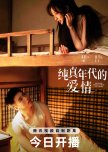
A warm hug.
"Reality itself is powerful enough. All we have to do is capture it."This is the quote from the drama that resonates with me the most because it perfectly explains why slice-of-life romance is one of my favorite subgenres. There are no flashy CEOs, no fancy mansions, and no over-the-top romantic gestures. Just two flawed and humble individuals navigating life, learning how to love, and trying to become better people — whether it's for each other or for themselves.
Sometimes when characters fall for one another, they get so consumed by their feelings that they lose their sense of self. But that's not the case with Fei Ni and Fang Muyang. Even when their bond grows stronger, they still hold onto their own hopes and dreams. They stay true to who they are at their core. Even when sacrifices are made, they aren't done at the request of the other. When one fumbles, the other shoulders the burden. When one succeeds, they both celebrate. They are equals. Each other's biggest fan. Their romance is slow-burn, sweet, and most importantly? Healthy. Sun Qian is so natural and bright as Fei Ni, it's like she was actually born in this era. Arthur Chen is so captivating and wholesome as Fang Muyang, I can't help but admire his charms. I adore these two actors as much as I adore their characters. But don't let my praise for the leads fool you. Despite its title, Love Story in the 1970s, this is more than just a love story.
Plain and muted-color clothes, government-issued ration coupons, rustic and cramped homes — the drama doesn't just look like it's set during the Cultural Revolution in China, it feels like it too. It touches on the hardships that many people faced during this time period and highlights the dangers that come with being an outcast in society. To conform is to blend in. To stand out is to make yourself a target. And somehow, following the rules doesn't always promise you safety. You can see the desperation and stress over the scarcity of goods, limited housing, and financial instability in the characters' eyes. You witness the hard choices some have to make for survival, and see how some are willing to throw away their morals, or even swallow their pride, to secure a place at the table. Every single character exists outside of their connection to the leads, and even when I don't always agree with the paths they take, their actions are always aligned with who they are as characters. They feel authentically alive.
It isn't always sunshine and rainbows, and yet, this drama feels like a warm hug. I usually struggle to keep up with ongoing cdramas because of how quickly they release new episodes, but for this one, I was glued to my screen daily. I was addicted. The storytelling is compelling, and the only complaints I have are that the antagonists are too good at getting under my skin. For someone as picky and easily distracted as me, that's a great problem to have, isn't it? That's how you know the entire cast and crew created a masterpiece. From the writing to the directing to the production to the acting — everyone managed to deliver a story so full of heart and consistency that even I couldn't find things to nitpick.
This slice-of-life romance reminds us that we are defined more by our resilience than our setbacks, and we can overcome anything as long as we have each other. Hope might give us the courage to keep going, but hard work takes us further in life than anything given to us for free. Is it preachy? Yes. Is it cheesy? Also yes. But it's the kind of story that leaves you feeling good inside, and we need more of that in this world. I highly recommend!
Was this review helpful to you?
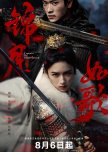
A great love story, but it will disappoint if you expected more.
It feels like a lifetime ago when news about Legend of the Female General first surfaced, and cdrama lovers everywhere cheered with anticipation. I was one of them. A female general? Tragic past? Second chance at life? War? Cool fight scenes? Cross-dressing? Romance? Deception? Angst? Women empowerment? As a huge fan of Mulan, the promises of such a premise excited me. Say less and sign me up for war.At first, I thought this drama would be similar to the author's other works — The Double and The Glory. Both were known for their darker themes, intricate plots, and suspenseful atmosphere. However, Legend of the Female General took a lighthearted approach with more comedic moments and gravitated strongly toward the romance, overshadowing the epic war and revenge aspects that the trailers initially teased. With just the first few episodes alone, it was also evident why some viewers were frustrated with this drama, and understandably so. The episodes were short, the editing was a bit choppy, there were plot holes and inconsistencies, and the story seemed to have deviated from what I knew about the novel. Sometimes you had to really suspend disbelief and throw away logic in order to truly appreciate this drama.
Despite the drama's departure from my previous expectations, I didn't hate the lighter tone or the romance-driven narrative. In fact, I thought the romance was the drama's best attribute. With that said, I do believe that too much medicine can poison you, and the problem I had with this drama was that it focused so heavily on the romance that sometimes it neglected other aspects of the story. What I hated was the way some of the pivotal moments — specifically some of the important non-romantic arcs — were carelessly mishandled. These were character-and-plot defining events and yet they suffered from the lack of appropriate build-up and execution that they deserved, falling flat and rendering the moments as anticlimactic. The most frustrating part? It wasn't like the director and screenwriters didn't know how to create impactful moments, because they did. When done right, there were scenes in the drama that were so heartfelt and inspirational, they left me in awe. I have rewatched entire episodes just to experience the feeling of joy and satisfaction all over again because those scenes were that mesmerizing. Unfortunately, those moments were few and far between, making me disappointed and yearned for more.
The drama was far from perfect, and yet, I found it enjoyable because of my love for the main characters. He Yan and Xiao Jue were the saving grace of Legend of the Female General. They were likable and charming, easy to root for and sympathize with. They were great as individuals, but together, they were scorching hot in all the best ways. So many of their moments made me emotional or gave me butterflies, and I was invested in their love story. Even when the plot faltered, their chemistry did not. They understood each other in a way no one else could. They were each other's equal, twin flames, never doubting the other person's capability or intelligence. The way they loved each other so selflessly and passionately was beautiful. I couldn't stop thinking about them, so I stayed for their romance. They consumed my mind and my time, and I continuously allowed them to do so. If that wasn't a sign of enjoyment on my part, then I don't know what was. This drama was my introduction to Zhou Ye or Cheng Lei, and their compelling performances here were a pleasant delight.
I liked that He Yan wasn't a bloodthirsty, revenge seeking, and bitter protagonist — although she had every right to be if that was the route she had chosen. This was her second chance at life, and while she wanted those who have hurt her to pay in due time, she wasn't going to waste her new life living in spite of others. She wanted to do things on her own terms and live her life for herself. I started reading the novel halfway into this drama, and the drama's plot might have diverged from the novel, but the He Yan in the drama was very similar in temperament to the He Yan in the novel. I've seen some complaints about why He Yan wasn't seeking revenge immediately after recovering from her assassination attempt and how her personality was too easygoing in the drama, and to this I leave a direct quote from the novel, "The truth was concealed, and she had to uncover it. But before that, she had to live her life well." He Yan was wonderfully brought to life, and I loved her from the beginning until the end.
I feel like the promotions were misleading, portraying this drama as a dark tale of revenge and war, when in actuality, this drama wasn't really like that at all. Yes, revenge was an important element, and yes, there was war. However, the story was more focused on the second chances at love and life, personal growth, and self-discovery of He Yan, and by association, Xiao Jue. I can see why some viewers might have been let down after watching Legend of the Female General, as the title would give the illusion of a more action-packed and war-centric story. It is nothing like the original Chinese title, 錦月如歌 or Brocade Moon Like a Song, which suggests a more romantic and softer tone, more fitting of the story.
Legend of the Female General was, more or less, a guilty pleasure for me. Objectively speaking, the plot was a 7/10, the editing and narrative execution were a 6/10, but the main characters were a 10/10. If I was to rate this drama purely on my level of enjoyment, it would be a 9/10 overall. I enjoyed it for what it was and I will most likely rewatch it again just for my favorite scenes. Even with its shortcomings, Legend of the Female General is still a binge-worthy, addicting, and fun drama. If you appreciate a romance dominated story with some action, and you are willing to overlook some plot inconsistencies, you might also find the drama worthwhile. The actors are amazing, and their chemistry will make you blush. I recommend going into this drama with low expectations and an open mind.
Was this review helpful to you?


