

 1
1 1
1



This review may contain spoilers
Nicely shot, but something seems lacking
This 2-episode miniseries doesn't have much of a story, but it probably isn't meant to have one. A group of boy scouts go camping. Wut and Ram partner up, and Wut develops a crush on Ram. Run-of-the-mill growing up issues are portrayed in the two episodes: the pangs of having a crush on someone of the same sex, the bullying of someone who does not seem masculine enough, sexual curiosity, etc. But the depiction of these scenarios is sensitive even if not exactly deep. Those who have been through similar situations will likely be able to identify with Wut.Still, there is potential for the miniseries to be better. How Ram feels towards Wut isn't clear, and this isn't a bad thing in itself. But perhaps there could be more shown about Ram to show the complexity of the situations the youths go through. He may stand up for Wut, but couldn't this seemingly heroic figure have his own struggles too, especially when he is one person against two or perhaps more. Does the bullying come and go so easily? (Could there have been flashbacks of how Wut has been bullied in school previously?)
Was this review helpful to you?

This review may contain spoilers
Unusual premises in this BL with the BL mostly repressed
A series like this makes me lament the BL censorship in China. It has some rather unusual BL materials, and without the censorship, the BL series from China would be rather fascinating. (Imagine The Untamed without censorship.)The story with the shape-shifting cat is the cutest. And it's just as well that the BL is more or less censored--some may find it discomfiting to see a human-cat relationship even if the cat is able to change its form. It's cute how the character's dislike for cats changes.
The story of an author and the character he creates also has an interesting premise. It may be a little strange, though that the siblings in the author's story are parallels to the author and his own sister. In a way, it's like the author's relationship (romantic or not) with his own alter ego. Of course, another way to look it is to see that the author has created a character he subconsciously wishes he can be, so it may explain why he would ultimately have a soft spot for the character.
The third story is a more conventional story about two athletes who have known each other from the time they are children but whose relationship have soured due to a misunderstanding. While this story doesn't share the quirkiness of the other two stories, it's a decent addition.
Despite having the BL tamed, this series doesn't simply turn the relationships into bromance. But don't expect the level of ingenuity we see in Word of Honor when it comes to circumventing censorship either. It just leaves things ambiguous or use dramatic conventions to suggest romantic feelings.
Was this review helpful to you?

This review may contain spoilers
Quirky and cute, rather decent
When I saw that this was 30 episodes, I was like, "Wow, I don't think there's any Thai BL since Love Sick with so many episodes." Then I realized that each episode was only a few minutes long. Which is not a bad thing for what has been touted as a Tiktok drama. It's just as well, since I'm not really used to the unusual aspect ratio adopted.The story is fairly OK--not particularly exciting, but sufficiently coherent and at least it is focused. One guy moves in with another as a roommate and some misunderstandings arise, giving to some mystery and some comedy. There is enough cuteness in the two roommates to satisfy BL fans who are not all that demanding.
This is not something that you would want to compare with some classic, high-budget BL series. But at least it is as entertaining as (or even more entertaining than) some BLs with 12-15 episodes of about 40 minutes each. With the focus on a limited number of characters, at least it does not drift from one couple to another. With some BLs, I complain about wasted potential. But with a production like this, I would say it has sufficiently fulfilled its potential despite less than stellar results. Several aspects of the production seem on the amateurish side, but the actors seem to have taken the production seriously, and this makes a difference.
Was this review helpful to you?

This review may contain spoilers
Nice BL that offers some lighthearted criticism of the industry
This is a cleverly made BL that knows the elements of a popular (and good?) BL and what bad BLs are like. It's also an understated satire or criticism of the BL industry while being a nice BL series in itself.The story of Gene and Nubsib is pretty good especially in the first half of the series. In the second half, I felt that the narrative threads that have been started were not really dealt with all that well (e.g. why Gene has such a strong reaction to Nubsib hiding the fact that they were childhood friends, why Nubsib forgives him quite easily and their parents' initial objections to their relationship). Some problems were resolved a little too quickly to make way for the good old Episode 11 crisis. Some practical constraints could have caused this since the creators are actually quite good at telling a story.
The series that Nubsib is filming in the story, Bad Enginner, is a mocking take on Thai BLs featuring engineering students (though I believe some of these are better than others). Some of the scenes in Bad Engineer (with Nubsib walking around and posturing with a few other engineering students) are reminiscent of what we see in some BLs but are so cringe-inducing that you begin to have an inkling of where the title is *Bad* Engineer.
The series also, in a rather understated and mild way, exposes the problems with the BL industry (well, actually the entertainment industry in general), including its fans. 2021 seems to be the year when the genre turns self-reflexive--I am reminded of Call It What You Want. Gene, who is the writer of the novel form of Bad Engineer, is a reluctant BL writer who keeps getting pressured to add sex scenes to his novels even at the expense of more important story-telling elements. Well, fans love it, the reasoning goes. Tiffy mentions to Tum some "curse" regarding the managers of BL actors in a series quarrelling (possibly a reference to series like Love by Chance and the infamous conflict between Saint's and Perth's managers).
The craziness of fans shipping actors rather than characters (without being able to draw the line between reality and fantasy) and the industry's willingness to pander to them for the sake of money is more than hinted at. And despite all the portrayal of same-sex relationships, the industry isn't altogether about tackling social problems like homophobia. At the end of the day, there seems to be some degree of exploitation: obligating young and good looking actors to perform fan service beyond the filming of the series (Bad Engineer) and any series-related events. I must say, however, that the series does not demonize BL fans. In the fan reactions to the exposure of Gene and Nubsib's relationship, there are actually diverse reactions, and there are those who can support Nubsib regardless of whom he is dating. Ultimately, it is a concern with profits that causes the TV station and managers to pressure the two of them to deny that they are dating.
Nevertheless, the series is lighthearted and does not really give its social critique a dark spin or throw it in the face of viewers. It still demonstrates the qualities of a good BL. It also has an awareness of what "woke" (I'm not using this term pejoratively) fans of BL would find issue with, avoiding stepping on landmines like gender stereotypes and issues with consent. Perhaps one weakness is that it is a little too self-conscious about this, but I won't fault it too much here.
This series, to me, is a nice mix of fluff and serious issues. Some may of course prefer just the fluff and others just the more serious issues (though I would think the latter aren't likely BL fans). Perhaps it is a sign of better BLs to come because the industry now has an awareness of its own problems. If fans want less toxicity in the industry, it may just happen because the industry doesn't want to lose fans.
Was this review helpful to you?

This review may contain spoilers
Competent in parts, hard to pin down as a whole
As a BL, this Filipino production can be rather special. It doesn't overly beautify the main characters, and it isn't shy to portray the sexual aspects of their relationship. It may be attempting some depth in commenting on class relations and political tensions, but "attempting" may well be the key word here: either the messages are painstakingly obscured despite all the historical, political and class references or the series is simply hollow and pretentious in this regard.There is an assortment of characters living in the same block (reminiscent of the chaotic delight that the Thai BL, YYY, was). But their stories don't really intertwine in meaningful ways except maybe for the story of Kelly. There is some commendable message about the difference between a gay person and a transgender person through the character of Kelly, but the message is not very subtly stated. Perhaps this is a deliberate attempt to ridicule those who can't get the simple distinction.
Perhaps there is some commentary of class difference, with the wealthy guy an indirect beneficiary of the corrupt Marcos regime and the poor guy an indirect victim. The message may well be pacifist, focusing on reconciliation rather than confrontation. However, one may find that those who have obtained their wealth through corruption seem a tad too benign.
The series does have its strengths. The parts focusing on the sexual attraction between the male leads is competently done. There are also rather funny moments in the series. I'm not averse to the historical and political references, but they ultimately seem somewhat pointless and don't gel well with the main narrative threads.
The good thing here is that Filipino BLs have actually be venturing into terrains previously unexplored by BLs coming from countries like Thailand. They attempts do not always yield ideal results but are nonetheless laudable.
Was this review helpful to you?

This review may contain spoilers
A rather compelling story with excellent storytelling
Apart from being impressed by how such good performances were coaxed out of the young actors, I was impressed by the story-telling, particularly in the first two-thirds of the series.From the start, the series makes the character of Chaoyang rather intriguing by portraying him as a guarded person who may or may not be as vulnerable as he appears to be. He takes in his friend (Yan Liang) and a girl (Pupu), but is also guarded against them. The two friends he takes in are more straightforward characters, but because of their relative simplicity, their moral dilemmas appear more compelling.
There are also many other interestingly complex characters ranging from Chaoyang's divorced parents to his father's new wife. At first, the father sees the son occasionally and does not pay him that much attention apart from giving him money or things money can buy. The increased attention the father gives to the son may be due to his guilt for not trusting the son, but is it truly fatherly love if it stems from a sense of indebtedness? The mother vacillates between being controlling and caring, but she, too, may be caring so much because of what it shows about her parenting. She does not quite get over the child's father's affair and her own divorce.
The story starts with a crime, but as far as crime is concerned, we know the criminal from the very beginning of the series, so it's not a whodunit series. Still, one may be pulled into the story by the question of how he is going to be exposed and whether the kids, who end up blackmailing him, will succeed. The story goes rather well until the last few episodes where both the story and the storytelling itself get weaker. In the last few episodes, when certain things are not revealed, it becomes too obvious that they are deliberately not shown (like what happens to Pupu after her asthma attack and what happens after the murderer is about to stab Yan Liang). The police suddenly start to connect the dots in the last episode (how timely!) and that's after a few more body counts in the murderer's ledger.
The story is complicated by the occurrence of an accident leading to the death of Chaoyang's half-sister. While it does not appear as though a crime has caused her death, the death of the girl plays a big part in the story as it causes her mother to accuse Chaoyang and his mother of murdering her. Even Chaoyang's father tries to secretly record a conversation with him to find evidence while ostensibly having a meal with him. Chaoyang finds out by accident, and perhaps his character takes on a darker turn here as he finds it harder to trust others from this point on.
In the last episode, the accident seems to take another turn as Pupu says to Chaoyang in her letter to him that she has not told Yan Liang about what happened in the Children's Palace (where Chaoyang's sister falls to her death). However, in Episode 3, we see Yan Liang being told about it in Chaoyang's presence. Is this a continuity error or deliberately added in to show that things may not be what they seem?
Chaoyang is ultimately the most intriguing, if perplexing, character. He may seem vulnerable and innocent, but he is also a smart and guarded person. He may well be selfish at times, perhaps understandably--like how he does not wish his friends to report to the police the events leading to the death of his sister because he is worried that his father will not forgive him for the indirect role he plays in causing her death. Despite having incriminating evidence of the murderer killing people, he does not duplicate the video evidence (or has he really not done so?), perhaps because he is also in the videos and will have a lot of explaining to do to his mother. He can even be manipulative--after discovering his father's attempt to record their conversation, he guilt-trips the father into spending more time with him and giving him more attention.
The focus of the series in, finally, not on crime but on human nature. The almost-psychopathic murderer may not be ruthless all the time. The innocent kid may not be all that innocent. People have the capacity to be self-centered and go to extremes as a result, but perhaps parenting makes a big difference. The killer's character may have been shaped by his childhood experiences, and Chaoyang may well end up like him without proper parenting. On the other hand, the jealous, self-centered girl in Chaoyang's class appears to become better over time after her father's assurances that it does not matter whether it's the top student.
Was this review helpful to you?

This review may contain spoilers
This cross-genre series could have been a lo of fun given that it has elements of supernatural, crime and mystery. Unfortunately, a lot of potential is wasted.An angel, Tep, wants to find out why human beings are not doing enough good to go to heaven. No human being has made it there for the past fifty years, and, judging by how the angels in heaven can congregate and form a rather small circle, I'm not sure how many people have made it there in the last 50 000 years. On earth, Tep bumps into Add, a reporter, and Tep ends up as Add's colleague in a news agency.
The supernatural concept is barely taken further even though it could have led to many funny and interesting situations. Add is able to become invisible, but his ability is seldom used and, when used, seldom leads to anything interesting.
Add is made to be a crime reporter against his wishes, and the criminal cases could, once again, have led to interesting situations for the angel and reporter pair, but the potential is once again wasted. Perhaps the intention is to focus more on Tep's mission to understand why humans are not doing good, but even this part is rather blundered. Tep vacillates between gaining insight into human beings and being even more confused than ever. (Maybe that's the point, but it's not a point that is made particularly well.)
There are some continuity issues, with events happening and leaving the viewer to think and go, "Ok..... so ....X must have happened even though it is not shown." It sometimes feels like a show that has had parts snipped by censors though this probably isn't the case since the "missing" bits do not seem like they have stuff that can be censored.
There are still things that make the series watchable. Some parts are done better than others (e.g. the part about the retired soldier threatening to bomb up a place, but the quality isn't sustained. Fluke is rather good in playing his part as Add, and his animated expressions are a nice contrast to Sunny's deadpan expressions as the angel.
Was this review helpful to you?

This review may contain spoilers
A lot of viewers seem to have something to say about Krist's acting and the views are rather polarized. Some think he can't act and has no chemistry with Punpun, the female lead. Others think he's a great actor has has wonderful chemistry with Punpun. He is not at the level where he he's so convincing in every single role that we see practically no trace of facial and verbal expressions that are probably a result of Krist being himself rather than the character. I feel that he is surprisingly good in the parts that require him to act funny and some parts with very strong emotions, but where the script doesn't offer much, he doesn't offer much either. And unfortunately, in One Night Steal, the character of Nott isn't very well written (or directed). The only really interesting character in One Night Steal is Charm, the actress with an apparent multiple personality disorder. Jonjam, who plays Charm, gets the mix of creepiness and hilarity just right.I'm not sure if the series is an official or legit adaptation of a movie, but it has been pointed out that the story is basically taken from a movie. That aside, the premise promises fun --a man who has the worst of luck swaps his luck with a woman who has the best of luck due to their one night stand. However, there is missed potential to play up the supernatural element regarding reincarnation and karma, especially at the end of the series where one wonders if the couple have broken the cycle of taking turns to killing each other in different incarnations. (I mean, it would be more moving if their love in this lifetime were so strong that it broke the karmic cycle, wouldn't it?)
The story about Nott and Jee can get insipid at times, and one appreciates the side characters the most when this happens. Sing is so natural and does not disappoints as the hilarious GD while Pleum is really likable as the nice guy, Nueng, who is in love with Jee but never going to get a chance. (Now, one wonders what such a nice guy has done in his previous life to deserve this.)
The sad thing is that the characters are not well written in general. Jee starts off wanting to get back her luck, and I'm not sure how she falls in love with Nott along the way. Nott at one point practically turns villainous when he thinks that Jee has lied to him about being the girl with whom he has had a one night stand, but the turn in the story no sooner occurs than it is dropped. And then Nott and Nueng uncharacteristically have a huge (physical) fight over Jee--I guess for no other reason than to serve the plot of having Jee abducted by Charm. Even Charm, the most interesting character, suddenly switches to her good self soon after abducting Jee, presumably because the drama cannot drag on much further.
If nothing else interests you, perhaps the songs in the series might. They are performed very well and blend into the story. Nott, Nueng and GD look convincing as a band. (Pleum looks especially charming when he is singing.)
Was this review helpful to you?
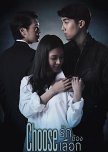
This review may contain spoilers
The story begins with Ton breaking up with someone over the phone, and we are likely to assume that it's the other main character, Tawan, but this will turn out to be a wrong assumption.Perhaps the story would merely be an unimpressive tearjerker if it had involved a straight couple, but where gay love stories are concerned, it is still fairly refreshing to have a show that doesn't focus on sex-crazed gay culture, innocent schoolboy love or struggles with homophobia in society. It is a simple love story about two men who love each other, with Tawan being the older man who has given a lot to his younger lover.
It turns out that Tawan is dying of late stage cancer and has decided to break up with Ton who is oblivious to Tawan's condition. As Ton's superior or boss at work, Tawan has even planted a female secretary, whom he knows will get along very well with Ton, to work with Ton.
Even though Ton ends up sleeping with the secretary who seems unaware of Tawan's plan, the ethics of employing the woman for this purpose is questionable and not addressed. And why Tawan chooses a female rather than a male person is also, unfortunately, not explained.
We also do not know the reasons behind Tawan's coldness towards Ton from the start. The decision to reveal Tawan's motivations later rather than earlier in the story has its pros and cons. The good thing is that there is a bit of a twist though one may be half-expecting it. The bad thing is that we may not feel so much for the characters until quite late in the story.
In any case, things do not go as Tawan has planned. After Tawan breaks up with him, an upset Ton gets into an accident and loses his sight and needs cornea donation to see again. So, expectedly, it's going to be Tawan who sacrifices by donating his cornea. What I don't get is how Tawan manages to do so before his death. (Is it even allowed?) The logic of the story aside, Ton regains his sight and looks for Tawan, who doesn't seem to have expected Ton to look for him, and the documents that will reveal the truth about Tawan's health, the secretary's employment and Tawan's cornea donation are lying in plain sight for Ton to see. Don't try to be too rational with the story here or it will spoil things for you.
The ending is bittersweet. Almost callously, Ton breaks up with the secretary (not that he is even a couple with her to begin with) and is by Tawan's side for what remains of his life. Despite the cliches in the story, Choose does come across as a sincere effort to tell a story about two men who truly love each other even when they are met with the worst challenges that life throws at them. It's nice to see a Thai production venture into new terrain with a story involving gay men--the typical BL is fairly lucrative, so we can see why companies would create them, but stories that aren't going to be commercially very successful deserve a chance.
Was this review helpful to you?

This review may contain spoilers
What happened VS What could have happened
The concept is quite brilliant, but the execution could certainly have been better.The "explanation" for the bewildering scenes for many of the episode is basically that, for people whose brains are oxygen-deprived and they are on the brink of death or in a coma, they hallucinate about what their lives could have been had they done something different.
At the start of the series, Great sees himself knocking a woman down with his car and driving off. When the vision ends, he drives and knocks someone down without driving off irresponsibly, changing the course of events. Eventually, however, it turns out that Great does not see 4 minutes into the future at all. The series of events happening following the hit-and-run is the reality whereas the other series of events is just something that goes on in his mind when he is in danger of dying.
Some find it highly unsatisfactory that so much of the series feature the "hallucinations" rather than the reality. To me, it is fine as the hallucinations reveal their most deep-seated desires and make the reality especially poignant when it is revealed. Nonetheless, I think there are issues. Since what we are seeing isn't premised on traveling back in time to fix the past or predicting the future to change something for the better, what we are seeing is what *could* have happened rather than what *would* have happened. In other words, the alternative story just a story spun by the dying brains of the characters rather than a definite course of events. This does compromise the emotive quality of the series.
It also seems to me that the "explanation" doesn't really explain things. At one point, we are led to think that Tonkla senses the presence of his brother, who has been killed. But, based on the explanation, this makes no sense whether we are watching the reality or Great's imagined series of events. The two do not mix unless Great's imagination can invade the reality that Tonkla experiences. Furthermore, it is quite confusing that when Great supposedly sees four minutes into the future, there are glances of himself being intimate with Time that happen way after the four minutes. The visions seem to be simply planted there to intrigue viewers and perhaps titillate them with glimpses of sex scenes. I also feel that, in the "hallucinated" series of events, there are scenes that Great wouldn't be imagining simply because they do not involve him (e.g. Time at the hospital overhearing what his colleagues say about his relationship with another doctor) and are not quite relevant to the alternative reality that his dying brain so badly wants.
When it comes to the BL, the relationship between Great and Time in the real version of events isn't developed well. We do not see enough of how Time's feelings for Great develop and see more of him being obsessed with avenging his parents who were killed. As for the other BL couple (three characters, actually), Tonkla/Korn or Tonkla/Win, there are just many sex scenes without emotional intensity. The story seems to vacillate between showing Korn as someone who deeply loves Tonkla and showing him as someone who does not truly care about him. Tonkla's apparent preoccupation with wanting to have unprotected sex seems nonsensical and added in just for dirty talk even though one might come up with some labored explanation for it. Win is interesting but lacks development--the final episode is a little too rushed for a series that seems to take its time to reveal things to us.
Ultimately, the freshness of the concept and the way the series pushes boundaries in depicting sex and nudity in BLs may garner this series a lot of attention, but it is unlikely remembered as a classic that is executed with finesse in every way.
Was this review helpful to you?

This review may contain spoilers
Strong Special Episode
This is a very good special episode that focuses solely on Tsuge and Minato. They are the side couple in the main series, and it is nice to have an entire episode dedicated to them. In fact, out of the two special episodes (the other one is focused on Adachi and Kurosawa), this is the better one, showing the couple overcoming a problem in their relationship. Tsuge is a successful writer who has just won an award, and Minato is an aspiring dancer hoping for his big break. Seeing Tsuge's achievement, Minato feels bad about himself and does not dare to talk about what he considers to be the an achievement that may turn out to be nothing (get he gets into the final round of an audition). If the special episode for Adachi and Kurosawa had ended in a different way, it would perhaps be as good as this one in terms of showing some development in the relationship.If you like Tsuge and Minato in the main series, this special episode is not to be missed.
Was this review helpful to you?

This review may contain spoilers
The StoryAt a young age, Tantawan gains a magic that allows her to call out to the person she loves and let the person teleport to her. That's also how the romance between her and Peng starts. Flashforward 15 years: Peng is now a doctor and Tantawan seems to have nothing to do but devote her life to taking care of Peng. However, Peng has become a doctor thoroughly dedicated to his work ever since an incident in which he caused a patient to die because he was in a hurry to meet Tantawan. He still loves Tantawan, but seldom expresses his affections and hardly has time for her.
After a car accident, Tantawan falls in love with a young houseman who treats her reassuringly though she loses her memory of the accident for some time and is puzzled by why she has romantic feelings for the young houseman, Chalan. However, she still loves Peng, and a love triangle ensues.
Besides the romance plot, there is also the revenge subplot in which a grieving brother wants to kill Tantawan because she is the driver causing the accident that leads to the death of his sister.
The Characters and Relationships
At first, I found the older Peng to be rather unlikable as he is cold to Tantawan. However, he turns out to be the best written character in the series apart from a couple of issues. The initial portrayal of Peng as someone who seems cold towards Tantanwan is a good thing, as we can easily understand how Tantawan may feel neglected. But the reason behind the change from his youthful self and older self is explained: as a houseman, he hurriedly gives the wrong treatment to a patient as he has a date with Tantawan, causing him to die. The deep sense of guilt causes him to resolve to be a serious doctor who spends most of his time working and learning more. His love for Tantawan is soon shown when he tries to shield her from the truth that she is the driver who has caused a girl to die. However, it is unconvincing that he would so quickly be interested in Paebii after he breaks up with Tantawan though it is Paebii that causes him to realize that he should balance his dedication to his work and his love life.
Tantawan, on the other hand, vacillates between being a rather irritating character and being one that we can sympathize with. At her worst, she seems ditzy, unreasonable, or too emotional. At other times, she is a good natured person. In yet other moments, she turns into a melodramatic comic character.
Overall, I found myself more interested in the side characters' relationships: 1. the houseman, Liwan, and his relationship with an older nurse, Tikka; 2. the houseman, Dao, and his friendship (or possibly more) with Tantawan's brother; and 3. the friendship between the people in the Emergency Department. Even the vengeful Taai is a more interesting character than the most important character, Tantawan.
Strengths and Weaknesses
Like the character of Tantawan, the drama is inconsistent. Sometimes it is lighthearted comedy. But it can suddenly become a drama about life and loss that leaves you with a heavy heart. Then it can also morph into a love story. The series can be rather good in its individual bits, but the bits don't seem to be particularly well-mixed. It kills off an ambulance driver's grandmother for no compelling reason except perhaps as a device to move the plot forward. The death of Dao in the second last episode is also unnecessary drama that I can't appreciate. In the end, I find that the series aspires to be more than it can possibly be but ends up being less as a result.
The ending of the love triangle has also got a number of viewers upset because Peng's love for Tantawan is steadfast and deep, but Tantawan chooses Chalan in the end. Personally, I think both Peng and Chalan truly love Tantawan, so no matter whom she chooses, it won't be satisfactory. It is just that it is especially saddening that despite the 15-year love between her and Peng, Tantawan chooses not to give their relationship another chance.
My problem isn't with who deserves Tantawan more (as some viewers put it) but with how Tantawan still seems to love Peng in the end. Based on her final lines, she seems to love Peng and doesn't want him to change for her, and yet she won't be happy with him if she doesn't change--not to mention that he has, in fact, already changed. That's still OK--if she doesn't want to continue her relationship under such circumstances, we can't really judge her for it. But she chooses to be with Chalan even though there is still someone else in her heart, which doesn't seem very fair to Chalan.
The ending is also self-contradictory: Tantawan tells Peng that the person she chooses will somehow have his teleporting magic diminished (??). Also, Tantawan is supposedly letting the magic reveal whom she really loves since she can't decide (but she seems to know what the magic will reveal as she cooks something for Chalan even before the magic reveals that Chalan is the one who still has the magical connection with her).
I guess she is ultimately not letting the magic decide, but has simply chosen not to be with the person who can't devote more time to be with her. As she says, Peng is her ambulance, but he is also everyone else's ambulance. Her decision may not be a selfish one--perhaps she loves him so much that she wants to let him go so that he can be himself (just like how Peng breaks up with her so that she can be with Chalan in the middle of the series). But again, if her love for him is so deep, I can't see how she can be with someone else and love him as much. The ending thus fails to satisfy.
Was this review helpful to you?

This review may contain spoilers
Mystery or Farce?
I can't decide whether this is a detective series or a farce.The series can roughly be divided into 3 main cases. It is highly unusual for a detective series to suddenly do away with the (initial) detective altogether halfway through, but this is what happens in the third part of the series (Episodes 9-12). And I don't mean that the detective disappears as part of the plot. I mean that he basically disappears from the plot.
Some people have suggested just appreciating Episodes 1 to 8 (the first two cases with the detective Lin Mo) alone. This is worth thinking about, so let's first consider the first two cases.
The first case is somewhat draggy, and since most viewers are not expecting to watch a supernatural series and will assume that the seemingly supernatural elements will be explained away, it is fairly easy to guess that some of the characters claiming to have encountered supernatural occurrences are conspiring to commit crimes. Although the exact details may be a bit more unpredictable, the revelations of the crimes are not going to be altogether awe-inspiring. Furthermore, the revelations of the truth don't always tally with the characters' behaviors when they are with those in cahoots with them (for example, a character who is supposed to have staged a car accident seems truly surprised that the car has gone out of control).
The second case is a flashback to Lin Mo's past. Having a flashback itself is fine, though in preparing the audience for the flashback, the the earlier episodes make certain references to Lin Mo's past that may confuse the viewer, making it seem like they have missed an earlier series or some episodes. Maybe cleverer editing would have made things better.
The twist in the second story doesn't really make sense (actually it is not much of a twist, the ending of the first story basically gives the ending of the second story away). Sure, the real villain by be really cunning, but how on earth did she manage to get the manpower and resources to pull off everything? Certainly her beauty alone isn't enough.
Also, while the second story takes place earlier in time, the female cop, Sasha, seems like a much more capable cop in the story. In contrast, in the first story, she seems rather incompetent as a cop despite having more experience. The characterization does not really make sense even if the focus is on Lin Mo's ability in cracking the cases.
Next, we inevitably have to consider the third story. After spending 8 episodes showing Lin Mo's prowess in solving mysteries from Episodes 1-8, he basically disappears in Episodes 9-12. I do not really buy into the idea of treating it as a separate story because it is meant to take place in the same fictional world after the first case of the series has ended. The series also actually quite heavily emphasizes this too, with Sasha going for a briefing about a group of missing youngsters who happen to be the children of very influential people. And as though we need to be reminded of the drastic change, the voice-over in the opening credits changes from Lin Mo to Koji who announces that it's still the same series but everything is going to be different (yeah, I know). It's either a bad attempt at pretending that the change is deliberate or a bold attempt to do something different with the detective genre.
As a mystery story, like the first story, it is a little obvious from early on that the ghost elements in the third must have been staged because this is not a supernatural-themed series (despite Lin Mo's apparent ability to see ghosts who do not tell him anything important anyway). In fact, the ghost element doesn't even seem to be taken very seriously. There is some fun in the third story, but the twists are rather weak. Furthermore, the tremors from the sudden disappearance of Lin Mo in the story continues all the way to the end: even till the last episode, I was wondering if Lin Mo would be woven back into the plot.
There may well be a hint that the first two stories take place in a game world, but this wouldn't really make sense although we see Lin Mo playing a game at the end of Episode 8 that is mentioned towards the end of the final episode. (This actually only makes the series more perplexing: why harp on the fact that there is some tenuous link between the characters in Episode 1 to 8 and in Episodes 9 to 12?) Furthermore, the multiple flashbacks to Lin Mo's childhood in Episodes 1-8 and the reference to the Q symbol at the end of Episode 8 heavily suggest that the third story is going to be about the case involving how Lin Mo's mother is killed. Unfortunately, this is simply dropped. One may suspect that there is some attempt to intrigue viewers in preparation for a possible sequel, but is the sequel going to feature Detective Lin Mo or Detective Koji? In fact, are they detectives or gamers?
In fact, the series ends up being rather farcical. The third story comes complete with an "awards ceremony" for the best actors in the staged events because, well, this really wealthy detective kid has insane amounts of money to splurge on staging events at the scale of making a movie just to trap a criminal. To add on to the possibly unintentional farce, even though Koji manages to solve the case that he is entrusted to by the dying mother of a gamer who has disappeared, he ends up consoling her with photoshopped photos of her dead son by pretending that he is still alive. (Hey, maybe you could have done that from the start?)
To be fair, Lin Mo does make an interesting detective character. A lot of work is done to form the foundation of further development, but he suddenly disappears from the story. He is like a walking forensics lab that churns out instant results. The ability to sniff and identify the trace of anything with a smell is a sort of unique superpowerish trait even though it is quite unbelievable (given that it is said that he has "trained" himself to smell things so well). We can certainly evaluate the first two stories with Lin Mo on their own merit, but it remains that the series feels really incomplete whether we ignore Episodes 9-12 or not. A sequel with Lin Mo as the main detective may still be watchable, but I don't know if that is ever going to happen.
Was this review helpful to you?

This review may contain spoilers
A rather special BL series that I enjoyed
This series has the misfortune of airing after Bad Buddy ended, in the same time slot. The comparisons in invited with Bad Buddy are unflattering, but it is a fairly nice BL series in its own way. My only gripe with Bad Buddy is that, with such a wonderful team behind it, there could have been a been more risk-taking to create something more unique. There are some BL series that have more personality to them despite having more flaws, and Enchante is one of them.In many ways, what we have is a story about growth. Akk and Theo are likable characters, but they are both flawed. Akk is quite clearly in love with Theo from the time they were children, and while he is a very good friend to Theo, but his main flaw is keeping his feelings to himself. Theo, on the other hand, is someone from a privileged background who doesn't put on airs, but he can be a little self-centered and isn't as innocent as he may appear at first. To end up together, each has to overcome his flaws.
The story may seem pointless to some as the focus on Theo's search for "Enchante" leads to practically nothing but a few wild goose chases. However, it is interesting to see the story of each of the fake "Enchantes" and who the real "Enchante" is. If there is a recurring theme, it is that things are often not what they seem. But this is also perhaps the reason trust Akk and Theo have for each other is beautiful. In a world full of deception, where even the most beautiful things may turn out to be illusory, it is rare to find someone you can trust without hesitation. Perhaps this is why Theo gets so upset when he realizes that Akk has hidden a certain truth from him, and perhaps his ultimate lesson is to accept that things are not always as straightforward as he would like. The story, especially with its many allusions to The Little Prince, can actually be pretty thought-provoking, though some may find it too slow-moving.
I'm not sure where the series was shot, but the scenes look very beautiful--almost unreal, in fact. (Did they really film the scenes of the university in an actual university?) The cinematography and setting make the series seem almost like a fairy tale. We could say that the point here is that in a world that seems so beautiful, there can be unpleasantness--or perhaps we could say that in a world with so unpleasantness and deception, we can still try to create a space of beauty for ourselves.
Was this review helpful to you?

This review may contain spoilers
Good storytelling, Interesting Characters
This is a cross-genre series of sorts, with elements of mystery and zombie apocalypse and even a bit of sci-fi. The premise is rather interesting if a tad bizarre--a cult is scheming something evil. It must be stopped, and ultimately, the main characters must stop them.The story may not draw viewers in that well if it were not for the interesting characters and their relationships. The dynamics between main characters, Gup De You and Ding Mao, are engaging without being cloying. Each of the four main characters, as well as most of the secondary characters, is interesting in his/her own right, and this is something quite rare.
The story would probably have been better without the obligatory quasi-scientific posturing. The seemingly supernatural occurrences must be scientifically explainable even if the explanations are implausible. This is thanks to China's censorship laws as usual, but I also wonder if there is a subversive mockery of the censorship itself. After all the scientific explanations, portrayed as a Western import, ultimately fail to account for everything.
Was this review helpful to you?


