

 1
1 1
1



This review may contain spoilers
Contemplative, if not everyone's cup of tea
Maybe it is best to start off with what this film is not. It is not a movie with an engaging storyline, full of suspense, twists and action. And while it may be classified as a film with LGBTQ+ themes, it is not too focused on LGBTQ+ issues either. The film may not live up to expectations because of what it is not, but it is also beautiful in its own way.The film has quite a number of characters though the ones who take up most of the screen time are the old man and the teenager. It is just that there isn't that much of a narrative where these two characters are concerned. The old man takes buses and inexplicably spits in the buses, to the chagrin of the bus drivers and other passengers. A teenager, who is trying to record evidence of her father having an affair, sneaks into the old man's apartment without permission because it offers a good view of the adulteress' apartment. However, she accidentally leaves her phone in the old man's apartment and when she tries to retrieve it, the old man damages it, so she keeps harassing him for payment or to let her use his apartment for her self-imposed task of catching her father in bed with the woman he is having an affair with.
In many ways, the film foregrounds the distance between people in society. There is so much going on in the lives of people around us, but do we really ever stop to care? If we see the old man spitting in a bus, do we stop to wonder if he may be someone with a sad story or do we simply feel disgusted and wish that he does not bother us? The teenager does not make an effort to understand her mother; neither does the teenager's brother and father. She is feeling dissatisfied with her life, envying a friend who has some sort of a career while she only gives piano lessons to a young man hoping to be a star. On the other hand, perhaps people also prefer to keep things to themselves. The teenager's mother does try to find out what she has been doing, but she is impatient and irritated by the motherly questions. The teenager's brother and the mother's piano student are gay and in a relationship, but the mother has to find out in a most awkward way--just as she starts taking a romantic interest in the student (perhaps psychologically explainable as a sort of a bid to re-live the youth she has lost). So lonely as we might be, there are probably things that we prefer to leave unsaid. After all, we live in a society with people who can mercilessly gossip about and judge others, such as when people speculate that the teenager is an underaged prostitute who has been going to the old man's house to provide her services.
The film, nevertheless, is humane in its portrayal of the plethora of characters, showing their dark secrets without judging them. Perhaps there is a personal risk in opening up to others, but it can also forge a connection between people, as the old man does when he reveals to the teenager that he is transgender when he tries to advise her not to hurt herself more by exposing her father's adultery to the rest of the family. The film ends ambivalently, with the old man seeming to be on the verge of suicide when the teenager appears and calls out to him. She walks towards him, stops some distance away, and the film ends. Is it the connection between them that is emphasized or the distance between them that is emphasized?
Was this review helpful to you?
This review may contain spoilers
Had the potential
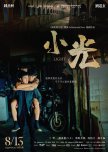
As it is, the short movie is can be rather touching in how it portrays the plight of Light, the main character, who has been through a lot in life, including being abused by his stepfather and having to prostitute himself for money (which the same stepfather demands for). He longs for love, but will he get it from the person who shows him concern, and will it last?Light is a character who is easy to sympathize with. There are some moments of overacting, but Jed Chung manages to convey the character's vulnerability and yearning. Unfortunately, while there are commendable attempts to be economical in fleshing out his back story, sometimes the character ends up incoherent. The way he taunts a customer and the fragility he displays as he gets beaten up, for instance, don't cohere very well without more shown about how he has changed over time as he has to deal with a life in the streets.
The gaps in the portrayal of the other main character, Shuo, are even more obvious. I could only make sense of what is going on because I had read the synopsis of the film, and a lot more needs to be shown about his struggles and his feelings towards Light. The film appears conspicuously incomplete when we see how there is obviously supposed to be a lot more about the Shuo that is somehow not filmed or not included in the 44-minute cut (more likely the former).
I was very much prepared for a tragic ending in this film, perhaps ending with Light's death under yet another person who is violent to him or Shuo's death as his job as a policeman puts him in danger (something which is hinted at). It was a pleasant surprise for me to see the film having a happy ending though the ending appears a little too hurried, like so many aspects of the film. This is a shame for we clearly have a team that is capable of doing more and exploring the nuances of emotions. For instance, when Light first initiates sex with Shuo, why did Shuo refuse to do it even though he was clearly aroused? Was he in denial or his own feelings or did he not want to treat Light as a prostitute by letting Light "repay" his kindness with his body?
This is a film one would love to be able to love more, but it feels incomplete, leaving one dissatisfied while craving for more.
Was this review helpful to you?

This review may contain spoilers
Quirky but fast-paced and entertaining
You wouldn't be wrong if you think this is a BL that uses a not-very-original "from fake boyfriends to real boyfriends" story. That's really what it is, but it also has its own character. It's the sort of series that is not afraid of being a little quirky with its use of a musical style (the characters break into song every now and then ) and the main setting in Isaan rather than Bangkok. The series has good looking actors but does not make them unrealistically good looking. The end result is something both familiar and unfamiliar enough to be accepted by a wide audience.The story is light-hearted but does work itself to some moments of heightened tension, so it is not an entirely light and frivolous offering. Together with the fast pacing, however, this means that there will be times when the shifts in tone are a little too abrupt. We can have a break-up one moment and a comic scene the next.
There are three BL couples in the series, and they are all rather likable. The main couple, Ruk and IG, could have had a more fleshed out story--it's cute when they become a couple, but the break-up occurs quite quickly after that and it doesn't feel as heartbreaking as it could have. The two side couples do not get that much attention but, especially for Nukrob and Grateen, manage to be likable enough for us to care about them.
The last couple of episodes give closure to the story, but do not seem to be as good as the earlier episodes. Some parts feel a little rushed while other parts feel draggy in the last couple of episodes. Still, this is quite an entertaining series. It's not the kind that will leave you craving for a second season, but nice to watch when you just want to relax.
Was this review helpful to you?

This review may contain spoilers
You have to wait to get to the better parts of the story
There is the romantic comedy part of this series and the ancient-forensics-investigations part of this series. They come together quite nicely in the end, but the series is quite uneven as a whole. It takes several episodes before the main female character even gets to do what she's good at (examining corpses and solving mysteries). In other words, if rom-com and somewhat silly humor isn't your cup of tea and you are watching for the mysteries, you have quite a bit to put up with. I also feel that while the basic concepts behind the mystery cases are interesting enough, they get too little coverage.The romance part of the story isn't really great. I actually liked the dynamics between the middle-aged couple (the main male character's father and his lover) more than the main couple.
The main characters are rather likeable in themselves, but somehow the couple dynamics are not that endearing. Zhao Cuo and Tian Sanqi are the main couple, but their devotion to promises they have made when they are but ten years old doesn't exactly seem like love. Especially when, through some twist of fate, they don't even realize that they have made contradictory promises. Admirably, Zhao Cuo is more decisive when it comes to (potentially) breaking his childhood promise to marry someone. Sanqi may irritate some viewers with her obstinacy in wanting to keep her childhood promise despite being in love with someone else.
Jack Lok's Bai Yifei is absurdly silly and cute, but the cutest part of his romance He Ruoyao turns out to be when he thinks he has fallen for a man because she has been disguising herself as a man. Sometimes even his frenemyship with Zhao Cuo is more entertaining (like the scene when he does a kabedon to Zhao Cuo when giving him advice.
The series is ultimately entertaining enough if you just want a leisurely watch. Just don't expect really well developed mysteries or seriously moving romance.
Was this review helpful to you?

This review may contain spoilers
Excellent story, beautifully unraveled
How do I even begin to praise this series after all the praises that have been heaped on it?Perhaps I should start by mentioning how unassuming it is. It doesn't try too hard to impress. Instead, it tells a very solid and well-constructed story without convoluted plot twists. It also doesn't organize the story according to cases, as many "forensics" series do. This means that we have 36 episodes of an increasingly complex mystery and as truths are revealed, more needs to be discovered. This culminates in a interesting climax. I particularly love how the series does not pretend that it has impressive plot twists or is revealing things that are totally unexpected. It strength is that even when there are events we see coming, we remain engaged because we want to find out more about these events (such as the real identity of the ultimate villain of the series).
The series is also likely to appeal to viewers because of the very likable characters. The romance and friendship between the characters are given just enough attention to make us care about them but the moments showing their relationships do not stray from the plot. I particularly like the friendship between Xiao Jinyu and Jing Yi as well as the relationship between the brothers, Xiao Jinyu and Xiao Jinli. (I bet many are fantasizing an alternative universe in which Xiao Jinyu and Jing Yi are a BL couple, and there are a couple of moments to tease us about it.) Occasionally, I find the coroner's lines a little repetitive: she's always mentioning how she finds certain things very strange, for instance. But this is not a major issue. After all, her expertise is in examining the bodies and she complements Xiao Jinli's brains by providing critical information with her expertise. This makes the series rather unique. Rather than focus on how a single detective figure manages to solve all the cases, the teamwork here is made very believable.
It's rare these days that we get an interesting story told without resorting to plot twists that stretch the limits of credibility. The Imperial Coroner manages to do this. It doesn't aspire to be too many things but it punches way above its weight in whatever it is doing.
Was this review helpful to you?

This review may contain spoilers
Strange but strangely enjoyable in some ways
The are some rather strange things about this series. First of all, it is absurdly lighthearted for a story that involves the mysterious deaths (likely murders) of two students in a school, with a few more being harmed in rather violent ways. It even has a student (not even 18, I think) apparently prostituting herself to a man old enough to be her father (well, he's literally old enough to be her father because he does turn out to be her schoolmate's father). Then there are the apparently uncaring teachers and some rather inconsistent characters.But I won't really say that the series is terrible either. It's enjoyable in some a B-movie sort of way. It does turn out to be fairly suspenseful though I do get a lingering sense that things are made up and improvised along the way -- it does not feel like I'm watching a nicely constructed story unfolding. The mystery gets solved and un-solved (and I don't just mean that it remains unsolved) at the end.
The "solving" of the mystery is certainly not satisfactory. The revelation of the culprit(s) is unconvincing because it doesn't explain how the second girl who is killed gets killed, and it's bizarre that classmates would send a culprit behind so much trouble sweet little notes urging the person to get well and return to school.
Then the mystery gets un-solved eventually. What I mean is that there is a twist and it turns out that the mystery hasn't really been solved. It is strange because the twist comes in a side story (right at the end of the final episode), something which is usually reserved for fluff and/or product placements. I'm not exactly averse to such a move, but it would only be brilliant if both the solving of the mystery and the un-solving of the mystery are convincing and executed with finesse.
There is one BL couple in the series (Song and Ming), together with plenty of moments of BL fan service (Pound and Joemy; Kyumin and Ricky). The BL couple is rather cute and while there is a fair bit of attention on them, I did wish there had been more of them instead of all the bitching and rivalry amongst the female students. Yes, this is one of the series that are sexist in the way they portray female characters to be often full of bitchiness (despite being more complex), unlike the more innocent and simple male characters. So be warned.
There are some moments of meaningless digressions that I can't really make sense of, such as the moments with this girl and some doctor she's obsessed with. Some parts are pointless and even exploitative, such as the scene in which the male students, not wearing any clothes, are taking a shower together in a tiny cubicle. In the last episode, there is even a scene in which Ricky and Kyumin come out of the same toilet cubicle one after another: Ricky looks at Kyumin and points at his own cheek. I thought he is asking for a kiss, but he is ... well, actually telling Kyumin about the white liquid substance on his (Kyumin's) face. Yeah, I so absolutely convinced that's a moisturizer or some skincare product because Ricky used to sell skincare products, haha.
I started watching this series because I wanted to see more of Ohm Pawat's acting, but while he doesn't disappoint, I must say Tonson who acts as Pimp (what a name!) impresses me the most. She can look affected, devious, victimized and yet still seem convincingly innocent when the situation calls for it. The character is a little inscrutable, but Tonson has managed to bring out all the aspects of the character very well.
Was this review helpful to you?

This review may contain spoilers
Reasonably good, but the weakest amongst Wu Xin 1-3
Of the three Wu Xin: The Monster Killer series so far, this is probably the weakest in terms of plot. It's almost as though there is some uncertainty as to how to proceed.Season 1 ends with Wu Xin going into his once-a-century deep sleep--he wakes up and forgets everything, including his lover, who has died, and his friend. Season 2 begins some time after Wu Xin wakes up, but Season 2 features some of the actors from Season 1--apart from Elvis Han who plays Wu Xin, there is Ian Wang and Sabrina Chen (the villain in Season 1). One may notice quite early on that the characters are given a bit of a reboot. It's understandable for Wu Xin since most of his memory is erased after his deep sleep, but his relationship with Bai Liu Li seems rather different in Season 2. Wu Xin and Bai's frequent squabbling despite their deep friendship is actually interesting and Bai appears very little in Season 1, so this change is forgivable.
The odder change is with Sabrina Chen's role. Perhaps there was uncertainty as to whether to bring back the villain of Season 1 or to create a new villain (who may or may not be played by Sabrina Chen). Eventually, despite frequent references to the Season1 villain (with the suggestion that she may return), the story doesn't really involve her. Instead, Sabrina Chen plays a male character--she does a good job of it, though there is really no reason to use a female actress for the role, much less one who looks exactly like Season 1's villain. In the end, it feels like Sabrina Chen is used to tease the fans of Season 1 only to disappoint them.
The supernatural element in the second season is also somewhat disappointing. There is some self-reflexive recognition of the weakness of the first (the monster killer, Wu Xin, actually has no powers apart from using his blood to get rid of evil forces) and some attempt to make it more interesting. But we are left with a lingering sense of a more powerful villain who may appear, only to be disappointed. The story centers around two magic mirrors (of sorts), and there's no real reason for the monsters in the mirror to appear after the death of the villain.
Some of the uncertainty in the direction, however, give rise to potentially interesting characterization. Ian Wang, who plays Gu Xuan Wu in Season 1, now plays Gu Xuan Wu's son (Gu Ji). Wu Xin's vague recollections of Gu Xuan Wu causes him to treat the son as a friend easily. For a while, the friendship between Wu Xin and Gu Ji seems like a rehash of Wu Xin and Gu Xuan Wu's friendship in Season 1. Perhaps there is a deliberate attempt to avoid rehashing the same idea, so Gu Ji's character turns out to be a much more selfish person. This does become quite interesting.
The romance element in Season 2 is probably the weakest amongst Seasons 1-3. Wu Xin's love interest seems (actually she is) too young. She is not even 18, and appears more like Wu Xin's kid sister. The romance plot seems to be added in for the sake of having romance.
Despite its flaws, the series is still fairly interesting. Those who feel no compulsion to watch all the three seasons (so far) can, however, probably go straight to Season 3, which is more interesting.
Was this review helpful to you?

This review may contain spoilers
Interesting, Convoluted, Incomplete
The feeling I get after watching the whole series is the feeling of waking up suddenly in the middle of the dream. I may well wish to continue with the dream but can't. This is another series that is tough to review. There is plenty I like about it, but it's too obviously incomplete to unreservedly give it a good rating.This series reminds me of Dream Detective, a series with an uncannily similar premise about entering people's subconscious, which isn't as interesting to me overall but has a much more nicely done ambiguous ending.
The revelations in the last episode complicate things a little, so I will just review Episodes 1-35 first.
Set in the Chinese Repulican era, the story starts with Jiang Shuo being found in a ditch. He has lost his memory but hasn't forgotten his special skill of entering people's subconscious. Some incidents result in his forging a friendship with a psychiatrist, Qin Yi Heng, and a romantic relationship with a warlord's daughter, Yuan Mu Qing.
Like a detective series, this series can be divided into a series of cases (which are ultimately tied to a mysterious masked person, Liu Zhi (meaning Six Fingers). The story occupies an interesting position between a conventional detective series and a series about supernatural occurrences: it is actually neither but has elements of both.
Some events in the stories are a tad too illogical. For example, one of Mu Qing's schoolmates is supposed to have lost her mind after a traumatic incident, but she still turns up in school properly uniformed and no one really seems bothered though everyone knows she has kind of gone nuts. There are also occasions when Jiang Shuo could look exactly like another person by simply wearing a mask of the person's face over his head (and the masks get made in an instant, it seems). This is the stuff of some wuxia dramas that are meant to be far-fetched anyway, but isn't what you would expect in a series like this one. Still, if we are not too exacting, the cases can be fairly nice. One involving a trip to an isolated island goes a little too far with its extended dream sequences with layer upon layer of dreams, but still, the story remains quite fascinating.
The main characters help in making the series more watchable. Mu Qing likes Yi Heng at first but shifts her affections towards Jiang Shuo. The romance part isn't excessive in my opinion, but shows the increasing attachment between the characters.
The bromance between Qin Yi Heng and Jiang Shuo is also nicely done, though I suspect it is more like one-sided and repressed romantic affection on Yi Heng's part--it can't be shown anyway, thanks to China's censorship rules. From Yi Heng's expressions as he observes JS while tailing him (to investigate an early case) to how he stops wearing glasses after Jiang Shuo comments that he looks better without glasses, his affection for Jiang Shuo seems to go beyond bromance. There are many more examples though I would urge you to skip the next paragraph if this isn't your cup of tea:
When Jiang Shuo almost drowns trying to save Mu Qing, Yi Heng frantically calls out Jiang Shuo's name though Mu Qing is also his friend. After near-drowning incident, Jiang Shuo is hospitalised and the only person next to him after he wakes up is Yi Heng and not Mu Qing who is starting to fall in love with Jiang Shuo. After Yi Heng is sacked from the hospital (affiliated to his family), he wants to rent a place where Jiang Shuo stays. Jiang Shuo asks him what he's doing there, and Yi Heng just says emotionlessly that it's because he misses Jiang Shuo. (This later leads to some joke about Jiang Shuo being Yi Heng's sugar daddy.) Sometimes Yi Heng is shown brooding in a corner when Jiang Shuo and Mu Qing are being loving, though he could simply be thinking about the mysteries (yeah, right). Yi Heng is always protective of Jiang Shuo: in one scene, he assures Jiang Shup that he doesn't have to fear because he (Yi Heng) is around. Though Jiang Shuo is clearly in love with Mu Qing, the way addresses Yi Heng is also suggestive; he insists on calling him Qin Er4 (short for the second son of the Qin family), but it sounds suspiciously similar to Qin Er0 (which would actually be affectionate). The good thing is the series doesn't bait BL fans in an irritating way; it just doesn't say exactly how Yi Heng feels towards Jiang Shuo.
The revelations in the last episode, however, complicate things too much and the series doesn't end properly as a result. Spoilers are inevitable here:
In Episode 36, it is revealed that everything that happens in the story (so far set in the Chinese Republican era, remember?) is merely occurring in Jiang Shuo's subconscious as he is seeking treatment from a psychiatrist (Dr. Qin, whose alter-ego is Yi Heng). Jiang Shuo is actually someone existing hundreds of years after the Chinese Republican era. Liu Zhi is his evil split personality trying to take over the body fully. To take over the body completely, Liu Zhi has to lock the good Jiang Shuo in the subconscious (as deeply in it as possible) and make him accept being locked. So, because of Jiang's attachment to all this people like Mu Qing in his imagination (these people are very real to him even though he now knows that they are imagined), he will have to destroy the anchor that allows him to get back to the real world. In other words, he has to save these imagined people he loves (hmm...). Well, he also wants to save Dr. Qin. So Jiang Shuo destroys the anchor and lets himself be locked in his subconscious in exchange for the safety of both the imagined people and Dr. Qin, which allows Liu Zhi to take over the body entirely.
But wait a minute. As if the above isn't complicated and convoluted enough, it is very possible that this thing about Jiang Shuo being Dr Qin's patient in the real world could simply be yet another illusion created by Liu Zhi. Perhaps the dilemma between saving Dr. Qin of the real world and saving the imagined people who feel entirely real to Jiang Shuo is itself an illusion. In Episode 35, the environment of the ship the characters are on suddenly takes on a reddish hue. There is some attention-grabbing visual effect in case you don't notice the sudden change in the environment, which makes it seem as though the ship has entered a different realm. So everything that happens after this point, including the "revelations" in Episode 36 could be illusions created by Liu Zhi in Jiang Shuo's subconscious. The purpose could be similar: to trap Jiang Shuo in the world of the subconscious. The ultimate reason for doing so could be different. (After all, the real world hundreds of years later doesn't make much sense. Jiang Shuo tells Dr. Qin that someone called Liu Zhi has been harassing him, and he shows Dr. Qin the mobile phone texts sent by Liu Zhi. All Dr. Qin sees is a blank screen. If Liu Zhi is another personality in the same body, he could well send actual messages using another phone. How does he make Jiang Shuo see something non-existent?)
Nevertheless, if the "real" world of centuries after the Republican era isn't truly the real world, why would Liu Zhi be able to create an illusion of a future in which the Republican era is over and which has things like computers? What sort of power would he need to have to predict things like computers and mobile phones? On the other hand, if everything in the Republican era is is not real but meant to fool Jiang Shuo, why would the stories involve the other characters' personal affairs and interior worlds that Jiang Shuo does not have access to? We end up with a situation where there are many possibilities but none really makes complete sense. Even if there is a sequel, we would likely have to settle for story with significant plot holes. It would actually be less problematic if the writers had not opted for such an unnecessarily far-fetched twist in the last episode.
At its worst, the series is like a bad story that ends with "I woke up and it's all a dream." However, there are also interesting things before the equivalent of the "I woke up" bit that are the story's redeeming qualities.
Was this review helpful to you?

This review may contain spoilers
Didn't expect this to be so good
When I first read the synopsis for this drama (not having watched the movie version before), I was wondering if the show would end up over-glamorizing the teenage cheats or over-moralizing on how wrong it is for them to cheat. Thankfully, it does neither.What we have is not only a good story that is paced and directed well but also a nuanced take on the rampant corruption and inequality in society. We are invested in the characters early on--the main characters, Lin and Bank, are definitely likable people in whom we invest our emotions. The scene in which Bank carries a small boy so that the boy could get a balloon that has floated to the ceiling shows the innate kindness in both Lin and him as they try their utmost to help the boy, who does not even seem friendly at first.
Lin and Bank are the geniuses that the title may refer to--they are really good academically, which is why they can help others cheat in exams. (I do wonder why the school seems to exclusively have MCQ tests, but we can probably ignore this lack of realism.) The other two main characters, Pat and Grace, are also developed in interesting ways although I thought they would be flat characters at first.
Although Bank later turns into someone we may have reservations feeling sympathy for, the story of his gradual loss of innocence is compelling and saddening story. Despite being an innocent and upright boy, he betrays his own principles when his mother is injured and requires a massive sum of money for surgery. However, after he is caught for taking part in a cheating scheme, he is expelled from school and will not be able to fulfill his dream of enrolling in medical school and becoming a doctor. At this point, his moral descent begins as he he sees his future destroyed and hatches another exam cheating scheme, even going to the point of betraying his friends and cheating the customers who pay him to help them cheat. Can we really blame him when his poverty drives him to cheat to get money for his mother's surgery and as a reward for his filial piety, he gets expelled from school and have his dreams destroyed without a second chance? (No doubt, had he the money to bribe the headmistress, he would perhaps have been able to continue studying in the school.)
The depiction of the characters is wonderfully executed. There is neither harsh judgement on their morally ambiguous actions nor unnecessary valorization of their behaviors. In contrast, the irony of the headmistress moralizing to Bank for cheating is hard to miss. She is, after all, one of the key faces of the corrupt society that benefits the privileged and exploits the underprivileged. The reason the cheating has become something like an organized crime is the corruption on the part of people like her in the first place: Lin realizes that her father has to borrow money and pay a hefty sum of money for her place in the prestigious school, and she only gets "half" the scholarship although the money used to bribe the headmistress is more than enough for her fees for a few years. The headmistress herself tries to get Lin to give up applying for a scholarship so that her nephew can get it. One feels a sense of injustice throughout the series, so even as we know that the cheating teens are doing something wrong, we may just find ourselves hoping that they get away with it.
With the story premised on teens trying to earn money by coming up with elaborate cheating schemes, the ending is a bound to be challenge to write. Do we let them be caught and punished and risk undermining the social critique of injustice by emphasizing the immorality of their actions? Do we let them get away with it and risk sending the message that society is unfair and cheating is a legitimate way of making things right?
Thankfully, the writers are clever enough to find a way out of the quandary. The students do get caught (after one confesses), but the story does not transform into one that simply moralizes about how the teens are wrong to cheat. The differing punishments for the four teens actually hammers in the message about inequality further. The wealthy Pat essentially gets away scot free because his father is able get him off the hook (presumably with money). Amongst the less privileged, however, the less privileged you are, the more you suffer: Grace and Lin get away with a suspended sentence whereas Bank is sent to a boys' home. Why the difference? Lin is lucky enough not to have a record for cheating in the earlier scandal because he mother is around to help her whereas Bank, the least privileged, has no one in a position to help him get away with it. On top of this, we shouldn't forget that the criminals who get punished here are minors whereas adults like the headmistress get away with accepting bribes that are more or less an open secret.
The inherent unfairness even in the repercussions suffered by the perpetrators of the cheating schemes is observed by Lin herself as she eventually concludes that she and her peers have to use their intelligence and talents to change society without breaking the law because they the legal repercussions they have to face will prevent them from fighting the unfairness in society further.
In the end, we see Lin realizing that cheating will not help her achieve what she wants. We might see that she is perhaps just following her father's footsteps, trying to change the system in small ways whilst being part of the system. However, she is also more ambitious and intelligent, and there is hope that she will achieve more with her peers. Perhaps the ending is a tad too optimistic, but I won't complain too much in this regard.
This is definitely one of the best dramas of 2020 that I have watched so far.
Was this review helpful to you?

This review may contain spoilers
From what I see from the comments, the story in this remake of the original Korean series is the same. This means that twists and revelations will not come as a surprise to those who have watched the Korean series. I have watched several Thai remakes of Korean series, and they are all competently made. However, I also wonder if it would be more interesting if they remake the series with a twist or with some surprising differences.Having said that, I think the Thai version of Oh My Ghost is interesting enough. We can sympathize with the characters of Jiew and Khaopun, but their plights are not portrayed in a way that is too exaggerated. Artit (Chef), on the other hand, could have been developed further as a character. He can be rather childish and wants to get even with some ex-classmates for bullying him, yet he is also kindhearted to the one who has bullied him most badly. However, the nuances of the character are not fully explored.
Prin, the policeman who turns out to be someone possessed by an evil spirit, is another interesting character who is not fully explored. At what point in his life does he start getting possessed? Is he fully unaware and innocent? I'm baffled because the evil spirit appears after Prin is beaten up by his adoptive father as a boy--for trying to kill the adoptive father's biological son. If he is not possessed by the spirit when he almost kills someone, is he really the nice and innocent person he is supposed to be?
The presence of ghosts in the story make it interesting, but it is not clear why some ghosts (like Khaopun) look no different from human beings while others look monstrous and grey. It also doesn't really make sense that Jiew would become unafraid of ghosts (including the scary ones) after making friends with Khaopun, a ghost that really looks no different from human beings.
Of course, the story isn't really big on the typology of ghosts, and minor lapses in logic do not really affect the viewing experience. The disadvantage of producing remakes is also that there is pressure not to just match up to the original but also to be better or more interesting in some ways. I doubt this series has exceeded the original in any way although I have not watched the original.
Was this review helpful to you?

This review may contain spoilers
Good story with important issues dealt with sensitively
When I started o this series, I wasn't expecting rape to figure so prominently in the story. The theme can be a little heavy, but, interestingly, it has not been excessively so. Three different main characters experience rape in the series, and their individual experiences are all different.Lookkaew is raped by a guy she is seeing when she is too drunk to resist. Som, who broadcasts erotic performances live, is raped by someone offering her money purely for a meal. Nhao is raped by two guys he meets at a bar.
The reason rape happens so often in a series with merely thirteen episodes is not directly explained (thankfully), and it's up to us to realize that every victim is different and yet rape is rape and their experiences similar in some ways too. This sounds like a ridiculously obvious thing to say, but perhaps people just do not get it that rape can be a wide-ranging experience but no matter what, it is traumatic. The case of Lookkaew shows us that a person can be raped by a good-looking and attractive guy who does not seek consent. With Som, we see that a woman who is willing to strip on camera for money is not necessarily willing to have sex with someone for money, and boundaries have to be respected regardless of what she is doing. With Nhao, we see how men can also be victims of rape. There is a different point to make for each of the three victims, but they also show how traumatic the experience can be.
The bigger point the series is making, however, that the judgement of others in society is almost like a continued rape for the victims. A revealing photo and video of Lookkaew is leaked, causing people to make derogatory comments about her without knowing that she has been raped. But even after it is made public, people question her intentions and wonder if she is seeking attention. Som refuses to even say that she has been raped, knowing that if she makes the claim, she will be criticized for being stupid enough to walk into a trap. She claims that the sex video of her being gang-raped is merely an act and bears with the judgement (which she has been getting for her erotic broadcasts). Nhao's identity is not revealed publicly, but he is no less traumatized because his parents judge him for being gay--to his father, it obviously matter less that he has been raped than that he is gay and has gone to a gay bar.
Nhao's case is particularly painful because he commits suicide, and though he does not tell anyone why he kills himself, we see flashbacks to all the comments that his parents have made about how being gay is abnormal as he commits suicide. Even if he may be able to eventually cope with having been raped, he is unable to deal with the homophobia of his parents.
It is quite amazing how much the series has managed to do within thirteen episodes. Apart from dealing with rape, misogyny and homophobia, it also comments on how the very institutions that are supposed to stand up for the victims may try to protect their reputations and even punish the victims. And then, even if redress is given, the victims' victimhood may be exploited by others for their own benefits. Lookkaew's school, for example, punishes her with probation and tries to stall the case after she reports having been raped--because the perpetrator, another student, is the son of an influential figure.
The series also deals with the issue of how leaked pictures and videos can be circulated on social media, causing the victims to be further victimized by the judgement of others and be subject to further harassment. And then there is also an exploration of victimhood: it can be a double-edged sword to speak up against one's victimization: it is necessary when one seeks redress, and yet it can also consign one to perpetual victimhood and cause one's identity to be reduced to one's victimization.
A potentially controversial aspect of the series is the portrayal of Lookkaew's rapist, Aud. It is a surprisingly nuanced portrayal. He can be quite an asshole, but he is also young and not brought up to be a responsible person. The series makes it clear that this does not make his actions excusable, and he himself realizes his mistake and decides to confess and face the music. I think the scriptwriters took a risk with this character because the sympathetic portrayal of a perpetrator of rape can be appalling if it is not handled well. It seems to have been worth taking the risk, though, for the character shows how important upbringing and education are when it comes understanding the notion of consent. (One may, of course, still be incredulous that he doesn't realize the gravity of his actions despite being grown up enough to be in the university, but maybe there is something about how easy it is for non-consensual sex to be normalized.)
It is unfortunate that none of the other perpetrators of rape are brought to justice despite their heinous actions. Perhaps that's the reality--a lot of times, the victims are left to suffer and cope while to criminals get away. Nevertheless, Aud seems to get away a little too easily. The university decides to suspend him for what he has done, and he himself feels that the punishment is too light and protests against it by leaving the university. But he is also a wealthy person and he tells his friends about going overseas. While he is genuinely remorseful, his act of raping Lookaew doesn't haunt him the way it continues haunting Lookkaew (as someone starts claiming that she has spoken up about the rape for attention). Because of this, the final episode isn't entirely satisfactory.
Still, the series comes across as a well-meaning and nuanced exploration of important issues like rape and the (lack of?) recourse victims has, It does this while telling a solid story, which is commendable. At first I was wondering if the subplot of Nhao and his boyfriend would merely end up being a barely related side story (as is sometimes the case with Thai series I have watched), but it ends up intersecting with the main plot rather well.
Was this review helpful to you?

This review may contain spoilers
The premise is interesting: Using an old phone, Min receives social media notifications from the future. The notifications reveal what would happen to Min in the future, so Min and her friend Sonia are excited about it.What sets the story back is that the future based on the notifications seem unimaginably ideal to Min, so she shouldn't do doing anything except to let things happen, notifications or not. However, Min and Sonia embark on a mission to make the future come true, which is pretty odd. Needless to say, by trying to make the future come true, they are changing the past (their present) and therefore threatening to make the wonderful future fail to come true.
Logically speaking, Min should have ignored the notifications (though, understandably, it is hard to do so). There is also this idea that the notifications are meant as a sort of message from the future. But Min does not find out till the very end of the story, so she spends most of her time trying to make the future come true (which is rather bizarre if you ask me).
Having said that, the story does turn out to be rather interesting. Min meets the handsome junior, Napat, and they fall in love. There is a love triangle though, because Min's friend, Tong, is also in love with her. Sometimes Min seems to really be happy with Tong, but she also seems averse to the idea of being romantically involved with Tong. Often enough, she accidentally changes the future and the notifications from the future show her ending up with Tong instead of Napat, and she tries hard not to let that happen.
Spoiler:
There is a twist in the story later on that doesn't please many viewers: Min breaks up with Napat and ends up with Tong in the future. Tong is actually a really lovable character and his ending up with Min shouldn't be a problem. Except that the series spends too much time focusing on what a nice couple Min and Napat are. Even by the end, I wonder if Min thinks she doesn't love Napat or if she merely finds it too difficult to change herself to be with him. (Also, Napat loves Min as herself before she changes for him, so it doesn't seem that the two are not really in love).
As for Min and Tong, the chemistry between them as good friends is wonderful, and it is a bit harder to imagine them as lovers, though this is perhaps more a matter of casting and direction rather than a flaw with the story.
The story is quite enjoyable, but I don't find myself entirely satisfied with the ending. Admittedly, it's hard to end the story well. If Min and Napat have a happily-ever-after ending, then he notifications would seem to have no meaning at all, and would seem to be a fantastical element added in for no reason. On the other hand, the Min and Tong pairing (done via a changing of the past that undoes the Min-Napat pairing and involves some strange paradoxes that are best left unconsidered) is not very satisfactory. The Min that we know over seven episodes or so isn't someone who would suddenly realize that Tong is the one for her just because she finds out that he is in love with her. After all, it is not as though she doesn't already know. In fact, she is resistant towards the idea until suddenly* ... Still, it is a very watchable and lighthearted series.
*We are left wondering how many pasts and futures there are. I think there are 3:
1. The past and future without the notifications (Min breaks up with Napat, and Tong dies)
2. Modified past and future 1 (Min who has received the notifications ends up breaking up with Napat, and Tong dies)
3. Modified past and future 2 (Min who has received the notifications realizes how much Tong loves her and that she loves Tong too, and she doesn't start a relationship with Napat).
The last one is the happy ending of the story. But with this sort of stories, there is a paradox. The story has it that, if Tong doesn't die, the notifications to the past will not be sent. And if they aren't sent, then Min can't possibly end up with Tong because of the notifications.
Was this review helpful to you?

This review may contain spoilers
This whodunit series has interesting cases, most of which are solved within the same episode. It manages to have quite a few surprising endings without trying too hard to have twists or maintain suspense. I like the classic feel to this series. Unlike some other series from the same genre in recent years, it doesn't have a lot of focus on forensics and high-tech equipment but focuses on locked rooms. The detective is also not a detective but a locksmith who is more interested in unlocking rooms. It is charming in how it doesn't take itself too seriously, sometimes making fun of the genre itself.What makes the series stand out is perhaps the overall quality of the production. The stories are good, the main characters are entertaining and likable, and it is well-paced. I actually watched a couple of episodes of the Chinese remake of this series and I dropped it to watch this. The stories may be similar (based on what I have watched), but this is just so much better.
Was this review helpful to you?

This review may contain spoilers
The fame of My Roommate is a Detective seems to exceed that of this series, which is set in a similar era. However, as a detective series, this series actually surpasses My Roommate, with more interesting stories that are solved by a more believable detective, who has good deductive powers without being ridiculously intelligent and knowledgeable. My Roommate is a Detective may have better characterisation and more interesting relationships between characters, but I find the stories in Detective L to be better stories in he whodunit genre.Detective L consists of stories of disparate cases with something something related to a criminal known as Captain connecting quite a few of the cases. Many of the cases have interesting twists that keep the viewer guessing. I particularly like the penultimate case involving a wealthy man who is rumored to have a valuable painting. The case of the serial killer on the loose is also interesting even though the twists may be overdone (the twists for this case seem to be written in without a care for being realistic because the writers think that the viewer can only be impressed by an outcome that s/he cannot guess correctly). Overall, I find the mysteries with simpler solutions to have a more classic whodunit charm. Apart from the case of the wealthy man with a valuable painting, the case of how a numbers of diamonds go missing from a safe are a case in point.
The biggest problem with the series is that it builds up and promises a story connecting at least some of the cases, but doesn't complete it. I'm OK with cliffhangers and Season 2 teases, but this one goes overboard, promises too much before basically saying in the last episode, "Hah, but we haven't written what you've been waiting to see for the last 20 episodes!" (This also hints at how the writers actually work -- there can be any number of twists and any kind of unpredictable outcomes as long as they feel like writing them into the series. Anyone could have done it in the whodunnits of this series, so the person who has done it may not be really convincingly the one that must have done it.)
Most of the individual cases are engaging on their own to make this series an interesting watch. But reviewing it is like reviewing an incomplete series. If there is a Season 2 that gives the story a sense of completion, it should probably be seen as a part of this season of this series.
Was this review helpful to you?

This review may contain spoilers
It is tempting to give this drama a really high rating, and it certainly has immense potential. The stories are interesting if you do no think too much about plausibility and the roles of Lu Yao and Qiao Chusheng are really well performed.The individual detective cases are fast-paced (largely) in a good way as a detective drama. Many of the cases get solved within 1-2 episodes. It is not the sort of whodunnit that is suspenseful in a way that invites the viewer to join in the guessing because some of the ways the murders/crimes are committed are so convoluted that the viewer is unlikely to predict them. The forensics and scientific explanations seem somewhat anachronistic for 1920s Shanghai, but I might be wrong. However, there are certainly anachronisms in the language used by the characters and in some references (e.g. the reference to Stockholm Syndrome) made by the characters. Nevertheless, if you don't expect really solid detective stories, the series is fairly good as drama. Another plus point is that there turns out to be a sort of link between the cases that is developed from the start.
The ending and final story seems overly rushed, with the murderer behaving so suspiciously from the start that viewers may assume that she can't possibly be the killer. I can't decide whether this is a stroke of genius or a poorly told story.
The performances of the male leads are really good and make up for a lot of the flaws of the series. In particular, Hu Yitian brings out the subtle changes in the character of the detective, Lu Yao, very well while giving an overall coherent portrayal of the character. Leon Zhang's character has less development but is nevertheless performed with nuance: his confidence and toughness, his sense of justice, his loyalty, his hidden vulnerability and world-weariness are conveyed, often without the need for dialogue to make these obvious.
The chemistry between the leads is good, but the series suffers from schizophrenic tendencies in the representation of the relationship between the main male characters. At its worst, the relationship between them can be construed as needless baiting of BL fans. This is because interactions, which would usually pave the way for the development of a romantic relationship, amount to nothing in particular. There are plenty of examples: when Qiao misunderstands Lu's request and gives him a hug, when Qiao puts his arms around Lu Yao when the latter is seated on a chair, when Lu comically jumps onto Qiao's back when he spots a chihuahua (a very frightening creature in his eyes), when Qiao gently wipes something off Lu's face, when Qiao looks almost forlornly at Lu in the last episode when Lu is leaving Shanghai with his wife. In the last episode, Qiao gives Lu a hug but does not hug his childhood friend (Lu's wife) even though she opens her arms to hug him.
We can probably be understanding and see that China's censorship laws do not allow BL. The homosexual desire could also be taken to be repressed and one-sided as Qiao has a greater tendency to behave tenderly towards Lu. However, is there really a need for such teasing when Qiao is ALSO portrayed as a someone who actually falls quite seriously in love with a woman in one of the cases? I do not mean to say that a series in which the two leading male characters are a romantic couple would necessarily be better. It's all a matter of execution. The straight relationship seems to pale in comparison to the suggestive bonds between the male characters, and if censorship rules must be followed, maybe the BL element should have been written out altogether (though to be fair, I heard that the series was conceived a few years ago, and at that time the censorship of BL had not really kicked in and there were popular BL series like Addicted from China, so maybe.) I also wouldn't really mind if the male-male romantic desire had simply been hinted at, but the inconsistency can be frustrating.
Perhaps the inconsistent BL-suggestive moments would not be so serious if the strength of the series had not relied so much on the portrayal of the two male characters. To make matters worse, the main female character seems to be a joke: she is a tabloid journalist who creates sensationalist headlines and misreports from time to time; her poor writing ability is also harped on again and again, but we are supposed to believe that she is a passionate journalist with principles and is somehow a respectable journalist too. There is an attempt to show the depth of her love for Lu (particularly in a scene when she tells Lu's ex that she does not know how to appreciate Lu), but such moments are few and far between.
In the end, the series is enjoyable but it also seems to be held back from being a classic. I have the nagging suspicion that the story would really shine had it been made in a more ideal world.
Was this review helpful to you?


