


 1
1



When a handsome, down-on-his-luck government agent (Seo Kang Joon) goes undercover as a student at a swanky private high school, he stirs up plenty of trouble (and interest) as he struggles to balance his mission with issues he encounters at the school — including bullying, power-tripping rich kids, suspicious school officials, and a certain female teacher (Jin Ki Joo) who’s determined to keep an eye on the new “problem student.”
Pairing leads from two of my favorite dramas (“Are You Human Too?” and “The Secret Life of My Secretary”), I was looking forward to this show, and it didn’t disappoint.
Seo Kang Joon brings a certain intensity to his roles that works well for the male lead, Jeong Hae Seong. You get the sense that even though he might look like the strong, silent type, there are a lot of emotions simmering beneath the surface.
Part of an intelligence team tasked with locating stolen cultural treasures, Agent Jeong looks effortlessly cool and confident on the job but also has moments of being awkward, easily embarrassed, and overwhelmed by his emotions. At heart, he’s just a nice guy with a lot of empathy who also happens to have some impressive fighting skills.
His character is multifaceted and gets more of a backstory than Jin Ki Joo’s female lead, Oh Su A, a teacher who’s caring and determined to make a difference for her students, but a bit silly. However, she does get some character growth, and JKJ gives a charming performance. The two of them have a playful, somewhat goofy dynamic that’s fun to watch, even though the romance takes a back seat to other plot elements.
There are also plenty of interesting characters besides the leads, particularly Chairwoman Seo. She’s a terrifying and formidable villain without being one dimensional. Her daughter, the student council president, is also a well-written and layered character— infuriating and pitiful at the same time.
Although this series does touch on a few serious topics (including the previously mentioned bullying and self-harm), it’s an entertaining watch that’s exciting from the get-go, doesn’t take itself too seriously, and offers lots of laughs, all without stretching out the story with too many episodes. Plus, everything gets wrapped up with a satisfying ending where the main characters each get their own little epilogue. Recommended!
Was this review helpful to you?

Entertaining but flawed story with missed opportunities for character development
I can understand why this drama was popular — it’s both hilarious and heartwarming, with likable leads and a great ending.But it’s not perfect. If there’s a weakness in the story, it’s the way the female lead’s character is written.
Kim Hye Yoon has a lot of emotional range to cover as Im Sol, the female lead, and gives a mostly convincing performance. She can switch from a sweet smile to sobbing in an instant. Sol is perky and determined, but acts like a teenager, not like a woman in her 30s (having a crush can do that, I suppose).
Her obsession with protecting Sun Jae and thinking she can “rewind” all the bad situations in life can be grating (not to mention unhealthy). I would have preferred to see her living a full and happy life with her disability. Plus, It can be hard to sympathize with her as a main character because it often seems like she’s just making things more difficult for herself with impulsive or illogical decisions, and it’s frustrating watching her torture herself (and break the heart of the man who loves her) trying to control the future.
Byeon Woo Seok has a lot of charm as Ryu Sun Jae, the male lead, and has great comedic timing. He delivers a convincing performance showing the two sides of his character (sweet, slightly awkward student vs. more confident, polished performer who still has a goofy side). The fact that he did his own singing for the role is impressive.
However, the leads’ relationship never really develops, and seems more based on infatuation and destiny than any kind of meaningful connection. The actors’ good looks and cute dynamic do a lot to gloss over the show’s missed opportunities for more character development.
But the way the show gradually reveals what the leads remember about each other is compelling, while the multiple timelines make for a plot that’s fast-paced and keeps you guessing.
There are also some standout supporting characters — the second male lead is a scene-stealer with his shameless flirting and dimpled smile, and the FL’s grandma is great (the touching scene between her and Sun Jae in the last episode might be my favorite moment in the whole drama).
While the series has its flaws, it’s still an engaging watch. Viewers should be aware that the story touches on some darker topics (depression, suicide, kidnapping), but overall this drama lands firmly in the rom-com genre. It doesn’t always strike the right tonal balance, and the time travel elements can be confusing and leave some unanswered questions, but the cast and the against-all-odds love story manage to hold things together.
Was this review helpful to you?

Funny but flawed story
A quirky but entertaining story about a woman who can change her appearance and the man who unknowingly falls in love with every version of her. It’s part romcom, sci-fi/fantasy, and office drama all rolled into one eccentric package.Neither of the leads are particularly likable at first — one has low self-esteem and gets tangled in a web of her own lies while the other comes across as rude and fickle. But both are pretty self-aware about their faults, and as the two work out their conflicts and misunderstandings, we get a different kind of take on an enemies-to-friends-to-lovers plot.
However, one thing bothered me that made an otherwise fun show less enjoyable: Some of the behavior that the female lead resorts to in order to hide her multiple identities is cruel and emotionally manipulative. She feels bad about it, but keeps doing it anyway. How she treats the male lead is played for laughs (and many of the circumstances the two get into are hilarious) but if you look past the humor, she’s pretty heartless. His anger is fully justified when he finds out the truth, and in my opinion he comes to terms with it a little too easily. But this being a drama, love conquers all.
Regardless of how the characters are written, the actors do a fine job. This is my first time seeing Tan Jian Ci in a comedy. His male lead is a serious, highly intelligent person forced into absurd situations, and he shows a lot of range in what must have been a challenging role. Landy Li successfully portrays the female lead as a woman with an inferiority complex who has to learn some self-acceptance. I also appreciated that the leads’ best friends (also the second couple) are well-rounded and interesting in their own right, more than just a side storyline.
This drama definitely falls in the “something different” category. It’s not perfect, and the way the moral of the story comes across can be a bit heavy-handed at times, but it has a unique plot that avoids the usual romcom cliches and a good cast, along with some decent-looking special effects and nice background music. While the last few episodes are a bit anticlimactic, it has a cute ending.
Was this review helpful to you?

It’s anchored by a classic underdog story about a high school boys’ soccer team that beats all the odds in pursuit of a championship win. The boys are funny and endearing, and many of them are also navigating their own struggles and heartbreaks.
The leads, Chen Jing Ke and Esther Yu, play the team’s coach and team manager. I wouldn’t say it’s a stand-out role for either of them, but both actors give heartfelt performances, and the progression of their characters’ relationship — from their battle of wits at the beginning to their professional partnership, mutual support, and growing feelings for each other — feels natural even though the romance isn’t the primary focus of the story.
It’s also nice to see Esther Yu in a role that’s a bit more mature and serious than the cute, bubbly types she often plays.
As the characters help each other face emotions like guilt, regret, and self-doubt instead of bottling them up, the series highlights the value of having community — family, friends, teachers/mentors — as a support during difficult times.
It’s a mostly feel-good series that I’d rate at an 8.5 — worth watching once for the heartwarming story and capable cast, but not a rewatch.
Was this review helpful to you?

Not-So-Dreamy Romance: Too Much Melodrama, Not Enough Character Growth
High school sweethearts reunite in their 30s and find life hasn’t gone as they’d planned. Their shared aspiration of working as a film director became an unexpected reality for one, a crushed dream for the other, and a broken promise that stands between them.The premise is promising and creates some interesting tension between the characters, but the way the story unfolds feels like the series is trying to be too many things at once. Is it a coming-of-age story, romcom, melodrama, family drama? There are multiple elements and subplots at play, but instead of combining into a complex and compelling story, it’s sometimes confusing and disjointed. Two other couples and various family relationships thrown into the mix don’t help matters.
Perhaps the biggest miss is the leads’ lack of character growth between high school and their 30s. If the difficult and traumatic circumstances they experienced during their time apart didn’t change them, what’s the point? The characters, while realistic in the sense that they have both good points and flaws, stay stuck in the same behavior patterns throughout the whole series.
That’s not to say the cast doesn’t deliver decent performances with the script they've been given. Hwang In Youp’s male lead, Woo Soo Bin, is sweet, flirty, and determined to win back his first (and only) love. His patient persistence and the way both he and his mom find the courage to stand up to his abusive father are probably the highlights of the series.
Lee Hye Ri’s female lead, Ju Yi Jae, is also a vivid character, the type whose emotions are always cranked up to the highest level — whether her mood is sunny and enthusiastic or fierce and unapologetic. There’s never a dull moment with her, but her emotional ups and downs can be exhausting to watch.
While the series does have a happy ending, the melodramatic elements (including domestic abuse, a scandalous family secret, a serious medical diagnosis, and a last-minute, illogical breakup) sometimes felt jarring mixed in with the overall romcom vibe. There are some emotional moments that hit hard, but overall the writing comes across as messy. It’s a drama that had potential, but couldn’t decide what direction it wanted to take and suffered from trying to squeeze too much into 12 episodes.
Was this review helpful to you?

In this role, he’s playing seven wildly different characters (impressive in itself), but the emotional range and depth he portrays — Cha Do Hyun’s devastating loneliness, Shin Se Gi’s fierce survival instinct fueled by anger and defiance, Yo Sub’s quiet despair — are what really stand out.
I almost dropped this due to the female lead’s screaming and hysterics at the beginning. While Hwang Jung Eum is an expressive actress, her character’s over-the-top reactions can be irritating and seem inappropriate considering her profession as a psychiatrist.
But the leads’ chemistry, especially their emotional connection, is palpable. Both are beautiful criers and give performances that will often tug at your heartstrings.
I’ve been working through some older K-dramas on my watch list that I’d heard good things about, and although this one is more than 10 years old and the visual style and effects look dated, the cast (including a fresh-faced Park Seo Joon) makes it worth watching.
Note: Viewers should be aware that child abuse is a recurring topic, though it happens offscreen. Suicidal ideation and other mental health crises are also shown and discussed throughout the series.
Was this review helpful to you?

Seo Mi Rae faces this question when she agrees to test out a virtual reality dating app where she meets a series of charming characters designed to be ideal boyfriends.
As a busy working woman who’s given up on dating, at first she’s half-skeptical, half-intrigued, but soon she finds herself sucked into the immersive experience.
She indulges in every classic romance genre setup — being wined and dined by a wealthy suitor, falling for the campus heartthrob, reconnecting with a crush after years apart, and more.
The cameos for the virtual boyfriends are brilliant (particularly from a scene-stealing Seo Kang Joon). And that’s the problem — the fantasy date scenarios are more fun and more frequent than Mi Rae’s interactions with her real-life love interest, and their dynamic doesn’t shift from a workplace rivalry to something more until late in the series.
It kind of undermines the moral of the story: that real-life connections are always more meaningful than imaginary ones, no matter how realistic. And that’s not the only problem with the script; it leaves little time for any connection or chemistry to develop between the leads, and Mi Rae’s emotional immaturity sometimes makes it difficult to connect with her and her choices as the main character.
Still, this drama is a lot of fun, a quick watch at only 10 episodes, and a perfect choice for something light and fluffy between more serious fare.
Was this review helpful to you?

Delightfully Quirky
Quirky characters, an unexpected love story, and a plot that explores the connections between food, family, and memories make this charming drama a warm and heartfelt watch, just like the bento box lunches that bring the leads together.The story revolves around Haru (Inoo Kei) and Naho (Matsumoto Honoka), both young professionals working in the gaming industry. When the two have a “meet-cute” in a park near their workplaces and start eating lunch together, sparks fly.
Haru is the definition of eccentric — he’s professionally successful, but a loner who talks more to an AI companion than his coworkers; he treats his collection of bonsai trees better than the people around him; and his diet consists entirely of protein bars until a certain female acquaintance begins making him bento boxes for lunch… and that’s how the “lunch break lovers” come to be.
Despite his idiosyncrasies, Haru is surprisingly sincere and thoughtful. He’s also lonely, and Naho’s earnest and nurturing personality, along with her happy family environment, draws him in. He’s able to open up to her about his unhappy childhood and come to terms with some emotional baggage thanks to her support and encouragement.
The leads’ relationship develops naturally through sharing food and flirty banter. Every time Haru gave feedback on Naho’s cooking with an enthusiastic “Buono!” I couldn’t help but smile. From his random Italian phrases to launching into trivia about food and nutrition, his character feels like a real person with real interests and hobbies and personality quirks. It’s an unexpected level of character detail for an 8-episode drama, although not all of the characters have as much nuance — some of the supporting roles are a little cartoonish (particularly the two gaming company CEOs and their constant temper tantrums).
But overall, it’s a fun and heartwarming watch with likable main characters, cooking sequences and artfully arranged bentos that will make you hungry, and a sweet and satisfying conclusion.
Was this review helpful to you?

The story revolves around a love triangle and power struggle between two men, a Crown Prince (Quan Pei Lun) and his warlord cousin (Richard Li), the Prince of Nanchuan.
Richard Li’s charisma is undeniable. His Yuwen Yuan is an antihero type of character that’s somehow unlikable, infuriating, sexy, and sympathetic all at once — a testament to his acting skills. When he’s reunited with his one-time fiancee, Su Yan, he’s bitter and intent on hurting and humiliating the woman who betrayed him, but in the end finds that he can’t let go of his feelings for her.
Quan Pei Lun also delivers an intense performance as Yuwen Yingren, the Crown Prince (and later Emperor) who married Su Yan and appointed her Empress. His calm demeanor hides a cruel and calculating character and it’s interesting watching his facade crack when things don’t go his way.
The two of them carry the majority of the drama with their compelling portrayals of characters with complex motivations and varying levels of unhinged behavior — their performances are much better than the messy script. Meanwhile, the female lead doesn’t have much of a personality or purpose other than to be caught between the two male leads, although Su Yan has some impactful moments of anger and despair towards the end.
I tend to avoid unhappy endings, but sometimes they work in a Shakespearean tragedy sort of way — as the inevitable outcome of characters’ choices. Rather than “A Tale of Love and Loyalty,” this drama is more like “A Tale of Obsession and Bad Decisions.” The conclusion is tragic, but reflects a quote from the male lead: “The only choice we have is how to die and for whom.”
Overall, this drama is hard to rate. Aside from the unsatisfying ending, it suffers from choppy editing and mixed production values (some decent music, weird filtering on actors’ faces, sets and some costumes look low-budget). But it’s a quick watch (about 5 hours for the whole series), so if you need a dose of angst alongside handsome men with long hair, this might fix your craving.
Note: If you’re watching on Viki, which formats the drama into 10 episodes, make sure to watch ep. 10 first — it’s a prologue.
Was this review helpful to you?

Good cast doesn’t completely make up for a mediocre script
Despite its talented leads and sweet, slow-burn office romance, “Shine on Me” gets bogged down by a rocky beginning and a business-heavy script.The story follows Xi Guang (played by Zhao Jin Mai), a recent college graduate from a wealthy, well-connected family. She’s nursing a powerful (and painfully awkward) crush on her university classmate. Why is anyone’s guess — he has the personality of a wet blanket — and on top of that, he’s already rejected her.
But she can’t get over him — even after our male lead, Yu Sen (played by Song Wei Long) comes onto the scene — though the two get off to a pretty rough start themselves. In fact, neither of the leads are particularly likeable at first, and the setup of the series withholds certain key pieces of information, leaving the audience in the dark about why characters behave the way they do.
The FL’s pining over her crush seems foolish rather than sweet, and the ML acts so petty, even vindictive, that you wonder how she’s ever going to warm up to him. You want to shake them both by the shoulders and tell them to get a grip.
For the first 6 or 7 episodes, I was doubting whether it’d be a worthwhile watch, but suddenly circumstances arise that allow the leads to have some compassion for each other, and it’s like a switch is flipped that changes their dynamic.
That’s when the slow-burn romance starts. Both Zhao Jin Mai and Song Wei Long play their parts well and do a fine job showing the characters’ development, emotional struggles, and growing connection as colleagues and then as a couple, but I wouldn’t say this is a standout role for either of them. I’ve been hoping to see SWL in another role that rivals the complexity and emotional resonance of his performance in “Go Ahead” (2020), but this isn’t it.
Most likely because the script doesn’t give them a whole lot to work with. The first part makes it hard to feel invested in the main characters because of their unexplained tension, while the rest of the drama spends a lot of time on unlikeable side characters and business dealings that don’t add a whole lot to the story.
What to Watch For:
- The arc where Yu Sen is trying to win over Xi Guang is super cute and cotton-candy sweet. His patient and persistent pursuit is the probably the highlight of the series.
- The soundtrack
What to Potentially Skip:
- The tedious business discussions and solar energy hype
- The time spent on the second male lead, whose indecisiveness and insecurity is frustrating to watch (why do so many women like him?)
Was this review helpful to you?
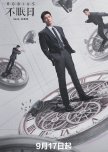
We’re thrown right into the action alongside a detective (Bai Jing Ting) who’s stuck in a time loop trying to stop a violent bank robbery and bombing. Turns out this phenomenon is nothing new to him. On random “loop days,” he has five chances to relive the events of that day — which he uses to his advantage as a police officer.
Whether the genre is romance, costume, or thriller, BJT is a versatile actor who’s compelling to watch. He seems particularly suited to this type of role — cool and capable on the job, but a bit awkward in his personal life — and looks convincing in fight and action sequences.
There’s plenty of red herrings to puzzle through and suspicious characters to keep you guessing, along with flashes of humor, a hint of romance, and some fun team camaraderie. There are some twists that are predictable once you start to connect the dots, but overall, “Mobius” is a gripping and fast-paced watch right up to the conclusion.
Was this review helpful to you?

Skip Season 1 & Watch This Instead
Season 2 rehashes many of the same scenarios — memory loss, Xiao Qi trying to retrieve something from Feng Leng, their love/hate relationship — and even recreates some exact scenes from the first season.While this season looks more polished (and Bie Thassapak Hsu as the male lead looks even more gorgeous, not that I’m complaining), there’s really nothing new here, and you don’t need to have seen season 1 to follow the story. But I’d argue that between the two seasons, this series is a more romantic, funnier, less angsty, and overall more enjoyable watch. The epilogue makes for a sweet and satisfying conclusion.
Was this review helpful to you?

Funny but Frustrating
Despite its silly premise, this wasn’t the fun, low-stress romcom I was hoping for.The leads make an attractive couple, and their bickering can be amusing to watch, but their relationship goes nowhere for basically the whole series. They’re always pushing away or misunderstanding each other. But with one of them experiencing human emotions for the first time and the other being emotionally constipated, I guess it’s about as messy as you’d expect.
The only reason I stuck it out to watch the whole thing is that the cast is mostly good, though both leads can be unlikable at times. Wan Peng is cute and quirky as the female lead, but her character’s cluelessness and refusal to be honest with the people she cares about can be aggravating to watch.
I was more impressed by Bie Thassapak Hsu as the male lead. Watching his character’s transformation from a stereotypical stone-faced, all-business CEO into someone who learns how to express himself and get in touch with his emotions was one of the redeeming qualities of the series.
I was also surprised to see Wang Hao Zhen, a familiar face from vertical C-dramas, as the ML’s personal assistant. Too bad his talents as an actor are underutilized here.
If you’re a fan of the cast, this may be worth a watch, but for plot and romance, it’s a skip.
Was this review helpful to you?

Sparks fly when he gets a job as her executive assistant. She’s prickly and emotionally closed-off, but he’s so unfailingly warm, caring, and capable that it eventually melts her cold heart. It’s not the usual take on gender dynamics that most dramas show, but that’s not the only thing that’s refreshingly different. The leads are mature, the recruiting/HR business setting is interesting, and the main source of conflict is a business rival, not a love rival.
While the main characters do have some trauma to deal with involving family relationships, this isn’t a melodrama. Overall, it’s a well-paced and enjoyable watch. (Bonus points for cute kids and nice music!)
Was this review helpful to you?

Wants to be about female empowerment, but misses the mark
With a talented cast and highly stylized but still engaging battle scenes, the "Legend of the Female General" is very watchable, but gets bogged down by some of its script and character choices.Zhou Ye mostly pulls off the title character, though the playful and tough-as-nails sides of He Yan’s personality didn’t always add up for me. And it does require some suspension of disbelief to buy into her being able to pass as a man while unmasked. It doesn't help that the character is written in an inconsistent way — there are times when she has the presence and poise of a military leader and other times where she definitely doesn't.
While it’s refreshing to see a female lead with fighting and strategic skills on par with the men, male characters frequently come to her rescue at key moments and the borderline ridiculous level of plot armor that she has makes her capabilities less impressive.
Add to that a few too many lectures and monologues, and the messages about women’s worth and equality start to get a little heavy-handed.
Ryan Cheng is certainly leading man material and convincingly plays the brooding but anguished General Fengyun, He Yan’s current commanding officer and former schoolmate. Unfortunately, his character doesn’t have a whole lot to do other than look dashing and speculate about the FL’s secrets.
Overall, despite good performances and mostly good production values, it feels like something’s missing. It could be due to the meandering plot towards the middle, character development that could’ve gone further, or the romantic storyline that falls a little flat despite decent chemistry between the leads (although there is a particularly memorable and poetic profession of love in ep. 30 *).
* “I respect her, value her, and won’t let anyone slander her. She graces my view, occupies my mind, and claims my heart.” (swoon!)
Was this review helpful to you?


