



Masterpiece!
Some 15 years ago, that masterpiece going by the name of "1 lt. no Namida" got me hooked on J-dramas. And now, after all those years of strict japanophile observance (in which I've watched about 250 J-dramas), I've got the strong feeling that this masterpiece going by the name of "Waiting For You in the Future" will definitely get me hooked on C-dramas! Such a strong impression it has left me with! ^__________^And how could it have been otherwise? Everything here is absolutely top notch!
Coming from J-dramas, which normally (of course, apart from asadora and taiga dorama) consist of 3 to 12 episodes, I must confess all my initial skepticism, when I started this drama made of 36 episodes of around 50' each (we're talking of 3/4 of an asadora!). But my hat goes off to the writer(s), 'cause not a single episode felt draggy or redundant!
The premise is very interesting (matter of fact, I've discovered this drama precisely 'cause I was looking for something similar to the J-drama "High Position" which I really loved) but, as my fellow reviewers already so aptly pointed out, this is much, much more than a mere time-travel story: it's about life, friendship, love, and it portrays an inspirational, life-changing path of personal growth. All filled with beautifully written characters who are so endearing that, by the end of the drama, you feel like you've just said goodbye to a bunch of friends!
Let me also spend some words about the acting: of course each country, each different culture has its peculiarities when it comes to acting styles (for example, Italian actors act similarly to French or Spanish ones, but pretty differently than, say, Brits or Scandinavians). I distinctly remember that when I had started watching J-dramas, at first I couldn't help but notice the different acting style, though I soon got used to it and now I must confess I find the Japanese acting style much more to my liking than, say, the "hollywoodian" one. Regarding the Chinese acting style, I had already watched a few Chinese movies, so I wasn't totally unfamiliar with it; as a result, adapting to it was totally effortless. And the whole cast does a superb job in this production, seriously! Particular praises go to Li Guang Jie, Fei Qi Ming, Sun Qian, Xu Jie aka Jelly and Zhang Zhi Lu, but they all did wel, really!
Praiseworthy are of course also the direction and the photography, both at a definitely higher level than those of most Japanese productions, I'll have to admit!
Last but definitely not least, the OST is simply fabulous. The score is always perfect for enhancing the viewers' experience, and the songs are really beautiful ! Honorable mention for the lovely "Sanctuary"!
Summing it all up, a perfect 10 in my book! Instant top5 of all times, as far as I'm concerned. I loved every single minute of it!
Was this review helpful to you?
The 1st season was perfect, and this is just as good!
There's an old Italian saying (of course, soccer-related - pardon, calcio-related ^__^) that goes like this: "squadra vincente non si cambia". That is, "never change a winning team" - meaning, when a formula works, there's no reason to modify it!That phrase fits perfectly to this second season of the acclaimed dorama "Furuhata Ninzaburo": the first season had been basically perfect, so why should they go and modify anything for the following season?
Luckily they didn't, and the result is just as good as the original!
As always in series with an episodic structure, some episodes are better than the rest; if I were to name a personal top3, I'd say first #10 - a real masterpiece! - and right next #9 and #4 ^____^
Note: Due to the continuous numbering adopted by this series (episodes are numbered progressively, regardless of seasons/SP etc.; therefore the 1st season has 12 episodes, then comes the 1st SP - episode 13 - then the 10 episodes of this 2nd season - episodes 14 to 23 - and so on), 2nd season's eps. 10, 9 and 4 are, respectively, episode 23, 22 and 17
Was this review helpful to you?
It's still an enjoyable movie that will provide a coupla hours of relax, only not the masterpiece I had expected.
Was this review helpful to you?

Was this review helpful to you?
Honto ni Atta Kowai Hanashi: 15th Anniversary Special 2014
2 people found this review helpful
Was this review helpful to you?
Was this review helpful to you?
Was this review helpful to you?
Was this review helpful to you?

Was this review helpful to you?
Was this review helpful to you?
Was this review helpful to you?
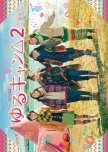
Weaker than the first season
This second season of "Yuru Camp" was in my humble opinion much weaker than both the first season and the in-between special episode. Fukuhara Haruka's screentime was drastically shrinked here, while most of the focus went to the supporting actresses - but that per se wouldn't have been such a big problem, as they're all decent actresses (even though not as good as Fukuhara - anyway, thumbs up to Ohara Yuno for her always contagious chuckle ^__^). The real problem is that the focus was also mostly switched from actual "yurucamping" to silly comedy, alas without much success. As a consequence, also the scenery, which had been an important detail previously, got a bit neglected here (don't expect loads of spectacular views, but rather just the occasional glimpse).I have no idea how much covid-related restrictions could have been the cause of these changes for the worse, though...therefore my not-too-low grade.
Was this review helpful to you?
The premise was nicely developed, the setting very nice, and the production value pretty high.
The whole cast did a marvelous job, seriously. My hat goes off to all of them! Honorable mentions for Sun Qian, for Luo Yu Tong (who grew on me so much that by the end of the drama I was liking her even more than the FL - and that's saying quite a lot!!!) and for Tao Hai.
The script was very good and I particularly appreciated how well they accomplished character development and how nicely they managed to convey a wonderfully positive, ethical message.
The only reasons I'm not giving this a perfect 10 are, on the one hand, that I really didn't like how they set things up for a potential second season (I'm talking about the very last scene with the never seen before character - totally unrelated to the rest of the series), and on the other hand, that I found a coupla scenes a bit weak/forced. But then again, perhaps the machine-translated subs (that at times one had to *interpret*, rather than simply *read*) are to blame for that? Whatever, beggars can't be choosers and machine-translated subs are still a whole lot better than no subs at all, of course. 9/10
Was this review helpful to you?
First of all, the message is so deep that it simply humbles at least 90% of other dramas (and basically every Western series ever - but well, that's easier).
The script works like a Swiss clockwork, seriously; and seeing how this drama consists of 40 episodes of around 45' each, that alone is quite a feat! You laugh, you cry, you learn, etc....the whole nine yards! Or rather, Yin & Yang and all 24 solar terms!
The characters are so well-written and tridimensional that when you finish watching the series, you feel like you're saying goodbye to a group of friends!
The acting is simply superb. At this point I usually give three "honorable mentions" but here it's hard to name just three, one would want to praise *all* of them with a virtual standing ovation! Anyway, traditions must be kept, so let's say I'll stand a little longer for Jiang Shan, Zhao Lu Si and my beloved Dai Lu Wa.
The music is just lovely and adds greatly to the viewing pleasure.
As for the "packaging" (direction, editing, photography, etc.), that's top-notch too.
What's not to like? Perfect 10! Goes instantly into my top-5 of all times! ^_____^
Was this review helpful to you?
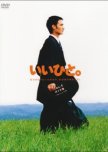
"Forrest Gump" meets "Shomuni", with lousy results
I must confess not being a big fan of those - tremendously popular - oversimplifications of movies or dramas that could be formulized as "A = B + C" (I've recently noticed one of those, for example, in relation to the fabulous C-drama "Reset", labeled by some as "Speed meets Groundhog Day"), but this time I myself can't resist the temptaion of summing up this "Ii Hito" as "Forrest Gump meets Shomuni"! ^_^;The problem is that whereas the latter was often hilarious, this one was mostly just ridiculous; and as for the former, they shared indeed a "definition" of "good person" that I happen to just totally disagree with. In fact, if you'll pardon my "hegelian dialectic", I really don't think that a good person is someone so naive and immature that doesn't even know what evil is ("Thesis"), but rather, someone who knows very well ("Antithesis") and decides to renounce evil and be good instead ("Synthesis"). Adults with the minds of a 5 years old kid aren't "good people", but the very definition of "simpletons" if you wanna be polite (or "retards" if you don't - and as annoying as I've found this ML who could only repeat, like a parrot, the same trite sentences throughout the whole drama, and the rest of the time just ran and shouted, rinse and repeat - well, I'm not so sure I wanna be polite in his case! =__=)
So, as you by now I'm sure have already guessed from my loooong introduction, I've found this drama's script to be reeeally bad. The "good guys" were annoying, the villains ridiculous (compared to the sneezing manager and his minion with the horrible haircut, even Dick Dastardly from "Wacky Races" was a credible, realistic and sober villain!), the plot almost non.existent, the dialogues and the message both trite and silly.
The cast's performance was also mostly abysmal (no surprise, given the material they had to work with) and only a coupla managed to do somehow well regardless (namely, Ito Shiro and Kanno Miho).
The production value was also nothing special, and the directing, instead, specially annoying - what with the constant zooming-in-and-out and the characters taking turns to stand in front of the camera and recite their lines (seriously, it felt like something a lousy high school club might do - and it'd still be annoying, but at least they'd have the excuse of being young and inexperienced; what was this director's excuse? .\___/.)
The only thing I was completely satisfied with was the OST, which was really marvelous (and the only reason why this doesn't get an even lower rating from me!!!)
So, 10/10 to the music, and extremely low ratings for the other categories.
My suggestion is: steer clear of the dorama and simply buy the OST! ^___-
Was this review helpful to you?


