




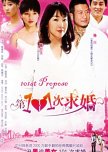
Li Shao Rong is an elegant and talented orchestra cellist who meets up with Zheng Jin Tai, a less-than-handsome-looking man who has walked long, unfortunate and ill-fated love roads. It is heart-touching and engaging to watch Jin Tai's devotion, sincerity and persistent love attitudes still shine through even after 99 unsuccessful proposals. There are right turns and wrong twists in their lives, especially with the appearance of Jun Shi, a charismatic rich man. Practice makes perfect. Will Jin Tai's next proposal win him a bride or will his proposals keep tallying up? Romanticize yourself with this series that speaks right to the heart!
Li Shao Rong is an elegant and talented orchestra cellist who meets up with Zheng Jin Tai, a less-than-handsome-looking man who has walked long, unfortunate and ill-fated love roads. It is heart-touching and engaging to watch Jin Tai's devotion, sincerity and persistent love attitudes still shine through even after 99 unsuccessful proposals. There are right turns and wrong twists in their lives, especially with the appearance of Jun Shi, a charismatic rich man. Practice makes perfect. Will Jin Tai's next proposal win him a bride or will his proposals keep tallying up? Romanticize yourself with this series that speaks right to the heart!

Li Shao Rong is an elegant and talented orchestra cellist who meets up with Zheng Jin Tai, a less-than-handsome-looking man who has walked long, unfortunate and ill-fated love roads. It is heart-touching and engaging to watch Jin Tai's devotion, sincerity and persistent love attitudes still shine through even after 99 unsuccessful proposals. There are right turns and wrong twists in their lives, especially with the appearance of Jun Shi, a charismatic rich man. Practice makes perfect. Will Jin Tai's next proposal win him a bride or will his proposals keep tallying up? Romanticize yourself with this series that speaks right to the heart!

Li Shao Rong is an elegant and talented orchestra cellist who meets up with Zheng Jin Tai, a less-than-handsome-looking man who has walked long, unfortunate and ill-fated love roads. It is heart-touching and engaging to watch Jin Tai's devotion, sincerity and persistent love attitudes still shine through even after 99 unsuccessful proposals. There are right turns and wrong twists in their lives, especially with the appearance of Jun Shi, a charismatic rich man. Practice makes perfect. Will Jin Tai's next proposal win him a bride or will his proposals keep tallying up? Romanticize yourself with this series that speaks right to the heart!

Li Shao Rong is an elegant and talented orchestra cellist who meets up with Zheng Jin Tai, a less-than-handsome-looking man who has walked long, unfortunate and ill-fated love roads. It is heart-touching and engaging to watch Jin Tai's devotion, sincerity and persistent love attitudes still shine through even after 99 unsuccessful proposals. There are right turns and wrong twists in their lives, especially with the appearance of Jun Shi, a charismatic rich man. Practice makes perfect. Will Jin Tai's next proposal win him a bride or will his proposals keep tallying up? Romanticize yourself with this series that speaks right to the heart!
Li Shao Rong is an elegant and talented orchestra cellist who meets up with Zheng Jin Tai, a less-than-handsome-looking man who has walked long, unfortunate and ill-fated love roads. It is heart-touching and engaging to watch Jin Tai's devotion, sincerity and persistent love attitudes still shine through even after 99 unsuccessful proposals. There are right turns and wrong twists in their lives, especially with the appearance of Jun Shi, a charismatic rich man. Practice makes perfect. Will Jin Tai's next proposal win him a bride or will his proposals keep tallying up? Romanticize yourself with this series that speaks right to the heart!

Li Shao Rong is an elegant and talented orchestra cellist who meets up with Zheng Jin Tai, a less-than-handsome-looking man who has walked long, unfortunate and ill-fated love roads. It is heart-touching and engaging to watch Jin Tai's devotion, sincerity and persistent love attitudes still shine through even after 99 unsuccessful proposals. There are right turns and wrong twists in their lives, especially with the appearance of Jun Shi, a charismatic rich man. Practice makes perfect. Will Jin Tai's next proposal win him a bride or will his proposals keep tallying up? Romanticize yourself with this series that speaks right to the heart!

Li Shao Rong is an elegant and talented orchestra cellist who meets up with Zheng Jin Tai, a less-than-handsome-looking man who has walked long, unfortunate and ill-fated love roads. It is heart-touching and engaging to watch Jin Tai's devotion, sincerity and persistent love attitudes still shine through even after 99 unsuccessful proposals. There are right turns and wrong twists in their lives, especially with the appearance of Jun Shi, a charismatic rich man. Practice makes perfect. Will Jin Tai's next proposal win him a bride or will his proposals keep tallying up? Romanticize yourself with this series that speaks right to the heart!
Li Shao Rong is an elegant and talented orchestra cellist who meets up with Zheng Jin Tai, a less-than-handsome-looking man who has walked long, unfortunate and ill-fated love roads. It is heart-touching and engaging to watch Jin Tai's devotion, sincerity and persistent love attitudes still shine through even after 99 unsuccessful proposals. There are right turns and wrong twists in their lives, especially with the appearance of Jun Shi, a charismatic rich man. Practice makes perfect. Will Jin Tai's next proposal win him a bride or will his proposals keep tallying up? Romanticize yourself with this series that speaks right to the heart!

Li Shao Rong is an elegant and talented orchestra cellist who meets up with Zheng Jin Tai, a less-than-handsome-looking man who has walked long, unfortunate and ill-fated love roads. It is heart-touching and engaging to watch Jin Tai's devotion, sincerity and persistent love attitudes still shine through even after 99 unsuccessful proposals. There are right turns and wrong twists in their lives, especially with the appearance of Jun Shi, a charismatic rich man. Practice makes perfect. Will Jin Tai's next proposal win him a bride or will his proposals keep tallying up? Romanticize yourself with this series that speaks right to the heart!

Li Shao Rong is an elegant and talented orchestra cellist who meets up with Zheng Jin Tai, a less-than-handsome-looking man who has walked long, unfortunate and ill-fated love roads. It is heart-touching and engaging to watch Jin Tai's devotion, sincerity and persistent love attitudes still shine through even after 99 unsuccessful proposals. There are right turns and wrong twists in their lives, especially with the appearance of Jun Shi, a charismatic rich man. Practice makes perfect. Will Jin Tai's next proposal win him a bride or will his proposals keep tallying up? Romanticize yourself with this series that speaks right to the heart!

Li Shao Rong is an elegant and talented orchestra cellist who meets up with Zheng Jin Tai, a less-than-handsome-looking man who has walked long, unfortunate and ill-fated love roads. It is heart-touching and engaging to watch Jin Tai's devotion, sincerity and persistent love attitudes still shine through even after 99 unsuccessful proposals. There are right turns and wrong twists in their lives, especially with the appearance of Jun Shi, a charismatic rich man. Practice makes perfect. Will Jin Tai's next proposal win him a bride or will his proposals keep tallying up? Romanticize yourself with this series that speaks right to the heart!


