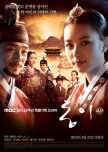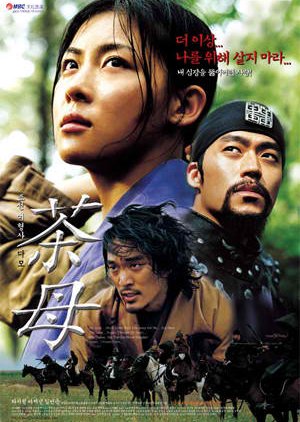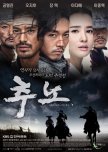
Action, Romance, Mystery. These two dramas have it all. There are fighting sequences, suspense, and not to mention it is interesting to see how old kdramas were filmed. Damo is from 2003 and still holds up, that is if you can see past the exaggerating Crouching Tiger Hidden Dragon combat. Same goes for Chuno, from 2010; although these dramas are fairly old, I still found them enjoyable to watch in 2019.
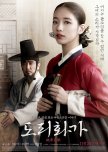
In 1867, Sin Jae Hyo leads the Dongrijungsa, which teaches pansori (traditional Korean musical storytelling). A young girl, Chae Seon, who wants to perform pansori, appears in front of him. Chae Seon has dreamed of performing pansori since she first heard Sin Jae Hyo perform when she was little, but Sin Jae Hyo turns her down because women are not allowed to perform pansori. Chae Seon then disguises herself as a man and enters the Dongrijungsa to learn pansori, but Sin Jae Hyo doesn’t accept her as his student. One day, he hears Daewongun, the most powerful man in Joseon and the father of the King, is going to hold a national competition of pansori performers known as “Naksungyeon”. Sin Jae Hyo decides to teach Chae Seon, who has a true voice to perform “Chunhyangga". If anyone finds out that Chae Seon is a woman, Sin Jae Hyo and Chae Seon will both face death.
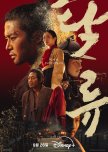
Both Damo and Takryu are Joseon-era historical dramas that blend action, personal struggle, and societal conflict, featuring protagonists shaped by hardship and injustice as they fight against corrupt systems and rigid social hierarchies, with emotional depth, gritty confrontations, and themes of loyalty and survival driving their intertwined fates in harsh, morally complex worlds.
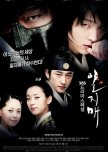
Both Iljimae and Damo are Korean historical dramas set in the Joseon era that mix action, romance, and social conflict, featuring protagonists shaped by personal tragedy and injustice who operate outside or on the edges of the law to fight against corrupt authority and help the downtrodden, with emotional storytelling anchored in moral dilemmas, forbidden or complicated love, and the struggle between duty and personal desire.
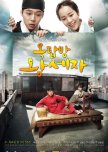
Crown Prince Yi Gak finds that he has been transported from the Joseon Dynasty to modern-day Seoul. He meets Hong Se Na, who bears a striking resemblance to his dead wife, and is determined to solve the 300-year-old mystery of her death. With his own resemblance to the CEO’s grandson at the company where Se Na works, Gak assumes the identity of the young man to stay close to her. Can the Crown Prince navigate a modern corporation to find clues to his own time period?
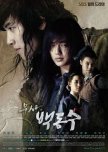
How Warrior Baek Dong-soo is similar to Damo
Warrior Baek Dong-soo and Damo are both Korean historical dramas set in the Joseon era that combine intense action, swordplay, and martial-arts sequences with deep emotional storytelling, following characters shaped by personal hardship and loyalty as they navigate a world of political intrigue, injustice, and duty while dealing with complicated relationships and the burdens of fate, making them appealing to viewers who enjoy action-driven historical sagas with strong character drama.
Warrior Baek Dong-soo and Damo are both Korean historical dramas set in the Joseon era that combine intense action, swordplay, and martial-arts sequences with deep emotional storytelling, following characters shaped by personal hardship and loyalty as they navigate a world of political intrigue, injustice, and duty while dealing with complicated relationships and the burdens of fate, making them appealing to viewers who enjoy action-driven historical sagas with strong character drama.
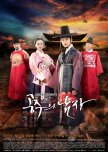
The Princess’s Man is similar to Damo in that both are Joseon-era historical dramas featuring intense tragedy, forbidden or complicated romance, and deep emotional stakes against a backdrop of political conflict and betrayal — The Princess’s Man centers on a forbidden, tragic love between a noblewoman and a man caught in deadly factional strife and revenge, where politics and family enmity tear lovers apart, much like Damo’s blend of romance, loyalty, and personal hardship in a dangerous, morally complex historical world.
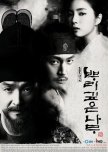
Deep Rooted Tree is similar to Damo in that both are Joseon-era historical dramas with intense political intrigue, deep emotional stakes, and morally complex characters shaped by tragedy and revenge, featuring protagonists whose personal losses and quests intersect with larger societal conflicts and oppressive power structures, blending action, mystery, and dramatic personal relationships against a richly depicted historical backdrop rather than just light romance or adventure.
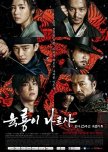
Six Flying Dragons is similar to Damo because both are Joseon-era historical dramas that weave political conflict, larger societal change, and deep character journeys together, portraying protagonists and key figures whose personal ambitions, loyalties, and moral struggles play out against turbulent historical backdrops rather than purely romantic plots, with a strong emphasis on action, intrigue, and the impact of history on individuals and relationships.
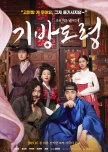
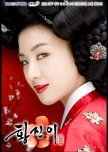
Both are Joseon period dramas starring Ha Ji Won. Both also happen to be underrated historical dramas of hers in comparison to Empress Ki. I watched both these dramas next to each other and became an instant fan of Ha Ji Won. Who could imagine that the graceful Ji Ni can also be the action queen Chae Ok?
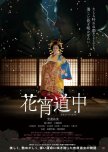
The New Yoshiwara pleasure district, in the twilight years of the Edo Period. Popular prostitute Asagiri will soon be freed from her indentured service. One day at a local festival, she meets young artisan Hanjiro who changes her destiny. Asagiri feels love for the first time in her life, but the history involving Hanjiro's client leads to tragic circumstances.
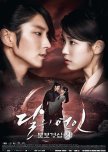
When a total eclipse of the sun takes place, Go Ha Jin is transported back in time to the start of the Goryeo Dynasty of Korea during King Taejo's rule. She wakes up in the body of the 16-year-old Hae Soo and finds herself living in the house of the 8th Prince Wang Wook, who is married to Hae Soo's cousin. She soon befriends several of the princes and meets the ostracized 4th Prince, Wang So. Although knowing she should not get involved in palace intrigues over the succession to the throne, she inadvertently becomes a pawn in the struggle, as several of the Princes fall in love with her.
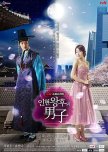
Kim Boong Do is a scholar who had supported the reinstatement of Queen In Hyun when Jang Hee Bin's schemes resulted in her being deposed and replaced as King Suk Jong's queen consort. He travels 300 years into the future of modern Seoul and meets Choi Hee Jin, a no-name actress who is expecting a career renaissance through her role as Queen In Hyun in a TV drama