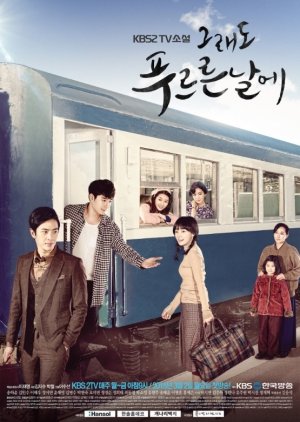
A Hundred Memories and In Still Green Days share several key similarities in tone, themes, and emotional storytelling, making them resonate in a very similar way.
Both dramas are deeply nostalgic—they capture the feeling of looking back on one’s youth with warmth, regret, and affection. Each focuses on ordinary people and everyday moments rather than grand plotlines, finding beauty in small, human experiences like friendship, first love, and growing up in simpler times.
Like In Still Green Days, A Hundred Memories unfolds at a gentle, reflective pace, allowing viewers to absorb the emotions behind every glance, silence, and smile. Both are coming-of-age stories set against a past era, using that time period to heighten the sense of longing and innocence lost.
Visually, both share a soft, naturalistic look—warm lighting, muted colors, and a sense of stillness that mirrors memory itself. They also highlight family and community ties, showing how the people around us shape who we become.
Ultimately, the two dramas are similar because they both explore the bittersweet beauty of growing up and remembering what time has taken away, inviting viewers to reflect on their own memories with tenderness.
Both dramas are deeply nostalgic—they capture the feeling of looking back on one’s youth with warmth, regret, and affection. Each focuses on ordinary people and everyday moments rather than grand plotlines, finding beauty in small, human experiences like friendship, first love, and growing up in simpler times.
Like In Still Green Days, A Hundred Memories unfolds at a gentle, reflective pace, allowing viewers to absorb the emotions behind every glance, silence, and smile. Both are coming-of-age stories set against a past era, using that time period to heighten the sense of longing and innocence lost.
Visually, both share a soft, naturalistic look—warm lighting, muted colors, and a sense of stillness that mirrors memory itself. They also highlight family and community ties, showing how the people around us shape who we become.
Ultimately, the two dramas are similar because they both explore the bittersweet beauty of growing up and remembering what time has taken away, inviting viewers to reflect on their own memories with tenderness.