







 2
2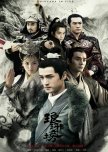




 Most Popular Chinese Actresses on MDL Part 1
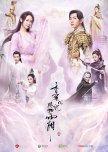
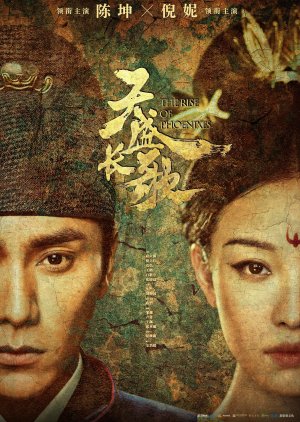
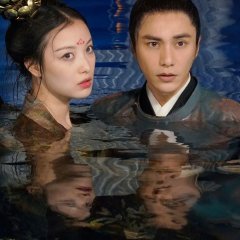
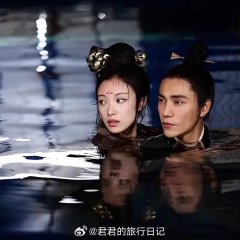
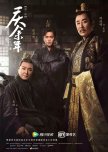
 Le sixième prince Lin Yi est un prince ambitieux et calculateur du royaume Tian Sheng. Pourtant, il doit dissimuler sa véritable personnalité derrière une façade insouciante après que le troisième prince Ning Xiao ait été accusé de haute trahison. Plusieurs années plus tard, il établit un réseau d'informations secrètes dirigé par Xin Zi Yan, tuteur principal de l'Académie de Qing Ming, afin de lever les fausses accusations portées contre son frère. Feng Zhi Wei est la fille illégitime du clan Qui et elle a été bannie de son foyer après avoir été accusée à tort d'un crime. Pour survivre, elle va devoir se déguiser en homme et va rejoindre la prestigieuse Académie Qing Ming. Elle deviendra générale et politicienne grâce à son talent et ses connaissances et elle se lie d'amitié avec Ning Yi. Elle découvre par la suite qu'elle est la seule survivante royale d'un royaume déchu. Elle croit que le royaume actuel a été construit sur les cadavres de ses proches et décide alors de se venger de ses amis et y compris de Ning Yi. (La source: Nautiljon) ~~ Adapté du roman Huang Quan de Tianxia Guiyuan. Modifier la traduction
- Français
- 中文(简体)
- Русский
- Português (Portugal)
- Titre original: 天盛长歌
- Aussi connu sous le nom de: Huang Quan Yi Tian Xia , O Avanço da Fênix , Tian Sheng Chang Ge , Vzestup Fénixů , Восхождение фениксов , 凰权·弈天下 , 天盛長歌
- Réalisateur: Liu Hai Bo, Shen Yan
- Scénariste: Wen Qing Xie Pei, Zou Yue
- Genres: Historique, Romance, Mélodrame, Politique
Où regarder The Rise of Phoenixes
Distribution et équipes
-
")
-
") Ni Ni Rôle principal
Ni Ni Rôle principal -
") Ni Da Hong Rôle principal
Ni Da Hong Rôle principal -
") Zhao Li Xin Rôle principal
Zhao Li Xin Rôle principal -
") Edward Zhang Rôle Secondaire
Edward Zhang Rôle Secondaire -
") Bai Jing Ting Rôle Secondaire
Bai Jing Ting Rôle Secondaire
Critiques
Des personnages d’une rare complexité Le véritable cœur de la série n’est ni l’intrigue politique, ni la romance. C’est l’étude de deux personnages brillants, brisés, et irrémédiablement liés. Feng Zhiwei (Ni Ni) : Intelligente, mesurée, lucide, un personnage féminin qui n’a pas besoin d’être idéalisé pour captiver. Son parcours est une montée silencieuse, une prise de pouvoir méthodique, sans jamais sacrifier sa dignité. Ning Yi (Chen Kun) : Stratège redoutable, héritier blessé, prince imprévisible. Sa performance ne cherche pas à plaire, mais à dominer l’écran, et elle y parvient. Leur relation n’est pas une romance au sens traditionnel. C’est une lutte d’égal à égal, un respect mutuel qui évolue vers quelque chose de plus profond, de plus douloureux, de plus vrai.
Une lenteur assumée, jamais gratuite Beaucoup qualifieront cette série de "lente". Ils auront raison — mais ce serait une erreur de voir cela comme un défaut. Cette lenteur est une stratégie narrative. Elle donne du poids au silence, de l’importance aux regards, de la crédibilité aux choix politiques et émotionnels des personnages. Ici, la tension naît de la retenue, et l’émotion ne jaillit pas : elle s’accumule, jusqu’à l’inévitable rupture.
Une œuvre d’art visuelle et sonore Chaque plan est une peinture. Chaque costume, une déclaration. Chaque composition visuelle a un sens narratif. Rien n’est laissé au hasard, et surtout pas la beauté. Le travail de William Chang (direction artistique et costumes) mérite d’être salué. Cette série est esthétiquement l’une des plus abouties jamais produites en Chine. La musique, quant à elle, ne souligne jamais les émotions, elle les enveloppe, subtilement, comme un écho lointain.
Un final impitoyable, fidèle à sa logique Oui, la fin divise. Elle déstabilise parce qu’elle ne cherche pas à rassurer. Elle ne récompense pas l’attachement du spectateur avec un “happy end” facile. Elle le confronte aux conséquences, à la douleur, à la réalité du pouvoir. C’est une conclusion tragique, mais nécessaire. Et surtout, cohérente avec tout ce que la série a construit pendant plus de 70 épisodes.
Conclusion The Rise of Phoenixes n’est pas un divertissement léger. C’est une œuvre exigeante, ambitieuse et profondément maîtrisée. Elle ne plaira pas à tout le monde, et c’est précisément ce qui la rend si précieuse. Ce n’est pas un drame qui cherche à être aimé. C’est un drame qui cherche à être grand. Et il y parvient.
Revoir ? Absolument. Pas pour comprendre ce que j'ai manqué, mais pour admirer ce que la série n’a jamais raté.
Cet avis était-il utile?

Machiavelli in love.
The first thing that comes up in any discussion of the Rise of the Phoenixes is that it has a bad ending. I put this in cold storage because I didn't want to be punched in the face after 70 episodes. After watching, l can confirm that it does indeed have the worst ending ever: 5 bad minutes that make little sense. The rest of it is so engaging that I loved almost every moment, plot flaws and all. It is one of my top 3 dramas. There is a spoiler discussion of the ending at the bottom if you scroll down.This was adapted from a popular novel (which I did not read) that had tragic elements but did not end in tragedy. Most of the flaws can be traced back to a fatal decision to change the book ending. That resulted in plot inconsistencies and several main characters making odd and uncharacteristic decisions in order to force this outcome. This begins from about episode 50. The last arc (~10 episodes) are the least convincing and closes the drama at its weakest moments. There are excellent reviews here that analyze the plot holes and flaws with this drama so I won't deep dive any of that. I will focus on what makes this hidden gem irresistible and unforgettable in spite of the negatives.
This is a political drama about the ascent of Ning Yi, the 6th prince of Tiansheng. Raised amidst palace intrigue, betrayal and murder, Ning Yi is a somewhat dark character who is an ultimate survivor. He is the quintessential Machiavelli; a ruthless manipulator and a consummate Go player both literally and figuratively. Wrongfully banished for eight years, he claws his way back to favor, methodically eviscerating his scheming brothers along the way. Initially his purpose is uncover the mystery behind his mother's disappearance and avenge his third brother's deposal. As he gains power, the goal posts change as he aspires to unite the kingdom and make it a place where all are equal in the eyes of the law. Like all characters destined for political greatness, Ning Yi believes that the ends justify the means and ruthlessly and deftly eliminates anyone in his way. He is a guarded character that conceals his true self behind a mockingly care-free and cynical façade. Shards of radiant light emerges when his core convictions are tested and when the people he cares for are threatened. Chen Kun's deliciously portrayed Ning Yi is brilliant, dramatic, wicked, ferocious, daring, charismatic, mischievous, sentimental and utterly unforgettable. I could not get enough of his wandering eyebrow, the wicked gleam in his eyes, his vehemence and his diabolical sense of humor. Ning Yi is an endlessly fascinating, one of a kind character that is by far my all-time favorite c-drama protagonist.
Fang Zhiwei for the first ~50 episodes is the rare strong female lead character we don't see enough of. She is the lowly niece of a powerful minister that is raised in his household on sufferance. She is highly educated, clever, idealistic and audacious enough to take charge of her own destiny. She encounters Ning Yi for the first time in a bold attempt to foil her uncle's plot to marry her off to this powerless prince in her cousin's place. He is intrigued by her and recognizes her resourcefulness could be useful to him. But she has a mind of her own and does not fall in with his plans that easily; as often as not they end up on different (though not necessarily opposing) sides. With Ning Yi's help, she disguises herself as a male scholar Weizhi and enrolls in the most prestigious school in the capital. She gains recognition as the Ultimate Scholar and becomes an influential member of the court and trusted confidante of the emperor. I love strong female characters like this and Ni Ni really shines in this role, especially when she goes toe to toe with Ning Yi. She is as persuasive as the boyish, accomplished and cunning Weizhi as she is the exquisite, vulnerable and overly idealistic Zhiwei. Zhiwei/Weizhi is a consistently awesome character until she sheds her identity as Weizhi and becomes Zhiwei again. At that point, in all the moments that matter she loses her common sense and regresses into a naïve, overly emotional and easily manipulated Zhiwei who no longer knows what she wants. Unfortunately this remarkable character was thrown under the bus to facilitate the dreadful ending.
Ning Yi and Fang Zhiwei were just made for each other. Only actors of Chen Kun and Ni Ni's caliber can express intense passion and longing while barely touching and the wordless communication of two soul mates who just know each other. All of their interactions are mesmerizing - their spirited and witty banter, the way Ning Yi chokes with unholy mirth every time he teases her and of course the biting scenes that I couldn't stop re-watching. Every time they part ways, I am devastated by how dejected Ning Yi is; how their body language conveys the true feeling behind the false bravado of their words. Ning Yi is proud of, not threatened by Zhiwei's abilities and independence, even when she challenges him. Thus Zhiwei bails out Ning Yi as often as he saves her. They are the ultimate power couple, a force to be reckoned with when they are united against some rather formidable villains. By no means invincible, they suffer crushing personal losses and setbacks that among other things forces Ning Yi to make the hardest sacrifice to keep Zhiwei safe.
The romance is so consuming it sucks you into rooting for them through many obstacles; blithely ignoring the blatant warnings throughout that it doesn't end well. This overshadows the fact that this drama is actually about political strife both internal and external. Together our main protagonists deal with internal conspiracies, ambitious princes and politicians, rebellious fiefdoms, remnants of the former kingdom, encroaching neighbors and a devious and paranoid emperor. The emperor is a distant father with too many sons that he treats as little more than pawns and potential usurpers. He is the one person that Ning Yi cannot protect Zhiwei from once her origins are revealed. Their worst enemy however is misplaced fiduciary to an older generation that can not let go of the past so that the younger generation can follow their hearts and dreams.
While the plot is complex with multi-faceted main characters, the overall narrative is clear, well paced and easy to follow. Despite some messy transitions and plot holes (likely due to censorship), the meaning and general thrust of the storyline is intact. The dialogue is witty and sprinkled with light humor that balances politically heavy tone of the drama. The characters are colorful and many have lovable quirks: Nanyi's odd eating habits, Ning Sheng's priceless facial expressions and Helian Zhang's parody of a lovesick fool. Both main protagonists have meaningful and independent relationships with the other core characters; they are not just defined by each other. Ning Yi's key friend, ally and confidante is headmaster Xin Zhiyan, an ambitious and wily strategist. He is protected by the fiercely loyal Ning Cheng, who is the couple's greatest champion. Zhiwei is aided by the dependable Yan Huaishi and protected by the devoted and silently lethal Gu Nanyi. The characters are well written, with their own priorities and agendas and have free will. Ning Yi and Zhiwei's relationship and their actions create uncertainly and friction in some of these surrounding relationships that sets in motion a number of unexpected and exciting plot twists with some heartbreaking consequences.
Though the last ten episodes are the weakest with pathetic and unconvincing villains, I still wanted to see the last main villain go down. Although I was warned, I won't lie: the last 5 minutes were still despicable and unforgivable. It was also completely out of character for Fang Zhiwei and thus not convincing. It was so bad I didn't even feel sad, I just kept shaking my fist at the TV. That said, this drama must be judged in its entirety and remains emphatically one where the journey is much more important than the destination. What a thrilling and riveting journey! I started to re-watch it almost immediately, something I haven't done since TMOPB. I really want to give this a 10 because I love it so much I just don't care about the flaws. But I knocked off 0.5 anyway as my petty and impotent vengeance for the ending.
On re-watch I realized that the ending can be interpreted as open which I discuss below (MAJOR SPOILER).
Warning: Major Ending Spoiler
In Zhiwei's last conversation with Nanyi at their base in the capital, he reiterates that he goes where she goes. He asks her if she is really going to marry Ning Yi and be his empress. She asks if that would be such a terrible thing? We may not have been shown the whole conversation which ends with Nanyi saying that he will wait there for her, implying she is coming back (and not marrying Ning Yi). The ending jump scene had a very surreal quality to it, almost as if it were a dream and not real. It can be argued that she fakes her death and disappears with Nanyi. This would be much more in character for Zhiwei. It would also be closer to the book ending which has her faking her death and eventually reuniting with Ning Yi who gives up the throne for her (credit to @Skibbies who shared the book ending with me). I think most viewers (including myself) were so shocked and dismayed they missed this subtlety. Though less obvious, it is the ending interpretation I prefer. I understand why Zhiwei wouldn't want to be empress when their path to the throne is littered with bodies but she is also smart enough to know that their cause was never her cause and that would be too unfair to Ning Yi. Ning Yi and Zhiwei have done enough for king and country and deserve a chance to enjoy their uncommon love as common people.
Cet avis était-il utile?