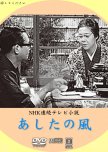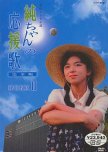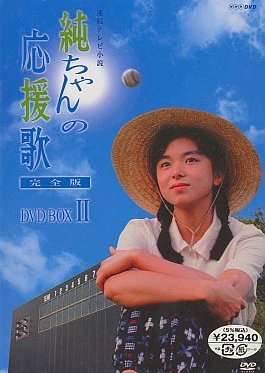
The 41th NHK Asadora. The year is 1947, August. Ono Junko's family is being evacuated to Wakayama and the father is going to war. A few years later, the father has returned from Manchuria but he also brought a boy that had been abandoned by his mother. The boy is Yuta and the family will adopt him. Edit Translation
- English
- magyar / magyar nyelv
- dansk
- Norsk
- Native Title: 純ちゃんの応援歌
- Also Known As: Jun-chan's cheering song
- Screenwriter: Hiroichi Fuse
- Genres: Historical, Life, Drama, War
Cast & Credits
-
 Yamaguchi Tomoko Main Role
 -
 Takashima MasahiroHayami ShuheiSupport Role
 -
 Kawazu YusukeOno Yoichiro [Junko's father]Support Role
 -
 Ito EikoOno Aki [Junko's mother]Support Role
 -
 Matsumoto YuriOno Kyoko [Junko's sister]Support Role
 -
 Nishikawa HiroshiOno Akira [Junko's brother]Support Role





Reviews

This review may contain spoilers
'Nice Play'
"Jun-chan no Ouen-ka" is my 4th asadora. I chose the drama since the fansubber had just finished subbing it at the time. You can find the subtitles over at d-addicts. "Jun-chan" was different from the previous asadoras I watched. The key difference being that Junko (played by Yamaguchi Tomoko) is an unambitious heroine. This is not bad, but it does mean that the series does not necessarily have a goal it's working towards. [Edit: This seems typical of '80s asadoras.] Junko instead focuses on taking care of her family through various ways. The drama therefore feels like more of a family/slice-of-life drama. I liked this kind-of easy-going pace, but I wasn't exactly on the edge of my seat after each episode to find out more.Besides family, "Jun-chan" has a secondary focus of baseball. It links to several of the series major characters and is also the source of the more emotional moments. I'm sure the third to the last episode will get to you too. I cried so much lol. Junko's brothers, Akira and Yuta, are the main ballplayers of the series. They are also two of my favorite characters in this asadora. There is a slightly awkward transition from where they are played by child actors to adult actors. However, I thought the adults were stronger actors so that makes up for it. I particularly liked the adult Yuta (played by Karasawa Toshiaki). Akira has a particularly pivotal moment that I won't spoil, but it sets the tone for the rest of the asadora.
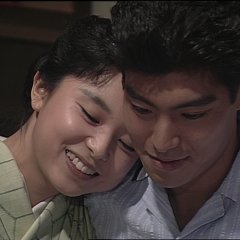
The main storyline in "Jun-chan" is perhaps the romance between Junko and the Japanese-American, Shuhei (played by Takashima Masahiro). I thought these two had strong chemistry and they manage to stay interesting even after getting married. Some might find their back-and-forth a tad grating, but I liked it. It was really the only source of tension for much of the asadora. And the "Will you marry me?" scene was the best. Much of the latter half of the drama is about the couple working through their marital and child rearing problems. Considering their strong, stubborn personalities, I liked that the writers didn't opt for an immediate "happily ever after"-type marriage. Their relationship feels very realistic as a result.
Now addressing Junko. She's a very low-key heroine in some ways. Junko gets most of her satisfaction out of life by helping others whether it's doing the housework or supporting her family by working at a diner and later at an inn. However, she is not portrayed as being perfect. Junko actually has a bit of a martyr complex and is often stubborn. Her family and loved ones appreciate what she does for them, but aren't afraid to call her out every now and again. And I absolutely loved these moments. As a heroine, I found Junko very enjoyable to watch and never annoying. I'll remember her for her bright and never-ending perseverance.
To close out, I chose to title this review "Nice Play" after a pivotal moment in the series. It's used in baseball to indicate "good game" basically. However, one character points out that this could apply to life itself. Junko, her family, and friends each had a "nice play." I enjoyed nearly every minute of the series and I liked that the ending indicates that their lives will go on even after the story.
My Asadora Ranking: https://kisskh.at/list/LAlqpp21
Was this review helpful to you?

This review may contain spoilers
TW: Blackface/Anti-Black Racism
A very unique asadora, as it is the first slice of life one I've seen. There isn't that typical goal or ambition the female lead aims to accomplish, especially in regards to a work life, since our main girl, Junko, seems to be content simply living and working in companionship with her family and friends, without carving a separate path for herself. That in itself is not a problem, of course, to quote Greta Gerwig's Little Women "just because my dreams are different than yours, it doesn't mean they're unimportant", but it does make for a less thrilling story compared to others. Nonetheless, as it follows the regular lives of Junko and her loved ones, there's moments of happiness and sorrow that'll definitely pull on your heartstrings, which is when the story shines the most.It's not all roses, and here comes the reason behind my disappointment: at one point in the story we see Junko and some minor characters do a play, and one of them does blackface. I want to start by saying that, of course, I understand that Japan doesn't have a history of blackface like countries such as the United States and Canada, and as this is an old production problematic things are to be expected, but as an afro-latina I think black people are often accused of being "woke" and forced to be forgiving, to put things into perspective, to see where people are coming from, even when it's harmful to us, all to dismiss honest conversations about racism and prejudice. With all that in mind, I decided to not ignore this blatant display of racism (both because of the use of blackface and because the "black character" in the play is potrayed as a servant) and mention it on my review, because from what I've seen it hasn't been brought up at all on this page and I believe viewers should be advised on content that might be triggering. And on that note I also have to give a trigger warning for attempted sexual assault and violence against children.
Was this review helpful to you?