A must-watch
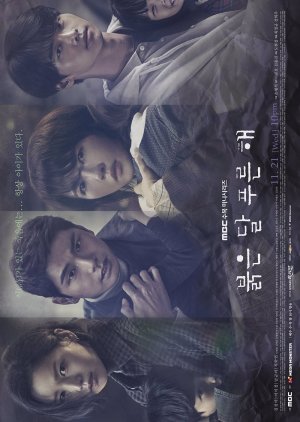
i think this is one of the best kdramas ever.the story, as you can see from the plot, is quite heavy so it may not be for everyone. i think the story itself unfolds really well in every episode. there are some things you can guess about, of course, but every episode has at least one plot twist. every evidence, quote, and scene has a meaning here. there weren't any necessary things that made the series longer. the cast is seriously good, they were fully immersed in their roles. especially as someone who loves children a lot, i felt terrible. all of it was so heartbreaking, and it gets even sadder when you remember that these kinds of things happen every day. i was quite surprised to see this drama isn't very popular, because it should reach more people. ost was quite good as well.
some scenes will haunt me for a while. definitely will rewatch, you should watch it too
Was this review helpful to you?
One of the most consistent dramas. Watch it till its final episode and don't read the spoilers.
This is one of the best dramas you can watch ( and not only among the S. Korean ones).I will not spoil a single detail as this drama is so well written that you'll have to watch itup to its final episode in order to figure out who did what.
The credits should go of course to the writers who kept the plot consistent from the first to the very last episode without deviating from the theme, the mood and the atmosphere of the series and without finishing this drama with a hasty, or incomprehensible or disappointing end as so often we have seen them doing on other dramas.
The above along with the great performances from all the actors and particularly the child actors and actresses make "Children of Nobody" one of the best series I've ever watched.
10/10 from me.
Was this review helpful to you?
I appreciate the attempt to bring to light various forms of abuse and its various lasting effects through adulthood no matter how stable one's life turns out. Also appreciate the highlighting that not all victims are saints themselves as everyone has their own type of sin.
However, while I'm not one who minds the slower-paced type of series/movies. This one just felt like a slow-pacing in circles over and over again. The actors were awfully bland even for a somber setting. Making it through over half of the episodes (with lots of fast-forwarding), there is pretty much zero character development. The female lead's character feels so one-note that I've grown annoyed by her screen time. Despite the trauma she's apparently gone through, she is really just selfish and self-righteous underneath her overbearing gentleness and occasional rage. For a child psychologist, she really doesn't have much empathy. It would have been fine if she was given any type of personality growth by now in the series. If the expressions on the majority of the actors didn't feel like permanent Botox, it might have worked better. The only actor that pushed the episodes along was really the main detective.
Was this review helpful to you?
It's not a happy one filled with romance, but it's raw, showing the truth, that unfortunately happens to a lot of people. It kind of reminds me of the movie "Silenced".
Good and bad is really blurred in this one, and it makes you think hard about if murder is ever okay.
The beginning is very different from the end but in a good way. We meet this mother and wife, Woo Kyung, who's a child psychologist, working at a children's centre. She appears to have it all, but as the show goes on, the curtain is drawn away, and doors that had previously been kept closed are opened, shaking her whole reality. You really fell for Woo Kyung in a lot of ways. There are moments where you don't fully understand her actions, but I guess that's because she too doesn't understand herself. People are complicated.
Then we have Ji Heon, our hot-headed detective. At first, he comes off as this really tough guy, with a dark past, but he really isn't much different from most detectives in drama-land. He's one of the leads, but we don't really know much about him throughout the whole show, except for a few things, which in some ways adds to the show. However, I would've liked to know a bit more about him and his past.
Cha Hak Yeon as Eun Ho really showed his abilities as an actor in this one, and he was probably one of my favourite characters of the show. He's kind, loves children, and is an overall good person. He has a bit of an arch in this show, and as we get to learn more of his past and what he's gone through, you'll find yourself wanting to give him a big hug, and a shoulder to cry on.
Lastly, we have our rookie detective Soo Young, who's new to the whole detective thing. We know next to nothing about her, and it kind of stays that way. She was a bit of a flat character because the few things we know about her. But, for that reason also, I'd say kudos to Nam Gyu Ri, for her performance, since she didn't have a lot to work with.
All of the child actors were great, I can't wait till they grow up. I'm sure they'll be at the top when they get older. Their performances were extremely raw and honest and didn't feel forced at all, like a lot of the times in dramas. The creators of Children of Nobody really hit a home-run when it came to the child actors.
A couple of things are left to your imagination - which I guess is for the best, since some of the neglect and the abuse is really horrible. But it does add to the show's overall feel and message. The biggest things are often the ones left unsaid and for a reason.
So, if you're in the mood for a raw, sad, mysterious drama, where you'll question your morals, then definitely watch it. BUT, if you yourself has gone through any kind of abuse, I would reconsider watching it, since that's one of the main factors of the show.
Was this review helpful to you?
This drama is like a puzzle
This drama is like a puzzle every episode exposes another piece and at the end you have the whole picture. Once yous start watching this drama you want to keep watching another and another episode because you want to know more about the characters and the whole story. All the characters are really interesting and the cast did very good job in portraiting them. The OST/music that this drama has is not much played in the drama but when it is it's really good too. I felt all the emotions from it. I would say it's one of the best kdramas I have ever seen and it's a pity that it's quite underrated, I think that people should know more about this drama. But I have to say that you can't watch this whole series in two days or so because it really effects your psychics and if you watch it in a shirt period of time (like I did the first 11 episodes from 16) you'll be a bit depressed but of course not everybody might feel like that.Was this review helpful to you?

Was this review helpful to you?

That being said, I am so glad Lee Yi-Kyung got to experiment with such a remarkable character exhibiting his versatility, given his flair in comedy has already been established. The story is very engaging and binds everything with so much finesse. Every scene and dialogue is important leading up to the conclusion. Top-class acting as expected from the ensemble as they have already made their mark in the industry.
Kim Sun-a has such a character arc and portrayed her turmoil and frustration with such ease. Her eyes do speak a lot more than what is hidden. The final episodes showcase her explosive acting skills when everything is exposed in the end.
The drama is so well written, much kudos to the writing team for shedding light on a grim and less-explored reality of children.
Was this review helpful to you?

Was this review helpful to you?

Boring but interesting
Hmm I don’t really knw hw I feel after watching this drama,the drama is deep and dark is slow and mysterious look boring bt interesting this drama is very different frm Movies/drama have seen so far , u will get to stage in this drama u think u no where is going but trust me u don’t I wanted to drop it at 1st because I didn’t understand wht I was watching bt I keep getting deep and deeper with it couldn’t drop it. Is definitely that one film dat keeps u at d edge of d couch I still don’t really knw how to describe it ....Bt if u want to see something completely different frm rom/com and all dat check it out this drama will make u understand that is not every human being dat looks sane on d outside is sane on the inside .... I definitely can’t rewatch this drama cuz is just too deep and touching this are type of movie u watch just once and love demWas this review helpful to you?

This review may contain spoilers
Beautifully Written - Don't watch if you are after "excitement" / twists & turns
I really think this was a beautifully written drama that did cover a really sensitive topic. They did manage to make good use of the number of episodes they had for this series.It does raise the argument of what is "worse", which you find yourself thinking about each time a child's story is explored. Sometimes, I felt like Red Cry was doing the right thing and other times, I did not. In regards to "who Red cry is?" it was pretty clear as the writers laid it out in front of us.
Even though some may watch this drama expecting it to be filled with twists and turns as to the revelation of the killer. Though, the killer was a big part of the drama, I just don't think it should be the only thing to focus on when watching. The main topic is childhood abuse and trauma, if you're looking for a drama to give you excitement, don't watch this.
This drama did tackle the different types of childhood trauma faced by both kids and when the adults were kids too. The Female lead Woo-kyung was an example of this. The memory loss she suffered due to a tragic and traumatic thing she witnessed first hand. I felt for her because she was continuously brushed off by her stepmother and the fact that there were barely any photographs of her childhood. It was tragic but a harsh reality some people do face.
So-Young (the female detective) even talked briefly about her experience of getting beat by her brother and how her natural reaction to his beatings were.
This show does raise awareness of the effects of abuse, especially childhood abuse on people.
I think the cast did a wonderful job acting together and alone in this drama and I would 100% recommend this drama to anyone who has patience to watch the story unfold.
Was this review helpful to you?

This review may contain spoilers
Does the weight of a crime disappear if the “crazy” are the only ones who remember it?
1.Moral InconsistencyIn this tale of those branded insane, what bothers me most about this series is the lack of moral consistency. The drama is meticulous almost relentless when it comes to punishing vigilante murderers, yet strikingly indifferent when harm is committed within socially acceptable roles like “parent,” “spouse,” or “family member.” The vigilantes who kill child abusers are pursued, condemned, and destroyed by the narrative. They are framed as criminals first and foremost, regardless of motive or emotional torment. The law closes in, society judges them, and the story ensures they face irreversible consequences. Their actions are treated as unforgivable, even when driven by grief, trauma, or desperation.
Now contrast that with the stepmother who killed her stepdaughter. Her consequence is not legal punishment, social condemnation, or even sustained moral reckoning. The primary “penalty” she faces is that the female lead does not forgive her. But refusal to forgive is not justice, it is an emotional boundary. It protects the victim; it does not hold the perpetrator accountable. Treating emotional estrangement as sufficient consequence for murder is a profound narrative imbalance. The female lead’s refusal to forgive is emotionally valid, but it cannot carry the entire weight of justice alone. Forgiveness is not a substitute for accountability, and silence is not resolution.
And then there is the husband. His infidelity, committed during his wife’s pregnancy, no less is effectively erased. He lives comfortably, faces no meaningful fallout, and continues his life without remorse or accountability. The drama does not even pretend to interrogate his actions. His betrayal is framed as incidental, something too minor to deserve narrative weight.
What disturbed me most was the way the drama implicitly suggests that betrayal becomes acceptable when the victim is unwell or emotionally vulnerable. Does the weight of commitment disappear when a partner is no longer “easy” to love? What, then, becomes of the vow of “in sickness and in health”? The narrative seems to quietly discard it the moment the wife actually needs support. Even more unsettling is how casually the story portrays the daughter’s almost immediate acceptance of the mistress simply because she is “nice,” as though kindness toward a child can neutralize betrayal of the family. This depiction is deeply troubling, not because forgiveness is impossible, but because it is presented as natural, effortless, and morally uncomplicated. The drama normalizes cheating without interrogation or consequence, creating the impression that infidelity falls within an acceptable range of behavior when a spouse is struggling. Leaving a sick partner might draw social judgment, but cheating (according to the narrative) is treated as understandable, even expected. It is not the act alone that disturbs me most, but how easily everyone moves on, as if betrayal is a reasonable response to hardship rather than a deliberate violation of trust.
This raises an uncomfortable question: Are some harms considered less worthy of consequence simply because they occur within “normal” family structures?
By punishing only those who act outside the system, the drama sends a message: that harm committed quietly, politely, and within accepted social roles is more forgivable than harm committed loudly in response to injustice. This is selective accountability.
The story insists that killing is unforgivable when done by those seeking justice for abused children, yet strangely negotiable when done by a stepmother behind closed doors. It condemns rage born from trauma but excuses betrayal born from convenience. In doing so, it unintentionally reinforces the very societal failures it claims to critique, where power, respectability, and silence shield wrongdoers from consequence.
When the narrative allows certain characters to move on unscathed simply because their wrongdoing is not the “focus,” it diminishes the seriousness of their actions.
Ultimately, the drama asks viewers to accept that some lives are destroyed for crossing moral lines, while others are allowed to thrive because their crimes are inconvenient to confront.
2.COMPLEXITY AND ACCOUNTABILITY
It is important to separate complexity from accountability. A well written character can be layered and still be unequivocally wrong. Depth, trauma, internal conflict, or sympathetic framing can help us understand why a character acts the way they do, but understanding is not the same as justification.
Circumstances may apply pressure, but they do not remove agency. Complexity does not erase choice. Every harmful act depicted in the drama (cheating, betrayal, neglect, even murder) was the result of a decision. Sympathy for their circumstances does not justify the pain they caused, nor does it absolve them of responsibility. When we absolve characters simply because they are nuanced or emotionally conflicted, we blur the line between empathy and excuse making. Explaining why someone chose self interest over commitment does not undo the damage caused, nor does it restore trust, safety, or dignity to the victim. Sympathy for the perpetrator’s internal struggle cannot outweigh accountability for the harm they knowingly caused. Defending these characters because they are “not purely evil” also sets a troubling standard: that wrongdoing is forgivable as long as it is done quietly, politely, or with sufficient emotional complexity. True complexity would require the narrative to hold these characters accountable while acknowledging their inner conflict. Without consequence, complexity becomes a shield rather than a lens. It turns moral failure into a character trait instead of what it actually is: a violation that demands recognition.
Complex characters can be compelling, tragic, even sympathetic. But complexity should deepen responsibility, not erase it.
3.Weight of a crime.
The weight of a crime does not disappear simply because of time, intention, remorse, circumstance, or narrative framing. If the question is whether the severity of wrongdoing lessens because the perpetrator suffered, felt conflicted, believed they had reasons, or because the story moves on, the answer remains the same: harm does not evaporate because it becomes inconvenient to acknowledge.
A crime’s weight is defined by the damage inflicted, not by how quietly it is absorbed, how gracefully the victim endures it, or how sympathetically the offender is portrayed. Silence from the victim does not equal absolution. Survival does not equal healing. Forgiveness, if it even exists does not retroactively erase wrongdoing.
What often does disappear is accountability. Narratives frequently shift focus away from consequences and toward the perpetrator’s emotional state, reframing harm as tragedy rather than responsibility. This does not reduce the crime’s gravity; it merely obscures it. The pain remains, even when it is no longer centered. If anything, the absence of consequences makes the crime heavier, not lighter because it reinforces the idea that some people’s suffering is expected, tolerable, or expendable. The weight does not disappear. It is either carried, acknowledged, and answered for or it is left to rest on the victim alone.
4.Severity can be ranked. Accountability cannot be optional.
Cheating, child harm, and murder cannot be meaningfully compared in a way that makes one “cancel out” or excuse the others, nor can they be reduced into something forgivable simply because a story decides only one of them is “important.”
What can be compared is severity, but comparison is not the same as erasure. In a drama, prioritisation of certain crimes for narrative focus does not change the moral weight of the others. When a story treats child abuse or murder as “serious” while framing cheating as trivial, understandable, or forgettable, it is not making a moral distinction, it is making a narrative convenience. The harm does not become smaller just because the plot moves past it.
Cheating is not equivalent to murder or child abuse in scale, but it is still a serious ethical violation. It involves deliberate betrayal, emotional harm, and often the destabilization of families and children. Reducing it to a forgivable flaw because “worse things exist” is a false moral hierarchy. By that logic, almost any harm could be dismissed as long as something more extreme appears elsewhere in the story.
Child harm and murder are crimes of irreversible damage; cheating is a crime of trust. They are different in form, but all are rooted in choice, power imbalance, and disregard for another person’s wellbeing. None of them become forgivable simply because the perpetrator suffered, had reasons, or was portrayed sympathetically. A drama can choose what it emphasises, but it cannot ethically reduce harm into irrelevance. Prioritizing one crime does not erase another. And no amount of narrative framing can transform intentional harm whether emotional or physical into something morally neutral or automatically forgivable.
5.Normalisation
I think cheating has become far too normalized, especially in media and popular narratives. It’s often framed as something inevitable, understandable, or even romantic, rather than what it actually is: a serious breach of trust. When infidelity is repeatedly portrayed without real consequences, it subtly reshapes how people perceive it, making betrayal seem less severe than it truly is.
Cheating is not a symptom of love “fading” or circumstances being difficult, it is a choice. Normalising it strips accountability from the person who made that choice and shifts focus away from the harm inflicted on the betrayed partner. This is particularly damaging because it minimizes emotional trauma and reinforces the idea that loyalty is optional when things become inconvenient.
Betraying someone you once professed to love, and with whom you share a child cannot be reduced to a narrative inconvenience or a morally neutral act. When infidelity occurs during pregnancy, a time of physical vulnerability and emotional strain, it reflects an even deeper level of disregard. Such behavior is not merely hurtful; it is ethically indefensible.
What is especially troubling is how the show minimizes this act by framing it as secondary to “more important” plot elements. In doing so, it implicitly treats infidelity as commonplace or inevitable, rather than as a serious violation deserving of accountability. The absence of consequences, social, emotional, or moral….creates the impression that betrayal carries little weight. The character in question assumes no responsibility, expresses no remorse, and faces no meaningful repercussions. This narrative choice subtly reinforces the idea that cheating is an acceptable or understandable response to relational difficulty, which is both misleading and harmful.
Cheating is not an unavoidable circumstance; it is a deliberate decision. At every point, there is an opportunity to communicate, seek support, or disengage honestly. Choosing instead to pursue another person, especially while one’s partner is enduring a difficult period reflects a prioritization of self interest over commitment and empathy. Portraying such a choice without consequence undermines the seriousness of the act and dismisses the emotional damage it causes.
Moreover, the lack of visible betrayal or reaction from the affected partner does not negate the harm done. Emotional restraint or forgiveness should not be mistaken for indifference, nor should it erase the wrongdoing itself. Even if the individual character is written as composed or self-sacrificing, the broader impact remains on the family, on those around her, and on the audience interpreting these dynamics. Media representations carry influence, and when betrayal is downplayed, it risks normalizing behavior that fractures trust and destabilizes relationships.
Ultimately, the issue is not simply about one character’s actions, but about the message the narrative conveys. By glossing over infidelity without addressing its moral and emotional consequences, the show fails to acknowledge the real world weight of such choices. Cheating should not be portrayed as a minor flaw or a tolerable norm; it is a serious violation that demands accountability. Ignoring this reality does a disservice not only to the characters involved, but also to viewers who understand the lasting harm betrayal can cause.
6.Thoughts on this Drama
The story unfolded in a fairly intense and engaging way, and I did find the progression compelling. Acting and pacing of the story was well done. However, from the very beginning, it was quite clear to me who was responsible. The character’s lean physique and, more notably, the disproportionate amount of screen time given to someone presented as a “side” character immediately stood out. For a character who was supposedly irrelevant to the central conflict, their repeated appearances felt deliberate rather than incidental. That narrative emphasis made it obvious that they were going to play a much larger role in the story, ultimately giving away the reveal long before it was officially confirmed.
One of the drama’s strongest elements lies in the cases themselves. Each case is disturbing, emotionally heavy, and handled with a level of seriousness that reflects the gravity of the subject matter. Rather than being used for shock value alone, the cases serve as mirrors to broader societal failures: neglect, abuse, silence, and the ways adults repeatedly fail children who depend on them for protection. What makes these cases particularly impactful is how they expose not only individual cruelty, but systemic indifference. The suffering depicted is not exaggerated or sensationalized; it feels painfully plausible, which makes it all the more unsettling. Through these narratives, the drama forces viewers to confront uncomfortable truths about responsibility, complicity, and the long term consequences of unchecked harm.
I thoroughly enjoyed the drama overall. That said, every time the husband appeared on screen, or the stepmother for that matter, I felt genuinely angry. They are not simply family members who made unfortunate mistakes or acted out of ignorance. They made conscious, deliberate choices that directly harmed FL. Their actions were not accidental, nor were they the result of misunderstandings, they knowingly prioritized their own interests at her expense. What frustrates me most is how the narrative attempts to soften their behavior by portraying them as otherwise “decent” or reasonable people. Decency cannot coexist with repeated, intentional harm. Being polite, well spoken, or socially acceptable does not erase the fact that they betrayed her trust and contributed to her suffering. Reducing their actions to mere family conflict minimizes the severity of what they did.
Was this review helpful to you?
Good but with some shortfalls
This drama was quite intriguing, I really enjoyed the first 10 or so episodes (well if you consider it as 16 total eps, the first 5 or so episodes). I enjoyed the mystery that it started with, especially with regards to Cha Wookyung’s past. The focus on the topic of abuse was also reasonably well handled, I felt for the children and got the message they were trying to impart for the most part.However, by the end I felt it lacked a strong ending. Like, I understood what they were trying for, but it felt a bit flat. The focus was also heavily on Wookyung, and while I didn’t mind since I was invested in her the most, it made the underdeveloped police leads stick out like sore thumbs. They just felt like plot movers, especially the female cop. And since they mostly drive the story, it made the plot feel like the writing was more spontaneous than well planned. But still the story was pretty good. I also did enjoy the music and the acting (mostly from Wookyung and Jiheon). Solid 8 from me.
Was this review helpful to you?