This review may contain spoilers
DARK as hell but definitely an edge of the seat thriller!
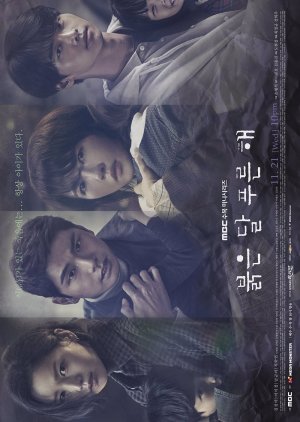
Story-The first thing that comes to my mind after watching Children of Nobody is that this drama is quite unique when compared to other dramas, in a lot of aspects. It begins and ends and does not give you any breathing space. It's one hell of a ride and mind you, it's not a happy one. Children of nobody touches on the concept of (spoiler- child abuse) and portrays it's lasting mental and social effects on the victim and his/her family even as an adult. No complaints there, as this drama does not hesitate to show the darker and gruesome aspects of (spoiler-child abuse). Some really tragic but realistic situations in the society are shown in this drama and makes you question people and humanity in general.Mind you, this one has no happy and mundane, friendly/ family drama going on. It does not waste time on any unnecessary topics and dives straight into the mystery. Every moment in every episode has a relevant connection to the story and all of it unfolds beautifully in the final episodes. The director has done an amazing job at connecting all the cases and characters and the story line surprisingly does not drop in any episode. In hindsight, I don't think I found any episode boring or lagging. This drama has enough suspense elements to keep the audience on the edge of their seat.Acting-Coming to the characters, the two main leads have done justice to their respective roles. The supporting characters are pretty good too. However the main female lead, Cha Woo Kyung was a tad bit dull in some scenes. She has the exact same blank,forlorn expression in most of the scenes and according to me she could have been more expressive but none the less her acting does not hamper the story in any way. The male lead, Ji Heon is top notch in his role of a cop. The characters are believable and draw you into them. The good guys make you root for them while the bad guys are creepy as hell. So that's a thumbs up. I was pleasantly surprised to see the children playing such profound and deep roles in this show and they have nailed it for sure. You sympathize with the children which deepens your animosity towards the inhuman parents and root for justice.
Music- There is not much of an ost or any profounding soundtrack here. Nothing memorable. For this kind of a drama it's not even required. The background score is good enough.
The best part about Children of Nobody is that it keeps you guessing till the last episode as to who the killer is. It keeps you confused till the very end. I believe some people can actually watch this drama in one go. Apart from the social message on child abuse, it also leaves behind a very significant question for us to think over as to who the bad guy really is. This drama is definitely a must watch. Do not give it a miss.
Was this review helpful to you?

Was this review helpful to you?
"Being alive gives you an opportunity."
This drama is interwoven with earthy colors , subdued action scenes and sense of solidity and then there is a strong poetic undertone. You feel the weight of the subject matter and pacing is rather appropriate to maintain this tension throughout 32 episodes.What a gripping premise. It has to do with murders of the people who have gravely mistreated children. Themes are related and interesting, victims and perpetrators seem to be everywhere. Many interesting questions arise among which the most important seems: "Who has the right to judge?" or "At what point is the punishment justified?"
Have to say the producers were smart with execution so the beginning and end felt meaningful...even though there were many loose ends in the story. (Personally, I wish the policeman and the main protagonist adopted Ha-na and ended up together. )
I watched this after Blind, which thematically perhaps addresses the similar issues, and have to say Children of Nobody did better job with the story and the ending in. Although they had 32 episodes to do so, the plot did not feel like a drag. Blind had a more interesting premise and perhaps better villain. Acting was average I would say. There is not a single character that stood out, but neither there is any disruption. The topic seems to have been the focus, which perhaps might have been even an intelligent choice.
A few ideas I picked up from the drama that absolutely captured me (and can give you sense of the tone of this drama):
"The crimes of the living are diluted into life and relationships, and then they finally disappear altogether."
"Being alive gives you an opportunity."
"I am glad it was not me." (You will know when you see the drama)
I think it is a worthy watch if you are into these types of dramas. It tackles a serious issue that is worth digging into. I feel certain dose of responsibility after watching this.
Thank you for reading.
Was this review helpful to you?
This review may contain spoilers
A Good Thriller That Gets Lost in Its Own Story
“It was really a roller coaster of emotions and thoughts, but I still think the script could have been handled in a more consistent way. The story is very confusing at the beginning — up until episode 3 I was seriously thinking about dropping it, but after that it got a lot better.***SPOILER ALERT***
CWK’s storyline didn’t make sense to me. Why would the father hide his own daughter’s death, protect his murderous wife, and still swap the other girl for his own? That’s a lot of villainy, and at no point is the father (who barely appears) portrayed as abusive or cruel. And the whole memory loss thing felt extremely forced.
To me, the only plausible reason for the father and stepmother to go along with something like that would be if CWK herself had killed her sister. Maybe while they were playing. Maybe the girl hid in the fireplace and died in an accident. Then they would have done everything they did to protect her. In the end, that would have been her real hell. But the way it was explained in the show just doesn’t hold up.
The whole brothers storyline could also have been handled better. The ending felt rushed and Red Cry was caught in a very silly way. On top of that, we never really understand why he became a killer. Was he abused too? Did he even try to look for his brother when he came back? And why did he come back in the first place?
Which brings me to the next problem: the script drags on with repetitive flashbacks of CWK and her sister. The poor use of the 16 episodes makes CWK the only character with real depth, which becomes frustrating at times because the other protagonists seem to have motivations driving their actions, but we never actually get to see them.
The relationship between detective KJH and his girlfriend? Did she lose a child? Why did he react that way when he found out she was pregnant? I thought he had also been abused as a child… but apparently his life was good, like Eun Ho said. So where did that abnormal fixation on “every life matters” come from?
And what about the last-minute drama with the police officer? And the little boy Shi Wan?
Final verdict: The story is good. I’d recommend it to anyone who enjoys a good thriller, but the lack of focus in the writing really holds it back.
PS: A lot of people excuse Eun Ho because he had a sad life, but not everyone who has a sad life becomes a murderer. That’s not a justification.
Was this review helpful to you?

Story -
As i said above the story was different and mind blowing from the beginning. A set of mysterious murders take place without any trace or evidence, the dectatives are trying very hard to figure out the killer. ,There is child abuse and things are quite complicated and even more suspicious. The dectative suspect many people involved in the spot or related to the victims. The investigation going deeply and it also involved emotional pain and suffering.There are some hard hitting emotional moments.. last 5 episode before the finale was just outstanding..
Acting -
All characters are awesome and real. Some of them are very mysterious. You will definitely fall in love with each and every characters
Music-
This is a throughout investigation journey, so the back ground score playing an important part of it. And it was superb. It makes this drama more intense and realistic with that extraordinary bgm.
Making -
Am so stunned to see the technical side of the drama, especially cinematography. It looks so real in each and every frame. The dark scenes are looks so magical and it created a horror feeling in some shots.
Last word -
You guys should just give it a try, its not an ordinary style drama, it has even more realistic emotional intense and mysterious after each and every episodes throughout from the start to end. It will surely surprise you
ONE OF THE BEST INTENSE DRAMA I SEEN
Was this review helpful to you?

This review may contain spoilers
The haunting theme of Red Moon, Blue Sun
The story of Red Moon, Blue Sun reaches its closure in a poignant, poetic narration that brings home the full extent of the themes that have been woven so seamlessly into this breathtaking drama through the folktale.The moon, frightened of the dark night
wept every night.
"Older sister, I am afraid."
The older sister, worried for her younger sister,
decided to change places with her.
So, a blue moon
began to shine at night,
and a red sun
began to shine during the day.
It was thus that
the red moon became the sun
the blue sun became the moon
-- translated from C-subs
The theme of sacrifice and deliverance is prevalent throughout, and comes full circle in the finale. We see it in the unlikeliest of places - the motivations that drive Red Cry - both LEH and YTJ - to take the mantle of executioner upon themselves, and save those in need. But more than that, as I mulled over the allegory of the Red Moon and Blue Sun in CWK's personal arc, I find myself second-guessing myself over and over again, until at last... I can only come up with one conclusion... that CWK and little SK are reflected in both the one who sacrificed and the one who was delivered. CWK, alive and living in the light, who willingly takes on the long, tortured journey to finally uncover the truth and bring her sister's fate to light - literally (with the unearthing of her remains, kept buried so long under the fireplace) and metaphorically, with the reveal of the terrible truth of what happened.
By the same token, little SK who forgoes her claim to any wrongs she have suffered, choosing instead to draw her tormented sister towards the path of healing and redemption, a path that is made possible with the compassion and forgiveness that only she could have given.
Thus... how fitting that the drama ended on that final note... with the two sisters, while separated by life and death, but never apart... a constant, ever-present source of comfort and love, the balm to the void only the other could fill... each the Blue Sun to the other's Red Moon. Perfect.
Was this review helpful to you?

An awesome thriller!
LIKEFor the first four episodes, my heart was racing as everything seemed spooky and mysterious
When Woo Kyung completed a poem, my heart skipped a beat - omg that was scary
DISLIKE
Nothing to complain about a great thriller
MUSIC - personal fav
Smile again - Kim Min Seung
REWATCH VALUE
I'll re-watch someday as I have way too many outstanding dramas on my list
Was this review helpful to you?

Unlikeable FL
I'm writing this after watching 20 episodes (12 left to go) because of how frustrating it is to watch a moral drama with such an unlikeable FL (Cha Woo Kyung). Maybe things will change in the last 6 episodes to completely change my mind, but 10 episodes in, the show has been spoiled for me by the FL. It's too bad because so much of the show is good: acting, plot, sense of mood/mystery/suspense. It tackles a tough issue and does it well--no makjang elements or silly comedic relief here. But for a show that is about good vs. evil, I found myself being frustrated by how unconvincing the good element is. I'm not saying that the heroine needs to be 100% purely good, but the FL is so self-righteous and so blind/defensive about her motives/actions that it's hard to root for her. Other than her desire to see child abusers punished--and who doesn't?--she is not a nice, likeable character; she does not treat others around her--colleagues, husband, daughter--very fairly. So at least partly due to her strong sense of moral cause, she is stubbornly blind to her moral failings. Especially frustrating is her inabilility to admit her weaknesses and ask for help, when she spends all of her time/energy demanding that everyone else fall in line with her sense of judgment. I wanted to root for her, but there's such a wall of coldness/self-righteousness around her that I just couldn't do it--and that has so far spoiled the drama for me.Again, perhaps everything about her motives/actions/personality will be explained in the final 6 hours in a reasonable way, but so far, I'm realizing that I need the heroine to be likeable for me to really care about what she cares about. Of course, child abuse is something we can all agree should be prevented/punished, but fighting against child abuse shouldn't excuse other types of moral failings.
Was this review helpful to you?

Perfect in every sense of the word
In one word ... It's a masterpieceIn one word ... It's a masterpiece
In one word ... It's a masterpiece
In one word ... It's a masterpiece In one word ... It's a masterpiece In one word ... It's a masterpiece In one word ... It's a masterpiece In one word ... It's a masterpiece In one word ... It's a masterpiece In one word ... It's a masterpiece In one word ... It's a masterpiece In one word ... It's a masterpiece In one word ... It's a masterpiece In one word ... It's a masterpiece In one word ... It's a masterpiece
Was this review helpful to you?
This review may contain spoilers
Noir drama that keep us hooked without knowing.
Maybe you all will not believe I gave all a round perfect star for story, cast, music etc.It just such a long long long time South Korea did a pure one on those genre, based on child which happend only on big screen like the one Bae Doona eonni took. Just on story itself this drama did ensure their winning, all character have their own past base story which made them do like that, even I who usually get whose the criminal and plotline did lost because their are tons of possibility that happend in here.
The cast from Kim Sunah who get a title of queen of romcom from her previous drama with Hyunbin (My lovely Sam Soon) did a pure genre of these thriller, criminal, etc which drained the actor energy to potray the character, which maybe she did train in Woman's Dignity. Our Lee Yikyung first male lead role *congratulation(if you ruled out Yoo Mi's Room) after countles of supporting character like bully student in School 2013 (our Woobin and Jongsuk oppa deul), young version in Nine, You, Who came from star as the killer's secretary, and Descendant of Sun as contractor worker which made him into a stardome limelight. Nam Gyuri (49days) and N which his acting become more and more better even leap into B class actor after the disaster Sassy Go Go even when the story was good. More of it all the children actor and actress sure did a very good job (cant wait for them grow up like Nam Dareum and do pick a lot of good pieces in drama and movie or another job in variety or such) It make us believe the PD, Screenwriter did their homework for made a plausible story and casting a good actor which sync perfectly into their assigned roles.
Drama set, vehicle, even their costumes will not like your usual drama which a lot of kind ppl scene, this drama is 99,99% art drama. Not so glamorous, pricey (even the real one those are cost us for fasting in months).
Music too sure, keep us being creep as the msytery happen etc. Only a total detective and such will love this kind of story so for others who cant handle it should not watch it because it's not your pinky pinky love story and such plus bit of humour like in Son, The Guest, its total dark drama.
Was this review helpful to you?

Uma poesia sombria sobre o trauma, a justiça e os abismos da psique.
Children of Nobody é um thriller psicológico que utiliza a estrutura de suspense investigativo para explorar, de forma simbólica e poética, as marcas deixadas pelo trauma infantil. A série constrói sua força na densidade emocional da protagonista, uma psicóloga infantil que, confrontada com eventos misteriosos, mergulha numa jornada de desintegração e revelação de memórias reprimidas.A narrativa, fluida e fragmentada, articula-se entre o mistério e o psicodrama, tensionando os limites entre justiça institucional e justiça subjetiva. A obra estrutura-se em torno de três eixos: trauma e identidade, a omissão das instituições diante da violência doméstica, e os dilemas morais da reparação. Os poemas infantis, os símbolos cromáticos e os espaços oníricos ampliam a carga emocional sem recorrer ao sensacionalismo.
Cha Woo-kyung, atravessa o enredo oscilando entre vítima e possível agente de vingança, numa trajetória que levanta questionamentos éticos profundos sobre culpa e redenção. Já o detetive Kang Ji-hun opera como contraponto racional, cuja evolução permite à obra discutir as insuficiências da lei diante de realidades traumáticas. O vilão do Dorama atua como uma espécie de entidade, que julga os abusadores que a justiça não é capaz de julgar, trazendo um questionamento forte sobre o que está de fato correto: o que a lei determina como sendo justiça ou a justiça é amparada puramente pela moralidade sendo justificável fazer justiça quando o estado não pode ir além da lei?!
Apesar de certas limitações, como a previsibilidade de algumas revelações, a falta de desenvolvimento e desfecho de algumas relações iniciais e finais que foram deixados de lado e o uso excessivo do simbolismo nos episódios finais, Children of Nobody é uma obra ousada, que recusa a catarse fácil e oferece, em seu lugar, um retrato sombrio e sensível sobre os destroços da infância e os limites da justiça. No geral é uma obra bem redonda e sem grandes furos, mas também sem grandes emoções.
Was this review helpful to you?