
















 Let's Play: Date a Drama (Melody Edition)
 - Italiano
- Español
- Bahasa Indonesia
- Русский
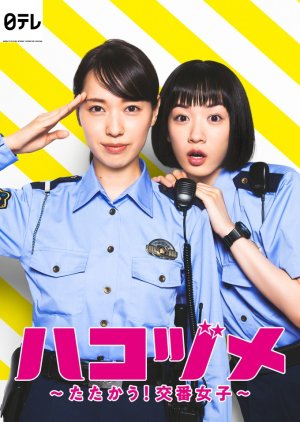
- Titolo Originale: ハコヅメ ~交番女子の逆襲~
- Conosciuto Anche Come: Hakozume Tatakau! Kouban Joshi , Hakozume: Koban Joshi no Gyakushu , Packed Up: A Police Box Woman's Counterattack , Hakozume: Tatakau! Koban Joshi
- Regista: Sugawara Shintaro, Nagumo Seiichi
- Sceneggiatore: Nemoto Nonji
- Generi: Mistero, Commedia, Vita
Cast & Ringraziamenti
-
") Nagano MeiKawai MaiRuolo Principale
Nagano MeiKawai MaiRuolo Principale -
") Toda ErikaFuji Seiko/"Mountain Mesu Gorilla"Ruolo Principale
Toda ErikaFuji Seiko/"Mountain Mesu Gorilla"Ruolo Principale -
") Muro TsuyoshiIgasaki Shuichi [Commander of Machiyama police box]Ruolo di Supporto
Muro TsuyoshiIgasaki Shuichi [Commander of Machiyama police box]Ruolo di Supporto -
") Miura ShoheiMinamoto Seiji/"Moja" [Detective]Ruolo di Supporto
Miura ShoheiMinamoto Seiji/"Moja" [Detective]Ruolo di Supporto -
") Yamada YukiYamada Takeshi [Detective]Ruolo di Supporto
Yamada YukiYamada Takeshi [Detective]Ruolo di Supporto -
") Nishino NanaseMakitaka Miwa [Detective]Ruolo di Supporto
Nishino NanaseMakitaka Miwa [Detective]Ruolo di Supporto
Recensioni

Unboxing Kawai
Before the show even really starts, Kawai’s resignation letter ends up in the trash and Fuji just picks it up like a Fami-Chiki chicken wrapper. That one simple gesture is basically the entire plot in a single beat. Fuji literally picks up Kawai and refuses to let her walk away from herself, which is the exact kind of aggressive support I live for. Kawai is seconds from quitting for good. She has been grinding away at the police box for who knows how long and it shows. Physically and mentally she is running on empty. No one seems to notice her and she has never felt appreciated even though she is supposedly the one keeping the neighborhood safe. On top of that the job itself feels meaningless most days, just a constant, unglamorous grind with zero reward. Then comes the absolute peak of the show where she finally snaps and screams that she wants a boyfriend just like in the manga Tsundere Senior and Spoiled Childhood Friend's Chin-up Battle. It is so ridiculous and entirely her. Fuji’s calm, deadpan presence right next to her makes the whole scene twice as funny. Nagano Mei completely inhabits that specific brand of exhausted, awkward charm. I am especially obsessed with Kawai’s police sketches because they are equal parts atrocious, hilarious, and cute. They look like something a very stressed child would draw while hiding under a desk yet they somehow capture the essence of the suspects in the most cursed way possible.Fuji is the perfect anchor for all that mess. Toda Erika is flawless as the ultimate romanceless Robocop and I am obsessed with her steady presence. It turns out she did not actually get punted down to the police box as some kind of punishment. She went there with a mission, hunting for the hit-and-run culprit that has been haunting her, and she kept that secret buried deep until Kawai finally stumbled onto the truth. It makes her character feel so much sharper knowing she was operating on this hidden level the whole time. She does not waste a single second on fake motivational speeches. She just exists next to Kawai and shows her how to survive the grind through sheer competence and perfectly timed deadpan comments that hit like a ton of bricks. I loved how Fuji pushed her into things. She handed Kawai awkward social situations and responsibilities she clearly felt unready for but it never felt like bullying. Watching Kawai flail through conversations or botch tiny tasks while Fuji just stood there with that unshakeable stare was pure comedy gold. Every lesson was quiet and embedded in the chaos of the day-to-day. It felt like a much snappier, more grounded version of a Gintama mentor dynamic where the lesson is just about not dying while filing paperwork.
What really makes the show feel alive is the supporting cast. Muro Tsuyoshi as Commander Igasaki is the perfect mix of ridiculous authority and familiar presence. Miura Shohei’s Minamoto, or Moja, brings that weary detective energy that feels earned. Yamada Yuki, Nishino Nanase, and Fuchino Yuto slide into the space seamlessly. They create a police box that feels lived in. None of them are flashy or stealing focus. They just make the office feel real like personalities rubbing against each other and surviving the grind together. It is a nine-episode sprint but it never feels rushed or thin. The show knows exactly how long it wants to sit in this space. Every episode feels used, like time spent rather than time passed. The chemistry between Kawai and Fuji in that tiny office is the only thing that mattered. The station looks messy because it is messy. It smells like paperwork and stale coffee and resignation. Their bickering never feels mean-spirited, just familiar. It is two people who realized the world is a disaster and they were the only ones standing between the paperwork and the public. Kawai does not suddenly become a superhero. She just learns how to occupy her own space because Fuji trusted her to hold it together even when she was panicking. Her awkwardness becomes part of her charm and Fuji’s quiet guidance makes it feel like a safe, lived-in space to stumble.
I loved how the show ended right back where it started, sitting in the box and complaining about the never-ending pile of work. It is so fitting because the job is still a thankless grind and the coffee is still stale but everything has changed for Kawai. She is still venting but she is not looking for the exit anymore. She has been saved from that initial despair and she is finally exactly where she needs to be. The production itself is modest and that is exactly why it works. No shiny sets or dramatic lighting, just a lived-in, slightly messy station that feels real. That simplicity lets the characters breathe and makes the quiet, goofy moments hit harder. This is a show that trusts its small scale to carry everything and it is so charming for it. I finished it feeling like I had spent time somewhere small and human with people I genuinely liked. Kawai's slow growth alongside Fuji's steady guidance, combined with the ensemble’s grounded presence and those cursed sketches, turned everyday boredom into something warm and funny.
Fuji picking Kawai’s resignation letter out of the trash literally saves her, while Fuji’s own presence at the box is revealed as a secret mission to find a hit-and-run culprit. Kawai is exhausted and hilariously human, punctuated by her boyfriend breakdown and her atrocious yet cute police sketches. Nagano Mei and Toda Erika anchor the show with perfect chemistry, supported by a lived-in ensemble that makes the police box feel alive. Nine episodes, tight and deliberate, small scale, and charmingly awkward. The ending brings them full circle back to the box, still complaining about the work, but showing that Kawai has finally found her place and is staying for good.
Questa recensione ti è stata utile?

Light hearted entertainment
This drama is about how two lady cops worked together to look after a small rural town in Japan. The icy cold disciplined senior Fuji and the nervous rookie Kawai. On the surface, it appeared as a light hearted stab at policewomen. On a deeper level, it was about friendship, trust and finding happiness in the work they did together. I thought Kawai did a fantastic job from beginning to end. Her role managed to salvage some of the unnecessary jokes and follies which slowed the pace of the drama down. I almost gave up then. As the drama went on, one could genuinely felt the incredible bonding between them. One must stay to the end to appreciate what comradeship was all about. This was well acted out. Nevertheless, an enjoyable watch. The original sound track was good too. I don’t think I will watch it again.Questa recensione ti è stata utile?