News


The Road to Splendor Review: A Slow-Burn Journey Worth Every Mile
# The Road to Splendor (花开锦绣, 2026) — Review*Note: this review covers the 2026 historical drama starring Ding Yuxi and Deng Enxi — not to be confused with similarly titled series like The Rise of Ning (锦绣安宁).*
## Premise
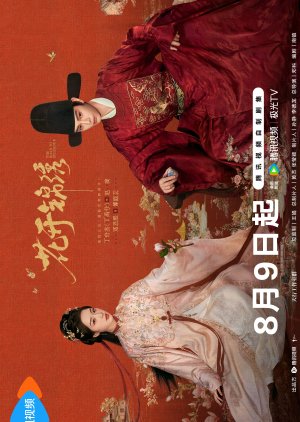
The Road to Splendor, which premiered on August 9, 2026 on Tencent Video with a simultaneous broadcast on Dragon TV , is a 36-episode historical romance laced with political intrigue . The story follows Fu Tingyun, a noblewoman falsely accused of an illicit affair on the eve of her arranged marriage, who escapes execution at the hands of her own family — desperate to protect a chastity arch that matters more to them than her life. Her unlikely savior is Zhao Ling, an underground salt smuggler with ambitions far beyond his humble station. Forced onto the road together, they pose as a married couple and flee from the Jiangnan heartland toward the northwest frontier .
## What Works
**The leads.** Ding Yuxi and Deng Enxi reunite here after Melody of Golden Age, and their chemistry is arguably the drama's greatest asset . Ding Yuxi carries Zhao Ling's transformation — from a street-smart salt runner scraping by on wits to a man who stands, unflinching, in rooms full of the empire's most powerful people — with remarkable emotional precision. Deng Enxi gives Fu Tingyun a quiet steel; hers is not a damsel's arc but a woman's deliberate reclamation of her own life, and the drama wears its themes of female awakening and resistance to feudal ethics on its sleeve.
**The writing of the journey.** What elevates this above standard costume-romance fare is that the romance is built on survival. Zhao Ling and Fu Tingyun begin as a transaction — silver and food for protection — and trust is earned kilometer by kilometer, through famine, bandits, and betrayal. When they do fall in love, it feels inevitable rather than scripted. Their bond is forged from choosing each other again and again when walking away would have been easier, and that gives the love story a sturdier foundation than the usual flutter-of-butterflies approach. Along the way, the pair stumble onto evidence of corruption in the salt administration, pulling them from a road story into the dangerous machinery of court politics — and giving the drama's middle stretch a welcome engine of suspense.
**The craft.** The production favors a grounded, warm-toned palette over glossy artificiality, and the cinematography frequently lets images do the talking — framing nobles above and commoners below to visualize class without a word of dialogue. The costumes and desert-and-frontier locations are gorgeous, and even when the story turns heavy, the drama remains visually alive . The supporting cast deserves mention too: several antagonists are written with coherent, venal logic rather than cartoonish evil, and Fan Yake's arc — a onetime friend who betrays Fu Tingyun out of ambition, survives, and eventually rebuilds her life on her own terms — is one of the most quietly satisfying threads in the show.
## Where It Stumbles
The romance is an extremely slow burn , and the drama draws out the wedding so long that even devoted viewers were begging for it. The bigger problem is the finale. For a story this invested in justice, the ending is astonishingly soft: many villains face consequences that feel disproportionate to their crimes, and some are handed redemptive or even content endings . The leads' epilogue is also frustratingly vague — we're shown freedom and a child, but little concrete sense of what their victory actually became. After thirty-six episodes of fighting, the audience has earned more closure than this.
## Verdict
Flawed but genuinely rewarding, The Road to Splendor is one of the stronger historical dramas of 2026 — currently sitting at a 7.2/10 on IMDb — and it rewards viewers who come for patient storytelling, political chess, and craft rather than constant romantic payoff. I land at roughly 7.5/10: exceptional leads, handsome production, and a road-trip structure that keeps momentum, docked points for a finale that forgives too much and explains too little. Recommended.
Was this review helpful to you?
Exquisite FL!
The script is good though some of the preoccupations seem overdone. Yes, salt was important in its days but some of the details seem rather incredulous. Salt as snow ......then salt into brine ...salt from the cliffs to salt in the capital....yet there is not much details into the actual salt operations.There is much emphasis on propriety where even a glimpse of undergarments (not worn) can give rise to a scandal. However the ML and FL chooses to remain unmarried for 5 years and yet spend much time in close proximity.
The FL is a statement in grace. There is no need for grand standing. Her glances are enough to shoot arrows into hearts. Minimal motions required. just a roll of her eyes does more than the usual fluttering antics of lesser beings. Ancy Deng truly impresses with her exquisite grace and elegance. In anger or in tears, her expressions are measured yet conveys the full measure of her emotions. She is the best reason to watch this drama.
The ML struts and poses. He likes to fold his arms akimbo and kicks his friends yet his friends love him. Initially, as a salt smuggler, he was a trifle irritating. When he morphed into the soldier attempting to earn credits, he had more lipstick than the FL. He only came into his own in the later stages as a favoured imperial official when he sprouted a goatee but still lacks the dignity of high office and age. Maybe because his clothes were oversized.
Wen ZR as Mdm Yu brings her repertoire as the consummate mother another level up from "Love's Ambition", where she was brilliant as the domineering mother. Every mannerism and every nuance in her speech carries forth another twist.
Cinematography is excellent esp the autumn scenery in Ganlin. Amazing colors and details of the leaves much appreciated. The desert scenes were magnificent. The Capital shots were a little weird. There are people when there are crowds. At times, its just the protagonists by themselves. I can't believe an execution can be carried in private by one person. And often the streets can be totally empty. Whoever did costumes had strange taste. I wonder what were the soldiers' head gear made of and where the inspiration came from? And it certainly is a little strange when the soldiers' had more make up than the maids. The ML certainly had more heavily slathered on lipstick as a soldier than the FL in Ganlin.
There is too much convenience in the story. I can't believe anyone can kidnap a "Second Ranked" lady and then allow her maid free to inform everyone of this most heinous crime. Is it that easy to just grab anyone to be a concubine, especially if the victim is one of the most prominent lady of the Capital? Towards the end, it seems like the story ran out of twists and there is literally more than half an episode dedicated to many little happy endings.
Was this review helpful to you?

Events Are Not the Same as Narrative Uncertainty
By Episode 36, The Road to Splendor resolves virtually every major conflict in perfect symmetry.The corrupt Yu family finally falls. Their assets are confiscated, and Madam Shu and her son are reduced to commoners. Peace is restored, the salt trade is stabilized, Zhao Ling gives up his imperial honors to live quietly with the woman he loves, and the surviving women finally break free and embrace their independence.
In other words:
Corruption: punished.
Injustice: corrected.
Villains: defeated.
The salt conflict: resolved.
The hero: gives up power.
The couple: together.
The women: independent.
It is an almost perfectly symmetrical resolution to the conflicts established from the beginning.
Of course, many things can happen along the way: betrayals, separations, persecutions, revelations, and life-threatening situations.
But events are not the same as narrative uncertainty.
If we already know where every piece ultimately has to fall, we may not know exactly how the story will get there...
but the destination was never really in doubt.
Was this review helpful to you?

True character development
When this show was announced, I wasn’t sure on what to expect because the leads have acted before and I didn’t really like it. However considering it’s been directed by the same director who has directed several shows which have all been phenomenal, I decided to give it a try.The setting— spectacular. From the costumes to the makeup to everything, it was really impressive.
The acting is what has blown my mind. Ancy Deng has improved so quite a lot. She looks matured and her acting shows drastic change from her previous roles. Ding Yuxi has always been a promising actor to me but again he too looks mature now.
The small details played an important role in this show. I love how they showed how the couple have matured, not just by their dressing but also the body language. Zhao Lings walk when he was still working with salt was entirely different. He was young and carefree and his body language spoke for his personality and now that he’s actually an official, his walk is refined, and it actually feels like the military has changed him. The same goes with Tingyun, her open hair and girlish personality changes rapidly as she grows into a woman of nobility and respect. Her hair style changes from one of a young woman to of a respectable capital lady with that bun. Huge respect to whoever has actually put in so much effort in these details.
My personal favorite- Wen Zheng Rongs acting is phenomenal. I’ve admired her for so long over her acting bcz she doesn’t get a lot of screen time or lead shows but whatever she plays– she’s actually seen as that character. In The Glory I actually hated her in the start (the character), but I ended up crying at the end bcz SHE IS such a good actress that the emotions are actually seen in her acting.
Though a great show, I felt like it wasn’t balanced. The starting was good, the middle not boring but it was light so by the time the ending episodes came, it got really heavy, it gave me a headache.
Also a side observation— almost all the side characters have been played by actors who’ve worked in some or the other popular show 😂
Was this review helpful to you?
that was SUCH a good drama
I have been in a drama slump for quite the while and even if i watch a drama its only like an episode or two a day but this had me hooked. everything was sooo good. the story was very unique and fresh not the typical leads who are born into power and just navigate a few problems they actually showed how they rised together from nothing.the acting was phenomenal. both the leads and the supporting cast did a greatt job
and overall the whole Drama was amazing but like the last few episode around 27 28 it become a bit repetitive like someone they knew would betray them and put a case on them and then the next 2 episodes they'll solve it and then the next episode ther will be another case. but still it was very very fun to watch
if you haven't watched it yet go watch it nowwwww
Was this review helpful to you?

This review may contain spoilers
If you loved BLOSSOM and THE DOUBLE, you will definitely love this one!
For my many years of watching c-dramas, this is actually my first time writing a review, so please bear with me. I started watching this drama because of DYX, plus the plot seemed interesting, and it really was! The first episode was already captivating, and I must say... unique. It immediately made me curious about where the story was going and what kind of journey these characters would take.The character of Fu Tingyun immediately captivated me, and Deng Enxi's portrayal is perfect! I initially thought she was just a simple, innocent, and fragile character, but I was amazed by how much her character grew as the plot progressed. She isn't the kind of female lead you can understand completely after just a few episodes. There's so much more to her character as the story unfolds, and I really enjoyed discovering those different sides of her.
TRTS made me feel as if I were watching my favorite historical c-dramas (Blossom & The Double) for the first time again. It feels nostalgic and, at the same time, refreshing. There were moments that gave me the same excitement I felt while watching those two dramas... the kind where you finish an episode and immediately want to know what happens next. It's been a while since a drama made me feel this invested in every little development.
Okay, so let me talk about DYX's character, Zhao Ling. Unlike the male leads in Blossom and The Double, who both came from noble families, Zhao Ling is an orphan who came from a humble background, at the very bottom of the hierarchy. He's a simple man who smuggles salt to provide for his brothers. And that's what makes his character so interesting to me. He's not someone who starts with power, status, or an influential family behind him. He starts with almost nothing, yet there's so much more to him than what meets the eye.
One of the most beautiful yet heart-wrenching scenes that I loved (and is probably my favorite) is when Zhao Ling chose to save Fu Tingyun despite what she had done to him. That scene genuinely stayed with me. For me, that was the turning point of everything, and it was what fueled me to keep watching the next episodes. I became so eager to see how their lives would change after that event and, more importantly, how their relationship would develop from there.
I really enjoyed watching how their relationship gradually developed because it wasn't something that felt rushed. There are so many circumstances that put them against each other, and yet there are also moments that make you wonder how these two people will eventually find their way to each other. Their journey is definitely one of the things that kept me hooked.
Also, my stress levels while watching this drama were as high as what I experienced watching The Double! Gosh, the villains go around plotting schemes in almost every episode! There were so many moments when I was just sitting there thinking, “PLEASE, CAN THESE PEOPLE JUST HAVE ONE PEACEFUL DAY?” 😭 But I must say, the villains are sooooo well-written. They're not just there to create unnecessary conflict. Their actions actually push the story forward and make the stakes feel much higher.
And that's probably one of the things I appreciate most about TRTS: it knows how to keep you invested. Whether it's the characters, the political schemes, the relationships, or the constant twists, there's always something that makes you want to watch just one more episode. And yes, DYX was the reason I started watching... but the story is what made me stay. 🥹
I LOVE MY FU TINGYUN AND ZHAO LING SO MUCH! I ALSO LOVE THE GANLIN PEOPLE <3
Was this review helpful to you?

This review may contain spoilers
What Love Can Demand From Us.
"When hearts are one, even strangers can walk the same path." — Xie Ting Yun⚠️ SPOILER WARNING ⚠️
This is a LONG review, and yes, I am going to talk about the actual story.
Major spoilers ahead for The Road to Splendor, including character development, political schemes, relationships, important reveals, and the ending.
If you haven't finished the drama yet, STOP HERE. Go watch it first. Then come back and let me overanalyze everything with you.
━━━━━━━━━━━━━━━━━━
👥 CHARACTERS
━━━━━━━━━━━━━━━━━━
Female Lead: Xie Ting Yun
Male Lead: Zhao Ling
Xie Ting Yun's Brother: Fu Ting Zhou
Xie Ting Yun's Childhood Friend: Fan Yake
Fan Yake's Husband: Yu Jingxiu
One of the court ministers: Grand Secretary Tian
Zhao Ling's Political Rival: Grand Secretary Yu
━━━━━━━━━━━━━━━━━━
☕ BEFORE THE SPOILERS
━━━━━━━━━━━━━━━━━━
I told myself I would try this drama with no expectations. Little did I know this show would destroy my sleeping schedule. Hurray! 🎉
There are a lot of things I want to unpack about this drama, so let's start.
The Road to Splendor follows two people from completely different worlds: Zhao Ling, a loyal and brave salt dealer from a humble background, and Xie Ting Yun, a noble lady falsely accused of having an illicit affair. Circumstances force them to flee together, and as they become entangled in conflicts involving their families, the salt trade, and the imperial court, their relationship gradually changes. What begins as necessity and mutual dependence slowly develops into trust, partnership, and eventually a love that feels earned.
One thing I really want to praise is the cinematography. There are scenes where the camera is noticeably tilted off its horizontal axis, making the frame feel slightly unstable, while other moments use wide or full shots to place the characters within their surroundings, often paired with atmospheric lighting. It creates some visually striking and emotionally charged scenes, such as when Xie Ting Yun confronts a tied-up Zhao Ling to propose an alliance so they can solve the salt-trade crisis, or when Zhao Ling's colleagues are shown watching him while Grand Secretary Yu stands between them. The framing often makes me pay attention not only to what the characters are doing, but also to how the camera wants me to feel about the moment.
Some viewers may consider this a slow-burn story, but I actually found it quite fast-paced. Almost every episode tackles a different subplot or conflict. Some take two or three episodes, especially in the first half, but there is usually a resolution before the drama introduces another problem. That structure made the show very bingeable for me. There was always another thread waiting to be unraveled, which made me click the next episode button more times than I should probably admit.
Now, let's dive into the themes and characters.
━━━━━━━━━━━━━━━━━━
🚨 SPOILERS START HERE 🚨
━━━━━━━━━━━━━━━━━━
One of the most noticeable themes throughout the drama is the filial duty of children toward their parents. It becomes a major conflict for Xie Ting Yun early on and returns later when she tries to settle down with Zhao Ling. What intrigued me wasn't simply the question of whether children should obey their parents, but something deeper: can filial piety still be considered virtuous when the values your circumstances demand of you contradict your own perception of right and wrong?
The drama explores this through several characters. The Emperor faces the dilemma of choosing between his love and duty toward his grandmother and the welfare of his people. Fu Tingzhou faces another version of it when protecting his mother and sister comes at the cost of obeying his father's selfish demands. The circumstances are different, but the conflict is similar: when family duty and personal morality point in opposite directions, which one should you follow? That is what made this theme feel surprisingly relatable. The circumstances may belong to an ancient setting, but the conflict between family expectations and personal values still exists today.
The drama also gave considerable weight to friendship through Xie Ting Yun and Fan Yake. They grew up together and were almost like sisters born from different wombs, but their friendship fell apart because of a man. He essentially forced Fan Yake to choose between him and her friendship with Xie Ting Yun, and the moment she chose him, the friendship was broken. Like, zip. Nada. Tapos.
What made this more interesting was the irony that came later. After losing that friendship, Fan Yake entered the high noble circle and tried to build new relationships, only to eventually question whether those people even considered her a friend when conflict arose. It made me think about the difference between genuine friendship and simply being surrounded by people who call themselves your friends when everything is going well.
Marriage is another theme that quietly runs through the drama. We see it through Fan Yake and Yu Jingxiu, Yu Jingxiu's parents, Xie Ting Yun's parents, and eventually Xie Ting Yun and Zhao Ling. Their marriages are very different, but they all raise questions about commitment: what does it actually mean to remain loyal to someone when circumstances become difficult?
There is even a moment when Xie Ting Yun describes Fan Yake to her widowed aunt and sees similarities between them, and another when she tells Zhao Ling that their circumstances could eventually make them like Madam Yu and her husband. These comparisons add another layer to the romance between the leads because their relationship isn't simply about falling in love. The drama keeps asking whether they can remain committed to each other without allowing family, duty, or political circumstances to turn their marriage into something transactional.
Yu Jingxiu is one of the most fascinating contradictions in the drama. He once told his mother, "You and Dad are truly made for each other. One uses me and the other threatens me." Yet ironically, he eventually became both. He uses and manipulates people to get what he wants and constantly threatens his own wife. He really is the Yu family's heir, not just in status, but in the way he understands power and relationships.
What makes him even more frustrating is his self-pity. He hates being treated as a tool, yet he has no problem treating other people the same way. He complains about the system while perpetuating it.
At first, I thought he was similar to Liu Chang from Flourished Peony, but I eventually realized that their trajectories are almost the opposite. Liu Chang is a coward first, and his circumstances gradually push him toward becoming worse. Yu Jingxiu is already willing to do terrible things; his circumstances simply expose the coward underneath. Liu Chang's cowardice leads him toward evil. Yu Jingxiu's evil exposes his cowardice. And that, to me, makes Yu Jingxiu far more ironic and frustrating.
That also makes Zhao Ling's description of him in Ganlin almost perfect: "You're a beast in fine clothes." Beneath the status, refinement, and respectable appearance is someone who uses, manipulates, and threatens others just as his parents do. He isn't merely the victim of the Yu family's way of doing things; he has become its perfect heir.
And then we have the two leads. Zhao Ling and Xie Ting Yun have insane chemistry on-screen. At first, Zhao Ling has this playful, easygoing personality while Xie Ting Yun is reserved. What I especially appreciated in the earlier episodes was how much Zhao Ling's feelings were communicated through subtle acting rather than dialogue. When Xie Ting Yun gives him a toast after they solve the salt-trade issue, just before he leaves for the army, he looks at her intently and then sighs. Whenever she proposes marriage and he waits for her to admit that her reason isn't simply convenience or an alliance, you can see him grabbing whatever is nearby just to maintain his composure. Those tiny gestures made their romance feel like a genuine slow burn because his feelings were already there long before he was willing to say them. And as the story becomes increasingly serious in the second half, both of them have to change with it. Zhao Ling became serious and Xie Ting Yun became more reserved.
Grand Secretary Tian, however, became my favorite character. Zhao Ling may be the character I find most fascinating to analyze, but Tian is the one who gives me the most fun watching him.
What initially looks like comic relief—his habit of "sleeping" in court—is actually a clever political tactic. Whenever the court becomes divided and the Emperor is caught between opposing sides, Tian gives him an easy way out. He will claim, "I have disgraced the court. Age has weakened me, and I can no longer stand for long. For me to grow so feeble-minded... I truly have no face to remain at court." The Emperor takes pity on him, someone is asked to help him, and then: "Court dismissed."
If you pay attention, the repetition reveals that this isn't simply a running joke. Tian is breaking the tension and giving the Emperor a way to end a political deadlock without openly taking either side. He is smart enough to keep his real opinions private, sharing them only with his daughter and son-in-law. In court, he remains deliberately unreadable. That is what makes him such a fascinating political character: he can be a powerful ally and a dangerous enemy precisely because you never quite know what he is thinking. Zhao Ling and Xie Ting Yun managed to crack his mask a little, but that mask is also what keeps him politically safe.
Then there is the Million-Tael Mausoleum renovation project, which to me was basically Zhao Ling and Xie Ting Yun playing one giant game of chess while everyone else was looking at individual pieces. What initially looked like separate political moves gradually revealed itself as part of a much larger scheme. I really enjoyed watching the pieces fall into place because it showed that the real battle wasn't always happening where the court thought it was happening.
What I found even more interesting was what happened to Zhao Ling afterward. He was stripped of his official position and reduced to a commoner after taking responsibility for the mausoleum project, but the Emperor later reinstated him, gave him the lapis lazuli bracelet, and immediately entrusted him with the disaster-relief program. Then the Tian family discussed what Zhao Ling and Xie Ting Yun had accomplished, with Grand Secretary Tian observing that they had more than ambition, they had the nerve and ability to wield power. The scene then cuts to the Xie residence, where merchants are already lining up with gifts for Zhao Ling. It felt like the drama was showing us, rather than simply telling us, that Zhao Ling and Xie Ting Yun had emerged from the scheme with a completely different level of political influence.
Zhao Ling also became willing to fight fire with fire, particularly in the way he dealt with Grand Secretary Yu. This became especially clear after he had a nightmare about Yu targeting his wife. Instead of simply trying to defend himself against Yu, Zhao Ling realized that he needed his own political power to protect her. He formed a faction and showed his lapis lazuli bracelet to the ministers, who then pledged their support to him.
Another thing I noticed was Zhao Ling was beginning to do exactly what Grand Secretary Yu had been doing all those years in court—building a faction, gathering influence, and using political power as protection. His political growth wasn't simply about becoming stronger. He was learning to survive by adopting the very methods of the people he was fighting against. But that growth comes with a psychological cost, and I think this is where Zhao Ling becomes the most interesting character in the drama.
Zhao Ling is probably the most complex and best-written character arc in the show for me. His journey from a playful, easygoing salt-dealer to one of the powerful figures in court reminded me of Walter White's transformation in Breaking Bad, not because their stories are the same, but because both characters gradually move further away from the person they initially appeared to be.
You can see Zhao Ling struggling with himself, especially when he becomes trapped in the General Mo donation-murder and Northwest corruption case. The exhaustion and fallen resolve visible on his face say more than his dialogue does. He knows what he is becoming. He knows what he has had to sacrifice. And yet he keeps moving forward because stopping would mean leaving himself and the woman he loves vulnerable. His rise becomes even more painful after he executes his former colleague in the Northwest and is subsequently promoted. On paper, he is succeeding. In reality, you can see the cost of every step upward.
What makes Zhao Ling's character arc so painful is the contradiction between the man he believed he was and the man he gradually had to become. He once believed, "There are lines we can never cross." Yet he eventually crosses that very same line, not simply because he wants power, but because he promised to protect the woman he loves. And the cruel part is that he was right about one thing: to protect her, he needed to be at the top. The higher his position, the more power he had to shield her. But getting there also meant becoming the kind of person he once believed he could never be. That is why his rise feels both like a victory and a consequence. He didn't lose his way by accident. He chose this road because he loved her.
And that is the real tragedy of Zhao Ling. He is not simply a good man who became powerful. He is a man who understood exactly what power could turn him into and still chose to climb because, in his mind, protecting her was worth the cost.
Overall, The Road to Splendor is a bingeable romantic story about two people who choose each other, but underneath the romance, family conflicts, and court politics, I think the drama is ultimately telling us about what love can demand from us.
Sometimes protecting the person you love means becoming stronger. Sometimes it means entering a world you never wanted to belong to. And sometimes, it means becoming the person you once believed you could never be.
Rating: ⭐⭐⭐⭐⭐ (5/5)
Was this review helpful to you?

It's Really Good!
I was excited to start this drama and lemme tell you it did NOT disssapoint! i was hooked from the very first episode and just couldn't stop watching, i dont usually watch on going dramas but i couldn't stop mysself. Ding Yuxi once again leaves me speechless with his acting, his mannerisms, the way he walks, talks, looks, moves and EVERYTHING fits the charac ter perfectly. you can tell that Zhao Lin was from a poor upbringing just by how good he portrays him. And Deng Enxi didn't fall short ! that scene in ep 4 was amazing! Needless to say they are doing an amazing job with this drama so far i recommend it !i love how there is betrayal, love, drama and much more it basically has nearly everything you could wish for in a drama.
Was this review helpful to you?
BEAUTIFUL ENDING!!! BEAUTIFUL VISUALS!!
THIS C DRAMA IS HEAVILY POLITICAL....FROM EPISODE 4 TO EPISODE 35....THE ENTIRE CAST CARRIED THE STORYLINE AND PLOTS PERFECTLY..THE CINEMATOGRAPHY WAS BEAUTIFUL AND THE OST WAS MADE FOR THE ROAD TO SPLENDOR ...THE FEMALE LEAD SHE'S VERY SMART ..AND THE MALE LEAD LISTEN TO HER AND BELIEVE IN EVERYTHING SHE ENVISION...OVERALL BOTH MALE LEAD AND FEMALE LEAD HAVE THE BEST CHEMISTRY...LOVE LOVE LOVE THE ROAD TO SPLENDOR..THIS IS ONE OF YOUR LOYAL FAN FROM JAMAICA 🇯🇲....I FORGET TO MENTION OUR MALE LEAD HE'S A COMPLETE GREEN FOREST 🌳 ❤❤❤❤❤Was this review helpful to you?

This review may contain spoilers
Boring
The story of *The Road to Splendor* is slow to get going. There is a lot of family drama, status, money, power, and hierarchy. Things start picking up around episode 4. The female lead is very annoying at first—much like the one in *Melody of Love*. 😤 She also gets the male lead into trouble. There is absolutely no chemistry—nothing at all. 💔 The story really starts to get tedious from episode 12 onwards. Her best friend Yake is in an unhappy marriage. That is one plus point: the husband is repulsed by his new bride, and things she does . 😒 I’m stopping at episode 14; it’s not worth it.I'm not a novel writter but give my two cents .
Was this review helpful to you?

This review may contain spoilers
1st half of drama was additive, 2nd half of drama needed more uplift
The first half of the drama was utterly captivating. Betrayal by a close friend, a scheming betrothed, and greedy relatives chasing wealth and freedom left the innocent Yun Ting vulnerable and at their mercy. At the same time, Zhao Ling stood out as a swaggering, arrogant anti‑hero—fighting for survival against corruption, bandits, and even his own gang, whose loyalty was bound only to money.The second half slowed in pace, shifting toward Yun Ting’s conflict with her father and the emotional strain caused by Zhao Ling’s guarded, tight‑lipped heart. In contrast, Young Yu openly expressed his love for her, creating sharp emotional tension. What shocked me most was the survival of members of the Yu family despite the cruelty and evils they had committed.
Two characters who left a strong impression were General Mo and his domineering wife. Uneducated, greedy, and obsessed with wealth, she manipulated him into accepting bribes, ultimately leading to his downfall and death. Even then, she refused to acknowledge her wrongs, instead blaming Yun Ting and Zhao Ling for his fate.
This drama vividly portrays the societal pressures faced by women, highlighting their suffering and lack of social rights—especially when unmarried. It is both a story of betrayal and survival, and a reflection of the harsh realities imposed by gender and tradition.
Was this review helpful to you?

This review may contain spoilers
When Peace Becomes the Real Victory
I started this one partly because of Ding Yuxi, but I stayed because the story gradually became much more interesting than I expected. The Road to Splendor begins with two people coming from completely different worlds—Zhao Ling, a salt smuggler with ambition and survival instincts, and Fu Tingyun, a noblewoman whose reputation and family position are suddenly turned against her. What follows is a long road through family politics, court intrigue, military power struggles, salt-trade conflicts, betrayal, and survival. WeTV’s own synopsis describes their journey as one of repeatedly facing family and imperial challenges together, and that really is the heart of the drama.What I liked most was that the story allowed both leads to grow into the people they eventually became.
Zhao Ling started out rough around the edges—street-smart, ambitious, and very much a product of the world he came from. But watching him slowly learn how to operate within the military and political system was satisfying. He wasn't simply handed power because he was the male lead. He had to prove himself, survive people who wanted him gone, and learn when to fight and when to calculate.
Tingyun also took a while to grow on me. Early on, there were definitely moments when I wanted to shake her because some of her decisions felt impulsive and unnecessarily dangerous. 😂 But I appreciated that the drama didn't leave her there. She became more observant, more calculating, and much better at understanding the social and political games surrounding her. Her development felt earned because she actually learned from the situations she survived.
And that's probably what made their relationship work for me.
They weren't simply a couple who happened to fall in love. They became partners. They learned how to trust each other, protect each other, and eventually make decisions together. I especially enjoyed watching their relationship move from survival and practicality into something genuinely emotional. The confession and kiss were probably one of my favorite turning points because by then, their feelings felt like the result of everything they had already been through together—not something suddenly inserted into the plot just because the drama needed a romance scene.
The political storyline had its frustrating moments, especially when the salt-trade conflict became increasingly tangled. There were also stretches where I felt the story could have moved faster. But unlike dramas where the complicated plotting eventually feels pointless, most of the major conflicts here eventually connected back to the larger question of who gets to control power, wealth, reputation, and ultimately their own life.
And then came the ending.
Honestly? I loved that they chose peace.
After everything Zhao Ling went through, he finally had the opportunity to hold onto rank, recognition, and political power. Instead, he chose to step away. Tingyun made the same choice. The two people who spent so much of the drama fighting to survive inside a world obsessed with status eventually decided that a quiet life together was worth more than remaining inside that world.
That is what made the ending feel satisfying to me.
They didn't “lose” because they walked away from power.
They won because they finally had the freedom to choose what kind of life they actually wanted.
And that, to me, is where the title The Road to Splendor becomes meaningful. The “splendor” wasn't necessarily the palace, rank, wealth, or political influence.
It was the life they were finally free to choose.
And of course… THE OST. ❤️🎧
I cannot review this drama without mentioning Liu Yuning.
His 《一诺》 (Yinuo / A Promise) serves as both the drama's official theme song and ending song, and honestly, it was such a fitting choice.
There is something about Liu Yuning's voice that carries distance, restraint, longing, and quiet devotion so naturally. And those qualities fit this drama surprisingly well.
The song revolves around promises, memories, and staying true to someone through the turbulence of fate—ideas that mirror Zhao Ling and Tingyun's journey almost perfectly.
By the time I reached the ending, hearing Liu Yuning's voice over the final stretch of their story made the conclusion hit differently.
And yes, I am absolutely biased. 😂
But even without the Liu Yuning bias, the song belongs here.
It wasn't just an OST I happened to like. It became part of the emotional identity of the drama for me.
The rest of the soundtrack also deserves credit. The OST album includes insert songs such as Li Jiawei's 《无归》, Xiao Aqi's 《云中鸟》, and Fei Yutao's 《黄沙骨》, giving the drama a broader musical palette beyond the main theme.
Still, 《一诺》 is the one I'll associate with this drama.
Because after watching Zhao Ling and Tingyun fight through everything, that song feels less like a love song and more like the musical summary of their entire journey:
a promise made, tested, and ultimately kept.
The Road to Splendor isn't a perfect drama. It has moments where the pacing could have been tighter, some political/salt-trade arcs became unnecessarily complicated, and there were definitely characters and decisions that tested my patience.
But by the time I reached the finale, I felt like I understood what the story was trying to say.
Sometimes the greatest victory isn't gaining more power.
Sometimes it's knowing when you already have enough.
And after everything Zhao Ling and Tingyun went through, seeing them choose a peaceful life together?
That was the ending I wanted. ❤️
💚 Would Watch Again?
Yes, especially for Zhao Ling's character growth, the political/military portions, and the later development of Zhao Ling and Tingyun as actual partners.
⚖️ What Worked
• Strong character growth
• Political/family power struggles
• Zhao Ling's rise from salt smuggler to respected high-ranking official
• Tingyun's gradual transformation into a more calculating and capable woman
• Partnership-based romance
• Satisfying HE
• A finale that actually matched the themes of the story
🚩 What Didn't
• Some early Tingyun decisions had me questioning her common sense 😂
• Certain political/salt-trade arcs became unnecessarily complicated
• Some portions could have moved faster
• A few conflicts felt stretched longer than necessary
Angst
Medium–High
Chemistry
Strong — especially once their relationship moved beyond survival and practicality.
Slow Burn
Yes. Their relationship develops gradually through trust, shared danger, and partnership rather than instant romance.
Genre Type
Historical • Political Intrigue • Family Drama • Military • Romance
My Rating
9.5/10 ⭐
Not flawless, but ultimately a very satisfying watch. And that ending? Peace over power. Every time.
Was this review helpful to you?