


 5
5 1
1



Generic, Commercial and Forgettable
Spooky in Love is a 100% commercial, generic and ultimately forgettable drama that will probably satisfy fans of its leads.The final episodes are little more than a checklist of unresolved plots: prosecutors, fraud, murder, breakups, shamans and a happy ending we could see coming from miles away. Everything gets resolved, but almost none of it produces any real catharsis.
Even the ghosts, once one of the drama's defining elements, are brought back at the very end in an attempt to create a melancholic reflection on life and death. But you can't neglect one of your main narrative devices for several episodes and suddenly expect it to carry emotional weight again.
The series tries to collect an emotion it stopped building long ago.
It isn't a terrible drama. It simply isn't unique, exciting or memorable.
It's just one more product from an assembly line producing essentially the same thing over and over
Was this review helpful to you?
This review may contain spoilers
A Film That Changes Its Thesis in the Final Act
The first two acts of this film establish a clear and compelling thematic direction, only for the final act to quietly replace it.The opening is exceptional. It builds two ordinary people connecting without status hierarchy, romantic pedestal, or aspirational fantasy. Their relationship feels grounded, emotionally honest, and free from exaggerated melodrama. The thesis appears simple yet rare: that two common individuals can connect purely because they do.
The pacing is not slow—it is restrained. Each scene advances the psychological conflict with intention. The emotional progression leads naturally to the public confession, which functions as the true climax of the story. By that point, the arc feels complete. The transformation is earned through vulnerability, not spectacle.
The issue arises in the third act.
The sudden death of the male lead does not emerge from prior conflict, thematic groundwork, or character decisions. It functions primarily as an external shock. More significantly, the narrative reframes this tragedy as the catalyst for her empowerment.
From a structural and psychological standpoint, this shift feels unearned. A character defined by insecurity, avoidance, and a retreat into emotional darkness would not realistically find immediate strength in the loss of her only source of validation. The film replaces process with symbolism.
The original thesis suggested that connection itself was enough. The final act implies that loss is what grants that connection transcendence.
That shift alters the film’s identity.
Tragedy does not automatically deepen a story. Structural coherence does. And here, the coherence established so carefully in the first two acts gives way to impact-driven symbolism.
The foundation was strong. The final turn changes what the film ultimately stands for.
Was this review helpful to you?

This review may contain spoilers
A Collection of Wounds, Not a Masterpiece
I completely understand why so many viewers connected with this drama. It is emotional, contemplative, and filled with wounded characters searching for meaning, recognition, and human connection.My problem is not with the emotions. My problem is with the structure.
The series constantly introduces new conflicts: abandonment, depression, alcoholism, failed careers, family resentment, infidelity, debt, lost children, artistic frustration, and industry politics. The result is a story that often feels less like a focused narrative and more like an accumulation of human misery.
Dong Man is the clearest example. After twelve episodes, he gains opportunities, support, recognition, an actor for his film, and even professional success. Yet he spends most of the series reacting rather than evolving. He suffers, wanders, shouts, and struggles, but rarely feels transformed by the journey. Meanwhile, Eun Ah receives the stronger arc. She makes decisions, confronts her past, changes her position in the story, and actively shapes her future.
The drama also introduces several ideas that never feel fully developed. Eun Ah's recurring nosebleeds are presented as an emotional symptom, yet the series never explains what they actually represent or how they function within its own world. The emotion-tracking watches are another example: an intriguing concept that is never explored beyond its symbolic value.
Many viewers describe this drama as profound, realistic, or even the best-written series of the year. I don't share that view. To me, it often confuses emotional intensity with depth. When every character is broken, frustrated, depressed, or emotionally wounded, the suffering eventually loses impact.
The finale reflects the show's biggest weakness. Most storylines are technically resolved, but few reach a truly satisfying emotional or dramatic climax. Several conclusions feel rushed, predictable, or underdeveloped.
In the end, I think this drama works better as a collection of emotions and damaged people than as a tightly structured story. I understand why others see a masterpiece. I simply never saw the same series they did.
Was this review helpful to you?
This review may contain spoilers
Zomvivor (2025) – Review
The series should’ve been called: “How to Destroy Your Survival Group in Three Easy Steps.”Step one: let your phone alarm go off in the middle of a zombie invasion.
Step two: don’t turn it off or throw it away,
because sentimentality weighs more than instinct.
Step three: run straight toward your friends to share the disaster.
That’s what separates smart tension from self-parody:
here, characters don’t die because of danger,
they die because of the stupidity programmed by the screenwriter.
And the audience, instead of suffering, ends up yelling at the screen:
“Just let her die already, please!”
Then comes the contractual drama:
the virus spreads only when the plot finds it convenient.
When a character is irrelevant, they turn in ten seconds.
But if they’re important, the camera gifts them three minutes
of close-ups, tears, and sad music.
And the flashbacks… oh, the flashbacks.
In a zombie series, how important is it to know the origin?
None.
When the world is falling apart, what defines the story
isn’t why it happened — it’s who survives.
Knowing why zombies exist rarely improves a story.
In fact, it often kills it.
If it’s a virus, it turns into sci-fi.
If it’s an experiment, it becomes a cliché.
If it’s divine punishment, it’s a sermon.
And if it’s “no one knows,” that actually works —
because what matters isn’t the origin,
but how the living react.
Zomvivor brings nothing new
to the already over-saturated zombie catalog.
The story is as shallow as a puddle.
And if you’ve seen too many undead films,
you’ll be bored to death —
because you’ve already seen every one of these scenes before.
Was this review helpful to you?

A Journey With No Uncertainty
I dropped Dream to You after episode 6. When the series ended, I went straight to the finale and watched only the last three minutes.Happy ending. They reconciled, overcame their traumas, and ended up together.
And I immediately wondered: did anyone really expect anything different?
If I can skip six entire episodes and arrive at exactly the destination I expected, then the ending carries no real narrative uncertainty.
Which raises a more important question: what could possibly happen during those six episodes that would genuinely change the fate of this couple?
Probably plenty of things happened to them. But there is a difference between events happening and a story creating narrative uncertainty.
Some people will say that the journey was what mattered.
And I agree—when the journey offers something worth discovering.
But when that journey is built around conflicts, traumas, and narrative devices we have already seen countless times, while the destination remains obvious from miles away, predictability isn't really the problem.
The problem is that there was no compelling reason to make the journey.
Was this review helpful to you?

This review may contain spoilers
All Hype, No Substance
Bon Appétit promised a lot with Yoona in the lead role, but the result turned out to be a major disappointment.The finale spends almost the entire episode on the rebellion against the king, in scenes that feel almost copied from Mr. Queen. What should have been thrilling quickly dissolves into a predictable climax. Even the long-awaited love confession feels flat, lacking passion or emotional weight.
The ending, where she returns to the present and reunites with him, arrives without logic or convincing explanation. It all happens simply “because it has to,” leaving the audience to fill the gaps on their own.
In the end, Bon Appétit is neither a memorable K-drama nor a strong romance. It’s a recycled, sugary, and directionless story. The only thing sustaining the buzz around it is the fandom, unwilling to admit that their favorite stars ended up leading a trainwreck of a series.
Was this review helpful to you?
Turn Your Brain Off
HUMINT is a Korean spy film… that ends up being just another generic action movie.The story revolves around human trafficking, crime networks, and the Russian mafia.
Heavy subject… completely generic execution.
Same formula again: many vs one…
but always attacking one at a time.
Like they’re waiting in line.
The “good guys” are perfect at everything:
taekwondo, flawless aim, insane reflexes.
They can even land shots by bouncing bullets off the ground.
The “bad guys”… can’t hit anything.
Not even at close range.
Except for the main villain, of course. He actually feels dangerous.
The body count is exactly what you’d expect:
enemies piling up like props during endless shootouts.
The movie tries to say something about corruption —
that everyone, even the police, takes advantage of others.
But in the end, it falls back on the usual cliché:
the unstoppable hero
and the “girl in danger” as motivation.
And then comes the most forced part:
characters who should behave like spies…
suddenly act like elite agents,
while everyone else conveniently becomes incompetent so they can shine.
And yes… you can almost hear the director saying:
“run straight into the bullets.”
Final verdict
If you like turning your brain off…
5 out of 5.
If you want tension, logic, and a well-written story…
this isn’t it.
Was this review helpful to you?
This review may contain spoilers
A Recycling of Korean Villain Clichés
Mantis is supposed to be a spin-off of Kill Boksoon, but instead of expanding that universe, it reduces it to a parody of itself.The “recipe” of clichés is complete: villains cast only for their “evil face,” slow-motion walks, heads tilted back, lazy one-liners before killing, and of course, the eternal knife fights. Instead of building tension, they provoke laughter.
The opening airport scene says it all: what should be a tense introduction turns into a catwalk of arrogance. Later, when the protagonist’s company “goes bankrupt,” he’s surrounded by people offering him jobs as if he were a K-pop idol at a fan meeting. It’s impossible to take that seriously.
The pacing is slow, the acting mediocre, and what is meant to be stylish ends up as pure posturing. In the end, Mantis is not a thriller about assassins — it’s a catalog of recycled Korean clichés, where real tension is replaced with scenes so ridiculous they feel like a sketch.
It will only work for teenage fangirls who don’t care about the story as long as their oppa is on screen. For everyone else, this borders on trash.
Was this review helpful to you?

The "Breadcrumb" Male Lead
Doctor on the Edge ended without much impact.The plot barely moves forward, the conflicts become repetitive, and the romance never develops the emotional spark needed to keep me invested.
The secondary couple was far more engaging than the main one, and the love triangle felt completely unnecessary.
Once again, the male characters are written as "breadcrumb" lovers—men who keep chasing someone even after being rejected, always hoping for another chance instead of simply moving on with their lives.
Frustrating, bland, boring, and ultimately forgettable.
Was this review helpful to you?
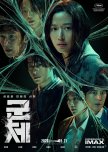
Horror Finally Feels Dangerous Again
Colony.7 minutes of applause at Cannes?
Should’ve been 20.
The movie borrows DNA from:
Resident Evil,
Aliens,
Train to Busan,
World War Z,
Invasion of the Body Snatchers,
and even The Great Wall…
yet somehow it never feels like a cheap copy.
It feels like a love letter to biological horror.
The infected operate as a hive mind.
They don’t feed.
They don’t think individually.
They coordinate, adapt, and slowly transform the entire building into a living organism.
The walls look like xenomorph nests.
The corridors feel like The Hive from Resident Evil.
And the true protagonist isn’t Ji Chang-wook…
it’s the infection itself.
What makes the film work so well is that the real horror isn’t only the monsters.
It’s watching humans stop protecting each other.
Cowardice.
Betrayal.
Revenge.
Obsession.
While the colony remains united…
the humans destroy themselves.
And yes, the film absolutely carries videogame DNA:
Resident Evil,
Aliens,
Left 4 Dead,
The Last of Us…
but it never abuses those influences.
It uses that visual language to create tension, not to show off references.
And the ending…
those absolute bastards.
Just when you think everything is over,
the movie leaves you with the most terrifying possibility of all:
what if the hive no longer needs a leader?
This is how intelligent entertainment is done.
Was this review helpful to you?

This review may contain spoilers
A Romance That Can't Compete With Its Own Fantasy
The series starts with a genuinely interesting idea: a virtual reality app where users can experience the perfect romantic partner. An algorithm creates the ideal man — attentive, attractive, always available, always saying exactly what you want to hear.For a brief moment, the show even seems aware of the implications. It hints at something deeper: the illusion of algorithmic romance and the uncomfortable gap between artificial validation and real human relationships.
But that idea quickly disappears.
By the middle of the series, the AI concept is mostly abandoned and the story falls back into a very familiar K-drama formula. The heroine repeatedly rejects the real man in her life — not because she dislikes him, but because no human can realistically compete with a fantasy designed to be perfect.
Ironically, the show criticizes this exact problem within its own dialogue. In one scene a writer complains that people read her webtoon only because the male lead is handsome. In another, a character dismisses concerns about childish storytelling by pointing out that many successful webtoons are built on simple plots.
In the end, this drama becomes the very thing it quietly mocked.
When the protagonist finally chooses the real man, it doesn’t feel like a meaningful decision. It feels like resignation.
Almost as if the message were:
This is the best reality can offer.
Which leaves the audience with an unintended question:
Is a perfect illusion better than an imperfect reality?
Was this review helpful to you?

The Cowardice of Great Ideas
What could have been the story of a single man standing against a corrupt and oppressive system over something as ridiculous as a small sack of rice —and, in that simplicity, define the perfect anti-hero: someone who doesn’t fight for the people, nor for justice, but out of pure exhaustion— turns into a feast of soulless fights, weightless characters, fake intensity, and villains striking caricature poses.Everything moves with a sleepy rhythm, a scattered plot, and a message that drowns in empty metaphors. The Murky Stream doesn’t lack ideas; it lacks courage.
Was this review helpful to you?

Love Has Fireworks Final Review (Completed)
I finished the drama hoping the second half would prove me wrong.Unfortunately, it confirmed everything I was worried about.
The biggest problem is that the romance simply refuses to move forward. The couple doesn't officially get together until Episode 34, after spending more than twenty episodes repeating the exact same "almost" dynamic. After all that waiting, the payoff amounts to two underwhelming kisses and very little time to actually enjoy them as a couple.
Even worse, once they finally start dating, the drama wastes another great opportunity. Their relationship becomes a secret, but nothing interesting is done with it. There are no awkward close calls, no funny situations, no real tension about being discovered. It's just a secret because the script says it's a secret.
The side couples continue to consume far too much screen time, and the corporate fraud storyline drags on much longer than necessary. I found myself skipping scenes constantly because they added very little to the main story.
What disappointed me the most, however, was the female lead.
At first, her playful personality was charming because it fit the "falling in love" phase of the story. But once the relationship became official, she never seemed to mature emotionally. At work she was portrayed as a brilliant finance professional, yet at home the romance often felt like watching two high school students who didn't know how to communicate. That contrast became increasingly difficult to buy.
The ending was just as underwhelming.
After asking the audience to wait for more than thirty episodes, the final proposal in the apartment where they first met should have been emotionally rewarding. Instead, it felt flat. No catharsis. No satisfying emotional payoff. Just... over.
I already understood the pattern by Episode 20. Unfortunately, the remaining episodes simply repeated it.
⭐ 1/5 — Background entertainment.
The kind of drama you leave playing while you're cleaning the house.
Was this review helpful to you?
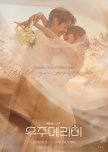
Final Series Review
Episode 12 — and the entire series — ends with the classic “kids’ menu combo” of K-dramas: everything magically works out just because.Would You Marry Me started off badly, then improved in a surprisingly strong middle stretch… and then melted like an ice cream under the sun from episodes 7 to 12.
And just like that… this drama is over.
Episode 1. No Spark, No Charm, Just Another Contract
Choi Woo Shik and Jung So Min are once again playing the same roles — she’s the Korean Meg Ryan, and he’s got the exact same personality he had in Our Beloved Summer. The script recycles the most overused K-drama cliché: the contract marriage. No chemistry, no charm, no soul. Even within its own rom-com territory, this first episode feels flat and uninspired. Hopefully, it gets better.
Was this review helpful to you?

This review may contain spoilers
Too Much Conspiracy, Not Enough Human Vapor
Human Vapor starts with a strong first episode, an intriguing premise, and solid production values. Unfortunately, instead of keeping the Human Vapor as the true driving force of the story, the series gradually shifts into a conspiracy thriller filled with secret organizations, human experiments, cover-ups, and lengthy investigations.This change in focus slows the pacing considerably. Long conversations and extended exposition repeatedly interrupt the tension, making the mystery feel stretched rather than expanded. Ironically, the 1960 film explores the same premise in just 90 minutes while keeping the Human Vapor at the center of the narrative and allowing the investigation between the detective and the reporter to move much more dynamically.
The series is technically competent, with good visual effects and an impressive opening, but I found it far more interested in conspiracy tropes than in the fascinating concept that made the original story memorable. For me, it ended up sacrificing its strongest idea for a mystery we've seen many times before.
Was this review helpful to you?


