Editorials

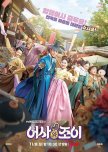
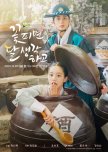
Laws against imbibing, buying or making alcohol created different challenges for these inhabitants:
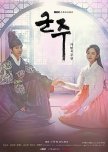
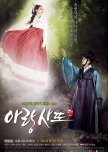
Inspector Nam Young from The Office of the Inspector-General who left his hometown to achieve fame in Hanyang and restore his family status; Kang Ro Seo, the aristocratic but impoverished lady who makes moonshine to reduce her debt, allowing her to continue buying her mother’s medication and her brother’s books; and even Crown Prince Lee Pyo, who was prone to scaling the palace walls in search of a tipple.
This trio has a fateful encounter leading to the discovery of a hidden stash of alcohol.
Inspector Nam Young from The Office of the Inspector-General who left his hometown to achieve fame in Hanyang and restore his family status; Kang Ro Seo, the aristocratic but impoverished lady who makes moonshine to reduce her debt, allowing her to continue buying her mother’s medication and her brother’s books; and even Crown Prince Lee Pyo, who was prone to scaling the palace walls in search of a tipple.
This trio has a fateful encounter leading to the discovery of a hidden stash of alcohol.
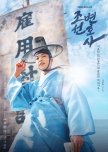
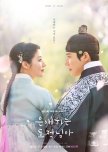
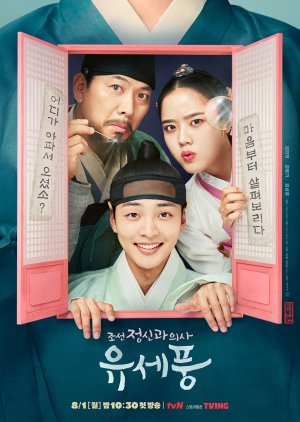
Poong: Yoo Se-poong was a genius acupuncturist to the royal family who can no longer perform acupuncture due to trauma. He has to reinvent himself as a "psychiatrist" to heal hearts instead of just bodies.
Human-Centric: They share a "healing" vibe where the goal of the protagonist's mission (whether stealing back a stolen heirloom or treating a mental illness) is to restore peace of mind to the victim.
Advocacy: They both feature leads who act as advocates for the vulnerable—widows, orphans, and the poor—who have no voice in Joseon society.
In this accept poong is doing better than beloved thief it includes mysterious cases and keep you guessing.
Poong: The Gyesu Clinic family provides a warm, comedic, and protective environment that helps Poong recover from his past.
The journey for the characters in both shows is as much about internal healing as it is about solving external mysteries. Watching them slowly open up and find happiness despite their previous losses is a major emotional hook.
Human-Centric: They share a "healing" vibe where the goal of the protagonist's mission (whether stealing back a stolen heirloom or treating a mental illness) is to restore peace of mind to the victim.
Advocacy: They both feature leads who act as advocates for the vulnerable—widows, orphans, and the poor—who have no voice in Joseon society.
In this accept poong is doing better than beloved thief it includes mysterious cases and keep you guessing.
Poong: The Gyesu Clinic family provides a warm, comedic, and protective environment that helps Poong recover from his past.
The journey for the characters in both shows is as much about internal healing as it is about solving external mysteries. Watching them slowly open up and find happiness despite their previous losses is a major emotional hook.
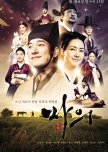
like looking at two different generations of the same medical legacy. Both dramas are classic examples of the "medical underdog" journey in the Joseon era.
Baek Gwang-hyeon starts as a lowly horse veterinarian (hence the title "Horse Healer"). He has to break through extreme class prejudice to eventually become the King's physician.
In both dramas, the protagonists face moments where they cannot perform their primary skill (acupuncture) due to external circumstances or internal trauma.
Much of the story takes place in community-style clinics rather than just the sterile halls of the palace. This gives both shows a "heart-warming" and "human" feel.
Both leads are tied to a historical mystery or a "framed" incident from their past that they must eventually resolve to clear their names (or their fathers' names).
The Stakes: The medical procedures often intersect with high-stakes political drama, where a successful surgery or treatment is the only thing preventing a coup or a murder.
Baek Gwang-hyeon starts as a lowly horse veterinarian (hence the title "Horse Healer"). He has to break through extreme class prejudice to eventually become the King's physician.
In both dramas, the protagonists face moments where they cannot perform their primary skill (acupuncture) due to external circumstances or internal trauma.
Much of the story takes place in community-style clinics rather than just the sterile halls of the palace. This gives both shows a "heart-warming" and "human" feel.
Both leads are tied to a historical mystery or a "framed" incident from their past that they must eventually resolve to clear their names (or their fathers' names).
The Stakes: The medical procedures often intersect with high-stakes political drama, where a successful surgery or treatment is the only thing preventing a coup or a murder.
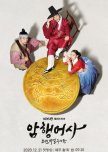
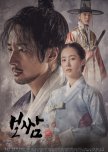
Both are lighthearted dramas that discuss heavy topics like abuse and mental illness. Both MLs have experienced past trauma that continues to effect them and their ability to work. They both are protective of victims of domestic violence and no longer have a biological family. They bicker a lot with the 2ML about how to do their jobs. There is action and comedy that counterbalance the darker portions. Also, both show why going to therapy is important.
In both, the ML is a talented, brilliant acupuncturist who experiences tragedy and leaves the palace/government, ending up in a different place (modern day vs. a village) where he must adapt to a different way of practicing medicine. Both dramas have a similar feel in the historical parts of LUTYN.