K-Drama

# of Watchers: 17
Reviews: 1 user
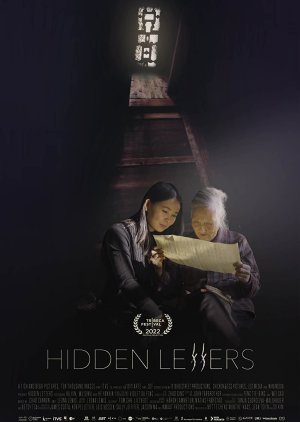
For thousands of years, women in China, who were often forced into oppressive marriages and forbidden to read or write, shared a secret language among themselves called Nushu. Written with delicate strokes made from sharpened bamboo sticks dipped in ink, Nushu bonded generations of Chinese women in a clandestine support system of sisterhood and survival. Fast forward to contemporary China, where two modern women are connected by their fascination with Nushu. In Jiangyong, Hu Xin works as a Nushu museum guide and aspires to master the ancient script following the breakup of her marriage. In Shanghai, Simu is passionate about music and Nushu, but archaic expectations threaten to end her pursuit of both. Influenced by Nushu's legacy of female solidarity, the two women struggle to find balance as they forge their own paths in a culture steeped in female subservience to men. Offering a unique lens through which to view women's equality, this fascinating film also explores the increasing commercialization of the deeply private Nushu language in direct opposition to its heart-wrenching origins. Filmmaker Violet Feng captures small revealing moments with gentle grace, culminating in a powerful resonance that lingers. (Source: IMDb) Edit Translation
- English
- magyar / magyar nyelv
- עברית / עִבְרִית
- dansk
- Native Title: Hidden Letters
- Also Known As:
- Genres: Documentary
Photos
Reviews

Hidden gem of a documentary
Hidden Letters is not an academic documentary. Instead it reveals history through the present, following two modern Nushu writers. Except for the opening frames (I'll address those below), the documentary is a delicate and thoughtful exploration of Nushu in its present form.The documentary explores the modern-day contestation around Nushu – through the women who engage with it – but also the opinions of men who think they know what they're talking about. (It turns out that mansplaining is the same in every language.) Unsurprisingly, it's the discussions between women about Nushu which come across as the most sincere.
The two Nushu writers meet with their own struggles as women, in part related to Nushu and in part related to their existence as women in a patriarchal society. Of course, these two things are enmeshed with one another. It is through their lives that Hidden Letters drives its emotions and messages.
For me, the only downside of this documentary is the opening frames. These are simply lines of text on a black background:
"For thousands of years, women in China were born to obey their husbands, fathers and sons.
Forbidden to read and write, their voices were silenced. Most left no record of their lives."
I'm not sure why Hidden Figures opens with such sa weeping, homogeneising statement (and in English too?). Particularly when what follows is a nuanced and complex insight into the evolution of Nushu. In a historical sense, Nushu itself was limited to the women of the inner chambers (and therefore not relevant to peasant women). But even saying "their voices were silenced" is in direct contradiction to the existence of Nushu itself – as well as other written records left by Chinese women of the past.
I'm not saying that oppression of women didn't exist - on the contrary, it was under such conditions that Nushu came into being – but I think Hidden Figures does itself a bit of injustice by opening with such a reductionist introduction to a deeply complicated form of communication.
That said, I highly recommend this documentary. It's well crafted and provides an intriguing insight into the intersection of Nushu and the everyday struggles of women.
Was this review helpful to you?