K-Drama



- lot of political subplot
- also a reborn x revenge story
- in ashes of crown, only the FL remembers her past, she wants revenge on her past husband and she allies with others to take him down
- in the princess royal, both of them remember their past and they're working together
personally I dropped The Princess Royal because it wasn't that dynamic, meanwhile Ashes of Crown has more action and I love that the FL is manipulative and she sees through a lot of schemes, she has a strategist's mind


- Princess Royal FL
- Scholar ML
- Leads had a previous relationship that left them both with a lot of resentment
- Lovers to enemies... to lovers?
- Both are political and showcase the power of the princess royal
- Both FLs are shady and pretend to be worse than they are
- Gender role reversal themes in both
TPD has no rebirth. TPR does.

both have:
- estranged spouse realizing they are actually still in love with each other and are the only ones that got each other back
- these realizations are triggered by death/near death event.
- female lead has higher status than male lead
- the female leads have another courter and the male leads are jealous over them

The Rebel Princess (2021) and The Princess Royal (2024) share some similarities in their stories. Both empresses in these two drama series have similar characters, they are focused on supporting their birth families, which troubles their kings due to this family lineage issue. Additionally, the main characters are both princesses who enter into politically arranged marriages with husbands from humble backgrounds. Watching The Princess Royal gives you a slight sense of déjà vu because of The Rebel Princess or vise versa.

Once an innocent and carefree young lady, Ren Yao Qi—the fifth daughter of the Ren family—suffers the destruction of her family and is even offered to a eunuch. With the help of Xiao Jing Xi, the second son of the Prince of Yanbei, she ultimately perishes together with her enemy.
When she opens her eyes again, she finds herself five years in the past. Cherishing this second chance at life, Ren Yao Qi hides her strength and bides her time, determined to protect her family from disaster and turn the tide of fate. Through her own efforts, she builds a relationship with Xiao Jing Xi founded on equality.
When she opens her eyes again, she finds herself five years in the past. Cherishing this second chance at life, Ren Yao Qi hides her strength and bides her time, determined to protect her family from disaster and turn the tide of fate. Through her own efforts, she builds a relationship with Xiao Jing Xi founded on equality.


- FL goes back to her youth (in TPR both leads do while in GZJS,YWRRYXFS only FL does)
- Princess FLs that are favoured by the emperor
- FL cleans up the court and corruption
- Scheming, cunning, cold, and ruthless FL (colder in GZJS,YWRRYXFS)
- Supportive, devoted, kind, and caring ML
- Mistreated ML whom FL protects
- Fight for the throne (in TPR FL fights to secure her brother's position as heir while in GZJS,YWRRYXFS FL wants to the position herself)
- Political
- Gender role reversal
Main difference is the romance and the ML. In TPR ML is a mistreated noble whom marries FL as her consort and both travel back in time to their youth while in GZJS,YWRRYXFS he's a bodyguard who had no relationship with FL until the story unfolds.

-Both dramas have similarities like a vengeful, cunning, intelligent, smart noble FL
-ML's are equally strong, cunning and official position holder
In TPR fl is royal born, who died by her own(spoiler*), ml at the same time died and both of them gained rebirth, while yun chu got murdered by her husband and step-son, had rebirth in her 20 year old self.... Both of them were vengeful, made the villains pay the price and found light in their dark life by ML...
-Both stories have politics, power struggle for throne, royal blood leads
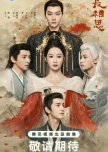
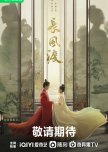

Revenge and The Princess Royal share several similarities, especially in their second-chance, political and romantic storylines. Both feature characters whose past experiences deeply influence their present actions, giving them the opportunity to change the course of events and avoid or correct previous tragedies.
In both stories, political marriage is closely connected to power and court politics, while the central relationships are built on complicated histories, mistrust and hidden intentions.
The leads constantly test, calculate and manipulate situations, often treating each other as pieces in a larger political game while trying to understand the other's true motives. Their romances are also intertwined with revenge, political struggles and the desire to change their fate.
However, while The Princess Royal focuses more on the mutual second chance of Li Rong and Pei Wen Xuan and their gradual journey from suspicion to partnership and love, Revenge places greater emphasis on identity, betrayal and revenge, with Song Ling returning as Ye Tingyan while Su Luowei remains unaware of his true identity.
This creates a similar dynamic of two people with a shared past entering a dangerous political game where neither can completely trust the other, but Revenge adds an extra layer of tension through the concealed identity and unresolved betrayal between its leads.
What makes Revenge particularly interesting is that the male lead is a minister deeply involved in politics, so we get to see how calculating and strategic he is, how much he conveys through his expressions, and how he handles different political situations.
This is especially comparable to The Princess Royal, where Zhang Linghe's character, Pei Wen Xuan, also had to constantly calculate his moves and navigate complicated court politics, while often behaving differently depending on what he was trying to achieve.
Since he has already portrayed a minister so well, it will be interesting to see how much he has grown and evolved in portraying a political, intelligent and strategic character this time, especially with the heavier political focus of the story.