K-Drama


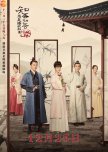
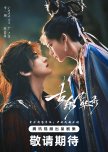
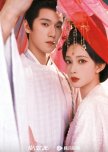
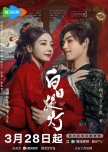
Shen Jia Lan, autrefois petite fille de noble, tombe en disgrâce après que sa famille a été accusée à tort de trahison. Abandonnée par son fiancé, Lin Jin Qi, elle est contrainte d'endosser l'identité d'une servante dans la maison de ce dernier. Malgré les difficultés, elle refuse de s'incliner devant le destin. Grâce à sa résilience et de son esprit, elle s'élève au-dessus des barrières de classe, gagne le cœur de Lin Jin Qi, gagne le respect de son entourage et finit par laver le nom de sa famille. (Source : Anglais = WeTV || Traduction = kisskh) ~~ Adapté du roman "Lan Xiang Yuan" (兰香缘) de He Yan Shan (禾晏山). Edit Translation
- Français
- 한국어
- 中文(简体)
- ภาษาไทย
- Native Title: 兰香如故
- Also Known As: Lan Xiang Ru Gu , Orchid Fragrance Remains , The Story of Xiang Lan , 蘭香如故
- Screenwriter: Tong Hua, Xiao Lou
- Director: Huang Ying Xiang
- Genres: Historical, Romance, Drama
Where to Watch Against the Current

Subscription (sub)

Subscription (sub)

Subscription (sub)

Subscription (sub)
Cast & Credits
-
") Seven TanXu Lan Xiang / Shen Jia LanMain Role
-
") Liu Xue YiLin Jin Qi / Feng TaiMain Role
-
") Pan Yi HongJiu Gao [Jin Qi's attendant]Support Role
-
") Wang Ting XuNan Ke [Jin Qi's attendant]Support Role
-
") Julia YeYu Chan [Jin Qi's maidservant]Support Role
-
") Ma Fan DingLin Xiu Ru [Jin Qi's half-sister]Support Role


Reviews

Une tranche de vie, du début à la fin
Against the Current est un drama incroyablement prenant sur le plan émotionnel. Dès lors qu'on s'attache aux personnages, il faut sortir les mouchoirs : cette histoire nous accompagne à travers les différentes étapes de leur vie, leurs joies, leurs épreuves, leurs pertes et le passage du temps. C'est un véritable drama tranche de vie, qui ne se contente pas de raconter l'histoire de son couple principal. L'univers familial est particulièrement riche, et les personnages secondaires ont leurs propres trajectoires, leurs relations et leurs enjeux. Ils ne sont pas là uniquement pour servir l'intrigue principale, mais participent pleinement à donner vie à cet univers.J'ai particulièrement apprécié la dimension profondément féminine du drama et sa manière d'explorer la condition des femmes selon leur statut social, des femmes esclaves aux femmes libres issues de familles aristocratiques. Leurs contraintes, leur manque de liberté et leurs différentes façons de lutter pour leur indépendance occupent une place centrale dans le récit. Jialan est une héroïne remarquable, une véritable force de la nature, qui a ses propres limites mais ne cesse de les repousser. Sa force réside autant dans sa résilience que dans son intelligence, ses convictions et son refus de renoncer à sa liberté. C'est une histoire sur les femmes, la famille, la dignité et le temps qui passe, d'une beauté bouleversante, qui laisse une empreinte durable une fois le dernier épisode terminé.
Was this review helpful to you?

 1
 1
好好活着 (Hǎo hǎo huó zhe)
These four characters, 好好活着, are repeated throughout the drama by different characters: Shen Jialan's mother, Xu Lanxiang's mother, Xu Lanxiang herself, Lin Jinqi, and even Zhao Xingtang, among many. The literal English translation is usually something like "live well," but I don't think that quite captures the essence of the phrase. To me, 好好活着 means surviving by whatever means necessary, no matter how difficult or desperate the circumstances are.Shen Jialan's mother wants her daughter to survive despite the annihilation of their entire clan. Xu Lanxiang's mother tells her to survive like grass—bend with the wind, but don't break. Despite being used by her family as a pawn for their advancement through marriage, Zhao Xingtang survives by fighting back. Lin Jinqi survives by constantly examining himself, listening to other people's opinions, and learning to compromise when it leads to the best outcome. Even after suffering grave injuries, he struggles to stay alive, with his life hanging by a thread.
And Xu Lanxiang? She learns to survive by becoming extremely observant. She watches everything around her, keeps a low profile, and avoids attracting unnecessary attention. She becomes as slippery as an eel—almost impossible to catch—and that very ability helps her escape one dangerous situation after another.
For me, this is the true meaning behind 好好活着. It doesn't simply mean "live well." It means you must fight to survive, no matter what, as long as you don't hurt innocent people. That's where the 好 comes in.
And I think that's the central message of this drama.
I originally tried to write a short review, but there are simply too many details that I find interesting and meaningful. I'm afraid that if I make it too short, I'll lose some of what makes this drama special. So, if you find this review too long, feel free to scroll down to the Final Words section.
👉Xu Lanxiang's Story
Xu Lanxiang was actually Shen Jialan, the sole survivor of the annihilation of the Shen family. And her ultimate goal was to clear her family's name.
The annihilation of the Shen family in the drama is based on a real and particularly brutal episode in Chinese history involving Fang Xiaoru (方孝孺), an advisor to the Jianwen Emperor.
After Zhu Di seized the throne and became the Yongle Emperor, Fang Xiaoru refused to serve the new emperor. According to the historical account, Zhu Di ordered the execution of Fang Xiaoru's relatives across the so-called ten kinships, with his students ultimately included as the tenth category. In total, 873 people are said to have been executed.
The drama takes this historical tragedy and creates Shen Jialan's story within it. In the drama, Shen Jialan is the only survivor.
This changes how we should understand Lanxiang. Survival is not her final destination; it is the means to an end. She has to stay alive, remain hidden, and protect the people who saved her so that one day she can restore the reputation of the family that was erased.
Being a playwright under the pseudo name Shen Rugu (沈如故), she writes her own story into plays and lets her audience discover the truth through her words.
Once we understand this, her guarded relationship with Lin Jinqi also makes much more sense.
Many viewers have commented that Jinqi's love for Lanxiang seems much stronger than Lanxiang's love for him, or that she never truly reciprocates his feelings. I can understand why some viewers see it that way.
But Lanxiang's heart is occupied by something larger than romance. She respects Jinqi, grows to love him, and clearly cares deeply about him. Yet she cannot simply abandon the purpose that has guided her entire life.
Her restraint is not necessarily a lack of love. She knows that she has a family name to restore and a truth to preserve.
That is why I find Lanxiang's character easier to empathize with once her true motivation is understood. She isn't simply a woman hesitating to accept the love of a man who adores her. She's a survivor who has spent her entire life carrying the burden of a family that no longer exists.
The opening scene is therefore especially heartbreaking. Shen Jialan suddenly finds her entire world turned upside down. She goes from being a highly regarded, well-educated young woman to becoming the poverty-stricken, sickly daughter of a slave couple.
The opening also immediately shows us how important a woman's chastity was in that society. The threat of sexual violation was so devastating that some women would rather take their own lives than live with the shame.
Shen Jialan's instinct for survival saves her from the mass suicide. And that same instinct continues to save her throughout her life as Xu Lanxiang—from her days as a lowly servant girl to eventually becoming the powerful first madam of her husband's noble household.
This brings us back to 好好活着.
For Lanxiang, surviving isn't simply about staying alive. She survives because she still has a purpose: to protect those who saved her and, ultimately, to restore the name of the family she lost.
👉The Setting
Although the drama never explicitly says so, the setting appears to be based on the Ming Dynasty, and judging from the historical events referenced at the beginning of the drama, it seems to be around the Yongle era, during the reign of the third Ming emperor, Zhu Di.
The historical background is particularly important here because the annihilation of the Shen family is drawn from the historical persecution of Fang Xiaoru. This historical foundation also helps explain the atmosphere of the entire drama.
Confucian values are practiced to an extreme, and family hierarchy, social status, loyalty, reputation, and obedience are treated as matters of life and death.
One of the things I love most about this drama is the way it portrays everyday life, people, and the passage of time. It doesn't always explain things through dialogue. Instead, it shows us.
We see the detailed workings of a conservative noble household: how men and women behave, how family members interact, and how servants are treated. And the treatment of servants can be absolutely brutal.
At the center of all this is Xu Lanxiang, trying to survive in this harsh environment while somehow helping both her fellow servants and the people she serves.
Every detail is a clue. Nothing feels completely random or wasted.
For example, the plaques hanging above the main halls tell us what each family values.
The Shen family's plaque says 惟善德馨 (wéi shàn dé xīn)—roughly, "virtue brings honor." To me, it represents the idea that glory is temporary, while compassion and virtue endure. This is the philosophy that shaped Xu Lanxiang, or rather, Shen Jialan.
The Lin family's plaque says 惟永懷圖 (wéi yǒng huái tú), conveying the idea of always thinking about and planning for the future rather than focusing only on the present.
And that perfectly sets up Lin Jinqi's character.
With just a few characters on a plaque, the director establishes the values of the two families—and, by extension, the values that shape our two leads.
I love this kind of storytelling.
👉 Characters and Acting
Xu Lanxiang — Tan Songyun
Casting Tan Songyun was an excellent choice. Even though she was 36 when she played the role, she can convincingly pass as a much younger woman at the beginning and then naturally grow into the role of the lady of the household.
Tan Songyun brings a maturity to Lanxiang's personality without making her feel artificially sophisticated.
She has incredibly expressive eyes that can communicate so much emotion without saying a word. A lot of Lanxiang's strength comes from her ability to observe rather than speak, so this quality works especially well for the character.
I wish the team had used Tan Songyun as the younger Shen Jialan as well, as the change in actors has made a big shift in the aura, look, and feel of what is supposedly the same person. Furthermore, Tan Songyun has played many roles convincingly as young schoolgirls. I believe she could have played an excellent Shen Jialan.
Lin Jinqi — Liu Xueyi
Lin Jinqi is serious and stoic on the outside, but in private he's actually quite affable and surprisingly open to the opinions of the people around him.
From a young age, his wise mother teaches him that one tree cannot make a forest. He needs his siblings, and he needs to take care of them, to create his "forest"—which is especially fitting given that his family name, Lin (林), literally means "forest."
That philosophy explains a lot about Jinqi.
He's kind to his family and takes responsibility for them, and in return, they give him their loyalty and support. There are quite a few scenes of Lin Jinqi simply spending time with his siblings, and those scenes are genuinely heartwarming.
But Lin Jinqi is also a controversial character.
Many viewers love him. Many others absolutely loathe him because he forces a free Lanxiang to marry him through an imperial decree. Later, he even drugs her so that he can bring her to the capital when she initially refuses to go.
I understand why viewers are angry with him. I'm not trying to glorify what he did.
But I do think it's important to remember that the concept of "freedom" in ancient China was very different from our modern understanding of individual freedom, particularly when it came to women.
I'm not saying, "It was the past, so everything is excused." Rather, I think the character needs to be understood within the social structure of his time. Men—especially powerful men—held enormous authority, while women often had very little control over major decisions, particularly marriage.
From Jinqi's perspective, he genuinely believed that what he was doing would benefit Lanxiang. He thought he was saving her from poverty and giving her the kind of status and security that most women of that era would have considered desirable.
He fell in love with Lanxiang precisely because she was different. But ironically, he still assumed that when it came to major life decisions, she would ultimately want the same things other women wanted.
In his selfish little mind, if he was going to make the decision for her anyway, why not make what he believed was the better decision?
I can understand his motivation, even though I don't necessarily agree with his actions.
And despite all of this, I absolutely enjoyed the humor Lin Jinqi brings to the drama. He makes the character much more lovable than he has any right to be.
And Liu Xueyi?
Wickedly good-looking.
As Lin Jinqi, he is probably the most desirable character in the drama—mature, serious, intimidating, and powerful. But behind the scenes, Liu Xueyi is apparently one of the goofiest people around.
His acting is a 10/10 for me.
He's stern without ever becoming wooden, and his micro-expressions are incredibly well executed. You can tell exactly when Jinqi is happy, sad, puzzled, suspicious, or deep in thought, even when he barely moves his face.
Liu Xueyi also has a commanding presence that makes him a very believable—and surprisingly lovable—大爷 (dà yé), or "big master," of the Lin household.
👉Official Soundtrack
The drama also has a wonderful collection of ballads, sung by different artists in soft, almost haunting voices. They feel like reflections on the pain endured by the people living behind the high walls of these mansions.
My favorite songs are 《大梦归》 (Return of the Big Dream), the ending theme sung by Zhou Shen, and 《我來書寫我的名》 (I Will Write My Own Name), sung by Wang Zhengliang.
《大梦归》 feels like Lanxiang's story—the pain she has endured and her determination to move forward rather than allowing the past to consume her.
《我來書寫我的名》, on the other hand, feels like Lin Jinqi's story. It's about his determination to go against the current and carve out a new life for himself and Lanxiang, breaking away from the traditions and expectations he inherited as the eldest grandson of a conservative, high-status family.
👉Final Words
This is a beautifully produced drama. It is visually stunning, but its real beauty lies in the culture, philosophy, politics, and everyday lives of both the servants and the nobles. This is not a drama you can watch casually while scrolling on your phone. It requires patience and attention.
At first, it may seem like very little is happening to the main characters in each episode. But actually, a lot is happening in the background. The details are subtle and often tiny, but they contribute enormously to the story.
I especially love the way the drama uses a recurring character as a marker of the passage of time. It's such an ingenious little storytelling device. I love how carefully the director incorporates all those tiny details, especially through visuals rather than dialogue. I love the beautiful framing of almost every shot. I love all the humor scattered throughout the episodes—even during scenes involving death. I love the serenity of the whole setting. And I love how it stirs up my emotions in almost every episode.
The drama gives us a detailed look into the life of an elite household during the Ming Dynasty—a household where the head of the family has enormous power over the lives and deaths of everyone beneath him.
And despite all the talk about Confucian morality and social order, the society underneath is full of double standards, hypocrisy, corruption, and rot.
The drama also makes an interesting point about politics: there isn't necessarily a "protagonist" or "antagonist" in politics. Those labels often depend entirely on which side you're standing on.
The winner becomes the hero.
The loser becomes the villain who supposedly deserved to be punished or executed.
Is this drama perfect?
Well, there are definitely too many coincidences that remind us we're watching a drama.
For example, Xu Lanxiang's adoptive parents happen to be in exactly the right place at exactly the right time—even though there was no particular reason for them to be there—and can swap places with their dead daughter and rescue Shen Jialan.
When Lanxiang escapes from the brothel, someone just happens to be waiting at the dock and manages to lure her out with singing, despite the fact that the villains are desperately searching for her.
Even the painting that becomes an important clue to Lanxiang's true identity happens to be accidentally picked up by her adoptive father, who is illiterate, and eventually sold to Lin Jinqi's grandfather.
And Lanxiang herself is almost too perfect. She always seems to have an answer and a solution to everything and rarely, if ever, makes a serious mistake. That's not particularly realistic.
Even though he and Lanxiang eventually have children and a happy family, I still finished the drama with a heavy heart. I pondered over the ending for days before I finally understood why the director chose to end the story the way they did in Episode 47. The director wasn't simply giving us a glimpse of the ending of Lanxiang; they were bringing us back to Lanxiang's ultimate mission, which also explains why she treated Jinqi the way she did throughout the drama. Once I understood that, everything finally fell into place. What initially left me feeling sad and unsettled became, in retrospect, a deeply meaningful and beautiful ending.
A wonderful, heartwarming watch. Strongly recommended. Don't miss it. Bravo!
Was this review helpful to you?