- Español
- English
- magyar / magyar nyelv
- dansk
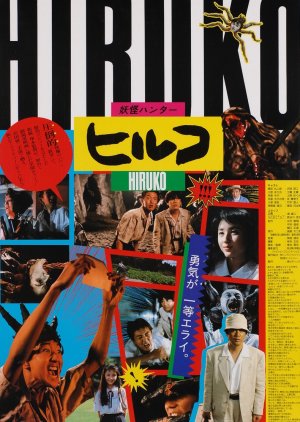
- Título original: 妖怪ハンター ヒルコ
- También conocida como: 妖怪ハンター ヒルコ , Yokai Hanta Hiruko
- Guionista y Director: Tsukamoto Shinya
- Géneros: Acción, Thriller, Misterio, Terror
Reparto y créditos
-
") Kudou Masaki Papel principal
Kudou Masaki Papel principal -
") Sawada KenjiHieda ReijirouPapel principal
Sawada KenjiHieda ReijirouPapel principal -
") Takenaka NaotoYabe TakashiPapel secundario
Takenaka NaotoYabe TakashiPapel secundario -
") Murota HideoWatanabePapel secundario
Murota HideoWatanabePapel secundario -
") Yo Kimiko[Tsukishima Reiko's mother]Bit part
Yo Kimiko[Tsukishima Reiko's mother]Bit part -
") Mitsuishi KenTakeshitaBit part
Mitsuishi KenTakeshitaBit part






Reseñas

This review may contain spoilers
Heads gonna roll...
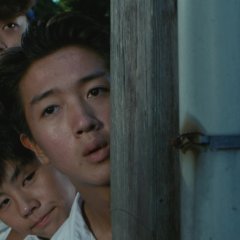
The eccentric archaeologist Hieda Reijiro, a novice demon hunter, and Masao, the son of Professor Yabe, find themselves teamed up in the hunt for the terrible creature Hiruko, an evil spirit capable of possessing its victims. The demon has appeared in the rural school attended by Masao himself. The young student, who has seen his classmate Reiko Tsukishima—with whom he is shyly in love—inside the school, comes to the same conclusion as the archaeologist: A mysterious portal may exist in those places which, if opened, would spread the gates of Hell, releasing other demonic creatures.Conceived in the summer of 1990, “Hiruko The Goblin”, the second movie by the extraordinary director Shin'ya Tsukamoto, ranks among the first two chapters of the “Tetsuo” saga in the filmography of the Tokyo-born author, appearing almost as a sort of “foreign body” within his cinematic vision.
Produced with a substantial budget by Shochiku, the project attracted the interest of Tsukamoto, who was seeking funding for the sequel to his sensational debut film, “Tetsuo: The Iron Man”. Although the script is based on a non-original story (the source is a series of tales from a manga by Daijirō Moroboshi), "Hiruko" proves to be a work of extraordinary imagination and genius, highlighting the great eclecticism of the thirty-year-old Tsukamoto, who is perfectly at ease even in a more “commercial” production.
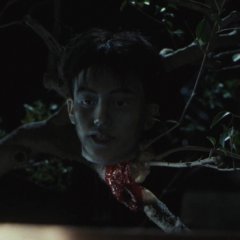
Clearly indebted to a certain horror classicism of the 1960s—with a little imagination, one might think of the various Kaidan movies or episodes of Yokai Monsters— “Hiruko The Goblin,” somewhat in keeping with its comic book origins, moves in a sort of amused equilibrium, perhaps a little off-balance, with that ability, at times masterful, to jump between the most disparate genres, from pure horror to exaggerated gore, to comedy that is at times surreal, alternating frenetic rhythms with almost meditative pauses.
The narrative structure finds its natural place in many classic Japanese clichés, starting with the school location, set in a bucolic countryside setting during the summer holidays (almost in contrast to the “urban/industrial” style found in “Tetsuo”), continuing with the particular representation of the (terrifying) demons of Japanese tradition and folklore. However, these elements are mixed and reworked by Tsukamoto in a referential key, also through elements typical of American horror, which was so successful in those decades.
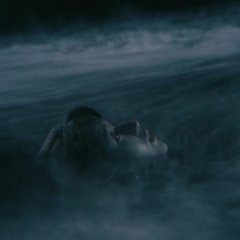
It is impossible not to notice the various references to the movies of Sam Raimi or John Carpenter (but in the finale there is also room for James Cameron's contemporary “Abyss”); While the swirling tracking shots that introduce the demon immediately bring to mind “Evil Dead”, archaeologist Hieda's vintage equipment (who rides a bicycle like Doc from “Back to the Future”) seems to come straight from “Ghostbusters”. Where technology fails, a good insecticide, perhaps even with a broom, achieves the desired effect!
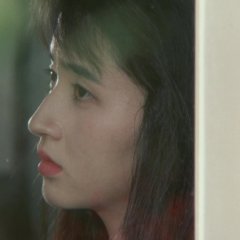
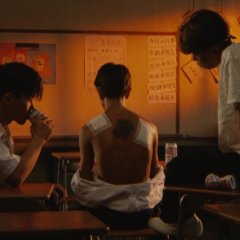
The mystery features are spot on, with Masao's classmates “disappearing” one by one, the school location, which is decidedly creepy at night, and the characterizations. The combination of Masao and Hieda is a dynamic duo with strong elements of a buddy movie and a mentor-student relationship, while the school building's caretaker is reminiscent of many characters from American made movies. However, it is Reiko, with her chanting, almost siren-like refrain, who is truly unforgettable.
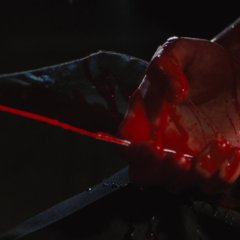
More grotesque than hyperkinetic, Tsukamoto's style in “Hiruko” is perhaps a little regimented, less subversive, and adapted to the classic conventions of the genre. undoubtedly less experimental, but still not without some of his characteristic visual solutions, such as stop motion, accelerations, and, to a lesser extent, body mutations, the Tokyo director nevertheless displays a truly remarkable formal elegance, especially in moments of apparent calm, at times even poetic, capable of creating the right atmosphere that inevitably leads to the most typical horror.
For many, Hiruko is considered a minor feature or a transitional work in Tsukamoto's filmography. In several analyses, some complain about a certain decline in the ending, perhaps a little too naive compared to the development of the story, but it should be remembered that this is still a commissioned work, over which Tsukamoto could not have full control and that, probably, the film company forced certain solutions;
Moreover, the substantial budget had been exhausted, forcing the director to abandon certain stylistic and narrative choices.
Personally, I've always loved it, ever since I first saw it; it was often shown on TV in late-night programs, slotting it in between the first two “Tetsuo” movies; I believe its strength lies precisely in this uneven, comic-book style, ironic and caricatural, in its perhaps naive and even slightly retro style (before the overdose of special effects, CGI, etc.), that artisanal taste, now almost completely lost, perhaps anachronistic for many (not for me, for sure) but undoubtedly fascinating and visionary, which has contributed to making it that cult object that still resists today.
8 ½
¿Te ha parecido útil esta reseña?
Recomendaciones
There have been no recommendations submitted. Be the first and add one.