




When (low) life gives you porcelain
South Korea, '70s: Eyeing the opportunity for a highly lucrative business deal, small-time criminal O Gwan Seok and his nephew O Hui Dong join a ship expedition intent on recovering a large quantity of Chinese ceramics. The submerged treasure is located inside a wreck sunk off the coast of Mokpo, in South Jeolla Province; however, they need to find a financier and some divers, all without arousing the suspicion of the police and any rival treasure hunters...One could start from the assumption that ‘Low Life’ is not exactly a production for all tastes, given that the accumulation of stylistic elements within it goes somewhat against the grain of the classic (even aesthetic) canons of the multitude of more openly celebrated contemporary dramas.
While it is true that at times it seems almost like a coming-of-age story, and the voiceover in several places reinforces this idea, adding a melodramatic element that is perhaps a little rhetorical but undoubtedly charming, it is nevertheless in the generalised human scenario that the main strengths lie.
At the heart of it all, as always when it comes to money, fortune, wealth and “treasures”, there is obviously greed and avidity, which here go hand in hand with the inevitable feeling of vain hope and social redemption linked to the ephemeral illusion of achieving economic targets.
Certainly valuable and courageous is the choice to represent a microcosm of marginal characters, outcasts and petty criminals, ready to fight each other in order to obtain the coveted ‘treasure’ in the illusion that this lucrative opportunity could change their lives.
Modern buccaneers, one might say.
And mind you, greed here is not limited to certain characters in the drama, but is a generalised fault that overwhelms every single element of the story and, in many places, spares no one, not even in the fleeting emotional bonds that occasionally reveal themselves, perhaps with the illusion of some search for “normality”.
Undoubtedly, it is a picture full of shadows and contradictions, where, at least for a large part of the drama, there is no room for purity and moral integrity, and where every character in the story, either by their own decision or by a cruel twist of fate, ends up choosing the most immediate path, as well as, inevitably, the most dangerous one.
For some, a certain ‘harshness’ in the approach to ‘Low Life’ may be determined by an almost wait-and-see first section, which is extremely articulate and dialogue-heavy, where, cinematographically speaking, the plot development is rather limited (one could say that ‘little is happening’ from an action point of view), but which is essential for introducing the vast and varied cast, with all their peculiarities and contradictions; It is clearly with the start of the treasure hunt that, inevitably, the human dynamics and behavioural tensions that had been suppressed until then will explode...
So double-crossing, suspicion, betrayal and fragile alliances prevail, thanks to the excellent ensemble cast and skilful direction that alternates moments of comedy and black humour with sudden, chilling bursts of violence and sadism, as if to emphasise the ambiguous nature of the characters portrayed in the story.
The characterisation of O Gwan Seok by the excellent Ryu Seung-ryong is truly remarkable. He is an utterly impassive and cynical figure – a mask that seems to come straight out of 1970s genre movies – ready to do anything to achieve his targets; However, in my opinion, the talented Im Soo Jung is unbeatable in the role of the ruthless Yang Jeong Sook, a sort of cold and manipulative “dark lady” who remains unperturbed and determined for most of the story, even if her mask occasionally gives way to moments of unexpected romance.
More classic is Yang Se Jong's portrayal of the young O Hui Dong, who, while accepting the (dirty) rules of the business, bends, especially in the last few episodes, for obvious narrative reasons, to a more stereotyped and “chivalrous” representation of what is necessary.
But it is the ensemble of many well-known and distinctive faces, playing the parts of con artists, ceramist experts, suburban wrestlers and boxers, improvised divers, corrupt police officers and all the motley crew that follows them, that allows ‘Low Life’ to be appreciated as a whole.
Clearly, it is not a perfect drama; the ending is a bit rushed and perhaps too ‘open,’ and, as already mentioned, patience and attention are required at the beginning. There may also be some somewhat forced twists at the end, but you are rewarded with a beautiful adventure that offers an interesting—and nostalgic—portrait of a particular historical period (the '70s), where the first signs of the economic and urban boom (and, of course, speculation) that will come to Seoul are already visible, in contrast to the representation of urban marginality and the aesthetics of the slums, well rendered by a careful reproduction of the locations, costumes and incredible looks of the time.
7 ½
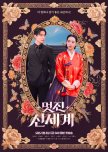
"Caught between what it is and what it could have been."
Presenting itself from the very beginning as a highly derivative and self-aware work, one that revisits several of the most recognizable archetypes of Korean fantasy romance through a contemporary lens, My Royal Nemesis builds its identity around an immediately familiar formula: a brisk pace, a constant stream of new situations, an abundance of twists, romantic banter, and a continuous interplay between comedy, melodrama, and supernatural elements.While this approach undeniably contributes to the drama's accessibility and keeps the narrative in constant motion, it also creates the impression of a story that rarely allows itself the time to fully explore the emotional consequences of the events it sets in motion. Each episode introduces new revelations, antagonists, misunderstandings, threats, romantic developments, or unexpected turns, resulting in a narrative that often seems more concerned with carrying the viewer from one development to the next than with allowing its most meaningful moments to settle and acquire their full emotional weight.
The series also appears to cater to a contemporary audience accustomed to fast-paced and highly dynamic storytelling, rarely allowing for moments of stillness and instead relying on a structure that consistently favors momentum over contemplation. From this perspective, My Royal Nemesis succeeds in its primary goal as an entertaining viewing experience. What is occasionally sacrificed, however, is the reflective space that might have allowed some of its more intriguing ideas to develop with greater depth and resonance.
Yet beneath this lively—and often overcrowded—surface, a far more compelling thematic core gradually begins to emerge. Through the character of Kang Dan-sim/Seo-ri, the narrative seems interested in exploring questions of fate, memory, and identity, as well as the ways in which history can distort, erase, or rewrite the truth of a person's life. These themes tend to surface most clearly within the Joseon-era storyline, which frequently proves more evocative and emotionally engaging than many of the contemporary subplots competing for the viewer's attention.
One of the drama's most intriguing qualities lies precisely in the tension between narrative ambition and narrative caution. As the story unfolds, My Royal Nemesis gradually introduces themes and ideas that seem to reach beyond the boundaries of conventional romantic entertainment: the relationship between personal and collective memory, the construction of identity across time, the influence of official narratives on our understanding of history, and the desire to challenge a fate that appears already written. These are the kinds of ideas that lend the story an unexpected degree of substance and, at times, suggest the possibility of a more distinctive and ambitious direction.
However, just when the narrative seems ready to fully engage with these questions, it often retreats toward more familiar territory, relying on well-established fantasy-romance conventions. As a result, its most intriguing revelations frequently coexist with highly predictable developments, while its more stimulating ideas are often accompanied—and occasionally overshadowed—by an ever-growing accumulation of subplots, corporate power struggles, romantic misunderstandings, and twists designed to keep the story in constant motion.
The result is a drama that appears fully aware both of its potential and of the boundaries within which it ultimately chooses to operate. My Royal Nemesis works primarily as a contemporary entertainment product, yet it repeatedly hints at possibilities it rarely commits to exploring in full. More often than not, it favors the reassuring effectiveness of familiar formulas over the risks that might have come with a more ambitious re-examination of the conventions it inherits.
If there is a true gravitational center around which the entire narrative revolves, it is Kang Dan-sim. More than the romantic storyline itself—often fairly predictable in its development—it is her personal journey that provides the drama with its most compelling moments. Through her bewildered encounter with modernity, the paradoxes of her situation, the fragmented memories of the past, the recurring dreams, and her repeated confrontations with the traces left behind by history, My Royal Nemesis gradually builds a reflection on memory and identity that reaches beyond the simple fantasy premise of temporal displacement.
In this regard, the scenes set in museums, along with the historical testimonies, paintings, letters, and documents connected to Kang Dan-sim, often prove more meaningful than the romance itself. It is within these moments that the character seems to find her most authentic dimension, confronting not only who she once was, but also how time and collective memory have chosen to remember her. The dialogue between past and present therefore becomes more than a narrative device; it evolves into a search for a personal and historical truth that has remained unresolved across generations.
As the story progresses, these questions gradually expand in scope. The revelations surrounding Seo-ri and the true nature of the protagonist's identity slowly shift the narrative's center of gravity. The issue is no longer simply how a woman from the Joseon era might adapt to life in the twenty-first century, but rather who the person we are watching truly is. Over time, the series suggests that Kang Dan-sim and Seo-ri are not merely two individuals separated by a temporal anomaly, but different manifestations of the same existence, connected by a continuity that transcends time, memory, and destiny. In doing so, the drama appears to move beyond the familiar framework of time-travel fantasy and toward a more ambitious reflection on identity, memory, and belonging.
It is arguably one of the most fascinating ideas the series has to offer, but also one of the most problematic in its execution. For much of the drama, the audience's emotional investment is built almost entirely around Kang Dan-sim, while Seo-ri remains a largely peripheral presence, defined more through second-hand accounts, diaries, and fragmented memories than through a fully developed narrative identity of her own.
When the story ultimately chooses to merge these two figures and trace them back to a shared origin, the concept is undeniably intriguing on a symbolic and thematic level. Yet it does not always achieve the same degree of emotional impact. Rather than functioning as a revelation capable of retrospectively reshaping the entire narrative, it occasionally feels like an elaborate explanatory mechanism—interesting in theory, but less convincing in its ability to genuinely move or engage the viewer.
As the drama approaches its conclusion, it finally appears ready to fully engage with the questions that had fueled much of its appeal from the very beginning: the relationship between memory and identity, the weight of history, the sacrifice required to confront an unresolved past, and the possibility of redefining the meaning of a life across time. Yet just as these themes seem poised to reshape the overall significance of the narrative, the story gradually steers them back toward a logic of reconciliation and narrative closure.
The more complex implications of its central ideas ultimately become subordinate to the pursuit of a reassuring and universally conciliatory ending. The result is a finale that privileges emotional resolution over the more challenging consequences of the concepts it had previously allowed to emerge. The issue is not so much the absence of answers, but rather the feeling that many of the drama's most compelling questions are ultimately simplified at the very moment they seemed ready to reach their fullest expression.
Among the drama's strongest assets is undoubtedly Im Ji-yeon, who carries much of the story's emotional weight through an energetic and engaging performance. She moves effortlessly between comedy and melancholy, balancing the exuberance of the contemporary setting with the emotional scars inherited from the past. As Kang Dan-sim, she becomes the true driving force of the narrative, and her presence plays a crucial role in sustaining the viewer's investment even when the screenplay becomes at its most fragmented or overextended.
More conventional, however, is the characterization of many of the figures surrounding her. In particular, Heo Nam-joon's male lead often feels like a compilation of familiar chaebol archetypes: wealthy, intelligent, emotionally isolated, burdened by family trauma, and ultimately destined to find redemption through love. The character fulfills his narrative function effectively enough, but rarely develops a distinctive identity of his own, remaining largely defined by conventions and traits that long-time viewers of Korean dramas will immediately recognize.
My Royal Nemesis is a drama that demonstrates a remarkable awareness of both its genre and its audience, yet rarely seems willing to truly challenge the conventions it inherits. It clearly understands the legacy of the fantasy-romance dramas that came before it, embracing their mechanisms, reproducing many of their familiar structures, and successfully appealing to the same audience. What it does only occasionally, however, is find the confidence to move beyond them.
It is perhaps here that the drama's greatest missed opportunity becomes apparent. With greater trust in its characters and a storytelling approach less concerned with constantly sustaining momentum through new twists, subplots, and narrative complications, My Royal Nemesis could have explored the deeper implications of its central premise with far greater conviction. Themes such as memory, identity, the rewriting of history, sacrifice, and the search for belonging run throughout the entire series, repeatedly emerging beneath its entertaining surface. Yet they rarely receive a development as coherent or as daring as the ideas themselves seem to promise, particularly in the drama's final stretch.
The result is a drama that remains consistently enjoyable and often genuinely engaging, built around a memorable protagonist and supported by an undeniable ability to entertain. At the same time, however, it is also a series that, whenever it seems on the verge of confronting the most compelling questions it has raised itself, ultimately retreats toward the safety of more familiar and reassuring formulas.
Behind its mosaic of references, influences, and situations that long-time fans of the genre will instantly recognize, one can glimpse the potential for something more ambitious: a story capable not only of paying tribute to the great fantasy-romance dramas that preceded it, but also of engaging with them on their most challenging terrain—the terrain of memory, sacrifice, and the search for one's place in time. It is a potential the series repeatedly allows us to see, yet never fully embraces as its own defining identity.
6 ½
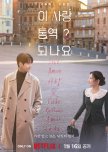
This Must Be the Place (To Translate Love)
The premise of Can This Love Be Translated? is undoubtedly appealing.A drama that plays on linguistic differences, manages to weave Italian into its narrative structure and moves between fascinating international settings such as Canada, Italy, Japan and Korea, it seems to have all the right ingredients to surprise. However, once the initial impact has worn off, the series reveals its limitations: a rather thin narrative, which develops according to familiar patterns and struggles to stand out and really explore the subject matter, getting lost in smoke and mirrors and convoluted musings. Everything remains superficial, proceeding by accumulation and ending in a rambling and inconclusive manner.
And that's a shame, because the set of themes deserved a much more elaborate narrative; telling the story of love, identity and trauma through the filter of linguistic and cultural translation, especially in a meta-cinematic context – albeit reduced to a horrifying case of “dating show” around the world – would in itself be an excellent starting point:
Love, like language, is an imperfect system: Something is always lost in the transition from one heart to another. It is constantly filtered: By the right words, by messages, by unspoken words that must be rephrased so as not to hurt, so as not to lose the other person. The act of translation is not only linguistic, but emotional. The characters try to make themselves “readable”...
It almost seems like a “tragedy of miscommunication”: even though they speak the same language, Ju Ho Jin and Cha Mu Hui do not understand each other, and translators are not needed when the problem is not language, but meaning.
In this game of “emotional translations”, Can This Love Be Translated? introduces an element that is seemingly unrelated and unconventional, but in reality powerful, at least in principle: Do Ra Mi. A character who -initially- functions as the protagonist's alter ego — her lighter, more ironic version, the one who says what she cannot say — but who ultimately reveals herself to be something more trivially introjected.
Not an autonomous presence, but a functional projection that openly “betrays” the narrative construction; initially, the main character’s trauma is introduced with considerable weight (coma, loss of control, scarred childhood) but then it conforms, it is handled as a narrative mechanism, not as a transformative experience; Do Ra-mi - in principle - would be a “valve” that allows the protagonist to say what she does not dare to say, to act on what she cannot process, until the final “explanation” which, unreasonably, overturns everything, bringing it back to a cliché tiredly exploited in the Dramaverse, especially in the golden age; the internalised maternal voice, the one that teaches how to make oneself acceptable, how to survive emotionally, how to love “well”.
However, even this surprise is handled more as a narrative clarification than as a real emotional earthquake; even after the revelation, the conflict does not really intensify. The internalised mother does not suffocate, dominate or ever threaten to take definitive control. She is a tamed ghost, more explanatory than destabilising. In this way, the childhood trauma – which is evoked with great emphasis – never becomes a force capable of irreversibly redefining the protagonist's present. Everything is accepted and overcome with lightness...
Furthermore, from a cinematic point of view, the choice of an “off-screen” solution (... “I'll meet her in Koreatown” ...) to resolve what is, to all intents and purposes, the narrative core of the drama, is absolutely unacceptable and unforgivable!
Unforgivable, like the representation of Italy, once again reduced to a stereotype, to an imaginary concept rather than the real country; For decades, the narrative of the Belpaese, mainly due to Hollywood, has portrayed Italy as a narrative postcard, an open-air museum with its slow pace, almost invisible work, as if we were a nation of slackers, permanent conviviality, and the absurd rituals of coffee, wine and weddings (the whole part about the protagonist's mother's wedding is an anthology of the ridiculous...); and here there is also a touch of irony, where a drama entitled “Can This Love Be Translated?” ends up not really “translating” Italy, but adapting it to a convenient, already familiar language.
A compendium of the most hackneyed narrative clichés of K-drama, ‘CTLBT’ plays on the tried and tested, offering an accessible, elegant and emotionally safe narrative in which it seems that the choice has been made not to make the characters pay a real emotional price. No truly irreversible choices, no net losses. And without loss, the conclusion struggles to feel necessary in a drama that promises complexity but chooses consolation, leaving two doubts that are at least concrete;
The Netflix model focuses on building media hype to capture the “present”, with a young, beautiful, "Instagrammable" lead actress, a beloved actor who never divides opinion – their excellent performances practically single-handedly “save” the drama – and a “clean”, explained, resolved trauma; all set in a beautiful scenario that leads one to think that the whole thing is the result of a major global marketing operation.
"Can This Love Be Translated" is not a creative failure—the series is saved by its craftsmanship and adequate cast—but rather a deliberate choice of narrative safety in a context of global aesthetic ambition. Perhaps for younger generations – or for those who have no memory of the great dramas of the early 2000s or the more radical titles of the 2010s – this series seems mature because it deals with trauma, identity and social issues. But talking about them is not the same as experiencing them, it is simply finding oneself in a comfort zone that works very well at the moment, generates discussion, etc., but which, perhaps in a few years' time, will be remembered as one of those “nice Netflix dramas”.
6 ½
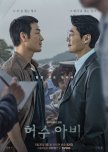
"The past is never dead. It's not even past."
Heartbreaking and evocative from its magnificent opening credits, “The Scarecrow” fully achieves every narrative goal it sets for itself, gradually transforming its crime framework into something far broader and more painful. What initially appears to be a conventional serial killer investigation slowly evolves into a collective tragedy, an irreversible accumulation of consequences where guilt, compromise, denied truths, grief and memory settle layer upon layer, forming a sorrowful elegy for lives trapped within the failures of an entire system.Drawing inspiration from the infamous Hwaseong murders, the drama uses real-life events as the starting point for a far broader and more disturbing reflection. The killer ultimately comes to represent only one part of the horror, while the true heart of the narrative gradually emerges through the distortions of a system incapable of distinguishing between justice and convenience, where power, prestige, fear and opportunism contribute, directly or indirectly, to the making of the tragedy.
The killer is merely the catalyst. The real tragedy begins when Evil finds fertile ground in the distortions of power, the indifference of institutions and the fragility of individuals. From that moment onward, every mistake generates a new consequence, every omission creates another victim, and truth becomes increasingly difficult to separate from its manipulations.
Making this descent into the grey areas of collective conscience even more compelling is a remarkably sophisticated approach to characterization, one that consistently avoids the reassuring dichotomy of "good" and "evil." With the exception of the victims of the injustices perpetrated by the police and the prosecution, almost no one is ever reduced to a single narrative function.
More than mere individuals, many of the protagonists become mirrors through which the drama reflects the tensions and ambiguities of Korean society at the time, carrying on their shoulders not only their own personal destinies, but also the wounds, compromises and contradictions of an entire system, while never losing their fragile and painfully human dimension.
Particularly emblematic is the figure of prosecutor Shi-young, a character who quickly transcends the role of a simple antagonist to become the embodiment of a system built upon privilege, prestige and the exercise of power. Corrupt, manipulative and often morally repulsive, he nevertheless remains far too complex to be dismissed as a conventional villain, contributing to the constant ethical destabilization that stands among the drama's most fascinating achievements.
Serving as his counterpart is Tae-joo, a detective driven by a genuine search for truth, yet gradually consumed by the very obsession that should guide him. Far from being an irreproachable hero, he too ultimately contributes, directly or indirectly, to the chain of mistakes and tragedies that runs throughout the story.
Their relationship, built upon a constant oscillation between attraction and repulsion, trust and betrayal, almost recalls the parable of the scorpion and the frog. Shi-young seems to seek confrontation with Tae-joo relentlessly, as though he needs him as a moral reflection of the man, he himself might have become, while Tae-joo spends much of his life desperately trying to prove that a fundamental difference exists between them.
And yet, proximity to Evil deforms even those who stubbornly attempt to fight it, making their relationship one of the most tragic and complex pillars of the entire drama.
Equally compelling is the portrayal of serial killer Ki-hwan, a character the drama consistently refuses to turn into either an exceptional monster or a near-mythological figure. Far removed from the image of the omnipotent criminal mastermind, Ki-hwan emerges instead as an ordinary man, socially invisible, consumed by envy, resentment and a profound sense of inadequacy.
What makes him even more unsettling is precisely this apparent ordinariness. The moment he chooses to let his brother Ki-beom take the blame and be sacrificed in his place marks the true point of no return for the story, not only on a criminal level, but on a deeply human one as well. In that decision lies more than a simple instinct for self-preservation; it becomes the ultimate rejection of any emotional, familial or moral bond.
As the narrative shifts between past and present, the conversations between Ki-hwan and Tae-joo in 2019 gradually take on the shape of a long and painful psychological examination, one in which the killer continues to exert a subtle form of control over the detective. What emerges from these encounters is not the portrait of a man haunted by his crimes or consumed by remorse. Instead, Ki-hwan seems to observe events with an almost playful detachment, as though the suffering he caused were little more than a secondary element in a game that began decades earlier.
For this reason, their final confrontation never feels like a liberating reckoning. What unfolds instead is the continuation of a wound that has remained open for more than thirty years, a suspended dialogue between two men who have spent their lives imprisoned, albeit in profoundly different ways, by the consequences of the same tragedy.
Standing before that prison door as it closes for the last time, Ki-hwan makes one final attempt to preserve the toxic bond that, for three decades, allowed him to remain at the centre of someone else's life.
While the investigation provides the narrative's driving force, some of the drama's most powerful and emotionally resonant moments emerge through its intricate family dynamics. Revelations involving hidden identities, blood ties, children unaware of their origins and long-buried truths gradually take on the contours of a modern Greek tragedy, where fate cruelly intertwines victims, perpetrators and survivors alike.
The revelation that Tae-joo, Shi-young and Sun-young share the same family origins is far more than a melodramatic twist. As the story unfolds, it becomes yet another reminder of the extent to which the past continues to shape the lives of its characters, making the boundary between individual responsibility and inherited burdens all the more painful.
Paradoxically, it is precisely when the institutions reveal their inability to deliver genuine justice that the drama discovers its most sincere form of redemption. Not in courtrooms, nor in investigations reopened decades later, but in human relationships. Truths are finally revealed, identities acknowledged, sacrifices made for the sake of others, and difficult paths towards forgiveness begin to achieve what the justice system never could.
Young-beom stands as perhaps the clearest example of this. Forced to reconstruct the memory of a father he never knew, and initially convinced that Tae-joo bore primary responsibility for his death, his gradual understanding of the truth emerges not through a verdict or a decisive piece of evidence, but through encounters with those who lived through the tragedy and continue to carry its scars.
Even more significant is the way the drama approaches its innocents. Characters such as Ki-beom, Seok-man, Young-beom, the grieving family of little Hye-jin, whose tragic fate continues to echo throughout the narrative, and, ultimately, Tae-joo himself, endure irreparable losses, stolen years and a pain that no verdict could ever erase, yet they are never defined by resentment.
In a story shaped by compromises, omissions and shared responsibility, they become the guardians of its most profoundly human quality: the ability to keep living without allowing the injustice they suffered to become a form of poison in its own right.
As the moving epilogue suggests, some wounds can never truly heal, and certain absences can never be filled. They may, however, be understood, shared and, perhaps, accepted. It is within this fragile possibility of reconciliation with the past that “The Scarecrow” finds its deepest and most affecting form of hope.
In a television landscape that too often relies on narrative shortcuts, easy absolutions and simplified moral frameworks, “The Scarecrow” stands as a rare example of writing capable of engaging with complex material without betraying its contradictions. While deeply rooted in a story tied to modern South Korean history, the drama ultimately speaks a universal language, transforming its criminal narrative into a reflection on power, responsibility, memory and the consequences of our choices.
A result made possible not only by the quality of the writing, but also by an extraordinary ensemble cast whose commitment and emotional authenticity elevate every stage of the narrative. While Park Hae-soo, Lee Hee-joon and Jung Moon-sung deliver performances of remarkable depth and intensity, one of the drama's greatest strengths lies in the collective work of its entire cast. From leading roles to supporting characters, each performer contributes to creating a world that feels lived-in, believable and profoundly human, allowing even the smallest emotional nuances of the story to resonate with remarkable force.
The series offers neither complete consolation nor fully restorative justice. Some wounds remain open, some wrongs go unpunished, and many lives continue to bear the marks of what happened. Yet, without ever abandoning its bitterness, “The Scarecrow” suggests that understanding the past may be the first step towards no longer being imprisoned by it.
More than a story about the guilty and the innocent, “The Scarecrow” is a story about people trying to live alongside what has been, slowly learning that moving forward does not mean forgetting, but finding the courage to continue living with their scars
9/10

“We are all prisoners... prisoners of our own nature”
A kind of psychological noir more than a typical “solution-driven” thriller, “Reverse” builds its strength through an intricate structure that functions not as a mere narrative device, but rather as a system of distorted perceptions capable, from its very first scenes, of immersing the viewer in a skillful game of reversals, ingeniously portraying the way memory, trauma and desire can deform the very perception of truth.Structured with meticulous ingenuity through flashbacks, ellipses, temporal gaps, sensory memories, omissions — real or presumed — and continuous shifts in perspective, the drama uses its narrative fragmentation not simply to create suspense, but above all to drag the viewer into a labyrinthine journey inside a fractured consciousness, where past and present progressively lose any clear boundary.
Despite its relatively short length — only 8 episodes — the drama constantly manages to call into question what the previous episode seemed to have established, overturning every viewpoint perhaps too hastily taken for granted. Through deception and manipulation, unexpected fractures, memories that take on the tone of confession and revelations that verge on staged performance, the viewer is progressively deprived, much like the protagonists themselves, of any stable point of reference, eventually coming to constantly doubt the very meaning of the images being shown.
Rather than using amnesia as a simple thriller device, "Reverse" gradually transforms memory into a true identity performance, where the recovery of recollections coincides not so much with healing, but rather with the slow re-emergence of a repressed, traumatized and potentially manipulative personality.
It is here that "Reverse" performs its most disturbing movement: instead of clearly separating victims from perpetrators, the drama constantly works on their overlap, forcing the viewer to continuously reconsider the moral role of its characters.
Beneath its thriller structure also emerges a surprisingly fierce reflection on class privilege and on the ability of elites to transform guilt into aesthetics. Art itself, through the character of Hee Su (an excellent Kim Jae Kyung), seems to become a sublimation of trauma and privilege, to the point of converting the suffering of others into creative language, sensitivity and even moral legitimization.
It is therefore no surprise that the image of fire returns throughout the entire series, transforming itself into primal trauma, sensory memory and the symbolic repetition of an impossible-to-erase violence. Every fire, whether real or evoked, seems to lead the characters back toward the same nucleus of guilt, desire and self-destruction. Within such an unstable perceptual and moral landscape, the work of the actors becomes fundamental, as they are called not to embody immediately readable figures, but rather characters perpetually suspended between trauma, simulation and moral ambiguity.
In this regard, Seo Ji-hye probably delivers the strongest performance of the series, crafting a version of Myo Jin that is layered, elusive and continuously indecipherable. Through an extremely restrained control of glances, hesitations and minimal expressive variations, the actress simultaneously conveys fragility, pain, lucidity and calculation, transforming the very face of the character into an ambiguous territory that the drama constantly invites the viewer to reinterpret.
While Seo Ji-hye chooses the path of opacity and continuous indecipherability, Go Soo instead constructs a Jun-Ho that explicitly recalls certain classic figures from Hollywood psychological noir. His elegant charm, seemingly reassuring control, emotional manipulation and the gradual emergence of opportunistic cruelty inevitably evoke archetypes close to Charles Boyer in “Gaslight”, with Jun-Ho transforming the house he shares with Myo Jin into a sophisticated perceptual prison built upon sedation, isolation and emotional control, where protection and coercion ultimately become indistinguishable.
More melancholic and crepuscular, instead, is the figure of Adjushi Ki Cheol portrayed by Yoon Je Moon, a character who seems to come directly from a Jean-Pierre Melville polar: a man consumed by time, guilt and the awareness of his imminent death, yet still capable of preserving, until the very end, a form of silent moral lucidity.
Balancing the tragic tension are also the deliberately more buffoonish characterizations of the secondary criminals, often constructed on the border between real menace and grotesque mockery, in a way that recalls certain noir deviations found in the work of Joel and Ethan Coen, where violence, absurdity and dark comedy coexist within the same degraded moral universe.
"Reverse"ultimately makes its relationship with the viewer fully explicit above all in its finale, where one of the most effective intuitions of the concluding episode is represented by the figure of the psychiatrist, who gradually assumes the role of a true alter ego for the audience itself. Like the viewer, the doctor is forced to retroactively reconsider every gesture, every answer and every hesitation shown by Myo Jin, realizing far too late that she too has been manipulated by a truth constructed through omissions, simulations and deliberately altered perceptual fragments.
In the courage of its conclusion, "Reverse" probably finds its most complete dimension. Far removed from the increasingly common tendency to redirect ambiguity toward conciliatory or morally reassuring structures, the drama refuses any form of definitive reconciliation, choosing instead to preserve until the very end the painful, contradictory and profoundly unstable nature of its characters.
Truth, in "Reverse", does not truly liberate anyone, restore balance or transform revenge into a cathartic or morally ordered journey. On the contrary, every revelation seems to further contaminate what the viewer believed they had finally understood, leading the drama toward a conclusion that is both tragic and ambiguously unsettling.
The “gift” evoked in the final part of the series therefore acquires a devastating meaning: not merely an extreme gesture or terminal provocation, but the possible specular recognition of a shared darkness that Myo Jin, perhaps too late, ultimately begins to glimpse within herself as well.
Perhaps the most radical choice made by "Reverse" lies precisely in understanding that certain truths do not serve to heal, absolve or restore order, but merely to reveal how deeply trauma, desire and revenge can deform a human being. Even when there is no longer any possibility of turning back.
8/10
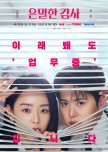
"I heard it through the grapevine (and I saw the photo too)."
Skillfully navigating the territory of workplace rom-coms, “Filing for Love” reveals its narrative maturity by gradually moving beyond the genre and its familiar simplifications to explore a far more complex reality: a working environment where surveillance, intrusion into private life, relentless competition, and the cult of productivity ultimately reshape even human relationships. Beneath its romantic dynamics and the inevitable conventions of the genre lies a surprisingly bitter reflection on contemporary loneliness, burnout, professional alienation, and the price many people are forced to pay when work ceases to be merely a part of life and becomes its absolute center.Through Team 3, seemingly relegated to the margins of the corporate hierarchy and tasked with handling the company's most uncomfortable and embarrassing issues, “Filing for Love” constructs a remarkably meaningful microcosm. The investigations that shape the first half of the story portray an environment in which work invades every aspect of existence, gradually transforming Haemu into a kind of city-state where people live, love, betray, and suffer almost exclusively within its boundaries.
While the first half of “Filing for Love” seems primarily concerned with the more intimate implications of work—surveillance, workplace relationships, burnout, loneliness, and the struggle to balance professional and personal life—the second half gradually broadens its scope, evolving into something close to a corporate political drama. Succession battles, reputation management, media pressure, and corporate restructuring become the natural extension of a theme that had been present from the very beginning: the company as a totalizing system, capable of extending its influence far beyond the workplace and permeating every aspect of individual existence.
Another interesting aspect of “Filing for Love” lies in its decision to subvert one of the most established dynamics of Korean workplace rom-coms. While the genre has accustomed viewers to the powerful CEO and the subordinate employee, the series instead places a woman in a position of authority, with the men around her forced to navigate that reality. The drama, however, carefully avoids reducing this choice to a simple reversal of roles. Its real interest seems to lie in the dynamics generated by power itself, regardless of the gender of the person who holds it.
When a relationship develops within a hierarchical structure in which one person has the authority to transfer, promote, or dismiss the other, the central issue is not whether that person is a man or a woman, but the imbalance of power that inevitably emerges. It is within this delicate equilibrium that Joo In-ah takes shape as one of the most compelling and well-realized characters in the entire series.
Joo In-ah (played with remarkable depth by the excellent Shin Hae-sun) is arguably the most fascinating character in the entire series. From her very first appearance, she is presented as a feared figure within the Haemu Group: an uncompromising executive, obsessed with rules and seemingly devoid of empathy. Yet, episode after episode, “Filing for Love” patiently dismantles this initial perception. In-ah is neither a moralist nor a cynic in the traditional sense of the term; rather, she is a radically pragmatic woman, accustomed to viewing the world through the lens of consequences and responsibilities.
Behind the feared executive, however, emerges a deeply lonely woman who lives an almost ascetic existence, accepts being misunderstood in order to carry out her work according to her own principles, and has turned isolation into a form of self-preservation. It is no coincidence that one of the most revealing aspects of her character emerges through her relationship with art. The woman who spends her days hidden behind regulations, disciplinary procedures, and an intimidating reputation chooses to expose herself in the most vulnerable way possible by posing as a model for an art class.
It is precisely this tension between strength and fragility, control and the need for understanding, that makes Joo In-ah one of the drama's most compelling characters. Her journey is not about learning to be strong—she has always been strong—but about gradually lowering her defenses and allowing herself the possibility of finally being seen for who she truly is.
No Ki-joon (portrayed with considerable charm by Gong Myoung) initially embodies the archetype of the perfect employee: capable, well-liked, efficient, and seemingly destined for a successful career. The series, however, quickly dismantles this surface image by exposing the vulnerabilities hidden behind the company's so-called "golden boy." His transfer to Team 3 marks the beginning of a profound identity crisis. Ki-joon has built much of his self-worth on professional achievement and the recognition he receives within the company, to the point where he can no longer distinguish between what he does and who he is. Through his character, “Filing for Love” explores one of the most insidious consequences of performance-driven culture: the risk of reducing one's identity to a professional role and gradually losing any sense of self beyond it.
Unlike many male protagonists in the genre, Ki-joon is not defined by his social status or his ability to wield power over others. His journey is instead that of a person who gradually learns to look beyond appearances, abandoning hasty judgments and preconceived notions. It is this willingness to constantly question his own assumptions that ultimately becomes his most defining quality throughout the story.
Jae-yeol (Kim Jae-young, delivering a measured performance perfectly suited to the role) is arguably the most tragic character in the entire series. In a more conventional drama, he would have been the classic second male lead destined to stand in the way of the main couple. Filing For Love, however, takes a far more interesting approach, turning him into a deeply human and melancholic figure. Every aspect of his life seems marked by a different form of deprivation: a strained relationship with a father who never considers him good enough, his mother's illness, a marriage shaped more by strategic interests than genuine affection, A-jeong's unrequited love, and, above all, his unresolved bond with In-ah.
More than an antagonist, Jae-yeol comes across as a man trapped within expectations that others have created for him. Heir, son, husband, executive: every role is imposed upon him before he has the chance to choose it for himself. Even his relationship with In-ah seems to belong more to the realm of regret and unresolved memories than to any genuine possibility in the present. In this sense, the character comes to embody one of the drama's most bittersweet ideas: success, power, and privilege do not necessarily guarantee freedom. On the contrary, they can become a cage just as suffocating as any other.
His character arc is particularly effective because the drama gradually abandons the idea of using him merely as a source of romantic tension. As the story progresses, Jae-yeol ceases to be an obstacle between the protagonists and instead becomes a symbol of everything In-ah and Ki-joon are trying to avoid: a life shaped by duty, compromise, and resignation. His personal journey ultimately takes on the contours of a quiet tragedy, one that inspires far more compassion than hostility.
A special mention should also go to A-jeong (Hong Hwa Yeon), a character the series uses to explore yet another form of loneliness and inadequacy. Ki-joon's former girlfriend and hopelessly in love with Jae-yeol, she lives constantly in the shadow of relationships that never achieve true reciprocity. Her desire to be seen and acknowledged is further complicated by a clear sense of inferiority toward In-ah, whom she perceives as unattainable both professionally and romantically. More than an antagonist, A-jeong remains the portrait of a person desperately searching for attention and belonging, enriching the broader mosaic of emotional fragility that runs throughout the series.
Through its protagonists, the series finds its most authentic voice. Beneath the romantic dynamics and the inevitable conventions of the genre, “Filing for Love” ultimately reveals itself as a story about individuals searching for a place to belong: Ki-joon seeks recognition and validation, In-ah a sense of peace that always seems just out of reach, Jae-yeol a form of legitimacy beyond the role imposed upon him by his family, and A-jeong a love that might finally be returned. Even its lightest and most entertaining moments rest upon a surprisingly bitter reality shaped by burnout, social pressure, isolation, and professional identities that gradually come to overshadow personal ones.
One of Filing for Love's greatest strengths lies in the way it develops the relationship between its two protagonists. Their romance is not born from immediate attraction or romantic destiny, but from a gradual process of mutual understanding and the slow abandonment of preconceived judgments. In the early episodes, Ki-joon sees In-ah much as everyone else at Haemu does: as a cold, uncompromising, and almost inhuman woman. His initial investigation into her affairs is driven by a desire to expose her, to find proof that something darker lies behind that carefully controlled façade. Yet the closer he gets to her, the more he discovers the exact opposite: a deeply lonely person, willing to endure the misunderstanding and resentment of others in order to do what she believes is right.
The drama charts this transformation through a series of subtle shifts in perspective. At first, Ki-joon watches In-ah in order to expose her; later, he watches her in order to understand her; eventually, he watches her because he is drawn to her.
Viewed in this light, the portrait Ki-joon creates carries far greater significance than the first kiss or any of the drama's more overtly romantic moments. If the paper clip symbolizes the birth of complicity, the portrait marks the birth of love.
For the first time, Ki-joon does not merely desire In-ah—he truly sees her, offering her a reflection of herself freed from the defenses behind which she has hidden for years. This is not a story of conquest, but one of mutual recognition: the story of a woman who has learned to live behind a suit of armor and a man who, little by little, stops looking at the armor and finally begins to see the person beneath it.
In this sense, “Filing for Love” is not truly a workplace rom-com, but a series about loneliness that uses the rom-com format as its narrative vehicle. Love is not presented as the culmination of one's existence or as a simple romantic reward, but rather as the possibility of escaping, if only for a moment, the structural loneliness generated by a system that measures a person's worth almost exclusively through productivity.
Just as the series seems to have fully embraced its most distinctive identity, some of its limitations begin to emerge. The ambition that expands the narrative from the microcosm of Team 3 to the internal power struggles of the Haemu Group enriches the story, but also accumulates a number of conflicts and subplots that the finale struggles to handle with the same care displayed earlier on. A certain repetitiveness in some of the investigative storylines, along with a few more conventional romantic detours, foreshadows a conclusion that resolves several of its most compelling tensions a little too quickly. More than the resolutions themselves, what leaves some room for reservation is the limited attention given to their aftermath.
Without reaching the excellence of the very best Korean workplace rom-coms, and despite a finale that simplifies and accelerates many of the tensions carefully built up along the way, “Filing for Love” remains a series that stands out for its thematic maturity, the quality of its character writing, and its ability to use romance as a vehicle for exploring something broader and more universal. It does not always fulfill every promise it makes throughout its journey, yet its reflection on contemporary loneliness, professional identity, and the need for belonging retains a sincerity that is rare within the genre. The journey does not always lead to the most satisfying destinations, but it remains far more interesting than most of the paths offered by traditional workplace rom-coms.
7½
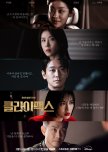
“The times are changing — just enough to stay the same.”
A profoundly revealing series within the contemporary Dramaverse, “Climax” stands out not so much for its undeniable intrinsic value, but for its inherently ambiguous and elusive nature — one that, precisely because of these qualities, seems destined to generate interpretations that are not always aligned.Within an increasingly congested landscape, ever more oriented toward recognizable, reassuring, and easily consumable formulas, works like this move in the opposite direction: they slow down, they layer, they refuse simplification, and above all, they deny the viewer a comfortable position from which to observe events. This is not a flaw — but a deliberate, almost programmatic choice.
It is perhaps along these lines that one can anticipate a reception that may not be entirely uniform, as a narrative so unwilling to provide immediate coordinates demands a different kind of attention — less oriented toward consumption and more toward engagement.
In this sense, some of the reservations that often emerge in response to works of this nature — related to perceived slowness, lack of immediacy, or difficulty of interpretation — seem to reflect more a different mode of viewing than actual limitations of the work itself.
This points to a deeper shift, one that concerns not so much taste as the ability to place a work within the evolving trajectory of cinematic language. Without a clearly defined memory — even a recent one — of forms and their transformations, any narrative risks being perceived only through its immediate impact, losing the very stratification that gives it lasting value.
Within this framework, “Climax “reveals a striking coherence, rejecting any form of simplification and choosing, from the very beginning, to construct a narrative universe that offers neither moral footholds nor stable points of reference. Its characters are not defined through reassuring categories — heroes, victims, antagonists — but instead move along a far more unstable axis, where ambition, survival, and compromise inevitably overlap.
Bang Tae-seop, an ambitious prosecutor reinventing himself as a political figure, embodies perhaps the most evident trajectory of this transformation: a path that does not distance him from the system, but gradually leads him to become an integral part of it. Alongside him, Chu Sang-ah, an actress marked by trauma and a career constantly exposed to manipulation and coercion, represents the most elusive and contradictory face of the narrative, suspended between fragility and calculation, between survival instinct and awareness of her own “role.”
Around them, figures such as Lee Yang-mi — a true nexus of power — and Hwang Jeong-won, only apparently more marginal yet emotionally pivotal, contribute to shaping a system in which every relationship, even the most intimate, is inevitably contaminated by dynamics of control, dominance, and adaptation.
It is precisely through the evolving trajectories of these two protagonists that the deeper nature of the series becomes fully apparent. Tae-seop, initially driven by an ambition still tied to a notion of personal redemption, gradually abandons any residual form of opposition, adapting with increasing lucidity to the logic of power until he becomes a fully conscious agent within it. His transformation is not abrupt, but gradual and almost inevitable, replacing conflict with control, and ethics with effectiveness.
Sang-ah, by contrast, operates on a more elusive and less linear plane — and for that very reason, a more destabilizing one. Her evolution does not follow a recognizable trajectory, but unfolds through successive layers, alternating moments of apparent vulnerability with sudden shifts toward a colder, more calculated awareness. She is a character that resists definition, and it is precisely in this constant oscillation that her strength lies: victim and strategist, emotional presence and constructed persona, never fully one or the other.
Within their relationship, these tensions do not cancel each other out, but rather recognize and integrate one another. What emerges is not a bond grounded in traditional emotional dynamics, but a form of balance built on mutual adaptation, shared risk, and an implicit understanding of the rules of the game. Rather than moving closer, the two protagonists ultimately align, becoming expressions of the same system — one that leaves no room for alternatives.
It is within this convergence that the systemic nature of “Climax” becomes most evident. Politics, show business, justice, and media are never treated as separate domains, but as interconnected parts of a single organism, capable of absorbing, reshaping, and redefining power dynamics from within. There is no real “outside,” no genuine possibility of escape: every attempt at resistance is ultimately absorbed, transformed, neutralized.
In this context, corruption does not appear as an exception or deviation, but as a structural condition — almost inevitable. Characters are not corrupted over time; they either already are, or become so insofar as they learn to survive. It is a process of adaptation rather than downfall, where the distinction between choice and necessity becomes increasingly blurred.
Within this framework, even morality loses clear definition. “Climax” rejects any manichean approach, carefully avoiding rigid distinctions between guilt and innocence, victim and perpetrator. Every character inhabits a grey zone, where actions appear both necessary and questionable, and survival often prevails over any notion of integrity.
In this sense, Sang-ah’s characterization proves particularly significant, revealing — especially in the private and more concealed dimension of her “true self” — a fragility that partially escapes the dominant logic of the system. It is precisely in these more intimate, less exposed moments that a more sincere emotional core emerges, one not entirely reducible to calculation and strategy.
This is not redemption, nor an attempt at moral rehabilitation, but rather an internal fracture that makes the character even more complex and resistant to rigid judgment.
If “Climax” sustains its structure with such coherence, it is also — and perhaps above all — thanks to a cast that deliberately avoids any form of self-indulgence. These are not performances designed to please, nor characters meant to be liked, but figures that exist within the system that shapes them, embodying all its contradictions.
Ju Ji-hoon once again confirms a rare versatility, moving across vastly different registers with remarkable ease, here translating into a progressive restraint that renders ambition almost inevitable, stripped of any overt emphasis.
Ha Ji-won delivers one of the most complex and layered performances of her career, crafting a character that constantly eludes definition. Her performance unfolds through shifts and sudden tonal changes, balancing fragility and control with disarming naturalness, never slipping into mannerism — at times approaching a form of meta-performance.
Nana embraces a deliberately deglamorized image and works through subtraction, building a presence that initially appears cryptic and distant, only to gradually reveal a deeply emotional and tragic dimension.
Cha Joo-young, on the other hand, embodies the structural core of power itself: she does not simply portray it, but makes it visible, giving shape to a figure that encapsulates the distortions of a system with no apparent alternative.
Together, they do not merely support the narrative — they make it believable, giving form to a system that, through their performances, becomes the true protagonist of the story.
It is precisely in light of this construction that “Climax’s ending reveals its full coherence. Far from any need for catharsis or moral resolution, the conclusion does not aim to resolve, but to stabilize. Tensions are not released, but absorbed; conflicts do not reach synthesis, but find a new placement within the same system that generated them.
There is no true fall, nor a real ascent: what changes is the position of the elements within a structure that continues to function according to the same logic. Power is neither challenged nor dismantled — it reorganizes, adapts, evolves. And the characters, far from being judged or redeemed, find a form of equilibrium precisely insofar as they accept being part of it.
It is a conclusion that may feel disorienting, precisely because it refuses simplification and offers no comforting resolution — yet it is likely the only possible one for a narrative that, from the beginning, has chosen to inhabit a space of constant ambiguity, never yielding to the temptation of clear moral distinctions.
“Climax” does not provide answers, nor does it attempt to indicate a direction. Rather, it invites the viewer to question their own position within dynamics that, however extreme they may seem, retain a striking sense of familiarity. It is not a conciliatory vision, nor a reassuring one.
But it is, precisely for that reason, remarkably lucid — and perhaps, unavoidably necessary.
8½
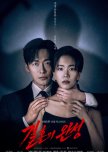
If I had a hammer, I'd hammer in the morning, I'd hammer in the evening, all over this land
Drawing inspiration from a Hollywood-style premise that flirts with decidedly captivating classic genre archetypes — the marriage thriller, the suspect husband, the kidnapped wife and an invisible killer — “The Husband” builds tension through a gradual accumulation of elements, in what appears to all intents and purposes to be a descent into the gothic-crime genre that is sure to captivate, laying excellent groundwork and fuelling ever-higher expectations.However, just when the viewer seems to have grasped the parameters within which the story intends to unfold, the series takes a sharp turn, transforming what appeared to be a gradual evolution of the thriller into a substantial replacement of it.
What might have taken the form of a narrative metamorphosis — A becoming B without ceasing to be A — instead gradually takes on the contours of a rupture: the marriage and crime thriller of the first part gives way to a medical-scientific conspiracy that does not seem to fit organically within the initial premise, nor does it succeed in retrospectively lending it a deeper meaning.
A rupture that appears all the more pronounced precisely because the first part of the drama perfectly illustrates the narrative framework that the series had outlined with equal rigour;
Through a cohesiveness that is more than mere appearance, “The Husband” exploits and expands upon – whilst redefining them within the conventions of television – the three unities of classical drama, beginning with the action in which the protagonist, Tae-ju, is determined to find and rescue Se-yun whilst, at the same time, proving that he is not responsible for her abduction; inevitably linked to time, through the ransom countdown and the constant threat of Se-yun’s death – elements that imbue the narrative with a frenetically gripping pace; finally arriving at the unity of place, where the house, Se-yun’s prison, even the hospital and the car delineate the microcosm within which the desperate hunt unfolds.
Within this narrative puzzle, the portrayals of the characters — Tae-ju, Se-yun, Man-hui, the police, the parents, Su-hyeong — all serve this conflict, alongside all the narrative elements that help the viewer immerse themselves in the whirlwind of hypotheses that the story inevitably provokes.
It is therefore within such precise narrative parameters that the viewer is gradually led to formulate their own questions, building expectations consistent with what the series has shown them up to that point.
And this is the point at which “The Husband” makes its most problematic choice: rather than developing those premises organically, it begins to shift the narrative’s focus towards a completely different subject matter...
The first sign of the plot’s fragility emerges as early as when the series introduces characters and situations that appear destined to deepen the mystery, but which ultimately turn out to be mere plot devices.
Su-hyeong, a former police officer and a sort of maverick driven by revenge, embodies a whole series of elements that could potentially be crucial to the story’s progression: he has a previous case, he has lost his wife, he has studied the kidnapper’s modus operandi, he possesses information the police do not have, and he knows another victim; yet his role is exhausted almost immediately, without him being accorded the narrative weight that his introduction seemed to promise, effectively reducing him to a plot device serving the protagonist’s sensational escape.
The same mechanism is repeated, on a smaller scale, in the subplot involving the nurse’s grandmother, who is kidnapped and used by Man-hui as leverage to extract information from the hospital – a subplot introduced with sufficient emphasis but quickly absorbed and abandoned by the narrative.
It is, however, particularly as the story progresses that this mechanism takes on more pronounced proportions, because it is not merely that certain plot threads are abandoned: the very nature of the narrative gradually changes.
The action and survival thriller gives way to a hospital-based conspiracy linked to stem cell research, with the focus shifting from the kidnapping and the hunt for the killer towards a web of vested interests, blackmail, murders and repressed emotions involving doctors, patients and their families. The problem is not, once again, the ambition to broaden the scope, but the lack of a transition capable of making this new scenario feel like the natural consequence of what had gone before.
This same shift gradually extends to the characterisation. From the very first episodes, Man-hui demonstrates that he employs technology, surveillance and planning with such systematic rigour that he is constantly one step ahead of anyone attempting to stop him; what changes, therefore, is not so much his nature as the increasingly evident disparity between his ability to anticipate every move and that of a clumsy investigative apparatus that seems perpetually to be chasing him after the fact.
His characterisation thus ends up oscillating between that of a brutal serial killer – who resorts to mallets, hammers and stones with often impulsive violence – and that of an almost infallible criminal capable of devising extremely sophisticated plans, a combination that the screenplay does not always manage to render fully coherent. Crosses, rituals, an hourglass and Little Red Riding Hood seem to belong to a killer with his own ritualistic conception of violence; at the same time, however, the second half asks us to view him as a highly sophisticated strategist of intrigue.
Man-hui and Gyeong-ae are gradually absorbed by the demands of the plot, whilst the complexity of their relationship remains only partially explored.
From that moment on, everything seems to operate according to different rules: the police – running like headless chickens – continue to chase without ever getting ahead of the game, whilst a surgeon almost incidentally takes on investigative duties, the hospital is transformed into a microcosm of rivalries, secrets, crimes and repressed emotions, whilst Se-yun herself, after being kidnapped, tortured, recaptured and finally freed, is left exposed to further dangers with protection that, paradoxically, appears far more fragile than that afforded to the wife of her own tormentor.
It is at this point that the viewer’s sense of disorientation becomes more than just a simple shift in tone: the series seems to have reversed its trajectory without laying the groundwork necessary to make that turn.
It is not, therefore, a question of expecting every detail to be explained or of insisting that a thriller must adhere slavishly to the conventions of the genre; it is a matter of recognising a narrative progression and verifying its internal consistency. In “The Husband”, however, intentions, premises and developments often seem to proceed on different levels, to the extent that certain plot twists are not merely implausible, but difficult to reconcile with the logic previously established.
In many series, the problem arises in the final episodes: a rushed conclusion, an unconvincing resolution, an ending that fails to live up to its promise. Here, the issue is more radically: the fracture occurs at the very heart of the narrative, retroactively altering our perception of what comes next and, to some extent, of what has come before.
‘The Husband’ thus ends up feeling like a drama that is progressively split into two narrative identities that are difficult to reconcile.
This is perhaps the main reason for my disappointment: not that I am faced with a story devoid of ideas, but with one that contains far too many and which, instead of organising them into a coherent whole, ends up simplifying and trivialising them.
And yet, amidst the muddled plot development, there was a story. Perhaps even a far more interesting one than the one the series chose to overload with conspiracies: the one suggested by the title itself, through the possible parallels between the two families – Tae-ju and Se-yun on the one hand, Man-hui and Gyeong-ae on the other...
Two profoundly different couples, even irreconcilable on a moral level, yet united by the same notion of marital devotion, taken to the point of self-sacrifice. Tae-ju goes so far as to put his own identity, and ultimately his marriage, on the line in order to protect Se-yun; Man-hui, having shared with Gyeong-ae a guilt that will become the very foundation of their relationship, in turn chooses to take full responsibility to save her.
One attempts to protect his wife without losing himself entirely; the other, having already crossed that threshold, transforms his sacrifice into a final act of protection. An imperfect symmetry – morally irreconcilable yet narratively evocative – which could have elevated “The Husband” to something far deeper than a mere crime thriller.
The drama could have been a real gem: it has the premise, the atmosphere, the characters and even thematic parallels capable of sustaining it. But the writing ends up squandering exactly what had made the opening so promising, gradually replacing structure with a mere accumulation of events and causality with the need to drive the plot forward. This is perhaps its most bitter contradiction: having enough material to build a memorable story, yet ending up simplifying it, trivialising it and fragmenting it.
A story may deliberately leave something unresolved; what it cannot do without paying a price is to invest time, information, motivations and relationships in building up its premises, only to transform them – once their immediate function has been fulfilled – into mere tools for advancing the plot. For every narrative element to which significance is attached inevitably ends up creating an expectation, and that promise, sooner or later, demands to be fulfilled.
5/10
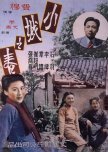
Lonely silence here / And I'm not the one / Make your house a home
A work poised between two eras, Spring in a Small Town (1948) by Fei Mu stands as one of the most lucid portrayals of a world coming to an end — and of the lingering inability to imagine what might replace it.From its very first moments, the film unfolds with the precision of a theatrical composition: a small group of characters, almost archetypal in nature, arranged within a confined space that seems to suspend time itself. The ailing, withdrawn husband; the wife trapped in a life drained of desire; the younger sister, still open to the possibility of a future; the silent, devoted servant; and the returning doctor from the past — each figure enters the scene already charged with tension, as if part of a fragile balance destined to fracture.
Yet beneath this seemingly classical structure lies a striking modernity. The emotions that shape these characters — desire, frustration, fear of change — do not belong solely to their time, but resonate deeply with our own. Within this suspended microcosm, dominated by a decaying house that emerges as a living narrative organism, Fei Mu crafts a film in which space does not merely contain the action, but reflects and confines it, becoming the silent custodian of a world slowly fading away.
At the heart of the movie lies a love triangle that deliberately avoids conventional melodrama, embracing instead the quieter, more painful path of inaction. The return of the doctor — tied to the woman by a long-suppressed emotional bond — introduces the possibility of change, yet that possibility remains suspended, never fully pursued. Desire is present, unmistakable, but it never finds the strength to become action.
Within this fragile equilibrium stands the husband, unaware of the previous liaison between the two, whose illness — ambiguous, never entirely defined but more than self-harm — takes on a meaning far beyond the personal. His passive presence becomes the silent axis around which all unfulfilled choices revolve. He is not an antagonist, but a condition: the embodiment of a world unable to react, unable to transform itself.
The triangle remains unresolved, and it is precisely in this lack of resolution that its tragic force resides. This is not a film about desire, but about the impossibility of acting upon it.
The title itself suggests a promise the film continuously evokes without ever fulfilling. Spring — traditionally a symbol of renewal — takes on an ambiguous, almost ironic meaning here: nature signals change, yet the characters remain incapable of embodying it. Time passes, seasons shift, but nothing truly transforms, as made clear in the ‘moral’ resolution of the finale.
In this tension between natural movement and human immobility, the film’s allegorical dimension emerges. Without ever explicitly invoking historical context, Fei Mu constructs a microcosm that reflects a broader condition: a society suspended between the end of one order and the inability to define the next. The decaying house, restrained bodies, and unfulfilled desires become visible traces of a transformation that has yet to take shape, dictated by a future that remains unclear.
Like many movies born in times of political tension or cultural constraint, the narrative operates on a lateral plane, where the personal becomes a vehicle for the political, and intimacy turns into allegory. The film does not depict History — it allows it to seep through gestures, silences, and spaces.
There is no hesitation in saying it: Spring in a Small Town is an absolute masterpiece, a true swan song from a director who was forced to emigrate to Hong Kong shortly afterwards; Not only one of the highest achievements of Chinese cinema, but a work that transcends time, style, and historical context without losing any of its emotional urgency.
In an era often dominated by excess, Fei Mu demonstrates how the greatest intensity can emerge through restraint, transforming silence, space, and minimal gestures into living cinematic matter.
Decades later, what remains most striking is not only its formal perfection, compared to a structure that could not be more minimalist, but its enduring relevance — because the hesitations, suppressed desires, and quiet fears that inhabit its characters are still our own.
That we can rediscover a film like this today is part of its quiet miracle (although the DVD release for the Italian market doesn’t do it full justice): a work once at risk of fading into obscurity now returns, intact, to remind us that great cinema never truly belongs to the past.
10/10
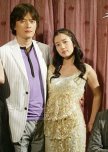
Our Life Is Not a Movie or Maybe
Compared to the substantial number of dramas that remain etched in the collective memory — constantly referenced, celebrated and reimagined — there are others that, almost inexplicably, slip into obscurity, swallowed up by time, the industry’s relentless turnover and an audience ever hungry for something new. "That Summer Typhoon" belongs precisely to this second category: a work that seems to have dissolved into the background noise of the Dramaverse, yet on closer inspection reveals an ambitious narrative structure, a surprising emotional depth and a thematic clarity that remains disarmingly relevant even today.It is, without a doubt, a drama of its time — but precisely for that reason it manages to foreshadow, with unsettling prescience, many of the dynamics we now take almost for granted: the invasive nature of the press, the artificial construction of celebrity, the increasingly blurred line between truth and public narrative, and the often-exorbitant price of success.
And yet, beneath this surface of glitz, spotlights and scandal, there beats a deeply melodramatic heart, built on fractured family ties, denied identities and truths deferred for far too long.
A sweeping, multi-layered narrative that can at times feel redundant across its thirty episodes, "Typhoon" constantly walks a fine line between excess and restraint, yet manages — and this is perhaps its greatest strength — never to lose its balance entirely. It is precisely in its insistence, in its returns and repetitions, that it finds a form of expression consistent with its very nature: a past that refuses to stay buried, a truth that demands space, an emotional storm — at times dangerously ambiguous — destined sooner or later to sweep everything away.
To revisit it today is to read it with a more discerning eye, one capable of recognising not only the limitations of a work inevitably tied to its era, but above all the strength of a narrative framework which, beneath the veneer of classic melodrama, conceals a surprisingly modern reflection on identity, image and responsibility.
On the surface, "That Summer Typhoon" presents itself as a classic early-2000s melodrama: the rise and fall of an actress, family secrets ready to resurface, impossible loves and artistic rivalries. Yet beneath this familiar structure, it builds something far more complex: a lucid reflection on identity, guilt and, above all, that fragile — and often insurmountable — boundary between private truth and public image.
In a world dominated by agencies, gossip and carefully constructed narratives, individuals move like pawns within a system that turns every event — even the most intimate — into spectacle. Success becomes a double-edged sword; fame, a mechanism that exposes, distorts and ultimately consumes.
From a narrative standpoint, That Summer Typhoon proves to be remarkably layered. It does not merely function as a family melodrama, but interweaves at least three distinct dimensions: the drama of the entertainment industry, the private tragedy of familial relationships, and a more subtle moral layer in which each revelation does not bring relief, but further complicates the characters’ lives.
Its structure unfolds through accumulation and reiteration: truths emerge, are questioned, then replaced by new versions, in a constant slippage that prevents any real stability. This is a familiar device in Korean melodrama of the period, yet here it is employed with unusual awareness, almost suggesting that no definitive truth exists — or that, when it does, it arrives too late to truly matter.
In this sense, the series moves fluidly between registers: moments of intense public exposure — press conferences, scandals, media intrusion — are set against intimate, often silent spaces where the emotional weight of events is felt without the need for explanation, further enhanced by a deeply effective musical score. It is precisely this oscillation between the external and the internal that gives the narrative its rhythm, despite the inevitable repetitions brought on by its length.
Even in its most repetitive passages, however, the series maintains a surprising equilibrium: each element contributes to a coherent whole, with individual threads ultimately converging into a single, overarching emotional “storm”.
"Typhoon" is, above all, a melodrama about truth and its consequences — a truth suppressed, concealed, manipulated and ultimately destined to resurface, sweeping everything and everyone away like the storm evoked in its title. Yet this is not merely a family secret, but a layered system of lies that encompasses individuals, relationships and an entire social ecosystem, where appearance outweighs substance and public image becomes a form of currency.
The drama thus constructs a dual narrative: on one level, the intimate, almost suffocating story of a family fractured by past choices and unresolved responsibility; on another, a broader reflection on the entertainment industry, the artificial construction of success and the intrusiveness of a media system eager to devour truth and reshape it into spectacle.
It is when this structure takes shape through the faces, gestures and silences of its characters that Typhoon makes its decisive leap, transforming from a potentially schematic narrative into a genuinely affecting experience.
Within this framework, even the most controversial element — the relationship between Soo-min and James — sheds any sensationalist dimension to take on the contours of a moral tragedy. The revelation is not deployed for shock value, but forces an irreversible reckoning, in which the characters must renounce not only a feeling, but an entire possible life.
It is, however, in its final stretch that "That Summer Typhoon" makes its most compelling shift, turning its melodramatic framework into a reflection on storytelling itself. The ‘film-within-a-film’ device — which reworks the characters’ lived experiences (with an ingenious reversal of roles!) — becomes a key interpretative lens: the pain is not resolved, but staged, transformed into a representation.
In this fragile balance between construction and authenticity, performance becomes the true emotional core of the narrative.
Jung Da-bin brings Soo-min to life with a disarming naturalness. There is never a sense of performance in the conventional sense: each gesture feels so spontaneous that acting and being seem to converge. Her arc unfolds through restraint, navigating increasingly complex emotional terrain without ever tipping into excess, preserving a clarity of gaze that becomes, paradoxically, her most radical form of resistance.
In hindsight, it is difficult not to perceive in this performance a glimpse of what might have been: a deeply human alternative to a frequently constructed and polished image of femininity. What remains is a subtle, painful trace that further deepens the emotional resonance of her work.
Alongside this quiet naturalism, Han Ye-seul adopts a more layered yet equally controlled approach. Her Eun-bi exists in a constant tension between public image and private fragility, shaped through nuance, silence and fleeting emotional fractures. It is a performance that avoids both caricature and victimhood, offering instead a complex, measured portrayal.
Viewed in retrospect, this characterisation acquires an almost meta-textual dimension: Eun-bi seems to echo the very public discourse that has often prioritised appearance over talent, embodying a figure who struggles — not always successfully — to assert a deeper, more authentic truth.
The result is a rare equilibrium: two performances that never compete for dominance, but instead build a relationship grounded in mutual recognition and quiet solidarity.
While Jung Chan, as director Kim Han-hee, operates within more conventional boundaries, Lee Jae-hwang finds greater depth in the tormented figure of James. Meanwhile, Lee Hyo-chun stands out in the role of Kang Jung-ok, delivering a particularly effective transformation: from a dishevelled figure trapped in the past to a gradually reconstituted presence, in a quiet yet powerful arc of personal rebirth.
Not without its flaws, "That Summer Typhoon" does at times suffer from redundancy and narrative overextension, with certain dynamics repeating to the point of perceptual fatigue. Yet in its closing movement, it takes a less predictable path: rather than culminating in rupture, it leans towards a fragile but genuine reconciliation, grounded not in forgetting, but in acceptance.
It is within this balance — between pain and awareness, loss and continuity — that the series finds its most complete expression.
Perhaps it is here that its most enduring value resides: in its ability to leave behind a trace that is less immediate, but more persistent — one that resurfaces over time and reveals itself fully only to a more attentive gaze. A subtle imprint in which constructed and lived identities overlap, at times even blur, amplifying — without ever stating it outright — a shared sense of fragility that extends beyond the characters to those who bring them to life.
And it is precisely for this reason that it deserves to be rediscovered.
-------------------------------------
To Jung Da-bin (1980-2007),
who, with her gentle radiance, has managed to transcend time and distance, reaching — silently — even here.
Wherever she may be, what remains is the imprint of a genuine emotion, and the memory of those who, even from afar, have never stopped watching over her.
8/10
I know a girl who's soft and sweet / She's so fine, she can't be beat / Got everything that I desire
The web series Candy is a small and curious television production, which fits into the GL (girls love) rom-com genre. With its eight episodes of about half an hour each, it is easy to follow and manages to intrigue the viewer, even if it does not always fully explore its characters.The story focuses on the reunion between Lin Can, now an established actress, and Nuan Nuan, her school friend from years ago. The two girls had been very close in the past, but a scandal linked to their relationship and hostility from their families had led to a painful separation. When they meet again as young adults, their feelings for each other seem to have not faded at all: Lin Can appears determined and direct, while Nuan Nuan remains shyer and more cautious. Under the pretext of hiring her as a personal assistant, the two begin to live together, slowly reopening a relationship that had been left unresolved.
Alongside the main couple, another romantic dynamic develops between manager Si Han and famous actress Jiang Wan. This quartet of characters gives rise to a narrative made up of skirmishes, subtle jealousies and romantic moments, in which the drama alternates between light-hearted comedy and more melodramatic passages.
One of the most interesting elements is the frequent use of flashbacks, which gradually reveal the characters' pasts and the reasons for their break-up. These flashbacks also paint a rather critical picture of the adult world: autocratic fathers, possessive or violent men, and unscrupulous figures of authority represent the main obstacles to the women's freedom. In this sense, the series introduces, without fully developing it, an almost “social” dimension linked to the difficulties the young women have had to face in their lives.
Not everything, however, always appears perfectly harmonised. Some narrative developments – such as episodes of sudden violence or situations bordering on thriller – introduce stronger tones than the prevailing romantic lightness. Even the psychological construction of the characters sometimes remains barely hinted at: many emotions are suggested rather than fully explored, probably also due to the relatively short length of the series.
The urban setting, on the other hand, is interesting: modern, clean and almost futuristic cities, often shown with surprisingly empty streets. This visual choice creates a particular, almost suspended atmosphere, which contributes to giving the show a fairly recognisable visual identity.
The overall tone remains delicate, however. The scenes between the main characters are constructed with restraint and discreet sensuality, without ever slipping into vulgarity. The title itself, “Candy”, refers to a small recurring gesture between Lin Can and Nuan Nuan: the exchange of sweets to soften difficult moments, a simple but effective metaphor for their bond.
Of course, we are not dealing with works as structured as queer cinema classics such as “Desert Hearts” or “The Incredibly True Adventure of Two Girls in Love”. However, Candy remains a curious and enjoyable little series, capable of functioning exactly like the gesture of giving sweets: simple, discreet, but able to sweeten the viewer's experience. The ending is beautiful and compensatory.
7/10

Free me now so I can see, the taste of wind and be like me (So Tonight That I Might See)
Oh Soo (Jo In-sung), abandoned at birth under a tree and raised in an orphanage, as an adult slips into gambling and fraud. A huge debt to a gangster gives him 100 days: either he pays up or he dies. With his back against the wall, an unexpected opportunity presents itself: to exploit his namesake, his deceased friend — disowned by his father — who was the brother of Oh Young (Song Hye-kyo), heiress to the PL Group. Upon her father's death, Oh Young becomes the sole heir to a business empire. Oh Soo then decides to stage the perfect scam: pretending to be her “lost” brother to get the money he needs to save himself. But deceiving Oh Young will not be easy: she may be blind, but she is anything but naive.In the history of Dramaverse, 'That Winter, the Wind Blows' occupies a pivotal position. There was a time when Korean melodrama spoke the language of the seasons: impossible loves, hidden identities, illness, sacrifice, destiny. Then, before the full globalization of platforms, writing became more layered, more hybrid. This series is not a simple return to the past, but a bridge capable of integrating classic melodrama into a more complex structure, contaminated by noir, supported by a strong visual dimension and a highly evocative soundtrack.
Here, lie is not only a narrative tool: it is a choice that comes at a price. Winter is not simply an aesthetic backdrop but an existential condition. The characters survive rather than live; they choose deception as a temporary refuge from a world that has already asked too much of them.
The disturbing element is not the deception itself, but its ethical nature. Oh Soo does not simply pretend to be someone else: he takes on a name that implies a moral function. While the con man carries within him an origin marked by abandonment, the dead brother was defined by protection. The homonymy becomes the mechanism that slowly tightens the grip of destiny. By accepting that identity out of necessity, Oh Soo also inherits the symbolic weight of the name. Noir imposes the mask; melodrama empties it and fills it with responsibility.
Oh Young's blindness is not a Hollywood-style thriller device, but rather the distance that separates and defines the character. It amplifies her isolation and vulnerability in a world where every gesture can be betrayal. Protected by a wealth that is both a shield and a prison, she lives in a system of ambiguous relationships, where care and control are blurred.
Deception creates a grey area where rules are broken. By pretending, Oh Soo inhabits a role he does not fully master; by relying on his “brother”, Oh Young exposes his fragility to inevitable risk. The series makes a paradoxical move: it makes fraud a necessary step towards trust. The lie becomes the threshold between guilt and redemption, survival and authenticity. Not only is it a morally questionable act, but it is also a crack through which the truth enters.
Oh Soo's identity begins as a performance: he studies habits, controls reactions, moves like an actor. But here, the acting does not remain external. While in theatre the performer returns to being himself, in this story the role changes the player.
The stage is the mansion: a place of apparent protection, but also of control and secrets. Oh Soo carries out a sort of emotional domestic invasion, entering rooms that hold suspended identities. A space where noir sets the stage for deception and melodrama transforms it.
In noir genre conventions, the hidden room promises fatal revelations. When Oh Young sneaks in, the series seems to promise a dark twist. Instead, there is a reversal: inside there is no crime, but memories. Videotapes, maternal objects, fragments of a bright childhood. The structure is that of an identity thriller, but the heart is bittersweet melancholy.
By crossing that threshold, Oh Soo does not just invade a space: he enters a past that does not belong to him. He studies those memories strategically, transforming them into an appropriate performance: a phrase at the right moment, a tone that evokes shared pain. The room becomes the place where the character is created. But melodrama sabotages noir: internalized memory does not remain neutral.
The rootless con man appropriates for the first-time a past that continues to hold sway. Watching those VHS and looking at those photographs means coming into contact with a lost happiness he has never known. The house ceases to be merely a place of deception and becomes a space of transformation: the paradoxical beginning of a moral conscience.
From the middle of the tale, the noir atmosphere does not disappear, but the story takes an emotional leap: it becomes internalized, subtle, transforming debt and threat into matters of the heart and body. Time, previously marked by the economic deadline, splits in two: on the one hand, the countdown of the debt and the danger imposed by the gangster Mo Chul, on the other, the slow and uncertain rhythm of Oh Young's illness, the return of the tumor and the refusal of the operation.
The truth emerges: he is not her long-lost brother, but an orphan who grew up surrounded by debt, gambling and dangerous streets. This recognition, both expected and feared, does not break their bond; it transforms it. Oh Young, though surprised and hurt, clearly perceives the depth of the feelings that unite them: love is not born from a glance, but from proximity: from the sound of a bell, the taste of candy floss, the shared breath in a hospital room, no longer brotherly, but a love suspended between caution and ardor, between protection and desire. At the beginning, the series had established a code, a symbolic barrier, but here the dam breaks.
The shared pill — an animal euthanasia drug that becomes a symbol of extreme choice — marks the boundary between power and powerlessness, between calculation and affection, guilt and the desire of protection. When Oh Young asks Oh Soo, ‘Why didn't you kill me when you could?’, the series makes its most radical move: noir and melodrama meet, measuring the distance between morality and the heart. She offers him justification, but he does not carry out the act. Not because he cannot, not because he has been discovered, but because he no longer wants to. It is no more a question of succeeding in deception. It is a question of responsibility.
In the final chapters, Oh Soo faces his destiny almost like a hero in a Jean Pierre Melville movie: he renounces his possessions, leaves money to pay off his debt, moves towards moral and emotional catharsis, ready to risk everything to save Oh Young. He is preparing for closure; he is the heroic figure who accepts the end. At the beginning, everything revolved around a monetary debt. Now the debt has become moral. He entered the mansion for money; he leaves it renouncing it.
The extreme gesture she makes is the point at which the melodrama reaches its absolute limit. But what makes the scene powerful is not the gesture itself — it is what happens afterwards. Oh Soo's rescue is not only physical. It is the definitive revelation of feelings. The moment when Oh Young “hears” the video confession in the secret room is perfectly consistent with the whole discourse on blindness as an alternative perceptual device. She does not see the confession. She perceives it, and therefore her lucid and painful analysis is devastating precisely because it is not hysterical. She is aware; here it feels like being inside one of Douglas Sirk's flamboyant melodramas; the truth does not immediately liberate, the truth hurts, but it is the only ground on which authentic love can grow.
In the minutes leading up to the epilogue, the show seems to want to return to its original rhythm: the time of debt and the time of illness overlap once again. On one side, the operating theatre, suspended between light and darkness; on the other, the green table, the final theatre of destiny. It is here that noir regains its breath: the crucial game, the tense silence, the man who plays not only to save himself but to free himself. gamble does not win out: it is choice. The financial debt is paid; the moral debt remains.
And just when it seems to be heading towards possible redemption, the story takes an almost Shakespearean twists. Betrayed friendship, a knife in the back, sacrifice imposed by blackmail: fate strikes with the dry cruelty of a Melville movie. For a moment, we truly believe that winter will never end. That everything must end there. The great melodramas of the early days taught us this: love is destined to be consumed by loss.
The ending chooses a brighter path, but not an easy one. There is an almost metaphysical passage: spring melting away the rigidity of winter. The atmosphere becomes airy, suspended, and we no longer know whether what we see is reality or desire. A ringing sound crosses the space — an echo of that sound that had replaced the gaze, an invisible thread between two solitudes. The pain encountered is not erased, but traversed. Not a reward but an achievement; if at the beginning everything arose from a stolen name, in the end what remains is an earned identity.
The work of the fantastic Song Hye-kyo is, first and foremost, physical. Keeping her pupils suspended in limbo for almost the entire series, her head slightly turned to listen, her posture composed, almost crystallized, is not a simple technical exercise: it is a dramaturgical choice. The fixed gaze in all those extraordinary close-ups becomes the opposite of emotional immobility. The more controlled the body is, the more the interior expands. Her Oh Young is rational, analytical, ruthless with herself. The tapes recorded in the secret room are not just memories: they are self-criticism. She is the first to judge herself. This detail avoids any drift into pity.
She is not the “fragile girl”. She is a clear-minded person who is suffering. The pivotal moment when she enters Oh Soo's room alone and lies down on the bed crying is devastating precisely because it is not dramatized. There is no hysteria. There is a silent collapse. It is not a lack of wisdom: it is an excess of analysis compared to the heart. Oh Young is a woman who understands everything — too much — and that is precisely why she hurts herself.
In contrast, Jo In-sung's work is pure movement. If Song Hye-kyo is subtractive and fixed, Jo In-sung is continuous muscular tension. A shifting gaze. A clenched jaw. Sudden outbursts. A body always ready to flee or sprint. He is an actor who works on the edge of implosion. In his other works, that tension was almost self-destructive. Here, it is more layered. The moment when he asks himself, “Why didn't I just cheat her? Why did I make her fall in love with me?” is the cruelest summary of the series. He doesn't cry because he's been found out.
He cries because he has crossed the point of no return. He has turned a plan into a feeling. And making a male protagonist cry without making him seem pathetic is a very rare balancing act. The writing supports it, but it is the acting that makes it credible: the emotion comes across as a breaking of armour, not as a request for empathy.
When kisskh talks about “chemistry”, it often means attraction or romantic intensity. Here, it's something more structural. She works by subtraction. He works by accumulation. She is control. He is nerve. She internalises. He externalises. Their complementarity is not only emotional: it is rhythmic. On stage, their breathing patterns do not coincide — and it is precisely this asynchrony that generates tension. When they reach the confession, the scene does not explode: it settles. There is no detonation. There is balance.
This is chemistry in the highest sense: two forces that collide and change shape. And that is why the series avoids tear-jerking melodrama. Both actors protect the dignity of their characters. They do not ask the viewer to cry: they remove any excuse for not doing so. She does not beg for compassion. He does not seek absolution. When they finally admit their love, it is not euphoria. It is lucidity. It is not liberation. It is responsibility. They are not celebrating a feeling. They are choosing to pay the price for it. Absolutely outstanding.
Perhaps winter is not a season, but a condition: one in which one lives when wearing a name that is not one's own. In the beginning, everything stems from a stolen identity, from survival built on deception. In the end, what remains is not melted snow, but the nakedness of a choice. It is not fate that changes characters: it is responsibility.
“That Winter, the Wind Blows” does not simply tell the story of an impossible love that becomes possible. It describes the moment when a man stops pretending to be someone else and finally becomes himself. And if spring arrives, it is not a miracle: it is the price paid for getting through that winter without hiding anymore.
9/10

Yes, you were my first love, and first love never, ever dies
Among the many dramas that have left their mark on Korean television, some continue to move viewers with a power that transcends any purely narrative explanation. Not because they defy the conventions of their genre, but because they still touch the heart even when every plot twist is familiar. Stairway to Heaven undoubtedly belongs to this rare category.More than twenty years after its original broadcast, it remains one of Korean television's most iconic melodramas and, arguably, one of its most disarming. Its plot alone contains many elements now dismissed as clichés: an all-consuming love that defies time, a family turned into a place of rivalry and oppression, a shattered identity, a fate that relentlessly thwarts every chance of happiness, and a final sacrifice that carries the melodrama to the edge of legend.
To regard Stairway to Heaven merely as one of the seminal works of the so-called ‘Dramaverse’, however, would be reductive. Rather than inventing a formula, the series belongs to a much older tradition, rooted in the 19th-century novel, the feuilleton, cinematic melodrama and the fairy tale. It moves across these traditions without losing their emotional power.
This continuity is precisely what makes it feel surprisingly modern. What stands out is not the presence of familiar melodramatic devices, but the way they are orchestrated. The accident, amnesia, mistaken identities, lies and twists of fate do more than surprise the viewer: they trigger a chain of consequences that forces every character to confront what they are willing to lose, conceal or sacrifice.
The melodrama thus moves beyond artifice to become a story of responsibility, guilt and the difficult search for a truth that no one can reach without paying the price.
Perhaps this is its greatest achievement: transforming a chain of seemingly improbable events into the only outcome that, once fulfilled, seems inevitable. From a distance, Stairway to Heaven may appear a succession of coincidences, tragedies and twists of fate. Yet the melodrama seeks not statistical plausibility but emotional truth. On screen, those coincidences lose their arbitrariness and acquire the weight of necessity. The improbable becomes inevitable, and it is this inevitability, more than the events themselves, that generates catharsis.
The credibility of Stairway to Heaven lies not in the probability of its events but in the coherence of their consequences. Every choice, even the most impulsive, irrevocably alters the fate of others, setting off a chain of cause and effect that reaches far beyond those who first set it in motion.
Jung-suh’s accident, the amnesia, Tae-hwa’s deception, and the manipulations of Yuri and her stepmother are not merely melodramatic devices but the first links in a moral progression that ultimately involves every protagonist. Each event becomes part of a rigorous causal pattern leading to the only ending we can accept as emotionally and morally necessary.
Great melodrama compels us not because what it depicts is probable, but because, once it begins, no other conclusion seems possible. This is perhaps why Stairway to Heaven continues to resonate across generations: not because it repeats familiar narrative forms, but because it breathes authentic life into them, creating a story where every choice has consequences and every character must ultimately face the moral weight of their actions.
These are narrative forms that have endured across centuries of literature, theatre and cinema, finding here a vitality that never feels merely allusive.
This structure draws much of its strength from the characters. Rather than serving only the plot, they belong to the archetypal world inherited from melodrama, the novel and the fairy tale. Yet they are never static: each must confront the consequences of their choices, turning archetype into genuine human experience.
Jung-suh embodies the classic melodramatic heroine, yet her path gradually moves beyond the comfort of the fairy tale. Deprived of her family, love, memory and even her own name, she struggles to reclaim her identity. Just as she seems to succeed, the story confronts her with an even greater trial: illness.
From that moment, her journey acquires an almost ascetic dimension, where reclaiming her life paradoxically means gradually renouncing it. The melodrama restores everything that had been taken from her, yet denies her the time to live it. This choice—both cruel and consistent—removes Stairway to Heaven from the logic of the consolatory fairy tale, bringing it closer to a tradition in which sacrifice is not a denied reward, but the fulfilment of a human journey.
Jung-suh’s tragedy lies not in losing everything, but in regaining it when she can no longer hold on to it. Hers is not the story of a woman who dies too soon, but of one who completes her journey at the very moment life is taken from her again.
Even more compelling is the relationship between Tae-hwa and Yuri. Raised by the same mother in the same oppressive environment, they initially share the inability to recognise the other as a person. Both seek control over Jung-suh’s life: Yuri through violence and usurpation, Tae-hwa through deception made possible by amnesia. From this common origin, however, their paths begin to diverge.
Tae-hwa’s love for Jung-suh predates the tragedy, making his guilt all the more painful. When the accident erases her past, he chooses not to restore it, turning her amnesia into his only chance to remain by her side. His deception springs not from malice, but from a desperate inability to surrender the only possibility of being loved.
That original guilt makes his journey so tragic. Unlike Yuri, Tae-hwa is forced to confront the consequences of his choices. He comes to realise that love cannot grow from possession, and that no feeling, however sincere, can justify a life built on lies.
His final sacrifice does not erase the past, but becomes his last attempt to restore what he helped take away. By giving Jung-suh the chance to see, he finally accepts that he must disappear from her life.
His redemption lies not in death, but in the renunciation of possession. His tragic greatness stems from the fact that sacrifice does not erase guilt—it reveals it.
While Tae-hwa transforms possession into renunciation, Yuri follows the opposite path. Convinced that happiness can be achieved by appropriating the lives of others, she builds every success on Jung-suh’s loss of love, identity and social standing. Yet each victory leaves her no closer to the fulfilment she seeks.
Her tragedy lies not in being exposed, but in her inability to stop the mechanism she set in motion. Every lie demands another; every act of violence leads to the next. When the truth emerges, Yuri loses not only Song-joo and the privilege she pursued, but also the identity she has constructed. Her story shows that the desire to possess everything ultimately deprives those who yield to it of what truly matters
Of all the characters, Mira embodies the most radical distortion of maternal love. Her actions spring from genuine affection for Yuri—and, conversely, contempt for Tae-hwa—but this love becomes a force capable of justifying any violence. Every lie and every abuse becomes, in her eyes, the price of securing the future she believes Yuri deserves.
That same logic leads to her downfall. In trying to spare her daughter every suffering, Mira leaves her unable to distinguish desire from oppression or happiness from possession. Her tragedy lies in realising too late that evil committed in the name of love remains evil. The madness that ends her journey is not an exemplary punishment, but the outcome of a conscience that, in seeking to control every destiny, destroys what it meant to save.
While Jung-suh represents the reclaiming of identity and Tae-hwa the path to redemption, Song-joo embodies loyalty taken to its ultimate extreme. His journey lies not in finding the woman he loves again, but in refusing to let time, death or lies replace her. While the others learn to adapt to a changed reality, he continues to recognise in Jung-suh a presence no absence can erase.
This is why the grand mural dedicated to her acquires a meaning beyond a romantic gesture. Like any monument raised against oblivion, it bears witness to the desire to make a feeling eternal despite time's relentless trials.
His journey culminates in accepting that love does not necessarily mean possession. The final marriage represents not love's victory, but its fulfilment. When Song-joo stands alone by the sea, he clings not to the memory of lost happiness, but to the truth of a love that death has failed to disprove.
In a genre that often relies on exaggeration to convey emotion, Choi Ji-woo portrays Jung-suh with remarkable dignity. Her pain is never displayed, but gradually internalised. The actress captures the nuances of resignation, resilience and quiet strength, making her character’s tragedy even more devastating. We do not witness the suffering of a victim, but the emergence of a woman who faces her fate with a composure capable of transforming melodrama into genuine tragedy. Queen of (our) tears.
Kwon Sang-woo avoids the stereotype of the flawless heroic protagonist. His Song-joo exists between stubbornness and vulnerability, continuing to believe even when every sign points otherwise. His performance gives credibility to the absolute loyalty that forms the drama’s moral core, naturally tracing the passage from youthful impulse to painful maturity.
Shin Hyun-joon embraces the series’ most delicate role with extraordinary dedication. Through a gaze suspended between desire, remorse and melancholy, he makes Tae-hwa’s slow awakening believable without ever asking the viewer to absolve him. It is precisely this restraint that gives authenticity to his journey of redemption.
Although still at the beginning of her career, Kim Tae-hee ensures that Yuri never becomes a mere antagonist. Her achievement lies in making emptiness desirable. Behind her impeccable elegance and polite smiles, she reveals a constant unease that gives credibility to the character’s gradual deterioration, suggesting that her ambition stems not from strength, but from a fragility that has never healed.
Rather than relying on individual performances, Stairway to Heaven draws its strength from the harmony of the entire cast. Each actor fully understands the nature of their character and avoids self-indulgence, creating a rare balance in which even melodrama’s excesses acquire natural credibility.
Whilst the characters form the heart of the story, it is the imagery that reveals its deepest meaning. Stairway to Heaven belongs to the tradition of melodramas that do not rely solely on dialogue or plot twists, but create a symbolic language destined to outlive the narrative itself. Certain images remain in the viewer’s memory long after the series ends because they do not merely illustrate a scene: they embody its meaning.
One of the most emblematic moments is the sequence marking the transition from young Jung-suh (Park Shin-hye) to her adult self, played by Choi Ji-woo. The director avoids an obvious break: the carousel’s circular motion crosses the frame, briefly concealing the protagonist’s face, and when it appears again, time has already passed. It is an ellipsis of extraordinary elegance, where technique and symbolism perfectly coincide. The merry-go-round continues to turn while the characters’ lives change irreversibly, transforming its movement into a silent metaphor for time that never stops.
Even more striking is the large mural dedicated to Jung-suh. Conceived within the story as a declaration of love, it continues to exist beyond it, transforming a place such as an entertainment complex into a space of memory. This is an exceptionally rare phenomenon: the melodrama does not merely evoke an image, but inscribes it into reality itself. The mural does not simply celebrate a sentiment; it represents an attempt to resist oblivion, giving permanence to what life continues to take away. Art thus becomes the place where memory resists the passage of time.
While the mural represents the desire to preserve the past, Tae-hwa’s final painting looks towards the future. A simple flight of steps fading into light, two barely sketched figures, no realistic references: it is perhaps the most essential image in the entire series and, precisely because of this, the most universal. Tae-hwa does not paint suffering. He does not paint death. He paints a direction. An ascent towards something that no longer belongs solely to the protagonists, but becomes the shared destiny of the entire story. It is not merely a painting. It is melodrama in its purest form.
The carousel, the mural and the painting are not mere symbols scattered throughout the narrative. They are images that continue to live beyond the story, transforming time, memory and love into something visible. Through this ability to condense an entire story into a few visual gestures, Stairway to Heaven transcends the boundaries of television melodrama, approaching that universal imagination in which cinema, painting and literature ultimately speak the same language.
Who knows, perhaps this is the fate of great melodramas: when the story ends, what remains are not only the characters, but the images through which we have learnt to recognise them.
Perhaps because Stairway to Heaven never asks us to believe in its events, but in the feelings that flow through them. Its archetypes belong to melodrama; its images to a tradition spanning literature, cinema and fairy tales. What keeps it alive is the consistency with which each character accepts the weight of their own choices.
That is why, more than twenty years later, that staircase continues to rise.
Not towards a specific place, but towards that part of ourselves which, despite everything, continues to believe that some loves can survive time, memory… and even oblivion.
10/10

A Button Worth a Treasure
At the turn of the 1990s and the new millennium, South Korea was still coming to terms with the aftermath of the Asian financial crisis. Against a backdrop of economic uncertainty and profound social change, works such as “Tomato” offered the public something precious: not an escape from reality, but a reassuring confirmation that hard work, honesty and perseverance could still be rewarded.Through a modern fairy-tale structure, the drama constructs a narrative universe in which injustices are gradually rectified, love overcomes social barriers, and even the most bitter conflicts find a possible reconciliation.
The whole story unfolds within a narrative framework that is surprisingly modern for its time, managing to go beyond what might be a predictable or seemingly conservative portrayal. "Tomato" constructs a world that is strongly centred on female characters, who are free to take on leading decision-making and professional roles without being reduced to mere stereotypes.
A telling example is the comparison between the two female CEOs of rival companies (Park Woon Sook and Jang Jung Hee, absolutely priceless in their roles)– influential and determined leaders who drive the narrative just as much as the younger protagonists, helping to paint a picture in which economic and entrepreneurial power is predominantly in female hands.
Similarly, the protagonist Han-yi (Kim Hee Soon, stunning and perfectly cast in her characterisation) is not merely the classic romantic heroine. Whilst she may bring to mind certain characteristics of a modern-day ‘Cinderella’, the character stands out above all for her work ethic, her perseverance and a moral integrity that never translates into passivity.
The successes she achieves throughout the story are not gifted to her by fate or through the intervention of saviour-like figures: rather, they are the result of experience, sacrifice and professional growth, in a narrative that ultimately rewards merit just as much as it does emotions.
In this sense, the drama seems to reflect a cultural climate in which individual commitment, integrity and the ability to bounce back from adversity continue to represent core values, offering the audience an optimistic yet not entirely naïve narrative about the possibilities of personal redemption.
The beating heart of “Tomato” lies above all in the interaction between four complementary characters, who together define the story’s virtues, limitations and contradictions. Whilst Han-yi embodies instinctive honesty and the perseverance honed through hard work, the young and brilliant lawyer Seung-jun (Kim Suk Hoon, with an image of the perfect, well-behaved lad that couldn’t be more genuine) serves as her natural male counterpart, driven by a deep sense of justice and an almost disarming trust in others.
Far removed from contemporary stereotypes linked to unbridled ambition, money or tormenting personal traumas – which, in his case, are limited to a difficult relationship with his mother, the energetic Chairwoman of Hyesung – Seung-jun embodies an almost reassuring figure, the classic ‘boy next door’ who is always willing to help others, including through his professional commitment and numerous pro bono causes. It is, however, his very trust that ultimately leaves him vulnerable to a long series of misunderstandings and manipulations that affect his romantic life.
In stark contrast stands Se-ra (Kim Ji Young, perfectly suited to the job), an antagonist modelled on an almost ‘classic’ conception of the melodramatic villain. Driven by ambition, resentment and a desire for social recognition, the young woman does not act out of necessity or trauma, but out of a clear determination to secure a position she believes is rightfully hers. Her constant scheming fuels much of the series’ conflict, yet the character never loses that almost archetypal quality that makes her instantly recognisable to the viewer.
Rounding out the picture is Cha Ki Jun (Kim Sang Joon, a decidedly enigmatic character), arguably the most multifaceted figure in the entire narrative. In love with Se-ra yet fully aware of her true nature, a loyal executive at Hyesung yet capable of navigating with remarkable skill through strategies, omissions and subtle psychological manoeuvres, the character gradually becomes the main driving force behind the events. Ambiguous without ever truly becoming villainous, Ki Jun observes and influences the events from a privileged position, often assuming the role of the story’s true deus ex machina.
Adding to the mix are the two female chairwomen of the rival companies, figures who help to give the drama a surprising focus on women. Seong Young-sook, at the helm of Hyesung Shoes, embodies a rigorous, almost military style of leadership: short hair, rather masculine clothing and an unyielding character that leads her to judge colleagues and family members according to criteria of discipline and efficiency.
On the opposite side is Na Hye-yeon, chairwoman of Terra Shoes, a woman who is equally determined but characterised by a greater sense of humour and a sharp wit that animates much of her exchanges with her long-standing rival. The verbal sparring between the two provides some of the series’ most entertaining moments, whilst at the same time helping to define a context in which economic and decision-making power lies firmly in the hands of women.
Although caught up against their will in the web of misunderstandings and manipulation orchestrated by Se-ra, both women end up embodying another central theme of the classic melodrama: the conflict between social status and personal feelings. In particular, Young-sook views the relationship between her son Seung-jun and Han-yi with growing suspicion, perceiving her as a girl lacking the appropriate social standing to join her family.
It is a dynamic that echoes the traditional class conflicts typical of the genre, though it never develops into an absolute dichotomy, leaving room instead for a gradual evolution of their relationships and mutual perceptions.
Less prominent, but just as entertaining, are the characters of Yun-ah (Kim Yu-ri, utterly adorable and deliberately naive), Han-yi’s best friend, an aspiring singer and the unwitting catalyst for the chain of events that will unfold in the drama, and Yoon Ho Tae (Kim Jin, decidedly comical), Se-ra’s brother, a likeable layabout with managerial ambitions that are always doomed to failure.
Viewed today, “Tomato” is also striking for its numerous narrative and iconographic elements that would become familiar to drama enthusiasts in the years that followed. The forced cohabitation of the protagonists – set, moreover, in a characteristic rooftop house – foreshadows dynamics that would later be developed and made famous by works such as “Full House” or “Attic Cat”; likewise, dates at the amusement park, bike rides, encounters in the rain sheltered by a yellow umbrella, the glass slipper – very Disney-esque – and a long series of romantic misunderstandings all help to shape a visual world that would become an integral part of the romantic language of Korean television.
Alongside these more recognisable elements, the drama demonstrates a particular sensitivity in its use of small, recurring objects and symbols. The tomato seedlings that grow alongside the protagonists metaphorically accompany the evolution of their relationship, whilst a simple button picked up by Han-yi after she rescued Seung-jun gradually becomes an emotional memento capable of holding memories, feelings and truths that have long remained hidden. It is a narrative that attaches great importance to small gestures, everyday acts of kindness and seemingly insignificant objects, recognising in them an evocative power that is often greater than that of words.
Maybe the most authentic aspect of the work is revealed in this constant attention to detail: an almost disarming faith in people’s ability to recognise, understand and reconnect with one another despite mistakes, social differences and misunderstandings. A sincere optimism that permeates the entire series and which, even today, helps to make it a small but significant testament to the early days of the Hallyu wave.
In keeping with the tone that runs through the entire narrative, the ending too eschews overly punitive or melodramatic resolutions, opting instead for a conclusion centred on reconciliation and personal growth. The protagonists are naturally rewarded for their perseverance, but the drama takes great care to avoid turning the antagonists into mere scapegoats. Se-ra, after her manipulations have gradually been exposed, is neither destroyed nor unduly humiliated; on the contrary, she is given the chance to reflect on her choices and embark on a new path alongside Ki Jun, the only character who has truly understood her limitations and fragility without ever idealising her.
Adults, too, are called upon to re-examine their own beliefs. The two mothers, who for a long time were intent on projecting their personal ambitions and corporate logic onto their children’s lives, eventually come to accept their children’s independence and freedom of choice, gradually stepping away from the role of obstacle that traditional melodrama would have assigned them. What emerges is a sort of ensemble parable in which each character, in their own way, is called upon to confront their mistakes, prejudices and expectations, ultimately finding a form of balance.
It is a conclusion that prioritises understanding over punishment, maturity over revenge, and hope over resentment; a choice that may be predictable, but one that is perfectly consistent with the spirit of a series which, from start to finish, has made optimism and faith in people its defining feature.
7/10
Everyone keeps hiding, What they long to find...
Drawing inspiration from one of storytelling's most enduring motifs—the double and the exchange of identities—Our Unwritten Seoul transforms a potentially familiar premise into a profound reflection on invisible pain and the weight of expectations. The series explores alienation, the search for belonging and purpose, and the painful reckoning with dreams that can no longer be pursued.Through the lives of twin sisters Yoo Mi-ji and Yoo Mi-rae, seemingly opposites in both temperament and circumstance, the drama gradually reveals a cast of characters united by hidden wounds, lingering guilt, unspoken regrets, and fragile inner lives concealed behind reassuring façades.
The writers deserve considerable credit for embracing such an ambitious narrative structure. Expanding through a remarkable number of interconnected backstories, the series touches the lives of nearly every major character without ever losing sight of its emotional core. As its world grows, Our Unwritten Seoul maintains a striking thematic unity, weaving together love, solidarity, quiet melancholy, and a rare emotional restraint that becomes one of its defining qualities.
One of the drama's greatest strengths lies in its constant reversal of perspectives. Those who appear to have everything under control often stand closest to breaking point, while the individuals most readily dismissed as unsuccessful or directionless prove to be the ones most capable of understanding and supporting others. Through this tension between perception and reality, the series encourages viewers to look beyond first impressions and question assumptions that seem firmly established.
Seen in this light, the theme of identity exchange serves a far deeper purpose than a simple narrative device. The twins do not merely step into each other's lives; they experience the weight of the judgments, misunderstandings, and expectations that shape those around them. In doing so, the drama challenges the notion that identity can be easily recognized or defined from the outside, revealing how little we often know about the struggles hidden beneath the surface.
Mi-rae appears to be the successful daughter while carrying a loneliness few people ever notice; Mi-ji is viewed as the sister who never quite found her place despite her remarkable ability to connect with others; Ho-su seems to have built the life everyone admires, yet remains deeply marked by physical and emotional wounds. Even Ro-sa ultimately proves very different from the figure the neighborhood—and the audience—had come to know.
The title itself carries a meaning that extends far beyond its geographical reference. This "unwritten Seoul" evokes lives still waiting to be told, stories struggling to break free from the definitions imposed by others—or by the characters themselves. The twins' journey becomes an attempt to reimagine their identities through a new perspective and a different understanding of their past.
The places themselves contribute to this reflection. The Seoul portrayed by the series bears little resemblance to the city of postcards and tourist guides. Alongside the modern metropolis survive seemingly modest spaces such as Ro-sa's restaurant and Se-jin's strawberry farm, which become places of memory, healing, and renewal. By preserving stories, relationships, and identities threatened by time and modernity, they offer the characters refuge from external pressures and the opportunity to reconnect with parts of themselves they believed lost.
These reflections on identity, belonging, and self-discovery find their clearest expression in the journeys of the main characters. Though their paths differ greatly, Mi-rae, Mi-ji, and Ho-su share the same challenge: learning to separate who they truly are from who others believe them to be, while coming to terms with wounds and guilt that have shaped their lives for far too long.
Mi-rae is not alone because she lives alone. She is alone because she has learned to carry everything on her own. Family responsibilities, professional expectations, successes, and failures have gradually built an invisible prison around her, one in which vulnerability feels like weakness and asking for help like a personal defeat.
Nothing illustrates this condition more effectively than her desk at the office. Isolated from her colleagues, exposed to everyone's gaze yet excluded from any genuine sense of belonging, it functions as a modern-day scarlet letter—a tool of exclusion that turns Mi-rae into a warning for anyone who dares challenge the company's hierarchy.
Her breaking point does not stem from weakness, but from the gradual disappearance of every space in which she can simply exist as herself. Her family sees a dependable daughter, her workplace a problem to manage, and society a measure of success. Eventually, Mi-rae begins to see herself through the same lens.
By contrast, Se-jin's strawberry farm becomes a place of healing. Where the office demands performance and conformity, the farm offers acceptance, the freedom to fail, and the chance to reconnect with a more human version of herself.
The exchange with Mi-ji does not transform Mi-rae into someone else; it allows her to reconcile with who she already is. Thoughtful and cautious until the very end, she gradually learns to separate her worth from achievement and expectation. When she leaves the company and chooses a different future, she is not abandoning herself—she is choosing herself for the first time. Her journey ultimately reflects one of the series' central ideas: one's place in the world does not necessarily coincide with the role the world has assigned.
If Mi-rae embodies the weight of expectations, Mi-ji represents the ability to keep moving forward despite disappointment and loss. Her apparent lightness does not come from an absence of pain, but from a refusal to let pain define her. Having lost her dream of becoming an athlete and spent years struggling with isolation and self-doubt, she nevertheless retains a rare ability to look beyond immediate obstacles.
Her optimism never feels naïve. It emerges instead from a genuine resilience that allows her to recognize the suffering of others without judgment and offer support without trying to solve every problem. This quality makes her Ho-su's anchor during the most difficult period of his life.
Mi-ji's own healing begins when she stops seeing herself as someone who needs to be saved and discovers that she can be a source of strength for others. In a drama filled with characters searching for their place in the world, she comes to embody perhaps its simplest and most meaningful idea: the ability to move forward, one day at a time, without losing faith that each new page may still hold something beautiful.
Ho-su is perhaps the most idealistic character in the series. Guided by a strong sense of justice and unwavering loyalty to his principles, he struggles to accept compromises he considers morally wrong, even when they might make his life easier. This integrity often places him at odds with his professional environment and leads him to stand beside those he believes have been treated unfairly.
To the drama's credit, however, Ho-su is never portrayed as a figure of heroic perfection. His convictions often turn into self-imposed isolation, convincing him that every burden must be carried alone.
Like Mi-ji, he lives under the weight of a past he has never fully forgiven himself for. The accident that took his father's life and damaged his hearing continues to shape both his sense of self and his relationships. Despite Bun-hong's unconditional love, Ho-su still sees himself as a burden to those around him. When his condition worsens, this fear resurfaces with renewed force, leading him to push Mi-ji away precisely when he needs her most.
Their bond acquires a particular depth because both are defined by wounds and guilt that have kept them tied to the past. It is no coincidence that Ho-su is one of the few people capable of recognizing Mi-ji regardless of appearances or circumstances. His confession carries an additional significance: the person Mi-ji has always considered less accomplished and less worthy of love is exactly the person he falls in love with. Ho-su loves her not for who she might become, but for who she has always been. At a time when he had stopped believing in himself, she was the one person who continued to believe in him.
His journey reaches its conclusion when he realizes that accepting help does not mean surrendering his dignity. Coming to terms with his worsening hearing loss is not an act of resignation, but an acknowledgment that vulnerability does not diminish a person's worth. In this sense, Ho-su embodies one of the series' most delicate reflections: courage does not lie in facing every battle alone, but in allowing those who love us to walk beside us.
Ro-sa and Sang-wol's beautiful backstory feels almost like a drama within the drama itself. Through the lives of two women raised on the margins of society and forced to confront poverty, exclusion, and violence, it retraces part of the long and difficult path of women's emancipation in modern Korea. Despite their different backgrounds and personalities, they come to embody many of the values at the heart of the series: solidarity, sacrifice, belonging, and mutual devotion.
It is no coincidence that Ro-sa refers to Sang-wol as her "twin", creating a striking parallel with Mi-ji and Mi-rae. Like the sisters, their bond transcends conventional definitions, becoming a relationship built on profound emotional intimacy and unwavering support. The result is one of the series' most moving relationships, granting these secondary characters a depth rarely afforded to figures outside the central storyline.
Their story also offers one of the drama's most poignant reflections on identity. For decades, Sang-wol lives under Ro-sa's name, not to erase herself, but to preserve the memory of the only person who ever offered her love, dignity, and belonging. In a narrative deeply concerned with how identity is shaped and perceived, their bond suggests that identity itself can become an act of care—an emotional legacy carried forward through time.
Equally important are the maternal figures, portrayed with remarkable nuance. Far from idealized, Bun-hong and Ok-hui reveal how love can be expressed through both devotion and imperfection. In different ways, they pass on not only affection and protection, but also fears, guilt, and expectations that echo across generations. Some of the drama's most moving moments emerge when these inheritances are finally acknowledged, allowing old cycles of pain and misunderstanding to be broken.
Ultimately, the series suggests that rewriting one's life does not mean becoming someone else. It means learning to revisit one's story with greater understanding, making peace with mistakes, regrets, and missed opportunities without allowing them to define the present. Every blank page becomes an opportunity to continue the story with a deeper awareness of who we are.
Perhaps the authors' most insightful choice lies in their refusal of artificial complementarity. The exchange does not turn the sisters into improved versions of one another, nor does it merge their personalities. Instead, it allows them to understand themselves and the world around them more deeply while remaining true to their nature. Mi-rae stays thoughtful and cautious, Mi-ji impulsive and radiant; what changes is not who they are, but the way they learn to inhabit their own identities.
Much of this delicate balance rests on Park Bo-young's extraordinary performance, which serves as the emotional core of the series. Tasked with portraying two profoundly different characters without relying on exaggerated distinctions, she delivers a performance of remarkable sensitivity, capturing the full emotional range of the narrative—from vulnerability and strength to melancholy, hope, and the desire to begin again. More than a display of technical skill, her portrayal makes both sisters feel authentic and deeply moving throughout their journeys.
Alongside her, an excellent ensemble cast brings depth and credibility to a richly layered narrative world where even secondary characters leave a lasting impression. From Ho-su, Ro-sa,/Sang-wol to the maternal figures whose influence resonates throughout the story, each character is given meaningful space without ever feeling superfluous.
This may be Our Unwritten Seoul's greatest achievement: its ability to embrace a remarkable number of themes, characters, and narrative threads without sacrificing cohesion or emotional depth. Where many stories would lose focus, the drama remains firmly anchored to its human core, guiding every character toward a resolution that feels both earned and sincere.
Ultimately, Our Unwritten Seoul is not a story about becoming someone else, but about learning to accept who we are. It is a story about identity, memory, belonging, and second chances, reminding us that no life can be rewritten by erasing the pages that came before. What we can do is learn to see those pages differently and find the courage to keep writing the ones still ahead. As the finale gently suggests, every blank page is not a reminder of what has been lost, but a testament to what we may still become.
9/10


